
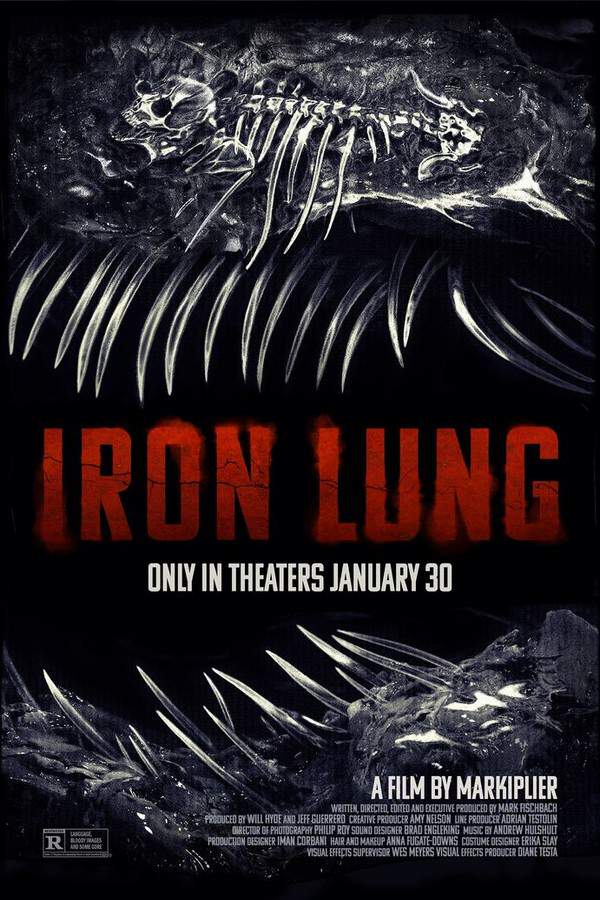
Iron Lung 2026 Reviews: Critic Consensus vs. Audience Reactions on Markiplier’s Polarizing Horror Debut
When a YouTube creator with over 35 million subscribers decides to fund, direct, and star in a feature-length adaptation of an indie horror video game, the resulting film inevitably carries expectations that transcend traditional cinema metrics. Iron Lung 2026—the directorial debut of Mark Fischbach (better known as Markiplier)—arrived in theaters on January 30, 2026, as one of the most fascinating experiments in modern genre filmmaking. This low-budget sci-fi horror chamber piece, adapted from David Szymanski’s 2022 indie game of the same name, has generated a reception landscape that mirrors the very darkness and claustrophobia depicted on screen: divisive, suffocating, and impossible to ignore.
For those seeking a comprehensive overview of cast details, production history, and plot frameworks before diving into critical analysis, the Iron Lung summary page on What’s After the Movie provides essential context. Unlike traditional studio adaptations backed by nine-figure budgets, Iron Lung represents a DIY ethos that has sent shockwaves through both gaming and film communities, prompting intense debate about accessibility, pacing, and what constitutes “legitimate” cinema in an era of content creator crossovers.
The search volume surrounding “Iron Lung 2026 review” has been staggering, with audiences desperately seeking spoiler-free guidance on whether this experimental feature warrants their time. Is Iron Lung worth watching for casual horror fans, or does it strictly cater to Lovecraftian devotees and Markiplier’s established fanbase? Through careful examination of critic reviews and audience reactions, we can map the fractured reception landscape and determine where this unique piece of indie horror cinema ultimately lands in the broader cultural conversation.
The Critical Divide: Mainstream Discomfort Meets Niche Appreciation
The Iron Lung 2026 critic reviews reveal a fascinating disconnect between traditional film journalism and the evolving landscape of creator-driven cinema. With scores ranging from a scathing 40/100 at major outlets to more forgiving mid-range assessments in the 60s, the film has failed to achieve consensus among established critical voices, yet this very disagreement speaks to its audacious nature.
Empire Magazine delivered perhaps the most brutal assessment of Iron Lung, stating that “Despite Fischbach’s arguably admirable intent and exertion, this low-budget sci-fi horror makes Event Horizon look like 2001: A Space Odyssey.” This comparison is particularly telling—it positions the film as a failed attempt at philosophical sci-fi horror, suggesting that its ambitions far outstripped its execution. Similarly, IGN echoed this sentiment regarding structural issues, noting that “Iron Lung has terrible pacing and very low energy from the start. The scenarios that Fischbach has put his character in just aren’t compelling enough to watch unfold, with scenes that drag on and on.”
However, the critical reception wasn’t uniformly dismissive. RogerEbert.com offered a counter-perspective that acknowledged the film’s textured approach, describing it as “A grungy, blood-soaked DIY chamber piece… admirably restrained, being far more interested in creating a haunting ambience than raising your blood pressure.” This distinction between “ambience” and “adrenaline” becomes crucial when analyzing why mainstream critics struggled with the film—it deliberately rejects the jump-scare cadence of contemporary horror in favor of a suffocating, atmospheric dread that demands patience.
The Guardian provided perhaps the most culturally insightful critique, framing the viewing experience through a distinctly modern lens: “Many of us have long sensed culture is making a decisive break with the analogue in favour of the (perhaps terminally) online and Fischbach’s film makes that paradigm shift not just visible but visceral; it feels not unlike spending 12 hours on Twitch with all the curtains closed.” This observation highlights how Iron Lung functions as a litmus test for one’s tolerance for internet-native storytelling—a style that prioritizes sustained dread and visual distortion over traditional narrative propulsion.
Collider and IndieWire occupied the middle ground, acknowledging both the film’s flaws and its distinctive voice. Collider noted that while “the pacing ultimately makes the conclusion feel exhausting rather than exhilarating or shocking… the craftsmanship is there; with his directorial debut, Fischbach shows that he’s more than just a YouTuber.” IndieWire perhaps best captured the paradox at the heart of the film: “Iron Lung is audacious and at times astonishingly boring. Still, it feels more enthusiastic and celebratory than many blockbuster adaptations built on safer math.”
This split in Iron Lung film reception suggests that critics evaluating the movie through conventional Hollywood pacing standards found it lacking, while those attuned to experimental horror and indie film aesthetics recognized its commitment to a specific, uncompromising vision. For viewers interested in exploring how this film compares to other video game adaptations in our database, the divergence between blockbuster safety and Iron Lung’s risky minimalism becomes even more pronounced.
Pacing, Atmosphere, and the “Slow Burn” Controversy
No aspect of Iron Lung 2026 audience reactions has proven more divisive than the film’s deliberate, methodical pacing—a creative choice that has left viewers split between praising its atmospheric immersion and condemning it as tedious padding. This tension between “slow burn psychological horror” and “boring indie experiment” defines the primary fault line in the movie’s reception.
User reviewer Nezchrynliir articulated the frustration of viewers expecting conventional horror thrills: “This movie while it may be better than many horror films in the last 12 years, to me ultimately was too slow moving and too boring. The game felt like it wasted a LOT of it’s run time with needless padding, and the whole plot felt paper thin to me.” This perspective aligns with Paigewoods’ bewildered response: “Was confused from start to finish. Literally nothing happens, he’s just stuck in a shell. Kept waiting for something and nothing.”
These reactions highlight a fundamental misunderstanding that often plagues chamber piece horror films—the genre operates on psychological pressure rather than plot mechanics. However, the criticism isn’t without merit. The transition from an interactive gaming experience (where the player controls the pace of exploration) to a passive cinematic viewing (where the director dictates rhythm) appears to have created friction for audiences accustomed to the source material’s exploratory freedom.
Conversely, defenders of the film’s tempo argue that the sluggishness serves the narrative’s oppressive themes. Nirkor provided an enthusiastic counterpoint in their Iron Lung viewer review: “One of the few new movies that dont rush their story and have an incredible pacing. Its rare see and im very happy that this movie handled it amazing.” This divide speaks to broader questions about modern audience attention spans and whether contemporary cinema has lost the ability to sustain dread without frequent stimulus.
The most sophisticated defense of the pacing comes from ShayWhatYouWill, who suggests the film requires recalibration of viewing expectations: “I think a lot of the negative reviews come from confusion at the eldritch horror genre… I just saw it a second time and understood much more of what was being implied. I love that the movie trusts the audience to think critically and pick up on the parallels.” This observation—that Iron Lung functions as a rewatch-friendly mystery rather than a straightforward narrative—positions it closer to films like The Witch or Annihilation than to mainstream Blumhouse productions.
The atmospheric immersion extends beyond narrative pacing into sensory elements. Multiple reviewers, including Mdk_reaper, highlighted the technical achievements: “The sounddesign was incredible and the visuals were incredible aswell… the film itself is pretty much a slow paced psychological horror sci-fi gore fest.” For audiences tracking box office performance of indie horror, Iron Lung’s ability to generate word-of-mouth despite its divisive nature suggests that its atmospheric qualities are creating a cult audience even as they alienate casual viewers.
Markiplier’s Evolution: From Content Creator to Filmmaker
Perhaps the most scrutinized element of Iron Lung 2026 has been Mark Fischbach’s triple-role as director, writer, and lead actor—a transition that has historically challenged even seasoned performers. The Iron Lung critic consensus regarding his artistic evolution reveals a surprising generosity toward his craftsmanship, even when criticizing the film’s broader structural issues.
Collider’s observation that “with his directorial debut, Fischbach shows that he’s more than just a YouTuber, and he can conjure up the same kinds of scares that make him scream as he’s playing games” acknowledges the genuine skill behind the camera, even as it critiques the pacing. This distinction between “content creator” and “filmmaker” has been a recurring theme in profiles of internet personalities attempting cinematic legitimacy, and Iron Lung appears to have successfully bridged that gap for many observers, even if the final product remains imperfect.
User reactions regarding Fischbach’s acting specifically show an interesting arc of improvement. ondatra3211 noted: “Mark’s acting is much better in the second half of the movie, and even though most of it takes place in one location, it never really gets boring.” This progression suggests that as the character’s psychological state deteriorates, Fischbach’s performance gains confidence and nuance—a trajectory that mirrors many first-time directors who find their rhythm mid-production.
The parasocial investment of Markiplier’s existing fanbase has undoubtedly colored Iron Lung fan opinions, creating a protective bubble around the project that some critics view as skewing aggregate scores. BleedingJester admitted as much: “I only watched this because I am was a fan of Markiplier when I was younger and I wanted to support him but this is genuinely a very interesting and kind of fun albeit slow movie to watch I liked it a lot actually.” Yet even within this admitted bias, the conversion from “supportive viewing” to “genuine appreciation” suggests the film transcends mere fan service.
Yocelyne4040 exemplified the enthusiastic supporter perspective: “Mark devoured this role and this movie entirely! For a first time movie maker this was amazing, I can’t wait to go back to the theater to see it again!!” This level of dedication—planning repeat theatrical viewings—indicates that Iron Lung has successfully cultivated the kind of cult film audience that sustains midnight screenings and special event cinema long after initial release.
However, the film also faces the unique challenge of escaping the shadow of its creator’s fame. Nezchrynliir’s admission that “I’ll be honest I never liked Markiplier to begin with” suggests that pre-existing bias against internet culture figures may be filtering into “objective” criticism, just as fan loyalty inflates positive responses. For those interested in exploring actor-director profiles and their career trajectories, Iron Lung represents a fascinating case study in how modern stardom—built on accessibility and daily content—translates to the mystery and distance required for cinematic performance.
Video Game Adaptation Authenticity: DIY vs. Blockbuster
In an era where video game adaptations have become Hollywood’s safest bet—following the massive successes of The Last of Us, Fallout, and Super Mario Bros.—Iron Lung 2026 arrives as a deliberate counter-programming statement. The Iron Lung film analysis regarding its adaptation strategy reveals a commitment to indie authenticity that stands in stark contrast to the polished, nine-figure budget productions dominating the landscape.
IndieWire’s observation that the film “feels more enthusiastic and celebratory than many blockbuster adaptations built on safer math” cuts to the heart of Iron Lung’s appeal. Where studio adaptations often sanitize the weird, specific vision of their source material to appeal to four-quadrant audiences, Fischbach’s film appears to have maintained the grungy, lo-fi aesthetic that made David Szymanski’s original game a cult hit among indie horror gaming enthusiasts.
The “blood-soaked DIY chamber piece” aesthetic noted by RogerEbert.com represents a philosophical choice as much as a budgetary constraint. By embracing the claustrophobic limitations of its setting—a tiny submarine navigating an ocean of blood on a dead moon—Iron Lung avoids the expansion bloat that typically dilutes game-to-film translations. Rather than adding unnecessary characters or action sequences to pad runtime, the film doubles down on the isolation and psychological pressure that defined the interactive experience.
This fidelity, however, has created a unique tension in Iron Lung spoiler-free reviews regarding accessibility. Mdk_reaper advised potential viewers: “Probably best to go into the film knowing why they are launching a submarine in a sea of blood but the film itself is pretty much a slow paced psychological horror sci-fi gore fest.” This suggestion that homework improves the viewing experience highlights a potential barrier to entry that mainstream adaptations typically avoid through extensive exposition.
The comparison to other movie collections and adaptations becomes inevitable when considering Iron Lung’s commercial trajectory. While it certainly won’t match the box office totals of franchise behemoths, its grassroots success—selling out specialty screenings and generating intense social media discourse—suggests an alternative model for game adaptations. The film treats its source material with the reverence of a concert film or documentary, prioritizing tone and texture over plot complexity.
User Nirkor specifically praised this genre commitment: “The dark atmosphere and the dip into eldritch/lovecraftian horror are certainly not what everyone likes, but to those whom like such, please watch it.” This recognition that Iron Lung targets a specific horror subculture—fans of The Void, Color Out of Space, or Annihilation—rather than general audiences explains both its passionate defenders and its confused detractors. It’s not attempting to be the next Five Nights at Freddy’s; it’s aspiring to join the ranks of prestige psychological horror.
The Lovecraftian Horror Divide: Understanding the Eldritch Appeal
To comprehend why Iron Lung 2026 has generated such polarized viewer reactions, one must examine its commitment to cosmic horror and the “eldritch” tradition—a subgenre that has always divided audiences between those who appreciate existential dread and those who require concrete explanations. The film’s reception acts as a filter for horror literacy, rewarding viewers versed in Lovecraftian tropes while alienating those seeking traditional narrative closure.
ShayWhatYouWill’s detailed analysis provides crucial insight into this dynamic: “I think a lot of the negative reviews come from confusion at the eldritch horror genre. Admittedly, the most impactful culmination of what the movie was building to got confusing and garbled in the chaotic ending. With some tweaking in the editing of the distorted voices and some visual clarity through all the blood, I think it would have hit harder for folks.” This observation suggests that Iron Lung’s final moments—likely featuring the distorted, reality-breaking revelations typical of the source material—sacrificed accessibility for authenticity.
The “garbled” quality mentioned isn’t necessarily a technical failure but rather a hallmark of cosmic horror, where the incomprehensibility of the threat constitutes the terror itself. When The Guardian compares the experience to “spending 12 hours on Twitch with all the curtains closed,” they’re inadvertently identifying the film’s successful transmission of digital-age disorientation—a modern equivalent to Lovecraft’s “non-Euclidean geometry.”
For audiences wondering is Iron Lung worth watching, the answer largely depends on their tolerance for ambiguity. Nirkor’s enthusiastic Iron Lung review specifically highlighted this appeal: “Its certainly not a movie for everyone. The dark atmosphere and the dip into eldritch/lovecraftian horror are certainly not what everyone likes, but to those whom like such, please watch it.”
The film’s visual language—dependent on blood, darkness, and claustrophobic framing—creates a sensory experience that transcends narrative coherence. BleedingJester’s warning that “it is an incredibly dark movie” serves as necessary content guidance, while Mdk_reaper’s description of “suspense and wtf moments” captures the intended disorientation. These elements position Iron Lung within a specific horror movie taxonomy that values atmosphere over plot, joining films like The Lighthouse or Possum in the “difficult but rewarding” category.
The rewatch value emphasized by multiple users—particularly ShayWhatYouWill’s recommendation to “give it a second viewing and sit with it”—further cements its status as a cult film rather than a mainstream hit. Like Donnie Darko or Mulholland Drive, Iron Lung appears to reveal hidden textures and “subtle details that were lovingly paced out and included in careful camera shots” upon repeated viewing, suggesting that initial Iron Lung critical consensus may shift as the film finds its audience through streaming and physical media.
Conclusion: The Future of Creator-Driven Cinema and Iron Lung’s Legacy
As the dust settles on the initial theatrical run of Iron Lung 2026, the fractured reception landscape reveals less about the film’s objective quality and more about the evolving expectations of modern horror audiences. With critic reviews ranging from dismissive 40/100 scores to appreciative acknowledgments of its DIY craftsmanship, and audience reactions split between “boring” and “masterpiece,” Iron Lung has achieved the rare distinction of being genuinely controversial—not through shock value or offensive content, but through its unapologetic commitment to a specific, suffocating vision.
For the team at What’s After the Movie, this film represents a crucial data point in tracking how internet-native creators transition into traditional media spaces. Mark Fischbach’s debut doesn’t seek to apologize for its YouTube origins nor to completely abandon them; instead, it uses the parasocial connection with his audience as a foundation for experimental storytelling that major studios would never greenlight. The fact that Mdk_reaper notes it’s “doing well at the box office” despite—or perhaps because of—its divisive nature suggests that niche horror cinema can sustain itself through passionate micro-communities even when broader critical consensus remains lukewarm.
The film’s ultimate legacy may be educational: teaching audiences how to approach indie video game adaptations with different metrics than those applied to The Super Mario Bros. Movie or Sonic the Hedgehog. Iron Lung demands patience, tolerance for ambiguity, and familiarity with Lovecraftian tropes. It rewards viewers who “think critically and pick up on the parallels” rather than those seeking passive entertainment. In this sense, it functions as a quiz of horror literacy—separating those who appreciate “haunting ambience” from those who require “blood pressure” excitement.
Whether Iron Lung becomes a footnote in a broader content creator filmography or the beginning of a distinctive directorial career remains to be seen. However, its immediate impact on horror discourse—forcing conversations about pacing, adaptation fidelity, and the validity of DIY aesthetics—secures its place as one of 2026’s most fascinating cinematic experiments. For viewers still on the fence, the complete Iron Lung summary and details await, offering the context necessary to decide if this particular submarine journey into blood and darkness aligns with your cinematic tastes.
As we continue tracking awards season potential for genre films and maintaining our comprehensive movie database, Iron Lung stands as a testament to the fact that in an age of algorithm-driven content, there remains space for the difficult, the strange, and the deliberately uncomfortable. Whether that space justifies a ticket purchase depends entirely on your willingness to embrace the dark.
External Resources and Movie Database Links
For comprehensive information about Iron Lung across the major film databases and streaming platforms, please refer to the following authoritative sources:
| Platform | Link |
|---|---|
| The Movie Database (TMDB) | Iron Lung on TMDB |
| Wikipedia | Iron Lung (film) on Wikipedia |
| Rotten Tomatoes | Iron Lung on Rotten Tomatoes |
| Metacritic | Iron Lung on Metacritic |
| JustWatch | Iron Lung on JustWatch |
| Box Office Mojo | Iron Lung on Box Office Mojo |