What's After the Blog?
Opinions • Reception
Undertone (2026) Review – Critics Opinions, Fan Reception, and Storytelling Analysis
Explore how critics and fans have responded to Undertone (2026), examining performance, storytelling, and its place within the paranormal podcast franchise. This post dives into reviews, audience reactions, and overall reception to give a comprehensive view.
March 17, 2026
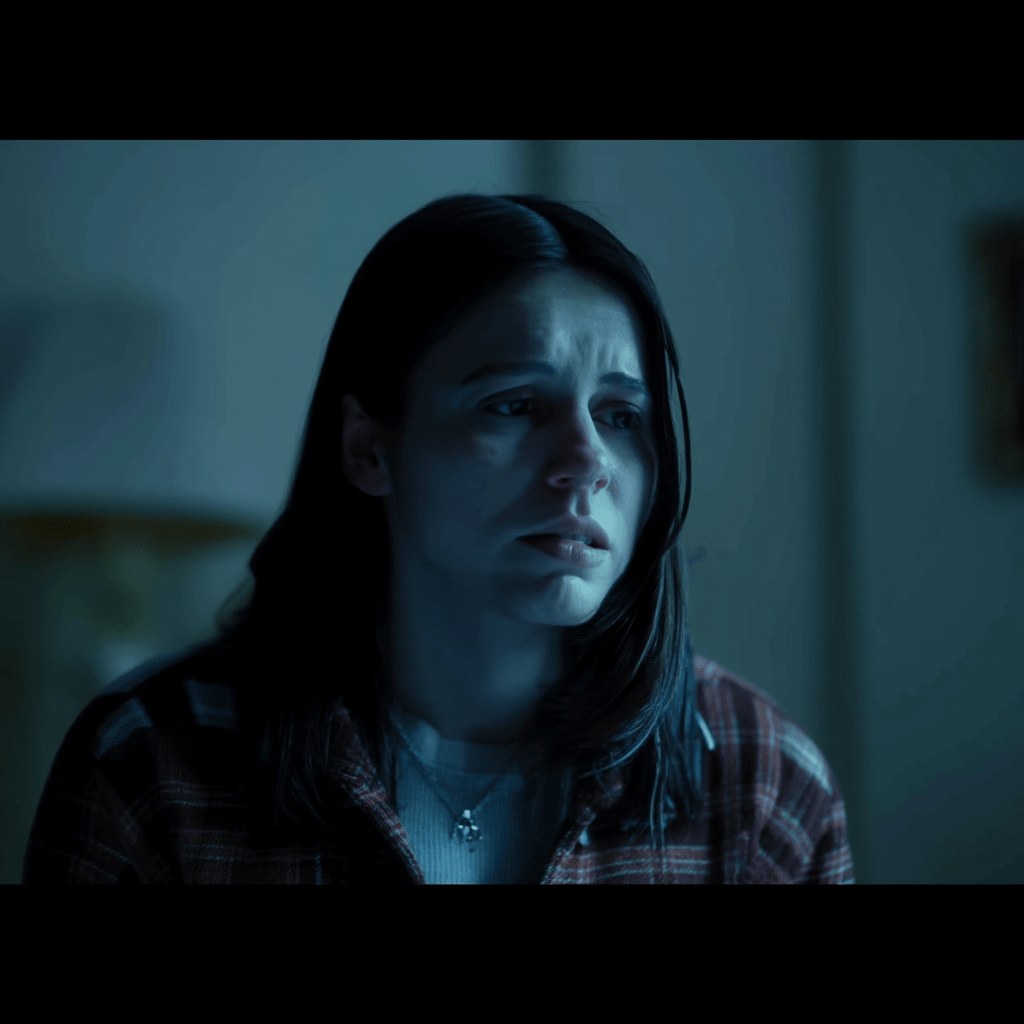
Movies mentioned in this article
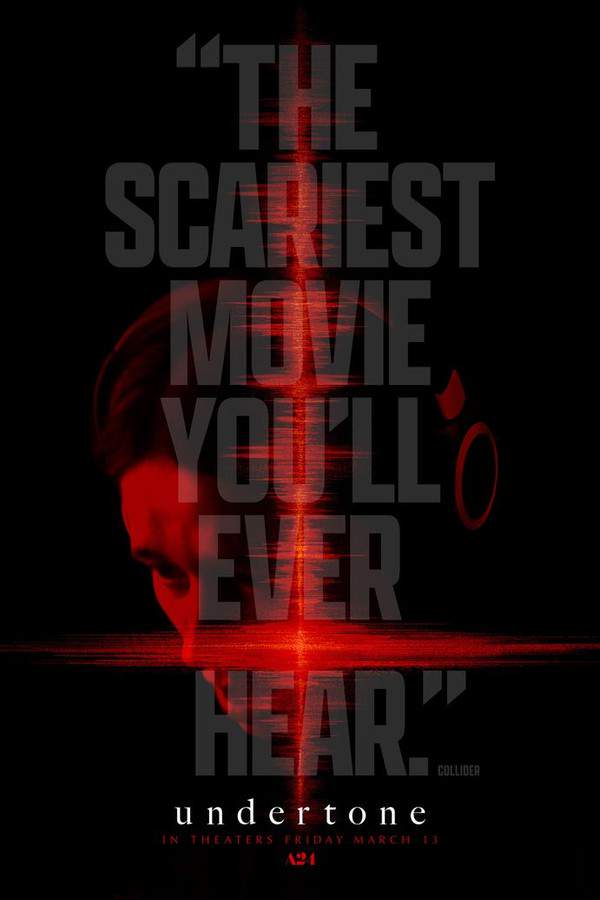
Undertone (2026) Reviews and Reception: What Critics and Audiences Are Saying About This Sound-Driven Horror Experience
When Undertone hit theaters on March 13, 2026, it arrived with a whisper rather than a scream—fitting for a horror film that weaponizes audio design and atmospheric dread over traditional jump scares. As cinema enthusiasts increasingly search for Undertone review content and spoiler-free takes before committing to this slow-burn thriller, the film has generated one of the most polarized receptions in recent horror memory. Unlike mainstream franchise entries that dominate the box office charts through spectacle alone, this intimate two-hander has sparked intense debate about what constitutes effective horror storytelling in the modern era. Is it a masterclass in aural terror that demands the theatrical experience, or an overhyped exercise in monotony that tests audience patience? At What’s After the Movie, we’ve analyzed the complete spectrum of Undertone (2026) critic reviews, audience reactions, and viewer opinions to help you determine whether this film deserves your time and attention. From the movie page insights to detailed film reception analysis, here’s everything you need to know about how this unique horror entry is being received across the critical and consumer landscape.
Critical Consensus and Critic Reviews: How Undertone (2026) Is Being Received by Professional Reviewers
The professional critical reception for Undertone reveals a fascinating divide between appreciation for its technical craftsmanship and reservations about its narrative minimalism. With scores ranging from middling to strong across major publications, the film has established itself as a textbook example of “critics’ horror”—the kind of formally rigorous genre exercise that earns respect even when it doesn’t fully satisfy.
The New York Times delivered one of the most enthusiastic endorsements, declaring it “a properly scary movie, the kind that merits watching in a theater with a good sound system (or headphones in a dark room, at home).” Their review emphasizes that “Undertone provides terrific evidence of what a filmmaker can do even under constraint,” suggesting that the movie’s limitations—its two-person cast, confined setting, and deliberate pacing—serve as strengths rather than weaknesses. This sentiment aligns with the broader critical appreciation for films that trust audience imagination over explicit visualization, a quality you can explore further in our movie wiki section dedicated to atmospheric horror cinema.
However, not all critics were equally charmed by the film’s rigorous minimalism. The Los Angeles Times offered a more measured take, noting that “the film is so committed to its rigors — the two-person cast, the glacial camera pivots, the moody lighting — that it teeters on the line of becoming monotonous.” This criticism highlights the central tension in Undertone’s reception: while some celebrate its formal discipline, others find it suffocating in ways that detract from the horror experience. For viewers researching is Undertone worth watching, this split in critical opinion suggests that tolerance for slow-burn storytelling will significantly impact enjoyment.
The Wall Street Journal struck a middle ground, praising how “the movie generates a pleasing fog of suspense as it makes the audience pay attention to each new audio cue,” while specifically recommending theatrical viewing. Their observation that “seeing the movie in a hushed theater is ideal; viewing it at home would almost certainly bring in distractions that would dilute the experience” speaks to the film’s unique demands on audience attention—a rarity in an era of second-screen viewing habits. This theatrical imperative has made Undertone a frequent topic in film analysis circles discussing the future of immersive cinema.
The Globe and Mail (Toronto) focused their praise on the film’s sensory elements, stating that “the film works best when it is only Evy and her headphones on the screen, the character’s head (and ours) becoming overwhelmed by some truly impressive, singularly creepy sound design.” This Canadian perspective emphasizes the movie’s success as a sensory experience rather than a narrative one, a distinction that appears frequently in Undertone 2026 reception discourse.
Conversely, New York Magazine (Vulture) offered a more skeptical take, suggesting that “Undertone is creepy enough without needing to knit its haunting into its main character’s background so clunkily; ironically, its most effective moments are ones of stylistic indifference.” This critique of the film’s narrative framing—attempting to ground its supernatural elements in personal trauma—represents a common complaint among critics who found the psychological backstory unnecessary baggage on an otherwise sleek exercise in dread.
The Playlist perhaps best summarized the film’s aesthetic priorities, noting that “for a film so fixated on provoking fear and dread through the medium of audio, it’s naturally strongest when it does not bother to stimulate the eyes at all.” This observation about Undertone’s visual restraint versus its aural complexity has become a central talking point in critic reviews and award season discussions, particularly regarding potential recognition for sound design achievements.
Audience Reactions and Viewer Opinions: The Polarized Reception of Undertone (2026)
While critics debated the film’s formal merits, audience reactions to Undertone have proven even more divisive, creating a stark contrast between horror aficionados who appreciate atmospheric tension and mainstream viewers expecting conventional scares. This polarization is immediately evident when examining user-generated Undertone audience reactions across major platforms.
User Skring33 represents the film’s passionate defenders, offering a detailed viewer reaction that contextualizes Undertone within contemporary horror: “I’m a huge horror movie fan and have spent years watching a wide range of films across the genre. I’ve been mostly disappointed with most of the newer horror movies (Longlegs, Weapons, Him, etc.) though a few have really stood out like Talk to Me, Companion, The Substance, and Let Her In. Undertone has lingered with me far longer than most horror films.” This user’s experience highlights how the film resonates with viewers seeking alternatives to mainstream horror formulas. They specifically praise how it “avoids the usual horror formula, leaning entirely on its incredible sound design and oppressive atmosphere instead of mindless jump scares,” while recommending theatrical viewing “with the best sound system.”
On the opposite end of the spectrum, user schlista delivered a scathing spoiler-free review: “Worst movie I saw in a long time! So boring for the first 80 minutes. Finally gets action in the final 10 minutes and it abruptly ends.” Their critique centers on the “slow burn” structure that critics praised but some viewers found interminable: “I get it was trying to be a slow burn, but if you’re going to do that you can’t have a million plot holes and stupid things that just make no sense.” This sentiment reflects a common disconnect between art-house horror expectations and multiplex audience patience levels.
The intensity of negative reactions reached its peak with user BigBinguz, who “remembered my metacritic account just to Vent on this piece of **** movie.” Their film reception commentary targets both the film’s content and its marketing: “If anything find whose running the marketing on this film and pulverize him or her into the **** ground for doing an immensely good job of over-selling you what is effectively a decent horror movie on paper but a rather **** one in execution.” Perhaps most damning was their suggestion that “Could’ve been a podcast and it would have worked out better in the end”—a critique that echoes the film’s emphasis on audio over visual storytelling.
User CinemaBoi reported taking extreme action due to dissatisfaction: “Asked for a refund. Got it with no questions asked. This was so boring and pointless it was insulting.” Meanwhile, bzybura described a theater experience that devolved into phone scrolling: “I tried to close my eyes and rest but the sound was loud and harsh. I ended up scrolling my phone in the theater until I realized that I could just sit in the lobby until it was over.”
Yet the film clearly connects with certain viewers on a profound level. User royalguy07 offered a starkly different opinion: “Extremely well made, unsettling, and **** up. Has an evil core I don’t ever want to talk or think about again.” This visceral reaction suggests that for the right audience—those who appreciate psychological horror that lingers rather than shocks—Undertone delivers exactly the kind of disturbing atmosphere that stays with viewers long after credits roll.
For those trying to determine where they might fall on this love-hate spectrum, our quizzes and games section offers interactive ways to match your horror preferences with films currently in theaters, including whether Undertone’s particular brand of dread aligns with your tastes.
Sound Design and Atmospheric Horror: Technical Reception of Undertone (2026)
If there’s one aspect of Undertone that generates near-universal acclaim across both critical and audience reviews, it’s the film’s innovative approach to sound design and its manipulation of aural space to create terror. In an era where horror often relies on visual gore or CGI spectacles, this film’s return to radio-drama-esque sensibilities has made it a standout entry in our concert films and sensory cinema collections.
The Arizona Republic highlighted this technical achievement in their enthusiastic review, calling it “creepy as all get out” while specifically praising the sound work that supports Nina Kiri’s largely solo performance. The film’s premise—centering on a podcast host who returns to her childhood home—provides narrative justification for the obsessive attention to audio detail, allowing the sound design to function as both plot device and atmospheric weapon.
The Reveal offered perhaps the most poetic description of the film’s sonic strategy, noting that while “Undertone might be a well-worn tale of demons and satanic beasties at its core,” its “ingenious form gives it an unnerving intimacy that begins as a dreadful whisper then slowly turns up the volume until it threatens to drown out the rest of the world.” This progression from subtle unease to overwhelming sensory assault mirrors the film’s structural approach to horror, eschewing traditional set pieces for a cumulative effect that some viewers found suffocating and others found transcendent.
The technical execution has sparked considerable discussion in film analysis circles regarding the resurgence of “acoustic horror”—films that prioritize sound over image. The Playlist’s observation that the movie is “naturally strongest when it does not bother to stimulate the eyes at all” suggests a radical departure from visual cinema norms, positioning Undertone as an experimental work disguised as mainstream horror. This distinction makes it a fascinating case study for our movie lists dedicated to innovative horror techniques.
However, this emphasis on audio created the film’s most significant accessibility issue. Several negative user reviews specifically mentioned the sound mix as a deterrent rather than an asset. User bzybura complained that “the sound was loud and harsh,” suggesting that the film’s aggressive audio design can alienate viewers sensitive to sensory overload. This divide between “immersive” and “unpleasant” experiences defines much of the Undertone viewer reactions debate.
The theatrical versus home viewing question becomes particularly relevant here. While The New York Times and Wall Street Journal both emphasized the importance of theatrical sound systems for full appreciation, the reality is that many viewers will encounter Undertone through streaming platforms. This distribution reality may fundamentally alter how the film is received, as the precise calibration of its audio landscape—arguably its primary artistic achievement—becomes dependent on individual home theater setups or, worse, television speakers.
For those interested in the intersection of technical filmmaking and horror, our profiles section offers deep dives into the sound designers and audio engineers who craft these immersive experiences, including the team behind Undertone’s distinctive sonic palette.
Performance Analysis: Nina Kiri’s Solo Act in Undertone (2026)
Beyond the technical wizardry of its sound design, Undertone rests heavily on the shoulders of its lead performers, particularly Nina Kiri, who carries the majority of the film’s runtime essentially alone on screen. The reception of these performances offers insight into how acting can elevate—or fail to salvage—minimalist horror storytelling.
The Arizona Republic specifically singled out Kiri’s work, praising “a great performance from Nina Kiri, on-screen alone for most of the film, as a podcast host who has moved back to her childhood home to take care of her dying mother (Michèle Duquet).” This acknowledgment of the demanding physical and emotional requirements of solo screen acting highlights why some viewers remained engaged despite the film’s deliberate pacing. When a performer must generate tension without the benefit of dialogue partners or elaborate set pieces, every micro-expression and physical choice becomes magnified, and according to several critic reviews, Kiri largely succeeds in this high-wire act.
The dynamic between Kiri’s character Evy and Duquet’s portrayal of her dying mother creates the film’s emotional anchor. While some critics, such as New York Magazine (Vulture), found the backstory “clunky,” others appreciated the grounded reality that these performances brought to the supernatural proceedings. The contrast between the mundane horror of caring for a dying parent and the supernatural elements threatening the protagonist gives the actors material that transcends typical genre fare.
However, not all audience members connected with these performances. User BigBinguz expressed strong antipathy toward the lead, stating “I hated the Lead Girl for some reason and sure enough felt vindicated by then end when the Reveal came.” This reaction suggests that the film’s reliance on character identification—necessary for the slow-burn approach to work—creates a vulnerability; if viewers don’t connect with the protagonist, the lengthy runtime becomes an exercise in frustration rather than suspense.
User Skring33, conversely, found the performance essential to the film’s success, noting how the acting combined with the sound design to create “one of the most genuinely frightening experiences I’ve had with this genre.” This divergence in audience reactions regarding the central performance illustrates how subjective film reception can be, particularly in character-driven horror where the viewer’s empathy with the protagonist determines the effectiveness of the scares.
The two-person cast structure—reminiscent of chamber dramas and intimate theater pieces—places enormous pressure on the chemistry between the leads. While The Los Angeles Times found the “glacial camera pivots” and visual rigor potentially “monotonous,” they didn’t specifically fault the performances, suggesting that the actors delivered committed work even when the film’s style alienated certain viewers.
For those interested in exploring more films featuring similar demanding solo or near-solo performances, our movie collections include curated lists of one-character films and minimalist cinema that showcase the range of what actors can achieve with limited resources.
The Slow Burn Debate: Pacing, Storytelling Quality, and Narrative Payoff in Undertone
Perhaps no aspect of Undertone’s reception generates more controversy than its pacing and narrative structure. The film’s commitment to slow-burn horror—spending approximately 80 minutes building atmosphere before delivering its climactic revelations—has created a fault line between viewers who appreciate gradual dread and those who find the approach tedious or pretentious.
Movie Nation offered one of the most balanced critical assessments of this issue, admitting that “there’s not much to this thin plot and the monotonous visual limitations don’t deliver the claustrophobia you might expect to heighten the growing dread.” However, they ultimately recommended the film “for horror that’s alarming in the most primal, aural and piloerection ways.” This qualified endorsement captures the central compromise Undertone asks of its audience: accept minimal narrative progression in exchange for sensory immersion.
The user reviews reveal how divisive this trade-off proves in practice. Schlista’s complaint that “if you’re going to do that you can’t have a million plot holes and stupid things that just make no sense” reflects a common frustration with slow-burn horror—that the extended runtime creates expectations for narrative coherence that the rushed finale fails to satisfy. Their observation that “Finally gets action in the final 10 minutes and it abruptly ends” suggests a structural imbalance that left many viewers feeling cheated rather than satisfied.
This criticism finds echoes in BigBinguz’s assertion that the film “Could’ve been a podcast,” implying that the cinematic elements added little to what amounted to an audio narrative. When viewers suggest that the visual component of a film is superfluous, it represents a fundamental failure of the medium—unless, of course, the film intentionally interrogates the relationship between sound and image, as some defenders argue Undertone does.
The Austin Chronicle took a more charitable view of the film’s minimalism, calling it “a testament to the adage that a good filmmaker can make anything out of nothing.” This perspective values the film’s economy of means as evidence of craft rather than a limitation. For viewers who approach Undertone with expectations shaped by micro-budget horror and experimental cinema, the pacing likely feels appropriate rather than indulgent.
The “abrupt ending” mentioned by multiple users—including Skring33, who otherwise loved the film—suggests that Undertone may falter in its landing regardless of how one feels about the journey. The disconnect between the methodical buildup and the sudden conclusion creates a tonal whiplash that undermines the careful atmosphere for some viewers. This structural issue has implications for the film’s long-term reception and rewatchability, as the knowledge of the ending’s brevity may alter how first-time viewers experience the slow build.
For horror fans debating whether Undertone’s pacing aligns with their preferences, our game section includes interactive tools to help identify your tolerance for slow-burn versus fast-paced horror, ensuring you can make informed decisions about which films deserve your theatrical dollars.
Final Verdict: Who Should Watch Undertone (2026) and Understanding the Divided Reception
As the dust settles on Undertone’s theatrical run and the film transitions to streaming platforms and home viewing, the question remains: who is this film actually for, and should you invest your time in this divisive horror experience? The answer, based on comprehensive analysis of Undertone reviews and audience reactions, depends largely on your relationship with atmospheric horror and your tolerance for experimental pacing.
If you are a horror connoisseur who values sound design as a primary storytelling tool—someone who appreciated films like Berberian Sound Studio or The Conversation for their acoustic innovation—Undertone offers a rare theatrical experience that prioritizes aural terror over visual spectacle. The film demands your full attention, ideally experienced in a theater with high-quality sound systems or at home with premium headphones in a dark room. Viewers who approach it as a sensory immersion rather than a narrative puzzle seem most likely to appreciate its “pleasing fog of suspense,” as The Wall Street Journal described it.
However, if you prefer your horror with clear narrative progression, frequent scares, or sympathetic characters whose motivations remain consistent, the critical consensus suggests you may find yourself among the viewers requesting refunds or scrolling through your phone in the theater. The film’s commitment to its formal rigors—its “glacial camera pivots” and “monotonous visual limitations”—creates a barrier to entry that casual horror fans may find insurmountable.
The performance of Nina Kiri provides another consideration: if you appreciate actors carrying films through sheer presence and physical commitment, Undertone offers a showcase for minimalist screen acting. Conversely, if you found yourself frustrated by the protagonist’s decisions or disconnected from her emotional journey, the film’s slow burn becomes an endurance test rather than a suspenseful experience.
For those still undecided, What’s After the Movie offers comprehensive resources to help guide your decision. Visit our summary page for detailed breakdowns of film content without spoilers, check our box office data to see how Undertone performed against other horror releases, or explore our awards section to track whether the film’s sound design receives the recognition it deserves during the upcoming awards season.
Ultimately, Undertone (2026) stands as a fascinating case study in the current state of horror cinema—a film that generates passionate defenses and equally passionate rejections, sometimes from viewers who sat in the same theater experiencing the same audio cues. Whether it represents the future of atmospheric horror or a cautionary tale about style over substance depends entirely on which reviews you choose to trust, and whether you’re willing to let the film’s “dreadful whisper” slowly turn up the volume until it threatens to drown out your expectations.
| Site | Link |
|---|---|
| The Movie Database (TMDB) | Undertone on TMDB |
| Wikipedia | Undertone (film) on Wikipedia |
| Rotten Tomatoes | Undertone on Rotten Tomatoes |
| Metacritic | Undertone on Metacritic |
| JustWatch | Undertone on JustWatch |
| Box Office Mojo | Undertone on Box Office Mojo |
Continue reading


What's After the Movie?
Not sure whether to stay after the credits? Find out!
Check out our other apps:

SAT Sphere
Build confidence for the Digital SAT.

Mori Atlas
Discover wild places worth protecting.

Luntero
Search smarter for a home in Amsterdam.

Plot Explained
Unravel movie endings and hidden clues.

Pokechamp
Dive into Pokémon data and battle logic.

Driving Theory
Get ready for your European theory test.

Movie Dust
Plan your next cinema trip with ease.

Musemap
Find art and culture as you travel.

Selkobase
Compare credentials before committing.

Local Manual
Turn an unfamiliar country into practical next steps.

Lernavi
Compare school systems before your next move.

GymRoam
Find a workout stop wherever your plans take you.
Explore Our Movie Platform
New Movie Releases (2026)
Famous Movie Actors
Top Film Production Studios
Movie Plot Summaries & Endings
Major Movie Awards & Winners
Best Concert Films & Music Documentaries
Movie Collections and Curated Lists
© 2026 What's After the Movie. All rights reserved.
Privacy Policy