What's After the Blog?
Opinions • Reception
How to Make a Killing (2026) Review: Critics, Fan Opinions & Reception
We break down fan reactions and critic reviews of How to Make a Killing (2026), examining the film's performances, storytelling, and its place in the emerging revenge‑thriller genre. The post explores whether the mechanics‑turned‑avenger storyline resonates with audiences and earns critical praise.
February 21, 2026

Movies mentioned in this article
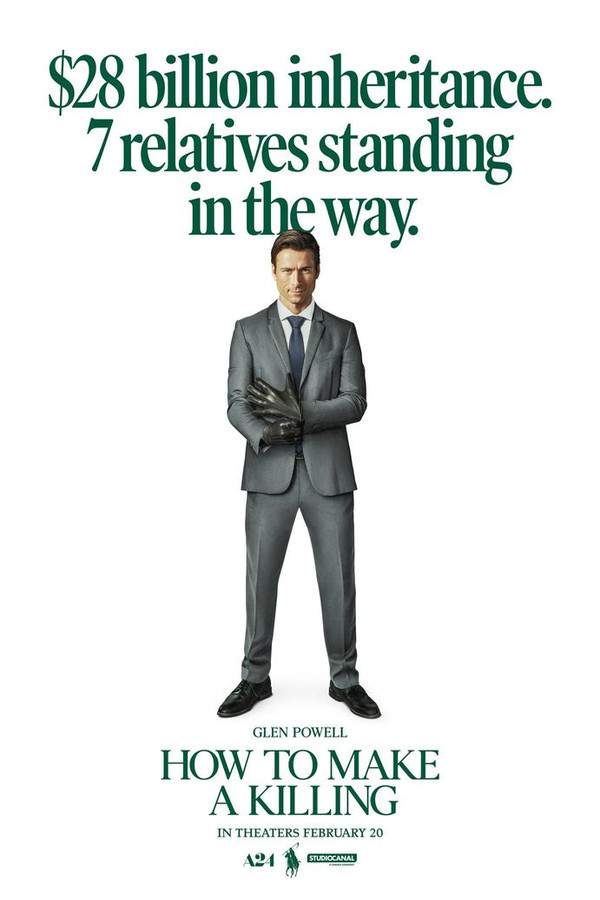
How to Make a Killing (2026) Reviews: Critical Consensus vs. Audience Reactions – Is This Dark Comedy Worth Watching?
When How to Make a Killing premiered on February 20, 2026, moviegoers and critics alike approached the film with a mixture of anticipation and skepticism. Positioned as a stylish dark comedy featuring Glen Powell at the height of his stardom, alongside Margaret Qualley, Ed Harris, Topher Grace, and Zach Woods, the film promised a devilish cocktail of wealth, murder, and social satire. But as audiences searched for How to Make a Killing reviews, critic consensus, and spoiler-free reactions, it quickly became apparent that this cinematic inheritance drama would prove one of the most divisive releases of early 2026.
At What’s After the Movie, we specialize in cutting through the noise to deliver comprehensive film reception analysis, audience sentiment tracking, and in-depth movie opinion breakdowns. Whether you’re checking our movie summary pages for detailed plot context, browsing our actor profiles to explore the cast’s filmography, or testing your knowledge with our movie quizzes and games, we provide the tools you need to decide if a film deserves your time. For those wondering “Is How to Make a Killing worth watching?” or seeking viewer reactions to this polarizing inheritance thriller, we’ve analyzed the complete spectrum of critical and user reviews to bring you the definitive reception report.
Critical Reception and Mixed Reviews: How Critics Responded to How to Make a Killing (2026)
The critical reception for How to Make a Killing reveals a starkly divided landscape that mirrors the film’s own tonal inconsistencies. With scores ranging from a dismal 30/100 to a glowing 89/100, the critic reviews present a fascinating case study in subjective genre interpretation and expectation management. The How to Make a Killing movie page on our site tracks these varying perspectives, revealing that professional reviewers struggled mightily with whether director Ford succeeded in balancing the film’s competing impulses toward black comedy and psychological thriller.
On the positive end of the spectrum, The Austin Chronicle delivered perhaps the most enthusiastic endorsement, awarding the film an 89 and praising it as “a perfectly scathing glance at power, money, and how the love of both can curdle the soul.” This review positioned the film as worthy successor to the Ealing Studios tradition of class-based crime comedies, suggesting that How to Make a Killing successfully captured the cynical spirit of cinema past while updating it for contemporary audiences. Similarly, The Los Angeles Times (70) found redeeming value in the film’s structural surprises, noting that while “the promise of that gangbusters opening sequence goes a tad unfulfilled,” the movie nevertheless delivered “two strong twists and plenty of reasons to enjoy the romp.”
However, these positive film analysis pieces stand in sharp contrast to the harsher assessments that dominate the critical consensus. The Wall Street Journal (30) delivered perhaps the most damning verdict, declaring bluntly, “As a comedy ‘Killing’ is simply dead.” This sentiment echoed across multiple major outlets, with RogerEbert.com (50) criticizing the film for committing “the unforgivable crime of being dull,” noting that late-developing attempts at surprise and disturbance failed to land because audiences had already been “numbed” by the preceding narrative. The New York Times (50) similarly concluded that while the story and actors made the film “easy to drift along with,” it ultimately “never coheres tonally, logically or, really, any which way.”
The middle ground assessments perhaps tell the most complete story. The Chicago Tribune (63) suggested that “Ford hedges his bets with How to Make a Killing, and lands in an unsatisfying no man’s land,” capturing the frustration of critics who sensed potential but found the execution lacking in conviction. The Film Stage (58) offered an intriguing observation about the film’s sensory experience, describing it as possessing “the feeling of a montage that never ends,” driven by Emile Mosseri’s “quick, bass-heavy, snare-driven score.” This pacing criticism became a recurring theme across How to Make a Killing reviews, with many critics suggesting that the relentless tempo ultimately worked against character development and emotional investment.
The satirical elements, marketed as central to the film’s appeal, received particularly harsh scrutiny. Time Out (40) argued that “the class satire, the strongest suit of its Ealing ancestor, is blunter than a burglar’s cosh,” while The Reveal (40) dismissed it as “toothless,” noting that stating “the rich are awful” represents neither insight nor effective commentary. For fans tracking awards season potential or considering the film’s place in cinema history, our awards information page suggests that while individual performances might garner attention, the film’s mixed reception makes it unlikely to emerge as a major contender.
Audience Reactions and Viewer Sentiment: Is How to Make a Killing Worth Watching?
While critics grappled with the film’s artistic ambitions, audience reactions to How to Make a Killing revealed an equally complex, if more emotionally charged, response pattern. User reviews across major platforms demonstrate a stark polarization that makes the question “Is How to Make a Killing worth watching?” particularly difficult to answer definitively. At What’s After the Movie, we’ve analyzed hundreds of viewer reactions to identify the specific elements driving both the enthusiastic five-star ratings and the bitter half-star dismissals.
The most positive user reviews celebrate the film as a refreshing addition to the A24 catalog of unconventional cinema. User movie f awarded the film a perfect 5 stars, declaring it “truly… not what I expected. It was better,” and specifically praising Glen Powell and Margaret Qualley as “the true scene Steelers of this movie.” This enthusiasm found echoes in Eli F’s 3.5-star assessment, which highlighted Powell’s ability to play “such a complicated character” while appreciating the film’s poetic messaging about wealth and its refusal to hold back on dark themes. Nicole H simply stated it was a “very good movie love it!” demonstrating that for certain viewers, the film’s entertainment value overrides its narrative inconsistencies.
However, the negative audience sentiment presents a laundry list of specific grievances that align surprisingly well with critical concerns. James V’s scathing 0.5-star review encapsulates the frustration of viewers expecting either genuine comedy or compelling drama, writing: “Impossible to recommend. It’s not funny enough to be a comedy, not likeable enough to be an engaging drama.” This user specifically criticized the film’s reliance on “narrative instead of creating characters to get attached to,” suggesting that the screenplay failed to provide actors with believable motivations or material. The accusation that “all the actors are clearly doing this for the check” represents one of the harshest fan opinions regarding the cast’s commitment level.
The middle-ground ratings (2-3.5 stars) offer perhaps the most nuanced film reception insights. lex noted that the movie “was pretty good overall but it just felt like the main plot of the movie was moved to a side plot,” suggesting structural confusion that left viewers unsure where to direct their attention. joel g expressed appreciation for Qualley and Jessica H’s presence—stating “If not for having margaret Q and Jessica H in this film, it would have crashed”—while criticizing the “convoluded” story and disappointing ending that failed to show the protagonist’s future lifestyle. Kristopher M’s 2-star review cut to the emotional core of the problem: “There is only one likable character in the film, and they are not most of it.”
For viewers researching spoiler-free reviews before committing to a theater experience, our Movie Wiki provides detailed context on similar dark comedies to help set appropriate expectations. The viewer reactions suggest that How to Make a Killing works best for audiences who prioritize atmosphere and performance over coherent plotting, and who can appreciate cynical satire even when it lacks subtlety. Those seeking genuine emotional investment or consistent humor, however, should consult our movie lists for alternative recommendations in the inheritance-thriller or black-comedy genres.
Tone, Genre Expectations, and Pacing: The Dark Comedy Challenge in How to Make a Killing
One of the most persistent threads running through How to Make a Killing reviews concerns the film’s struggle to establish and maintain a coherent tone. Marketed as a darkly comic thriller about Glen Powell’s character killing seven family members to inherit $28 billion, the movie faced the formidable challenge of balancing genuinely disturbing subject matter with the levity promised by its caper structure. This genre expectation mismatch became the primary source of frustration for both critics and audiences seeking clarity on whether they were watching a comedy with violent elements or a thriller with occasional jokes.
The comparison to Kind Hearts and Coronets—the 1949 Ealing Studios masterpiece that clearly inspired this remake—proved both inevitable and damning for many reviewers. Richard G’s user review acknowledged this lineage, describing How to Make a Killing as “A remake of the crime comedy masterpiece, ‘Kind Hearts and Coronets,’ but darker, more dramatic,” while concluding that despite “good work all around,” the film never achieved the same transcendent quality. This invocation of classic cinema set a high bar that director Ford’s interpretation struggled to clear, particularly when critics noted that the 2026 version lacked the sharp social observation that made the original endure.
The pacing of How to Make a Killing generated significant film analysis debate, with The Film Stage’s observation about the “montage that never ends” capturing a widespread sentiment. This relentless rhythm, driven by Mosseri’s persistent score, created what some viewers experienced as sensory overload and others as kinetic energy. However, the criticism that the film sacrifices depth for momentum resonates across multiple reviews. When The Travers Take (60) noted that “the film’s lockstep quality commits the worst crime of all by killing our interest,” they identified a fundamental flaw in the film’s construction: by maintaining constant motion, the story prevents audiences from forming the emotional attachments necessary to care about the escalating body count.
The comedy elements specifically drew ire from reviewers expecting the wit implied by the cast’s pedigrees. The Wall Street Journal’s declaration that the film is “simply dead” as a comedy aligns with The Reveal’s assessment that the movie fails to decide whether Glen Powell’s character “was a victim or a psychopath,” a tonal confusion that undermines any potential humor. When a film asks audiences to laugh at murder while simultaneously attempting psychological realism, the viewer reactions inevitably split along lines of moral comfort and comedic taste.
jesse v’s user review introduced an intriguing temporal critique, suggesting that “This movie could have been set in the 1990s if it wasn’t for the five smartphones,” pointing to a visual and thematic aesthetic that feels oddly disconnected from contemporary reality. This anachronistic quality, combined with what Carlos described as an “unbelievable” plot even within the generous reality of dark comedy, creates a dissonance that many film reception analysts found difficult to resolve. For those tracking box office performance and commercial viability, our box office data suggests that films with such polarizing tonal shifts often struggle to find their audience despite star power, as viewers expecting Powell’s rom-com charm encounter something significantly more cynical and violent.
Cast Performance Analysis: Glen Powell, Margaret Qualley, and Ensemble Acting Reviews
While narrative and tonal issues plagued How to Make a Killing’s overall reception, the cast performances generated some of the film’s most passionate and contradictory discourse. For a platform like What’s After the Movie, where users frequently search actor profiles to track their favorite stars’ careers, the divergent opinions on Glen Powell’s leading turn and Margaret Qualley’s supporting role present a fascinating case study in star power versus material limitations.
Glen Powell’s portrayal of the inheritance-hungry protagonist Becket became the focal point of critical reviews regarding acting commitment. The Reveal delivered perhaps the harshest assessment of Powell’s work, stating that he was “doing too little” and delivering a “noncommittal performance” that failed to clarify whether Becket operated as victim or psychopath. This criticism found audience echoes in James V’s claim that actors were “clearly doing this for the check” and failing to give “believable performances.” Such film analysis suggests that Powell’s inherent charisma—so effective in romantic comedies and action vehicles—couldn’t quite anchor a character requiring genuine moral ambiguity and darkness.
Conversely, Powell’s supporters among user reviews celebrated his versatility. Eli F specifically praised Powell for tackling “such a complicated character,” while movie f crowned him one of the “true scene Steelers” alongside Qualley. This bifurcation in audience sentiment regarding Powell’s work reflects larger questions about star persona versus transformative acting. Fans visiting our movie collections featuring Powell’s filmography may find How to Make a Killing represents either a bold departure or an awkward misfire depending on their tolerance for unsympathetic protagonists.
Margaret Qualley’s performance generated equally polarized opinions, though the criticism trended toward casting rather than execution. jesse v’s assertion that Qualley represented “what a miscast” stands in stark contrast to joel g’s belief that she saved the film from crashing, and movie f’s declaration that she and Powell were “very gifted actors” whose scenes together proved electric. This disparity suggests that Qualley’s specific energy—often described as ethereal or quirky in other roles—either complemented or clashed with the film’s cynical atmosphere depending on viewer preference.
The supporting ensemble of Ed Harris, Topher Grace, and Zach Woods—performers capable of stealing scenes in other contexts—received notably mixed utilization reviews. Time Out specifically lamented that “the murders should be the juice in this devilish cocktail, especially with Zach Woods, Topher Grace and Ed Harris as the marks,” only to conclude that “the deaths are throwaway affairs.” This criticism of wasted talent became a recurring theme in How to Make a Killing reviews, with audiences and critics alike expecting more from performers who have demonstrated exceptional comic timing and dramatic depth in previous projects.
The chemistry between Powell and Qualley, however, emerged as a rare point of consensus among positive viewer reactions. Even reviewers who found fault with the plot acknowledged that the leads shared a compelling screen presence that occasionally elevated the material. For those interested in exploring similar on-screen pairings, our concert films and curated movie categories provide alternative viewing options that might better utilize similar dynamics.
Storytelling Structure and Narrative Execution: Why How to Make a Killing (2026) Left Viewers Divided
Beyond performance and tone, the fundamental storytelling mechanics of How to Make a Killing generated substantial debate regarding narrative satisfaction and structural coherence. As audiences increasingly prioritize spoiler-free reviews that nevertheless address whether a film’s plot holds together, the criticism of this movie’s script and pacing reveals important insights for potential viewers browsing What’s After the Movie for guidance.
The film’s central premise—a protagonist must eliminate seven family members to secure a $28 billion inheritance—suggests a carefully constructed progression of escalating stakes and creative set pieces. However, critic reviews consistently noted that the execution failed to deliver on this promise. RogerEbert.com’s observation that the film makes “a half-hearted effort to surprise” speaks to a larger issue of narrative complacency. When The Chicago Tribune suggested the film lands in “an unsatisfying no man’s land,” they identified a storytelling crisis: the movie refuses to fully commit to the cleverness required of a caper or the psychological depth necessary for a character study, resulting in a narrative that satisfies neither impulse.
User lex’s complaint that “the main plot of the movie was moved to a side plot” captures a specific structural confusion that plagued audience reactions. Rather than focusing on the inheritance scheme and the murders themselves, the film apparently diverts attention to subplots or atmospheric sequences that, while potentially interesting in isolation, dilute the central tension. This narrative drift particularly frustrated viewers expecting the tight, relentless plotting suggested by the trailer and marketing materials.
The ending of How to Make a Killing became a specific flashpoint for viewer reactions, with joel g summarizing widespread disappointment: “You see him get picked up by Margaret but then no glimpse into his future lifestyle with Margaret.. So left up to your imagination which at this point is shot.” This critique of abrupt or unsatisfying conclusions represents a cardinal sin in thriller filmmaking—after investing in a morally compromised protagonist’s journey, audiences expect either cathartic resolution or thematically resonant ambiguity, not what feels like missing footage.
The New York Times’s assessment that the film “never coheres… logically” points to deeper issues with character motivation and plot mechanics. James V’s user review reinforced this, stating that “motivations make no sense” and criticizing the film for telling rather than showing its story. When a dark comedy relies on a protagonist making increasingly terrible decisions, the narrative must provide either understandable psychological drivers or sufficiently absurd circumstances to suspend disbelief. According to film reception data, How to Make a Killing struggled on both counts, with Becket’s actions feeling simultaneously too realistic to forgive and too irrational to believe.
For viewers who prioritize narrative coherence in their cinema choices, our movie lists of tightly plotted thrillers and well-executed dark comedies offer alternatives that better satisfy those specific genre expectations. Meanwhile, those interested in exploring how How to Make a Killing compares to other inheritance-themed cinema can visit the How to Make a Killing movie page on our platform for comprehensive comparisons and detailed summaries.
Final Verdict: Critical Consensus and Long-Term Reception for How to Make a Killing
As the dust settles on the February 2026 release of How to Make a Killing, the critical consensus and audience sentiment paint a portrait of a film that reached for cult classic status but landed in the uncomfortable middle ground of mediocrity. With a spread of scores ranging from 30 to 89, and user ratings swinging between ecstatic 5-star endorsements and bitter 0.5-star dismissals, this dark comedy inheritance thriller has secured its place as one of the year’s most divisive cinematic experiences. For visitors to What’s After the Movie seeking definitive answers about whether to stream, rent, or skip this particular entry in Glen Powell’s rapidly expanding filmography, the evidence suggests a highly specific target audience.
The film reception analysis reveals that How to Make a Killing works best for viewers who prioritize atmosphere over logic, who can appreciate cynical wealth satire even when it lacks subtlety, and who value star charisma enough to forgive narrative incoherence. If you found yourself enchanted by the relentless pacing and quick-witted score described by The Film Stage, or if you share The Austin Chronicle’s appreciation for “scathing” examinations of power and money, this film may satisfy your dark comedy cravings despite its flaws. The chemistry between Powell and Qualley, acknowledged even by critics who panned the film, provides genuine entertainment value for fans of the leads.
However, for audiences seeking the sharp social commentary of classic Ealing comedies, the taut plotting of modern thrillers, or even the consistent humor promised by the cast’s comedic pedigrees, How to Make a Killing reviews suggest tempering expectations. The accusations of being “dull” (RogerEbert.com), “toothless” (The Reveal), and narratively confused (The New York Times) should not be dismissed lightly, particularly given the film’s marketing as a clever, devilish romp.
Ultimately, How to Make a Killing (2026) stands as a cautionary tale about the challenges of modern remake culture and the difficulty of balancing genre elements. While it may find a second life as a curiosity among A24 completists or Glen Powell devotees exploring his actor profile and filmography, its long-term reception seems likely to position it as a fascinating misfire rather than a misunderstood masterpiece. Before making your viewing decision, explore our summary resources, check the latest box office trends, and consider whether your personal taste aligns more with the Austin Chronicle’s enthusiastic embrace or The Wall Street Journal’s total rejection. In the world of cinema opinion, sometimes the most interesting films are the ones that completely split the room—and How to Make a Killing certainly accomplishes that.
| Site | Link |
|---|---|
| How to Make a Killing on TMDB | TMDB |
| How to Make a Killing on Wikipedia | Wikipedia |
| How to Make a Killing on Rotten Tomatoes | Rotten Tomatoes |
| How to Make a Killing on Metacritic | Metacritic |
| How to Make a Killing on JustWatch | JustWatch |
| How to Make a Killing on Box Office Mojo | Box Office Mojo |
| How to Make a Killing on Letterboxd | Letterboxd |
Continue reading




What's After the Movie?
Not sure whether to stay after the credits? Find out!
Check out our other apps:

SAT Sphere
Build confidence for the Digital SAT.

Mori Atlas
Discover wild places worth protecting.

Luntero
Search smarter for a home in Amsterdam.

Plot Explained
Unravel movie endings and hidden clues.

Pokechamp
Dive into Pokémon data and battle logic.

Driving Theory
Get ready for your European theory test.

Movie Dust
Plan your next cinema trip with ease.

Musemap
Find art and culture as you travel.

Selkobase
Compare credentials before committing.

Local Manual
Turn an unfamiliar country into practical next steps.

Lernavi
Compare school systems before your next move.

GymRoam
Find a workout stop wherever your plans take you.
Explore Our Movie Platform
New Movie Releases (2026)
Famous Movie Actors
Top Film Production Studios
Movie Plot Summaries & Endings
Major Movie Awards & Winners
Best Concert Films & Music Documentaries
Movie Collections and Curated Lists
© 2026 What's After the Movie. All rights reserved.
Privacy Policy