What's After the Blog?
Opinions • Reception
Blue Moon (2025) Review & Critics Opinions – Audience Reception, Performance & Storytelling Analysis
Dive into the fan reactions and critic reviews of Blue Moon (2025), assessing its performances, storytelling depth, and its place in the musical biopic franchise.
October 29, 2025

Movies mentioned in this article
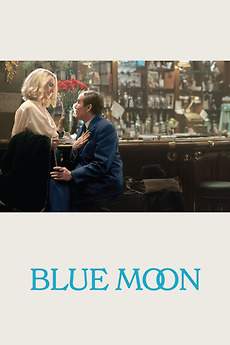
Blue Moon (2025) Reviews & Reception – In‑Depth Opinions on What’s After the Movie
Critical Consensus – How Major Critics View Blue Moon (2025)
The critical landscape for Blue Moon (2025) is a tapestry of admiration for its lyrical ambience and disappointment for its narrative restraint. Time praised the film as “both a modest movie and a dazzling, generous work” (score 80), acknowledging Linklater’s ability to blend restraint with visual generosity. The Seattle Times echoed this sentiment, noting that “watching Blue Moon feels like sitting with smart people in a retro bar, covered in a gentle blanket of cocktail piano,” and highlighted Ethan Hawke’s “beautifully shaded performance, of equal parts bravado and vulnerability” (score 75).
Conversely, The Washington Post critiqued the film for its “somewhat stuffy compendium of literary references and insider‑y bons mots aimed at tickling theater aficionados” (score 63). The review suggests the movie may alienate viewers lacking deep Broadway knowledge, a point reinforced by San Francisco Chronicle’s comment that the “quiet intensity…is at times agonizing.” Even Los Angeles Times admitted the film’s emotional weight, calling Hawke’s depiction of Hart “touchingly diminished” yet authentic (score 90).
Overall, the Metacritic average hovers in the high‑70s, indicating generally favorable reviews, especially among publications that value atmospheric storytelling over conventional plot mechanics. Critics align on a few constants: the film’s single‑location setting functions as a “theatrical stage” (Christian Science Monitor, 90), the script feels “off‑Broadway” (Original‑Cin, 75), and Hawke’s portrayal is the centerpiece of praise.
For readers who want a deeper dive into the film’s critical context, check out the full Blue Moon page on What’s After the Movie – you’ll find quick links to critic scores, a summary page, and a box‑office breakdown that frames the reception in commercial terms.
Audience Reactions – User Reviews Highlight Varied Perspectives
User reviews on Metacritic reveal a polarized but passionate audience. TVJerry (score 6) described the movie as “almost a one‑man show” where Hawke’s monologues dominate, calling it “the less memorable” part of his career despite commendable performance. leestoych (score 7) noted the film’s “heavy dialogue” and “theatre‑play” feel, appreciating Hawke but criticizing Margaret Qualley’s limited impact and the film’s failure to reach “masterpiece” status.
In contrast, Cynthiajoy (score 10) and planktonrules (score 10) hailed the movie as “completely fascinating” and “terrific,” respectively, emphasizing the script’s brilliance and Hawke’s “mesmerizing” delivery. ferguson‑6 (score 8) highlighted the film’s “dialogue‑heavy” nature as a strength, praising its historical depth and Hawke’s ability to expose Hart’s “bitterness and envy.” Even the more measured davidlovesfilm (score 8) described the film as a “sincere look into professional divorce,” underscoring its emotional core.
A recurring theme among the user base is the film’s appeal to musical‑theatre enthusiasts. Sees All and davidlovesfilm both note that knowledge of Rodgers & Hart elevates the viewing experience, while casual viewers may find the pacing “boring” or “not very cinematic.” This split reflects a broader trend: Blue Moon functions as both a love letter to a bygone era and an insulated conversation that rewards insider familiarity.
Readers interested in community‑driven insights can explore the movie wiki, join the quiz page to test their Rodgers & Hart knowledge, or browse movie lists that cluster Blue Moon with other Linklater works. All of these features are seamlessly integrated on the What’s After the Movie platform.
Performance Spotlight – Ethan Hawke’s Portrayal of Lorenz Hart
Ethan Hawke’s turn as Lorenz Hart stands out as the film’s most universally lauded element. Critics and fans alike converge on the notion that Hawke captures “the genius and loneliness” of the lyricist with nuance. The Los Angeles Times (score 90) called it “the most touchingly diminished” performance of Hawke’s career, while The Seattle Times (75) praised the “beautifully shaded” balance of bravado and vulnerability.
User reviewers echo this admiration. planktonrules declared Hawke “simply amazing,” noting his ability to make Hart’s “witty and insightful comments” mesmerize the audience. ferguson‑6 highlighted Hawke’s “absolutely terrific” embodiment of a “poor soul at the end of his time clinging to past successes.” Even the more critical TVJerry conceded that Hawke “does it with admirable skill.”
What makes Hawke’s performance distinct is the way he navigates Hart’s internal contradictions: the lyricist’s brilliance, his hidden gay identity, and his spiraling alcoholism. The Christian Science Monitor observed that the film “captures the connivance and conviviality of theater people…forced and entirely genuine,” a dynamic Hawke portrays through rapid, lyrical dialogue paired with moments of still, reflective silence.
For those who wish to dissect Hawke’s performance scene‑by‑scene, the profiles section on What’s After the Movie offers a detailed breakdown of his career milestones, while the movie collections highlight other standout performances in Linklater’s catalog for comparative study.
Comparison to Other Musical Biopics & Linklater’s Filmography
Blue Moon sits at an interesting crossroads between classic musical biopics like “La La Land” and more introspective works such as “Inside Llewyn Davis.” Unlike the glossy, song‑driven approach of “La La Land,” Linklater opts for a confined, dialogue‑rich setting reminiscent of his earlier collaboration with Richard Kaplow on “Me and Orson Welles.” The Original‑Cin review (75) explicitly notes the script feels “adapted from an off‑Broadway play,” underscoring its theatrical DNA.
Compared to other Linklater films, Blue Moon continues his fascination with time‑bound, character‑driven narratives. Austin Chronicle (78) calls the movie “a testament to Linklater’s continued vitality,” while Time (80) acknowledges its “dazzling, generous work” despite modest ambitions. The director’s signature long takes and naturalistic lighting are evident, as highlighted by the Christian Science Monitor (90) which notes the film “rarely feels stagy” despite the single‑room setting.
In the broader musical‑biopic arena, Blue Moon diverges from the conventional song‑performance format, opting instead for a “conversation over cocktails” model. This aligns it more closely with “The Last Five Years” and “A Star Is Born” (2022 version) in its emphasis on emotional honesty over spectacle. Critics such as The Washington Post (63) criticize the “insider‑y bons mots,” suggesting the film may alienate mainstream audiences—a common risk for period‑specific, industry‑focused narratives.
Fans seeking a comparative perspective can explore the concert‑film category on What’s After the Movie, where Blue Moon is juxtaposed with other music‑centric titles, or dive into the awards page to see how it stacks up against its peers during the 2025 awards season.
What This Means for Movie Lovers – Summary, Takeaways & Next Steps
The reception of Blue Moon (2025) paints a picture of a film that triumphs in its artistic ambition while stumbling in broader accessibility. Critics celebrate its atmospheric depth, Hawke’s magnetic performance, and Linklater’s faithful recreation of 1940s Broadway intrigue. Audiences, particularly those steeped in musical‑theatre history, resonate with its “dialogue‑heavy” charm, whereas casual viewers may find the pacing “boring” or “not very cinematic.”
Key takeaways:
- Critical praise centers on visual mood, Hawke’s nuanced acting, and the film’s ability to feel intimate despite a single‑location constraint.
- User sentiment splits between “terrific” and “forgettable,” hinging largely on the viewer’s familiarity with Rodgers & Hart’s legacy.
- Comparative analysis positions Blue Moon alongside other Linklater works and musical biopics, highlighting its unique blend of theatrical dialogue and cinematic subtlety.
For readers eager to explore more, What’s After the Movie offers a comprehensive suite of tools:
- Dive into the summary of Blue Moon for a quick refresher.
- Check out the movie wiki for deeper production notes.
- Test your knowledge on the quiz and games page with a Lorenz Hart trivia challenge.
- Browse movie collections to watch other Linklater or musical‑theatre titles.
- Visit the dedicated Blue Moon (2025) movie page for streaming options, user ratings, and related articles.
Ready to join the conversation? Head over to the list page to see where Blue Moon ranks among 2025 releases, or explore the box‑office section to gauge its commercial impact. Whether you’re a Broadway aficionado or a casual filmgoer, Blue Moon offers a rich, if niche, cinematic experience worth dissecting.
Outbound Links for Further Reading
| Site | Link |
|---|---|
| IMDb | IMDb |
| TMDB | The Movie Database (TMDB) |
| Wikipedia | Blue Moon (2025 film) – Wikipedia |
| Metacritic | Metacritic – Blue Moon (2025) |
| JustWatch | JustWatch – Blue Moon (2025) streaming guide |
| Box Office Mojo | Box Office Mojo – Blue Moon (2025) |
| Letterboxd | Letterboxd – Blue Moon (2025) |
Continue reading




What's After the Movie?
Not sure whether to stay after the credits? Find out!
Check out our other apps:

SAT Sphere
Build confidence for the Digital SAT.

Mori Atlas
Discover wild places worth protecting.

Luntero
Search smarter for a home in Amsterdam.

Plot Explained
Unravel movie endings and hidden clues.

Pokechamp
Dive into Pokémon data and battle logic.

Driving Theory
Get ready for your European theory test.

Movie Dust
Plan your next cinema trip with ease.

Musemap
Find art and culture as you travel.

Selkobase
Compare credentials before committing.

Local Manual
Turn an unfamiliar country into practical next steps.

Lernavi
Compare school systems before your next move.

GymRoam
Find a workout stop wherever your plans take you.
Explore Our Movie Platform
New Movie Releases (2026)
Famous Movie Actors
Top Film Production Studios
Movie Plot Summaries & Endings
Major Movie Awards & Winners
Best Concert Films & Music Documentaries
Movie Collections and Curated Lists
© 2026 What's After the Movie. All rights reserved.
Privacy Policy