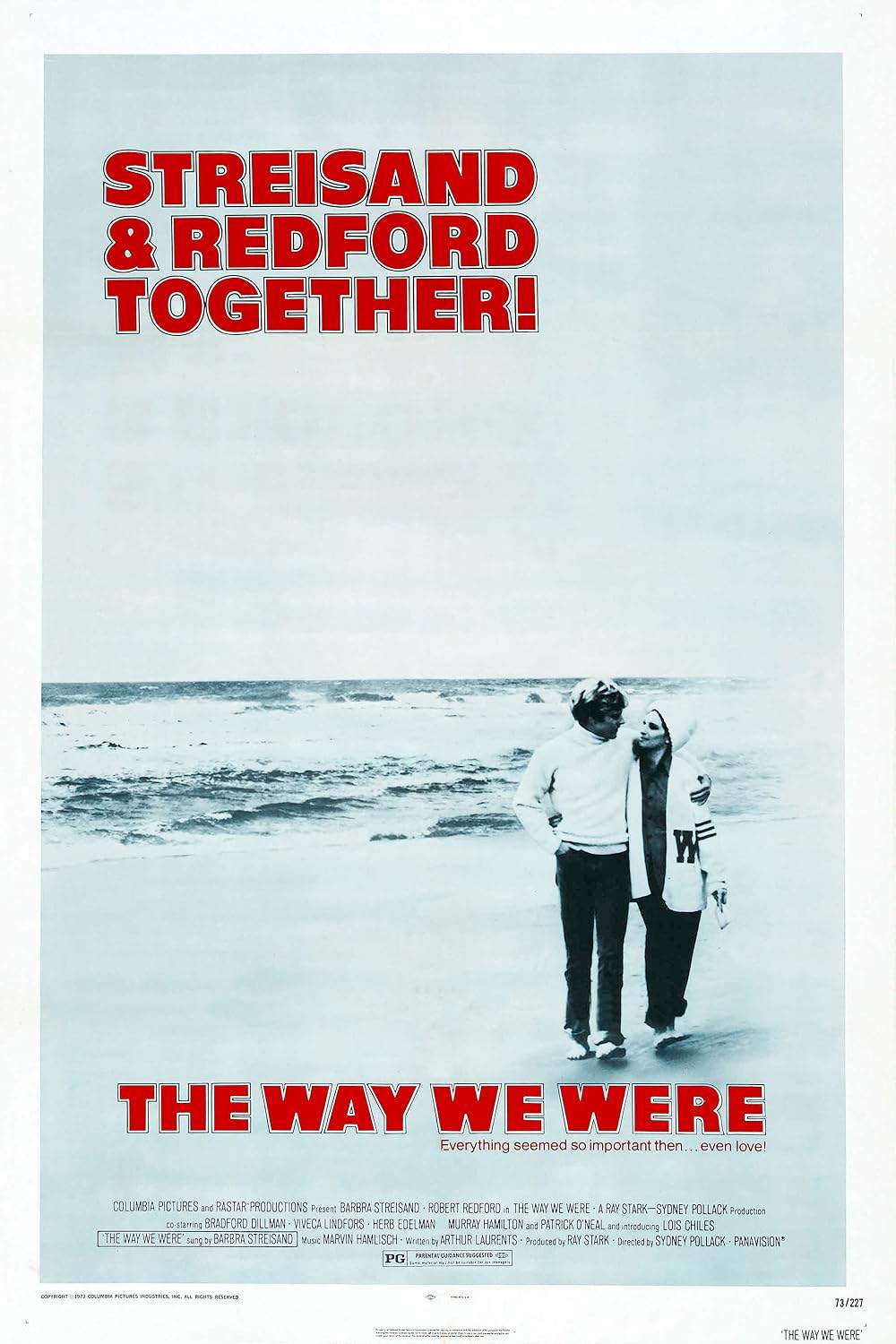
What Is The Way We Were About?
The premise of The Way We Were in 275 words, with nothing given away. The full story follows below.
In the fevered atmosphere of a 1937 university, a young Marxist activist and a charming aspiring writer collide, their worlds as different as the ideas that drive them. Katie Morosky carries the fire of a passionate, socially‑conscious Jewish upbringing, while Hubbell Gardiner embodies a laid‑back, privileged ease that seems almost indifferent to the turmoil around him. Their first encounter, a brief dance at a college prom, sparks a curious magnetism that hints at both conflict and connection.
Fast‑forward to the aftermath of World War II, when the two reunite amid the bustling streets of New York City. The city pulses with returning veterans, burgeoning artistic circles, and the first tremors of a new political paranoia. Katie, still devoted to causes that keep her awake at night, finds herself drawn to the quiet promise of Hubbell’s literary ambitions. Hubbell, meanwhile, wrestles with the lingering shadows of his service and the allure of a career that could lift him out of the ordinary. Their budding romance is set against a backdrop of shifting social expectations, where personal dreams clash with the weight of collective responsibility.
The tone of the story is one of wistful yearning, laced with the subtle tension of two people trying to reconcile love with conviction. The film paints post‑war America in muted yet hopeful colors, allowing moments of quiet intimacy to shine against the broader canvas of political unrest and artistic aspiration. As the couple navigates the delicate balance between public activism and private devotion, the audience senses that their bond will be tested by forces both external and internal, leaving a lingering question of whether love can truly bridge such divergent paths.
What Happens in The Way We Were?
The complete story of The Way We Were, from the first scene to the last, in 384 words (about 2 minutes). Spoilers throughout.
Spoilers ahead
In the year 1937, the lives of Katie Morosky and Hubbell Gardiner intersect, bringing together two opposing worlds. Katie, a passionate Marxist Jew, stands firm in her anti-war beliefs, while Hubbell, a laid-back WASP, exemplifies the essence of indifference. Their first meeting at college ignites a peculiar attraction: Katie finds herself mesmerized by Hubbell’s effortless charm and literary skill, while Hubbell is intrigued by Katie’s steadfast principles and relentless conviction. As they part ways after a brief dance at prom, the groundwork for a complicated bond is established.
Decades later, as World War II comes to an end, their paths cross again in New York City. Now juggling various jobs, Katie is fueled by her persistent commitment to social justice. Conversely, Hubbell returns from service in the South Pacific, having developed a deeper understanding of the fragility of life. Despite their differences, the two feel an undeniable pull toward one another, momentarily setting aside their divergent views amid shared passion.
As time unfolds, Katie and Hubbell traverse the challenging landscape of post-war America. Though Hubbell’s naval experience has transitioned into a promising writing career, Katie becomes increasingly troubled by his growing detachment from political matters and social issues. His friends’ casual remarks regarding the passing of President Franklin D. Roosevelt further exacerbate the rift, marking their first significant conflict.
Against the odds, the couple reconciles, nurturing their relationship into a romance that eventually leads to marriage. Yet, as Hubbell’s literary success opens doors with a prestigious studio contract in Malibu, Katie’s anxieties about his choice to adapt his novel for film begin to surface. Her concerns are not unfounded, as the Hollywood blacklist gains momentum, casting a long shadow over their lives amid growing McCarthyism.
With Katie’s political activism surging, her participation in protests and demonstrations puts significant strain on their marriage. Hubbell, weary from the relentless pressures and struggling to meet Katie’s expectations, grows increasingly aloof. The birth of their daughter only heightens the tensions, ultimately culminating in their divorce.
Years later, destiny reunites the couple outside the Plaza Hotel in New York City, where Katie is protesting against the escalation of nuclear arms. In a poignant and bittersweet goodbye, it becomes evident that while the wounds of their past still linger, they have evolved into a deeper understanding of one another’s complexities.
The Way We Were Timeline: Every Key Event in Order
13 key events in the order they happen, from “First Encounter at College” to “A Bitter Farewell”. 5 events name a place, across 3 locations.
- 1
First Encounter at College
In 1937, Katie Morosky and Hubbell Gardiner meet for the first time at college. Their interaction during a brief dance at prom establishes an intriguing attraction between the passionate Marxist Jew and the laid-back WASP, despite their starkly contrasting worldviews.
When:1937
- 2
World War II Ends
As World War II concludes, the lives of Katie and Hubbell intersect once more in New York City. Katie has been tirelessly advocating for social justice while Hubbell returns from service in the South Pacific, both having changed significantly since their college years.
When:1945 Where:New York City
- 3
Momentary Connection
Despite their differing ideologies, Katie and Hubbell share a passionate moment upon reuniting. Their previous attraction rekindles, leading them to temporarily set aside their political divides to explore their growing bond.
Where:New York City
- 4
Post-war Challenges
Navigating the complexities of post-war America, Katie becomes increasingly concerned about Hubbell's detachment from important social issues. Hubbell's experiences in the navy have shaped his perspective, but he finds it difficult to relate to Katie's fervent activism.
- 5
Significant Conflict
Their differing priorities come to a head when Hubbell’s friends make light of the passing of President Franklin D. Roosevelt. This moment highlights their first significant conflict, pushing the couple to confront the growing rift in their relationship as they grapple with their beliefs.
- 6
Reconciliation
Despite their challenges, Katie and Hubbell work towards reconciliation, finding ways to nurture their romance. As they deepen their relationship, their contrasting views begin to coexist more harmoniously, and they ultimately decide to marry.
- 7
Hubbell's Literary Success
As Hubbell's writing career flourishes, he receives a prestigious studio contract in Malibu. This opportunity brings excitement but also raises concerns for Katie as she fears the impact of Hollywood's changing landscape on their lives.
Where:Malibu
- 8
Hollywood Blacklist Concerns
Katie's anxieties intensify regarding Hubbell’s decision to adapt his novel for film amid the looming Hollywood blacklist and the rise of McCarthyism. Her apprehensions highlight the tension between their personal and political lives.
- 9
Strain from Activism
Katie's commitment to political activism leads her to participate in various protests, which puts a significant strain on her marriage. As Hubbell grows weary of the constant pressure, the couple faces increasing tension and misunderstandings.
- 10
Birth of Their Daughter
The arrival of their daughter amplifies the existing tensions between Katie and Hubbell. As they grapple with new responsibilities and differing values, their relationship takes a toll that eventually becomes unmanageable.
Show the other 3 events of The Way We Were Hide the last 3 events
- 11
Divorce
Facing insurmountable differences, Katie and Hubbell decide to divorce. This decision marks a significant and painful chapter in their lives, as they confront the dreams and aspirations that now lie shattered.
- 12
Reunion at the Plaza Hotel
Years later, Katie and Hubbell cross paths outside the Plaza Hotel in New York City. This chance encounter reveals the depth of their unresolved emotions and the changes they have undergone over the years.
Where:Plaza Hotel, New York City
- 13
A Bitter Farewell
During their meeting, Katie is engaged in protesting against nuclear arms escalation. Their conversation becomes a bittersweet goodbye, symbolizing that while their past wounds remain, there is a new understanding of each other's complexities.
Where:Plaza Hotel, New York City
Who Are the Main Characters in The Way We Were?
2 characters, among them Katie Morosky (Barbra Streisand) and Hubbell Gardiner (Robert Redford): who each one is and the part they play in the story. Every profile links to the actor’s page.
-

Katie Morosky (Barbra Streisand)
Played by Barbra Streisand
Katie Morosky is a passionate and principled character who stands resolutely for her beliefs, representing a voice of social activism and justice. Her strong Marxist convictions often put her at odds with the more carefree and indifferent Hubbell. Despite her vulnerabilities, Katie's unwavering perseverance and commitment to social causes are central to her character arc.
- 👩🎤 Activist
- 📚 Intellectual
- 💔 Complex
-

Hubbell Gardiner (Robert Redford)
Played by Robert Redford
Hubbell Gardiner is depicted as a charming and laid-back individual whose indifference to political matters contrasts sharply with Katie's fervor. His naval experiences during the war lead him to a promising writing career, yet his detachment from social issues strains his relationship with Katie. Over time, Hubbell's inner conflicts reflect the tension between personal aspirations and romantic commitments.
- ✍️ Writer
- 🎭 Charming
- 🏖️ Indifferent
Where and When Is The Way We Were Set?
The Way We Were is set in New York City, Malibu, South Pacific and Plaza Hotel (1937, World War II, Post-war America). Here is why the time and place matter to the story.
When
1937, World War II, Post-war America
Set against the backdrop of 1937, the film captures the shifting dynamics during World War II and extends into post-war America. This time period is marked by social upheaval, changing political landscapes, and the cultural impacts of events such as the end of the war and the onset of McCarthyism. The characters navigate through these tumultuous times, revealing their personal growth and the influence of historical events on their relationship.
Where
New York City, Malibu, South Pacific, Plaza Hotel
The movie spans several notable locations, including New York City, known for its vibrant cultural life and significant historical events, and Malibu, famous for its stunning coastal views and Hollywood allure. The South Pacific represents a backdrop of wartime experiences, leaving a lasting impact on the characters' lives. The Plaza Hotel serves as a poignant symbol of their complex reunion, highlighting the intersection of personal and political struggles.
- 🌆 City
- 🌊 Coast
- 🏨 Hotel
What Are the Themes of The Way We Were?
3 ideas the story keeps returning to, among them Love & Loss, Social Justice and Hollywood & Fame.
-
01
Love & Loss
The central theme of the film revolves around the complexities of love interwoven with loss. Katie and Hubbell's relationship evolves through affection, conflict, and ultimately separation, reflecting the challenges faced by couples amidst changing societal norms. Their journey illustrates how love can be both a unifying force and a source of profound heartache.
-
02
Social Justice
Katie's character embodies the theme of social justice and activism, contrasting sharply with Hubbell's indifference. Her passionate involvement in political causes highlights the era's sociopolitical tensions, demonstrating the struggles individuals face when their personal beliefs clash with their relationships. This theme prompts reflections on the sacrifices made in the pursuit of justice.
-
03
Hollywood & Fame
The narrative also explores the allure and pitfalls of Hollywood, particularly through Hubbell's literary success and the challenges of adapting work for film. The encroaching influence of McCarthyism and the Hollywood blacklist serve as a cautionary backdrop, revealing the vulnerabilities of artists amid societal pressure and shifting values.
What Kind of Film Is The Way We Were?
Bittersweet in tone, with slow pacing and a moderate story, going by the plot summary.
- Tone
- Bittersweet
- Pacing
- Slow
- Story
- Moderate
- Intensity
- Medium
- Ending
- Bittersweet
A sweeping, melancholic romance that traces the passionate yet fraught relationship between two opposites over decades, evoking a profound sense of nostalgic reflection and the painful beauty of what could have been.
- nostalgic
- passionate
- melancholic
- reflective
- romantic
- tense
- star-crossed lovers
- political activism
- class differences
- dysfunctional marriage
Content notes: political persecution.
Quiz
How well do you remember The Way We Were? Test yourself on the story.