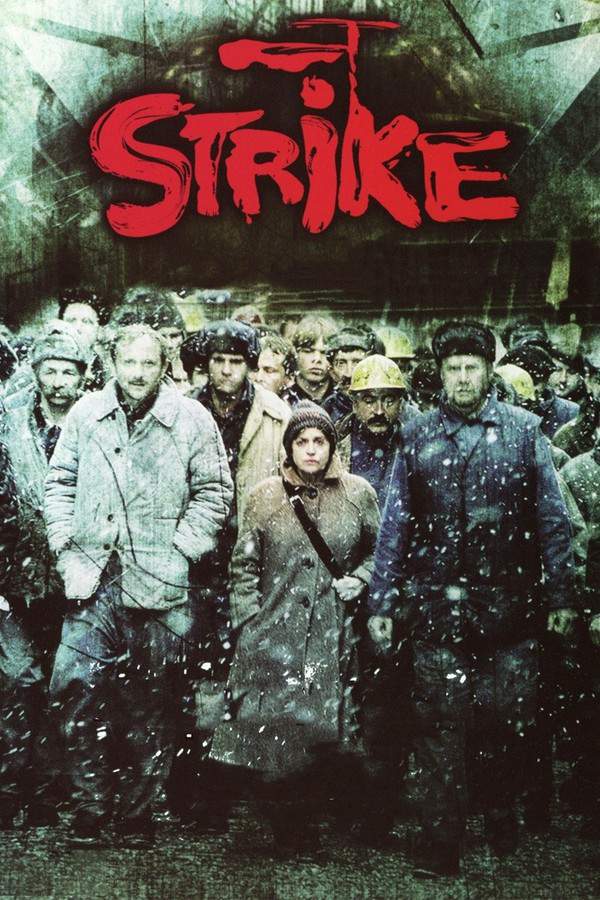
What Is Strike About?
The premise of Strike in 310 words, with nothing given away. The full story follows below.
In the gritty world of a 1970s Polish shipyard, the daily rhythm is dictated by relentless production quotas and the unspoken weight of state authority. The film opens with the hum of massive cranes and the clatter of welders, a place where personal ambition is constantly measured against collective demand. Against this backdrop, the story follows a determined woman who has risen from humble beginnings to become a respected figure among her peers, embodying both the pride of skilled labor and the quiet frustration of an ever‑tightening system.
Agnieszka Kowalska is introduced as a diligent welder whose reputation for hard work earns her official accolades, yet she feels an inner pull toward something more equitable. When a routine meeting turns into a clash over basic workplace comforts, she steps forward, offering a modest yet potent act of solidarity that hints at a deeper well of courage. Her interactions with coworkers, including the earnest crane operator Mateusz and her supportive neighbor Kazimierz, reveal a network of personal bonds that sustain her resolve, while the stern presence of party official Sobecki underscores the ever‑present tension between individual conscience and institutional pressure.
The tone of the film is both intimate and expansive, blending the earthy texture of shipyard life with a lingering sense of historic possibility. Through careful framing and a muted color palette, the audience feels the claustrophobic atmosphere of the yard and the simmering undercurrent of dissent. Agnieszka’s quiet defiance, expressed through everyday gestures and steadfast moral choices, begins to ripple outward, suggesting that even the smallest acts can inspire collective awakening.
As the narrative unfolds, it becomes a tribute to an unsung heroine whose perseverance quietly fuels a larger movement for freedom. The film balances personal drama with a broader social canvas, inviting viewers to contemplate how ordinary individuals can become catalysts for change in a world fraught with oppression.
What Happens in Strike?
The complete story of Strike, from the first scene to the last, in 647 words (about 3 minutes). Spoilers throughout.
Spoilers ahead
In the Lenin Shipyard in Gdańsk, a diligent welder named Agnieszka Kowalska earns steady respect as she is repeatedly honored as an “activist of the Year” for being a stellar superquota worker. Marked by this tenth victory, she receives a television and offers a grateful speech about coming to the shipyard in 1950 with nothing and now having a skilled trade and a home. Yet the celebration is complicated by the whispers of her colleagues, especially the other women workers, who are not impressed by how hard she has pushed herself to meet the quotas demanded by the Party.
During a meeting of Party and union officials, Agnieszka pushes for a longer lunch break, but the officials refuse to budge, with Sobecki leading the resistance. Frustrated by the callous attitude toward grueling working conditions, she quietly organizes a simple act of solidarity—bringing soup to her exhausted coworkers so they have time to eat. When Sobecki confronts her, she does not back down and even mocks him after his threat to report her.
Determined to change her lot, Agnieszka gambles with a pay cut and swaps roles with Mateusz, a crane operator. She immerses herself in learning to read and write, and she grows close to her neighbor, Kazimierz. Her perseverance pays off when she passes the exam and becomes the first female crane operator at the yard.
Months pass, and a devastating diagnosis changes everything: kidney cancer. Grief and fear loom as she worries about her young son, Krystian. In time, Kazimierz pledges to raise Krystian as his own, and he and Agnieszka marry. On their honeymoon, tragedy strikes again when Kazimierz dies of a heart attack, leaving her a widow.
As Agnieszka navigates new pain and responsibilities, a Party official pressures her to push the workers harder to meet deadlines. She refuses, recognizing the toll of constant overtime on her colleagues. The strain culminates in a catastrophic fire caused by exhaustion, killing 21 workers, including her friend Mateusz. In the aftermath, the shipyard director withholds pensions for surviving dependents and even fabricates timecards to hide the excessive overtime. He offers Agnieszka overtime pay only if she stops speaking out about the forged records, a demand she rejects, renouncing the man she calls Bochnan.
As Krystian grows older, he shows promise with a girlfriend and plans to pursue a polytechnic, but Agnieszka’s defiance begins to affect her family’s standing. It is revealed that Sobecki is in fact Krystian’s father. In a moment of desperation, Krystian seeks a chance to prove himself and enlists, hoping to secure a path to higher education afterward.
The story moves to the turbulent strikes of 1970, when workers are crushed by violence. Agnieszka is arrested, beaten, and returns home to find her son wearing the uniform of those who had mistreated her. Krystian reveals he knows the truth about his parentage, and she recounts the arc of her relationship with Sobecki.
Fast forward to 1978, when Sobecki’s secretary invites Agnieszka to join an underground newspaper, Robotnik. The election of Pope John Paul II—a fellow Pole—becomes a turning point as Agnieszka and others begin to disseminate newsletters that reveal what is really happening in the shipyards. Officials respond by isolating her during shifts and later firing her on a charge of misplacing her late husband’s trumpet. The firing ignites a strike wave, spreading to other shipyards and to streetcar drivers who walk off the job in solidarity.
Negotiations yield limited gains for the Lenin shipyard, with Leszek offering narrow concessions. Yet Agnieszka rises to deliver a forceful speech that motivates the workers to press their demands further, rallying them to continue striking in solidarity with others who had helped them win concessions. The archival moment of the 21 Accords (1980) and the birth of Solidarity unfold on screen, signaling a wider awakening that extends beyond the yard and into a broader workers’ movement.
Strike Timeline: Every Key Event in Order
15 key events in the order they happen, from “Award ceremony and 1950 arrival” to “Solidarity is born”. 15 events name a place, across 10 locations.
- 1
Award ceremony and 1950 arrival
Agnieszka Kowalska is honored as 'activist of the Year' at the Lenin Shipyard for being a top quota worker. She receives a television prize and delivers a speech about coming to the shipyard in 1950 with nothing, and now she has a profession and a home. The moment marks a high point in her early recognition and public standing.
When:1950 Where:Lenin Shipyard, Gdańsk
- 2
Colleagues challenge her after the ceremony
Following the ceremony, fellow women workers confront her for pushing so hard and for seeming to ignore the party quotas. The confrontation exposes the strain between individual ambition and collective control within the shipyard. It foreshadows the friction that will define her career.
When:1950s Where:Lenin Shipyard, Gdańsk
- 3
Lunch break debate and soup initiative
In a meeting of Party and union members, Agnieszka argues for a longer lunch break, but officials refuse to budge. Sobecki confronts her in a tense exchange, illustrating how authorities police even small worker concessions. To help her colleagues, she organizes bringing soup so workers can eat without rushing.
When:1950s Where:Shipyard meeting room, Lenin Shipyard
- 4
Becomes first female crane operator after learning
She decides to take a pay cut and switch jobs with Mateusz, the crane operator. She learns to read and write, passes the exam, and becomes the first female crane operator at the shipyard. She also grows closer to her neighbor Kazimierz, who supports her ambitions.
When:late 1950s Where:Lenin Shipyard, Gdańsk
- 5
Diagnosis and family plan
A few months after qualifying, Agnieszka is diagnosed with kidney cancer. She is distraught about what will happen to her young son Krystian. Kazimierz agrees to raise Krystian as his own son and soon marries Agnieszka.
When:early 1960s Where:Gdańsk, family home
- 6
Husband dies on honeymoon
During their honeymoon, Kazimierz dies suddenly of a heart attack, leaving Agnieszka a widow. After this, a Party official pushes to push workers harder despite exhaustion, and Agnieszka refuses. The mounting tension culminates in a deadly fire at the shipyard, where she does what she can to help pull colleagues from the blaze.
When:early 1960s Where:Lenin Shipyard, Gdańsk
- 7
Overtime pressure and deadly fire
The shipyard's overwork culture leads to an accidental fire in which 21 workers are killed. Agnieszka attempts to rescue colleagues with her crane, underscoring the human cost of the relentless push for speed. The tragedy exposes the flaws in the system that kept pushing workers beyond safe limits.
When:mid-1960s Where:Lenin Shipyard, Gdańsk
- 8
Pensions blocked and forged timecards
Following the disaster, the shipyard director withholds pensions for surviving dependents while the union forges timecards to hide the extreme overtime. They offer Agnieszka overtime payments if she ceases speaking about the forged timecards. She renounces Bochnan in anger.
When:mid-1960s Where:Shipyard offices
- 9
Krystian learns his true paternity
Krystian grows up, has a girlfriend, and is doing well enough to aim for a polytechnic. It is revealed that Sobecki is Krystian’s father, a fact Agnieszka confronts in his office. He agrees to help only if he can meet his son.
When:late 1960s Where:Agnieszka's home and Sobecki's office
- 10
Krystian enlists for a better future
Out of desperation, Krystian enlists so that he can eventually go to a polytechnic. This decision reflects the pressures on families during the era and the hope for a more stable future through education or military service.
When:late 1960s Where:Recruitment office
Show the other 5 events of Strike Hide the last 5 events
- 11
1970 strikes and personal cost
The 1970 strikes unfold with worker deaths, and Agnieszka is arrested and beaten. She returns home to find Krystian wearing the uniform of those who had just mistreated her. Krystian reveals he knows about his true father, deepening the family conflict.
When:1970 Where:Lenin Shipyard and home
- 12
Underground press and pope election
In 1978, Sobecki's secretary recruits Agnieszka to Robotnik, an underground newspaper. The election of Pope John Paul II energizes workers and heightens shipyard politics. Agnieszka helps write and distribute newsletters to educate workers about conditions.
When:1978 Where:Lenin Shipyard
- 13
Firing sparks wider strikes
Shipyard officials place her on lockdown to stop distribution of underground literature and fire her for allegedly stealing her deceased husband’s trumpet. The firing triggers a wave of strikes across Lenin Shipyard and spreads to other workplaces, signaling a broader labor movement.
When:1978-79 Where:Lenin Shipyard
- 14
Solidarity grows and concessions begin
Strikes spread to other shipyards and transport workers, pressuring authorities to negotiate. Agnieszka gives a speech urging continued solidarity, helping to sustain the momentum for workers’ rights. Archive footage foreshadows the broader changes to come.
When:1979-1980 Where:Lenin Shipyard and wider Poland
- 15
Solidarity is born
The labor actions culminate in the emergence of Solidarity, a nationwide workers’ movement that changes Poland’s political landscape. The events spotlight the power of collective action that began with one woman at the Lenin Shipyard.
When:1980 Where:Poland-wide
Who Are the Main Characters in Strike?
6 characters, among them Agnieszka Kowalska, Mateusz and Kazimierz: who each one is and the part they play in the story.
- AK
Agnieszka Kowalska
A hardworking welder at the Lenin Shipyard who earns acclaim as an activist and, later, becomes the first female crane operator after switching jobs and learning to read and write. She embodies resilience and defiance against exhausting quotas and bureaucratic indifference. Her personal losses— cancer, the death of her husband and later sabotage by authorities—shape her resolve.
- 💪 Protagonist
- 👷♀️ Engineer
- 🧭 Determined
- M
Mateusz
A crane operator and Agnieszka's friend whose difficulties with the exhausting quotas culminate in a fatal fire. His death deepens the film’s critique of unsafe working conditions and the human cost of industrial pressure.
- 🛡️ Friend
- ⚒️ Worker
- 💔 Tragedy
- K
Kazimierz
Agnieszka’s neighbor who becomes a partner and later marries her. He supports her ambition and shares the burden of family life, stepping in to raise her son when tragedy strikes.
- 👨👩👦 Family
- 💡 Mentor
- S
Sobecki
A Party official who resists Agnieszka’s reforms and denies concessions. He is Krystian’s father, complicating political loyalty with personal ties.
- 🏛️ Official
- ⚖️ Oppression
- K
Krystian
Agnieszka's son who grows up amid the shipyard politics, has a girlfriend, and aspires to Polytechnic. He eventually enlists to secure a path to education.
- 👦 Son
- 🎓 Student
- L
Leszek
The shipyard director who agrees to compromises to quell the strikes, reflecting the balancing act between management and the workers' demands.
- 🏛️ Director
- 🗳️ Mediator
Where and When Is Strike Set?
Strike is set in Lenin Shipyard, Gdańsk and Poland (1950s–1980s). Here is why the time and place matter to the story.
When
1950s–1980s
The story spans several decades of postwar Poland under communist rule. It begins in the 1950s with labor politics, includes the 1970s strikes, and culminates in the rise of Solidarity around 1980, intertwining personal lives with historic political shifts.
Where
Lenin Shipyard, Gdańsk, Poland
The Lenin Shipyard in Gdańsk is a major shipbuilding complex and a symbol of Polish worker movements. It is known for its heavy industry, stringent quotas, and the resilience of workers who built ships while fighting for better conditions.
- 🏭 Industrial
- 👷♀️ Female workers
- 🛠️ Labor rights
What Are the Themes of Strike?
4 ideas the story keeps returning to, among them Solidarity, Empowerment and Authority.
-
01
Solidarity
The film centers on workers uniting against excessive overtime, unsafe conditions, and oppressive management. It traces how Agnieszka's actions to support colleagues—like bringing soup to workers—spur collective action. Underground networks organize resistance and sustain momentum. Strikes and negotiations reveal the power of solidarity to win concessions and reshape shipyard life.
-
02
Empowerment
Agnieszka's journey from welder to crane operator marks a breakthrough for a woman in a male-dominated trade. She pursues literacy and training to secure a new role and financial independence. Her defiance of bureaucrats and willingness to risk criticism highlight the transformative potential of empowerment. The arc shows education as a tool to overcome barriers within a rigid industrial system.
-
03
Authority
Officials and managers wield quotas and punishment to keep pace with production. The film exposes forged timecards, threatened layoffs, and the suppression of dissent. Agnieszka's stand against such power demonstrates the moral costs of blindly following orders. The tension between authority and workers underpins much of the conflict across decades.
-
04
Historical memory
The story connects intimate struggles to major national events. From the early postwar era to the 1980 strikes and Solidarity, personal courage echoes through history. The film presents real moments like the 21 Accords to show how individual actions can influence a country's political trajectory. Archive-style framing anchors the narrative in a broader social movement.
What Kind of Film Is Strike?
Hopeful in tone, with steady pacing and a moderate story, going by the plot summary.
- Tone
- Hopeful
- Pacing
- Steady
- Story
- Moderate
- Intensity
- High
- Ending
- Happy
A heavy yet inspiring historical drama that follows a woman's determined struggle against oppression, marked by profound personal tragedy but ultimately culminating in a hopeful victory for collective action.
- hopeful
- determined
- gritty
- tragic
- inspiring
- somber
- political struggle
- workers' rights
- personal loss
- social justice
Content notes: workplace death, political violence, beating, grief.
Quiz
How well do you remember Strike? Test yourself on the story.