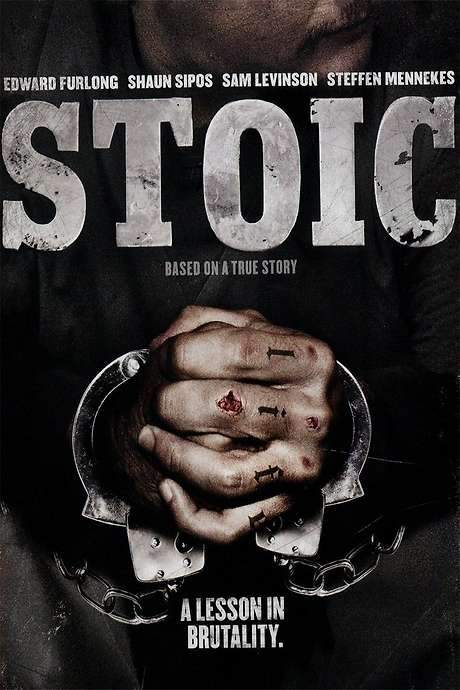
What Is Stoic About?
The premise of Stoic in 293 words, with nothing given away. The full story follows below.
In a stark, cramped cell block where time is measured by the clink of metal doors and the stale scent of cigarettes, three men serving brief, non‑violent sentences learn to navigate the unspoken hierarchy of prison life. Peter Thompson carries a veneer of quiet calculation, while Harry Katish exudes a restless, almost volatile energy that keeps his surroundings on edge. Jack Ulrich, the quietest of the trio, watches closely, his silence speaking louder than words. Their routine is punctuated by small wagers and idle chatter, a fragile camaraderie forged under the watchful eyes of guards who never see what truly transpires behind the walls.
Their world tilts when a fourth inmate, Mitch Palmer, joins their cell. Mitch, fresh from a short stint for vagrancy, quickly becomes the focus of a heated poker game that turns ordinary stakes into something far more personal. The card‑play, initially a harmless diversion, sparks a shift in power dynamics, exposing latent aggression and a desperate need for control that each man harbors. As the laughter fades, an unsettling tension settles, hinting at actions that could easily spiral beyond the confines of a simple game.
The film’s tone is gritty and claustrophobic, dwelling in the oppressive silence of institutional life while letting the characters’ inner turmoil bleed through cracked concrete and flickering lights. A palpable sense of dread builds around the trio’s attempts to hide what they have set in motion, suggesting that the consequences of a moment’s recklessness can echo far louder than the walls themselves. With a focus on psychological strain and the fragile alliances that form under duress, the story invites viewers to wonder how far ordinary men will go when the rules of the game change and the price of secrecy becomes their only option.
What Happens in Stoic?
The complete story of Stoic, from the first scene to the last, in 725 words (about 3 minutes). Spoilers throughout. Names in the text link to 4 cast member pages.
Spoilers ahead
The film unfolds through a series of flashbacks as three inmates — Peter Thompson, Harry Katish, and Jack Ulrich — are interviewed about the apparent suicide of their cellmate Mitch Palmer. Across these interviews, the audience learns the grim truth: Mitch Palmer was subjected to torture and humiliation at the hands of his fellow inmates long before his death, and the three men confess their roles in the escalating abuse.
The story begins with the four cellmates sharing a game of poker for cigarettes, trading stories from their lives before confinement. Mitch wins the round and dares to stake his entire cigarette stash on one more game. The bet flips the dynamic: the loser must eat an entire tube of toothpaste. Mitch loses, and the others press him to fulfill the bizarre punishment. What starts as coercion soon spirals into a chain of coercive cruelties.
Harry, who is in for armed robbery, stages a mock wash-up and wraps a towel around a bar of soap, then targets Mitch with a brutal soap beatdown while the others restrain him. Mitch’s stomach turns as the attackers force him to swallow the toothpaste. Peter, feigning concern, offers a “special drink”—water flavored with salt and pepper—only to threaten Mitch with renewed discipline if he resists. Mitch, wary and wary of the others, is pressured to drink, but he pushes the cup away, and the taunting continues.
The circle of torment deepens when Peter proposes another drink: this time it is tainted with urine and feces from the toilet. Mitch struggles, choking and vomiting as the others loom over him, counting down the seconds and pushing him to comply. The brutality escalates further when Jack, enraged by the violence, physically beats Mitch and belittles him with humiliating commands, insisting that Mitch lick up his own vomit. Mitch’s pleas to stop are met with cold indifference as the others watch, indifferent to the pain.
One of the most shocking moments comes next as the group’s cruelty turns sexual and violent. After a late-night moment where Mitch tries to signal for help via the prison’s emergency intercom, Peter lies to the guards, claiming it was an accident. The trio presses Mitch and violence intensifies; Jack becomes openly enraged that Mitch pressed the emergency button, while Harry stares with a cold gaze and participates in the abuse. The moments grow darker as Harry grabs a mop handle and, in a brutal act, uses it in a sexual assault, then forces the bloodied implement into Mitch’s mouth. Mitch’s state deteriorates into catatonia as the scene plays out, and Peter, plagued by remorse, wavers between guilt and fear.
From this point, the group hatches a chilling rationale: Mitch’s death could, in their minds, lessen their own sentences. They recount an urban myth that the psychological trauma inflicted on fellow inmates can influence sentencing when a cellmate commits suicide. The plan is cruelly clear: Mitch must hang himself. They try first with a TV cord, propping Mitch against a barred window, but the cord snaps under the weight. They try again with Mitch’s bedsheets, lifting him onto a garbage can so he can take a final cigarette. When Harry finally delivers the decisive kick that ends Mitch’s life, Peter is left in tears, while Jack and Harry watch the television as if nothing happened.
The morning after the death, the three cellmates stage a scene for the interviews, claiming to be moved by the tragedy, though Peter remains quietly silent. Harry denies any real involvement, and Jack offers a remorseful confession: he doesn’t fully understand why he acted the way he did and longs to wash his hands clean. Peter, however, is engulfed in tears, insisting the hanging was his idea and that Mitch did not deserve the abuse he endured.
In the closing text, the film reveals the grim consequences of their actions: each of the three cellmates, originally serving 2- to 3-year sentences, receives an additional 8 to 15 years for their roles in Mitch Palmer’s death. Mitch, by contrast, had been serving a 6-month sentence for vagrancy and resisting arrest. The final frames show a fleeting, uneasy sense of connection as Mitch helps Peter perform proper pushups, hinting at a fragile, troubled bond formed in the worst of circumstances.
remember who made the drink
enough of this shit
“already a part of this”
Stoic Timeline: Every Key Event in Order
11 key events in the order they happen, from “Poker game and the cruel bet” to “Aftermath and the sentence”. Every event takes place in Prison cell.
- 1
Poker game and the cruel bet
Four inmates gather in their cell to play poker for cigarettes. Mitch wins all the cigarettes from his cellmates, setting a harsh bet for the loser. The loser must eat an entire tube of toothpaste, foreshadowing the brutality to come.
When:Evening Where:Prison cell
- 2
First torture: forced toothpaste punishment
As the game ends, the cellmates escalate the bet by forcing Mitch to honor it. Harry pretends to wash up, wraps a towel around a bar of soap, and begins to scream and hit Mitch while the others restrain him. They compel him to eat the entire toothpaste despite his pleas.
When:Night Where:Prison cell
- 3
The false care and a 'special' drink
Peter pretends to be concerned and promises to make Mitch a 'special drink' to make him feel better. He prepares a mixture of water, salt, and pepper, while the others threaten Mitch to drink it. Mitch resists, but the cellmates insist he has already consumed it, heightening the coercion.
When:Late night Where:Prison cell
- 4
A worse drink: urine and feces
Peter escalates by making a second drink from water laced with urine and feces from the toilet. Mitch chokes and vomits as the others countdown, insisting he must drink it. The humiliation deepens as his stomach rebels against the brutal attempt.
When:Late night Where:Prison cell
- 5
Violent beatings and degradation
Jack violently beats Mitch, belittling him and forcing him to lick up his vomit with his tongue. Peter and Harry react apathetically, watching as Mitch crawls to the mess and continues to suffer. The cruelty becomes routine in the cell.
When:Late night Where:Prison cell
- 6
Emergency button and collapse
Mitch, desperate for help, presses the emergency intercom button. The cellmates drag him to the wall and silence him as Peter deceptively tells the guards he accidentally bumped the button. They beat him again and urinate in a cup, pouring it down Mitch’s throat.
When:Night Where:Prison cell
- 7
Rape and further humiliation
Jack rapes Mitch, and Peter, witnessing remorse, is pressured by the others not to speak. Harry grows even more brutal, grabbing a mop handle and sodomizing Mitch with it, the blood and feces staining the scene. Mitch sinks into catatonia as Peter shakes with remorse.
When:Night Where:Prison cell
- 8
The plan to end Mitch’s life
Peter mentions an urban myth that a cellmate who dies by suicide will reduce the survivor’s sentence. The three agree Mitch must hang himself to seal their fates. They attempt the first method using a TV cord, but the cord breaks and the plan fails.
When:Night Where:Prison cell
- 9
Second attempt: bedsheets and the fatal kick
They try again with Mitch’s bedsheets, propping him against the barred window and standing him on a garbage can, allowing him one final cigarette. Harry kicks the garbage can away, and Mitch dies as the others watch indifferently.
When:Night Where:Prison cell
- 10
Morning after and the façade of remorse
The next morning, the trio hits the emergency button and pretends to be upset, but Peter remains silent. Harry denies involvement, Jack admits guilt and says he’s ashamed, and Peter remains tearful and fearful of exposure.
When:Morning Where:Prison cell
- 11
Aftermath and the sentence
Text reveals the three cellmates received an additional 8 to 15 years for their role, while Mitch Palmer was technically serving only a 6-month sentence for vagrancy and resisting arrest. The closing frames show Mitch helping Peter do proper pushups and bonding with his fellow cellmates, offering a grim juxtaposition to the killings.
When:Post-event Where:Prison cell
Who Are the Main Characters in Stoic?
4 characters, among them Mitch Palmer (Shaun Sipos), Peter Thompson (Sam Levinson) and Harry Katish (Edward Furlong): who each one is and the part they play in the story. Every profile links to the actor’s page.
-

Mitch Palmer (Shaun Sipos)
Played by Shaun Sipos
Mitch is the fourth cellmate who becomes the focal point of the group's cruelty. He endures escalating humiliation and violence within the cell, illustrating the fragility of a person under extreme peer pressure. His eventual death acts as a pivot that exposes the moral decay of the others and invites reflection on punishment and solidarity.
- 💔 Victim
- 🕯️ Traumatized
-

Peter Thompson (Sam Levinson)
Played by Sam Levinson
Peter is a low-level drug dealer who schemes to manipulate Mitch and the others, presenting himself as caring while orchestrating dangerous acts. He shows moments of remorse during the interviews, revealing a conflict between self-preservation and moral responsibility. His role probes how fear and self-interest can drive collective cruelty.
- 🧠 Morality
- 🧪 Deception
- 🤝 Peer-pressure
-

Harry Katish (Edward Furlong)
Played by Edward Furlong
Harry, imprisoned for armed robbery, participates in brutal acts with apparent indifference, serving as a catalyst for the group's violence. He rarely shows empathy and remains emotionally detached, reflecting the cold power dynamics of the cell. His behavior illustrates how cruelty can be normalized when it is shared among peers.
- 🔥 Violent
- 😐 Indifferent
- JU
Jack Ulrich (Steffen Mennekes)
Played by Steffen Mennekes
Jack, jailed for arson, is impulsively aggressive and openly belittling toward Mitch, escalating the torture. He demonstrates bursts of rage but also experiences visible remorse in the interviews, revealing a stormy inner conflict. His actions exemplify how anger can fuel brutality in a confined crowd.
- 💥 Aggression
- ⚖️ Guilt
Where and When Is Stoic Set?
Stoic is set in Prison cell and Prison block. Here is why the place matters to the story.
Where
Prison cell, Prison block
Set within a maximum-security prison, the action unfolds in a cramped cell where cigarettes are traded and power plays unfold. The cell's close quarters heighten fear, rank, and intimidation, turning small acts into tests of loyalty and cruelty. The environment functions as a pressure cooker that reveals the inmates' true characters and moral boundaries.
- 🔒 Prison
- 🗝️ Incarceration
- 🪪 Penal system
What Are the Themes of Stoic?
3 ideas the story keeps returning to, among them Power & Cruelty, Guilt & Complicity and Trauma & Silence.
-
01
Power & Cruelty
The film exposes how a small group wields absolute power over a vulnerable prisoner, turning manipulation and intimidation into a daily ritual. The cruelty escalates from taunts to brutal acts, illustrating how social dynamics can corrupt judgment. It also uses the interviews to reveal how control in confinement shapes behavior and justifications.
-
02
Guilt & Complicity
Peter's growing remorse contrasts with Harry and Jack's detachment, highlighting how individuals rationalize or deny their roles in violence. The film questions whether complicity excuses cruelty or only compounds it. It also asks how memory and accountability survive inside institutions where silence can feel safer than truth.
-
03
Trauma & Silence
The brutal acts leave lasting psychological scars on the survivors, shaping their present actions and recollections. The non-linear interview structure documents how trauma is processed differently by each inmate. The story suggests that trauma survives through memory, habit, and the fear of reprisal.
What Kind of Film Is Stoic?
Dark in tone, with steady pacing and a straightforward story, going by the plot summary.
- Tone
- Dark
- Pacing
- Steady
- Story
- Straightforward
- Intensity
- High
- Ending
- Bleak
An intensely grim and claustrophobic descent into the moral decay of prison life, where a simple prank spirals into relentless torture and murder, leaving the viewer with a palpable sense of dread and hopelessness.
- brutal
- claustrophobic
- oppressive
- anxious
- grim
- unsettling
- prison brutality
- systemic abuse
- betrayal
- guilt
Content notes: torture, sexual assault, physical abuse, murder, humiliation, suicide depiction.
Quiz
How well do you remember Stoic? Test yourself on the story.