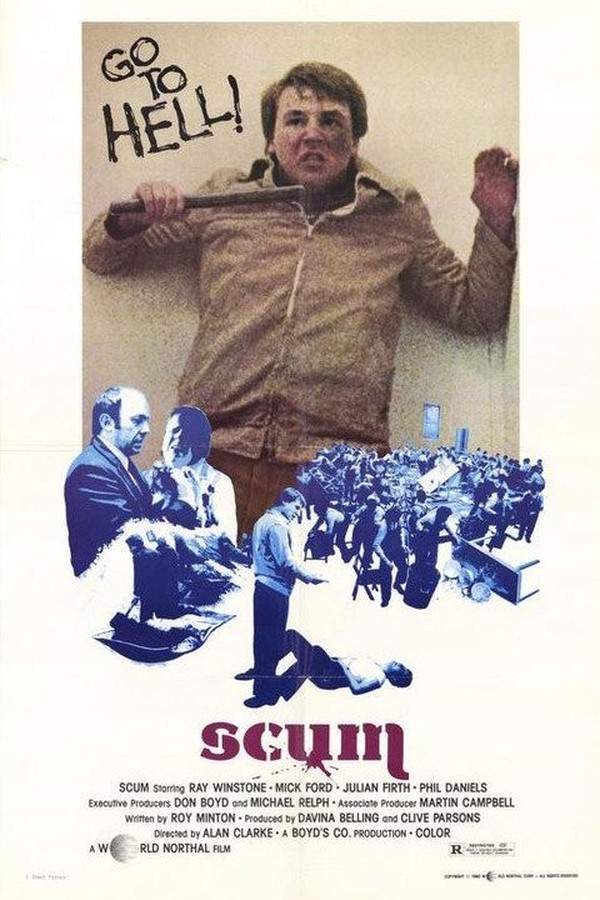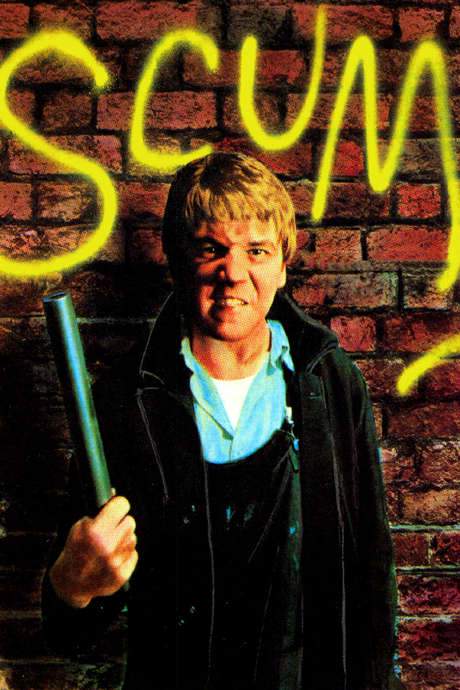
What Is Scum About?
The premise of Scum in 333 words, with nothing given away. The full story follows below.
In a stark, institutional world where survival is measured in whispered codes and unspoken rules, the Borstal reformatory looms as a micro‑cosm of power and desperation. The walls are hung with a palpable tension, the air heavy with the clang of metal and the low murmur of men who have learned that strength is often the only currency. Within this bleak landscape, the daily grind is less about rehabilitation and more about navigating an unforgiving hierarchy that rewards intimidation and punishes weakness.
Three newcomers step off the prison van and into this crucible. Carlin, a young man who has already shouldered the burden of his brother’s misdeeds, finds himself thrust into a dormitory where watchful eyes track every move. Beside him, Angel and Davis each receive solitary rooms, immediately marking them as distinct pieces on the institution’s chessboard. Their arrival sets the stage for a delicate balancing act: they must learn the unspoken laws of the wing while keeping their own fragile sense of self intact.
The internal order of the Borstal is ruled by an informal “Daddy,” a figure who maintains control through fear, aided by a cadre of enforcers whose presence is as much a warning as it is a reassurance to the rest. Staff members hover on the periphery, their indifference shaping the inmates’ self‑policing. It is here that Archer, an eccentric and unusually sharp inmate serving time for a non‑violent crime, becomes an unlikely ally. His quiet intelligence offers a different perspective on the power structures, hinting at the possibility of subtle resistance beneath the surface brutality.
Against this backdrop, Carlin senses both the danger and the opportunity that the Borstal’s rigid hierarchy presents. As he watches the dynamics unfold, he begins to contemplate what it might take to claim a place of influence without losing his humanity. The film thrives on its grim realism, drawing viewers into a world where every interaction crackles with latent aggression, and where the line between protector and predator is constantly being redrawn.
What Happens in Scum?
The complete story of Scum, from the first scene to the last, in 647 words (about 3 minutes). Spoilers throughout. Names in the text link to 3 cast member pages.
Spoilers ahead
Three young men arrive at a borstal by prison van: Carlin, Angel, and Davis. Each is allocated a room; Angel and Davis get single rooms, while Carlin is sent to a dormitory. Carlin, who has taken the blame for his brother’s scrap-metal theft, settles into a tense, watchful quiet as he begins to navigate the strict hierarchy of the institution.
Carlin quickly befriends Archer, an eccentric and intelligent inmate serving two years for workplace fraud who prefers peaceful disruption over open confrontation. Archer explains that Banks, the current “Daddy” of the wing, maintains power through bullying and fear, aided by Richards and Eckersley, with staff largely turning a blind eye. This establishes the social map of the borstal: a fragile balance where leadership is earned through intimidation and where the authority of the staff is compromised by indifference.
Davis and Angel quickly become targets as Banks’s violence spills over into the new arrivals’ lives. Davis is hazed and attacked, while Angel is brutalized in his room. To temper his anxiety and keep a low profile, Carlin watches as the trio is soon put on report after a brutal encounter, and the fear inside the dormitory intensifies. In this climate, helplessness and aggression fuel each other, and the line between protector and aggressor begins to blur.
Determined to claim control and protect the others, Carlin uses a sobering moment of calculated violence. He corners Richards with an improvised cosh—two snooker balls tucked into a sock—and, after forcing Eckersley to back off from reporting him, seeks out Banks. In a brutal washroom ambush, he delivers a severe beating and proclaims a new order: the wing will answer to a leader who will not tolerate interference. The move earns him the uneasy respect of many inmates and signals a chilling shift in the Borstal’s dynamics, showing that Carlin’s strategy hinges on fear, leverage, and the willingness of others to play along.
As days pass, Carlin’s grip tightens. He defeats an opposing wing’s Daddy, establishing himself as the central authority across the house. With Archer and Meakin by his side, he curbs the victimization of weaker prisoners and curbs racially charged violence, presenting a more orderly, if still brutal, system. His ascent catches the warders’ attention, and the staff begin to acknowledge his control—he even negotiates a single cell in exchange for acting as a “natural leader” to the housemaster, Mr. Goodyear.
Meanwhile, Toyne—Meakin’s friend—receives devastating news from in-laws that his wife has died. Depression takes hold of him, and warders scold him for moping as he slips into a profound despair. Slashing his arms, Toyne is moved to an adult prison, where he dies after a second suicide attempt. Carlin advises caution to avoid Eckersley and his cronies, but tragedy keeps creeping into the borstal’s walls, coloring every decision with fear and grief.
The crisis deepens when Davis is subjected to a brutal gang-rape by three youths who had asked for a smoking break. A warder, Sands, sees what happens but grins and does nothing to intervene, and later that night Davis kills himself with a razor blade after being ignored when he presses the help button. Warder Greaves does not intervene, and the defiance of the system bursts into the open tragedy that has been quietly simmering beneath the surface.
The aftermath shocks the establishment into action. In the dining hall, the inmates sit in silence, jolted into action by Davis’s death and Toyne’s earlier loss. Carlin initiates a full-scale riot, pulling Archer and Meakin into a reckoning with the staff. The wardens beat them, dragging them into solitary confinement, while the Governor announces that the damage to the dining hall will be paid through lost earnings. In a final, somber moment, the Governor leads a minute of silent prayer for Davis and Toyne, underscoring the human cost of a system that legitimacy comes at the price of dignity.
Scum Timeline: Every Key Event in Order
14 key events in the order they happen, from “Three new inmates arrive and are assigned rooms” to “Governor condemns the damage and leads a memorial”. 14 events name a place, across 13 locations.
- 1
Three new inmates arrive and are assigned rooms
Carlin, Angel, and Davis arrive by prison van and are allocated to living quarters within the borstal. Carlin attempts to stay low-profile, while Angel and Davis receive single rooms and Carlin is placed in a dormitory. The arrival foreshadows the harsh hierarchy that will dominate the wing.
When:Day 1 Where:Borstal
- 2
Carlin befriends Archer and learns about Banks's dominance
Carlin meets Archer, a reflective inmate who pursues peaceful disruption over violence. Archer explains Banks—'Daddy' of the wing—keeps control through bullying, aided by Richards and Eckersley and a compliant staff. The conversation sets up the power dynamics that will drive later conflicts.
When:Day 1 Where:Borstal wing common area
- 3
First assaults reveal Banks's rule
Carlin witnesses Davis being hazed and attacked by Banks, and Angel is beaten in his room by Banks and Richards. Carlin himself is headbutted by Banks in an unprovoked assault, highlighting the violent regime that governs the wing. These events crystallize the threat Carlin faces and his potential for action.
When:Day 1 Where:Wing
- 4
Davis is framed and sent to solitary
Davis is framed for theft by Eckersley and placed on report. The three newcomers are subsequently moved to solitary confinement as the staff's tolerance for dissent shrinks. The episode marks the escalation toward collective resistance.
When:Day 2 Where:Wing solitary confinement
- 5
Carlin gears up for revenge and arms himself
Carlin prepares to assert control by arming himself with an improvised cosh: snooker balls stuffed into a sock. He uses this weapon to threaten Richards, forcing Eckersley to back down. The act signals his readiness to challenge Banks's regime.
When:Day 3 Where:Rec room
- 6
Carlin confronts Banks and asserts dominance
Carlin tracks Banks to a washroom and delivers a severe beating, making it clear who now governs the wing. He then explicitly warns Banks about his future under Carlin's 'natural leadership'. The confrontation marks a turning point in the wing's power balance.
When:Day 3 Where:Washroom
- 7
Carlin defeats an opposing Daddy to widen control
A rival wing's Daddy challenges Carlin, but Carlin overpowers him in a brutal fight and imposes his rule across the broader borstal area. The defeat deters further challenges and consolidates his authority. Other inmates begin to expect more protection under Carlin's leadership.
When:Day 5 Where:Adjacent wing
- 8
Warders recognize Carlin and grant a single cell
The warders acknowledge Carlin's burgeoning leadership and entrust him with responsibility as a 'natural leader'. In return, he secures a single cell, moving from the dormitory to a more privileged accommodation. This change solidifies his status among inmates and staff.
When:Day 7 Where:Housemaster Goodyear's block / Goodyear's office
- 9
Toyne's despair and death-in-waiting
Meakin's friend Toyne receives news of his wife's death by letter and falls into deep despair. Warders scold him for moping, but his gloom deepens, leading him to injure himself and later transfer to an adult prison where he dies after a second suicide attempt. The tragedy compounds the sense of hopelessness in the facility.
When:Day 7 Where:Borstal
- 10
Davis's assault and warder complicity
While working in a greenhouse, Davis is gang-raped by three youths who had asked for a smoking break. Warder Sands sees what happens but grins and does nothing to intervene, then resumes supervising without addressing the assault. The guards' indifference amplifies the inmates' sense of injustice.
When:Day 9 Where:Greenhouse
Show the other 4 events of Scum Hide the last 4 events
- 11
Davis kills himself
Distraught by the assault, Davis kills himself with a razor blade. He presses the call button but warder Greaves ignores him as he bleeds. The suicide becomes the breaking point that triggers broader unrest.
When:Night of Day 9 Where:Davis's cell
- 12
Dining hall riot erupts
In response to Davis's death, the inmates refuse to eat and Carlin initiates a full-scale riot in the dining hall. The hall erupts into chaos as guards move to restore order. The event demonstrates the collective anger and the fragility of the borstal's control.
When:Day 10 Where:Dining hall
- 13
Carlin, Archer and Meakin are dragged to solitary after riot
Following the riot, Carlin, Archer and Meakin are beaten and dragged, bleeding and unconscious, into solitary confinement by wardens. The punishment underscores the high cost of their rebellion and the regime's continued control. Their injuries reflect the physical toll of challenging the system.
When:Day 11 Where:Solitary confinement wings
- 14
Governor condemns the damage and leads a memorial
The governor informs them that the damage to the dinner hall will be paid through lost earnings. He then leads a minute's silent prayer for Davis and Toyne, offering a somber closure to the events. The scene marks the moral reckoning and the official response to the turmoil.
When:End Where:Governor's office / Borstal
Who Are the Main Characters in Scum?
10 characters, among them Carlin (Ray Winstone), Archer (Mick Ford) and Banks (John Blundell): who each one is and the part they play in the story. Every profile links to the actor’s page.
-

Carlin (Ray Winstone)
Played by Ray Winstone
New arrival who takes the blame for his brother's theft and tries to stay under the radar. He befriends Archer and gradually asserts dominance to stabilize the wing. His calculated leadership curbs abuse, earns wary respect, and ultimately reshapes the power structure within the borstal.
- 🧭 Leadership
- 🗡️ Aggression
- 🎯 Strategy
- A(
Archer (Mick Ford)
Played by Mick Ford
An eccentric and intelligent inmate serving two years for workplace fraud. He prefers cunning over brute force and aims to peacefully influence staff and events. He becomes Carlin's ally, providing a counterbalance to Banks' brutality.
- 🧠 Intellectual
- 🤝 Ally
- 🗺️ Strategy
- B(
Banks (John Blundell)
Played by John Blundell
The wing's current 'Daddy' who maintains power through bullying and intimidation. His position rests on fear and the tacit consent of the staff. Banks embodies the corrosive side of institutional control that Carlin must confront.
- 👊 Bullying
- 🏷️ Power
-

Richards (Philip Daniels)
Played by Phil Daniels
Banks' principal enforcer, involved in hazing and beatings to sustain the wing's hierarchy. He thrives within the same brutal system and helps perpetuate the cycle of abuse. His presence marks the everyday cruelty inmates endure.
- 🤼 Violence
- 🤝 Henchman
- E(
Eckersley (Ray Burdis)
Played by Ray Burdis
Another of Banks' lieutenants, using intimidation to keep control. He personifies the loud, physical aspect of the borstal’s oppression. His actions remind viewers of the ease with which violence becomes normalised.
- 🗡️ Enforcer
- 🕶️ Intimidation
- D(
Davis (Julian Firth)
Played by Julian Firth
An escapee from an open institution who is hazed and framed for theft, soon drifting into isolation. His suicide highlights the lethal consequences of neglect and the moral failures of the system. Davis's death accelerates the inmates' revolt and reveals the human cost of fear-driven power.
- 😔 Victim
- ⚖️ Injustice
- A(
Angel (Alrick Riley)
Played by Alrick Riley
A car thief who arrives at the borstal and endures brutal treatment from Banks and his crew. His experiences illustrate the savagery of life inside and the frequent targeting of vulnerable new arrivals. He remains a marginal figure but underscores the pervasive danger.
- 🚗 Car Theft
- 🛡️ Survivor
- T(
Toyne (Herbert Norville)
Played by Herbert Norville
Meakin's friend who learns his wife has died and collapses into deep despair. He attempts suicide, highlighting the emotional collapse caused by confinement. His fate and later transfer to an adult prison reveal the harsh paths the system imposes on vulnerable inmates.
- 💔 Loss
- 💭 Depression
- MG
Mr Goodyear (John Grillo)
Played by John Grillo
The housemaster warder who ultimately recognizes Carlin's leadership and grants him a single cell in exchange for responsible conduct. He embodies the authorities who supervise but also negotiate terms with the inmates. His stance hints at a limited, fragile governance within the borstal.
- 🏛️ Authority
- 🧭 Guidance
- MS
Mr Sands (John Judd)
Played by John Judd
A warder who witnesses abuses, including Davis's tragedy, but initially reacts with indifference. His reaction exemplifies the casual cruelty and apathy that enable the cycle of violence. Sands' attitude helps precipitate the breakdown of order and trust.
- 😐 Indifference
- 🏛️ Authority
Where and When Is Scum Set?
Scum is set in Borstal and England (1970s). Here is why the time and place matter to the story.
When
1970s
Set in 1970s Britain, a period of social upheaval and reform of the penal system. The borstal operates under a rigid hierarchy where warders, 'Daddies' and their lieutenants wield authority. Economic hardship and a faltering social order fuel brutality and a siege mentality among both staff and inmates.
Where
Borstal, England
The action takes place inside a tightly controlled borstal in England, a reform-style youth detention facility. The setting is stark and institutional, with dormitories, washrooms, a dining hall, and solitary confinement spaces shaping daily life. Power struggles among inmates and the complicity or neglect of staff drive the tension and sense of danger throughout the film.
- 🏫 Borstal
- 🌍 United Kingdom
- 🧱 Prison System
What Are the Themes of Scum?
3 ideas the story keeps returning to, among them Power Dynamics, Violence and Despair.
-
01
Power Dynamics
Carlin rises from a newcomer to a de facto leader by leveraging loyalty and calculated violence. Banks and his henchmen enforce a brutal pecking order, while some staff tolerate or quietly enable the abuses. The wing's balance of power shifts when Carlin challenges Banks, redefining what authority looks like inside the borstal. The dynamic shows how control is negotiated through fear, respect, and strategic alliances.
-
02
Violence
The film portrays routine beatings, intimidation, and mob-like aggression that define life in the borstal. Beatings, hazing, and sexual violence mark the asylum-like environment, driving characters toward desperate actions. The riot in the dining hall exposes the fragility of order and the heavy cost of silencing pain. Violence is both a tool of control and a catalyst for resistance.
-
03
Despair
Isolation, betrayal, and neglect corrode any sense of safety or belonging. Toyne's depression and suicide attempt reveal the emotional toll of losing loved ones and the relentless pressure of confinement. Davis's suicide becomes a watershed moment, underscoring the system's failure to protect vulnerable youths. The film closes with a grim reminder of the human costs of institutional brutality.
What Kind of Film Is Scum?
Dark in tone, with steady pacing and a straightforward story, going by the plot summary.
- Tone
- Dark
- Pacing
- Steady
- Story
- Straightforward
- Intensity
- High
- Ending
- Bleak
An unflinchingly brutal and harrowing descent into the oppressive world of a borstal, creating a constant sense of dread and futility as characters navigate systemic violence and cruelty.
- oppressive
- brutal
- claustrophobic
- grim
- anxious
- harsh
- prison system
- institutional corruption
- survival
- bullying
Content notes: sexual assault, suicide, physical abuse, bullying, psychological mistreatment.
Quiz
How well do you remember Scum? Test yourself on the story.
Where to Watch Scum
Stream it on Kanopy and The Roku Channel. US availability and prices from JustWatch.
Stream 2
 Kanopy
  The Roku Channel
 Streaming availability in the US, powered by