
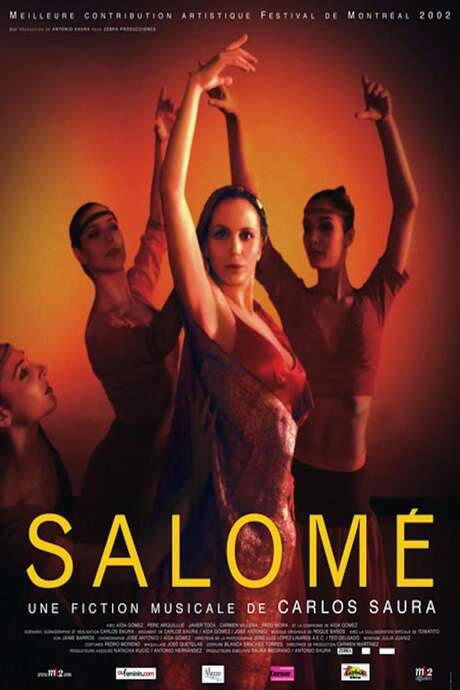
What Is Salomé About?
The premise of Salomé in 291 words, with nothing given away. The full story follows below.
In a uniquely intimate documentary, the world of flamenco converges with the ancient biblical tale of Salomé, inviting viewers into the crucible where choreography, music, and storytelling fuse. The film follows a troupe as they translate a centuries‑old narrative into a vibrant stage spectacle, balancing the raw, visceral energy of the dance form with the mythic weight of its source material. The atmosphere is both reverent and restless, a place where tradition brushes against contemporary vision.
At the heart of the creative engine is the meticulous director Pere Arquillué, whose quiet intensity shapes the project’s aesthetic and emotional compass. Together with a close‑knit team of musicians, set designers, choreographers, and costume artisans, he sketches out the visual language that will carry the story from rehearsal rooms to the footlights. Their collaboration feels like a living laboratory, each session revealing the delicate push‑and‑pull between individual artistry and collective purpose, all underscored by the rhythmic pulse of flamenco.
The central figure on stage is the eponymous dancer Salomé, whose personal journey from confronting a severe scoliosis to leading the Spanish National Ballet adds a resonant layer to her performance. Surrounding her are the core members of the cast: King Herod, Herodias, and John the Baptist, each a dancer whose own histories echo themes of family expectation and artistic perseverance. Their interactions, both on and off the stage, suggest a tapestry of desire, power, and rivalry that fuels the creative process.
When the production finally opens its doors, the theater transforms into a lush, color‑saturated arena where movement becomes a language of its own. The audience is drawn into a world where sensuality, tension, and myth intertwine, leaving a lingering sense of curiosity about how each dancer’s inner rhythm will shape the unfolding drama.
What Happens in Salomé?
The complete story of Salomé, from the first scene to the last, in 359 words (about 2 minutes). Spoilers throughout. Names in the text link to 5 cast member pages.
Spoilers ahead
This documentary-style film unfolds in two parts, tracing the birth and execution of a flamenco stage adaptation of the biblical tale Salomé. The director Pere Arquillué guides a creative team as they translate the story into rehearsal rooms, costumes, and choreography. The central figure is Salomé Aída Gómez, a dancer whose ascent has included overcoming a severe scoliosis and who now leads the Spanish National Ballet. The ensemble also features King Herod Paco Mora and Herodias Carmen Villena, as well as John the Baptist Javier Toca, each sharing their roots as dancers and recalling how their parents initially faced resistance to their career choices.
In the first part, we see the process in close detail: the story is summarized for the troupe, the director expresses his vision for the drama’s propulsion, and the team—musician, set designer, choreographer, and costume designer—maps out how the stage will come alive. The rehearsals become a window into a living collaboration, with every member contributing to the mood, tempo, and visual language of the piece. The film thus doubles as both a documentary on creation and a character-driven portrait of four dancers who carry the narrative forward.
Part Two shifts to the stage itself, a spare but lush environment bathed in color and light, where the audience is drawn into the plot as it unfolds. On the surface, the court of King Herod, who has married Herodias, seems to revolve around Salomé, his stepdaughter that he desires. Herod, consumed by fascination, asks Salomé to dance for him on his birthday, a request she initially refuses with dignity. Herodias pushes her daughter toward the performance, exposing the complicated web of desire, power, and rivalry that frames the dance. Salomé’s sensual, feverish interpretation—the dance of the seven veils—becomes a turning point; the king’s appetite grows as he promises anything she asks. In a dramatic and defiant move, Salomé requests the head of John the Baptist Javier Toca. The moment arrives: the head is presented on a tray, and the moment reveals Salomé’s deeper ache. She realizes that her feelings for the prophet are still alive, and in a final, devastating act, she ends her own life.
Salomé Timeline: Every Key Event in Order
12 key events in the order they happen, from “Documentary framing and pre-production” to “Film closes with meditation on art and tragedy”. 12 events name a place, across 10 locations.
- 1
Documentary framing and pre-production
The film opens as a documentary, with the director outlining the scope of the project and how the show will be built from the ground up. He summarizes Salome's story and explains his purpose: to explore Salomé's attraction to John the Baptist and the revenge that follows. We see early planning sessions and an intent to film the working process.
When:Pre-production Where:studio
- 2
Creative team assembled and begin collaboration
We meet the core crew—the musician, the score composer, the set designer, the choreographer, and the costume designer—who begin to shape the production. The film follows their creative conversations, sketching ideas, and testing movements. The troupe's cohesion and shared vision start to take form.
When:Pre-production Where:studio
- 3
Principals introduced and backstories shared
Salomé, King Herod Antipas, John the Baptist, and Herodias are introduced as the central dancers and narrators. Each recounts their beginnings as dancers in childhood, including Salomé's battle with scoliosis and her rise to director of the Spanish National Ballet. John speaks of emigrating from Cuba, while Herod and Herodias confront parental resistance to their careers.
When:Early Where:interview space
- 4
Rehearsals begin and the process intensifies
The troupe starts rehearsing the stage adaptation, translating biblical drama into ballet gesture and movement. The camera follows dancers through routines, cues, and small tensions that surface in performance. The director monitors progress, pushing for precision and emotional clarity.
When:During rehearsals Where:rehearsal space
- 5
Design and staging come together
The team finalizes costumes, lighting, and the spare stage layout, balancing lush color with simplicity. Set pieces and outfits are tested, and dancers practice with props and cues. The union of design and choreography begins to give the production its visual identity.
When:Pre-performance Where:costume shop / stage workshop
- 6
Troupe rehearsals inform the plot's rhythm
We watch rehearsal sequences that trace Salomé's growing longing for John and Herod's conflicting desires. The performers embody the emotional beats of the story, shaping timing and intensity. The process reveals how the 'Salomé' stage version translates a biblical narrative into dance.
When:During rehearsals Where:stage rehearsal room
- 7
Stage version sets up the birthday scene
On the stage set, Herod marries Herodias and becomes enthralled with Salomé, who initially resists the request to dance. Herodias influences her daughter, pushing Salomé toward the provocative performance. The tension between power, desire, and duty begins to mount.
When:During the performance arc Where:palace set
- 8
Salomé performs the Dance of the Seven Veils
Salomé finally agrees to dance for the king, and the choreography unfolds in a sensual, frenzied sequence. The king promises anything she asks, surrendering to the spell of the performance. The scene marks a turning point, blending artistic triumph with ominous undertones.
When:Climax of the dance Where:stage
- 9
Salomé's demand for John the Baptist's head
In defiance, Salomé requests the head of John the Baptist, shocking the king who is torn between desire and prohibitions. He reluctantly agrees, yielding to her demand. The act reveals the deadly consequences of manipulation and ambition.
When:Climactic moment Where:palace stage
- 10
The head on a tray and Salomé's heartbreak
John the Baptist's head is presented to Salomé on a tray, fulfilling the dangerous bargain. Yet Salomé realizes she still loves him, and the moment exposes the hollowness of power and manipulation. The emotional disintegration in the room is palpable.
When:After the demand Where:palace
- 11
Salomé's suicide
Grief consumes Salomé and she hangs herself, bringing the violent arc to its end. The narrative intention shifts from spectacle to tragedy, underscoring the cost of desire and ambition. The production's personal cost is laid bare as the dancer pays the ultimate price.
When:Ending Where:palace
- 12
Film closes with meditation on art and tragedy
The documentary frame lingers on the performers transforming through roles and back to themselves. The film invites reflection on how art, identity, and sacrifice intersect in the rehearsal room and on stage. The concluding moments tie the rehearsal’s intimacy to the audience's understanding of the story.
When:Post-production Where:studio / stage
Who Are the Main Characters in Salomé?
5 characters, among them El Director (Pere Arquillué), Salomé (Aída Gómez) and King Herod (Paco Mora): who each one is and the part they play in the story. Every profile links to the actor’s page.
- ED
El Director (Pere Arquillué)
Played by Pere Arquillué
The director oversees the entire project, guiding the troupe from rehearsal to performance and shaping the documentary narrative as well as the stage adaptation. He coordinates the creative team and sets the pace, tone, and vision for what ends up on stage. His leadership reveals how a cohesive artistic plan becomes a live ballet.
- 🎭 Director
- 🧭 Leadership
- 🪄 Vision
- S(
Salomé (Aída Gómez)
Played by Aída Gómez
Salomé is a dancer who rose to prominence with the Spanish National Ballet after overcoming scoliosis. She leads the company on this production and navigates a complex love for John the Baptist amid artistic ambition. Her resolve and vulnerability drive the performance and its emotional arc.
- 💃 Dancer
- 🎭 Protagonist
- 💫 Ambition
- KH
King Herod (Paco Mora)
Played by Paco Mora
King Herod is the ruler entangled in a dangerous love triangle, enthralled by Salomé’s dance and willing to bend morality for spectacle. His fear and fascination shape the plot, as he grants Salomé her desires while concealing his own jealousy. His choices push the tragedy toward its violent finale.
- 👑 Royalty
- 🔥 Desire
- 🧭 Power
- H(
Herodias (Carmen Villena)
Played by Carmen Villena
Herodias is Salomé’s stepmother and a calculating presence behind the court’s intrigues. She engineers social and sexual tensions to advance her own position and to test Salomé, contributing to the dangerous dynamic that culminates in catastrophe.
- 👑 Villain
- 🧠 Manipulation
- 💪 Power
- JT
John the Baptist (Javier Toca)
Played by Javier Toca
John the Baptist is the holy man who captivates Salomé, standing as a moral counterpoint to the dancers’ world. His sacred status prevents him from yielding to Salomé’s advances, and his eventual fate becomes the fulcrum of the tragedy.
- 🕊️ Prophet
- ✝️ Sacred
- 💔 Love-unconsumed
Where and When Is Salomé Set?
Salomé is set in Theatre and Rehearsal Studio. Here is why the place matters to the story.
Where
Theatre, Rehearsal Studio
The film unfolds within a theatre where a director trains a troupe of flamenco dancers for a stage adaptation of Salomé. A spare, colorfully lit stage anchors rehearsals, with back-stage areas for costume, lighting, and set design as the team collaborates. The setting centers on the Spanish National Ballet, highlighting the craft and teamwork required to mount a biblical story as contemporary performance.
- 🎭 Theatre
- 🎨 Arts
- 🧵 Stagecraft
What Are the Themes of Salomé?
3 ideas the story keeps returning to, among them Artistic Process, Lust & Revenge and Faith & Art.
-
01
Artistic Process
The documentary-style opening reveals how a ballet is built: a director, choreographer, designers, and musicians work through rehearsals, costume choices, and lighting to translate a story into movement. It emphasizes the precision, collaboration, and timing that shape a live performance. The film shows how each department contributes to the final stage picture and tempo.
-
02
Lust & Revenge
Salomé’s attraction to John the Baptist triggers a chain of manipulation and retaliation. Her dance becomes a vehicle for desire, while Herod and Herodias pursue their own appetites through power and spectacle. The plot escalates toward the fateful demand for John the Baptist’s head and the subsequent tragedy.
-
03
Faith & Art
The biblical tale is reframed as a living work of art, blurring sacred narrative with performance. The dancers wrestle with the tension between religious reverence and sensual stage presence. The story’s culmination probes how faith, art, and ambition collide, ending in tragedy rather than piety.
What Kind of Film Is Salomé?
Dark in tone, with variable pacing and a moderate story, going by the plot summary.
- Tone
- Dark
- Pacing
- Variable
- Story
- Moderate
- Intensity
- Medium
- Ending
- Sad
A dramatic and sensual documentary that immerses the viewer in the intense creative process of a flamenco ballet, culminating in a tragic stage performance of profound emotional weight.
- sensual
- dramatic
- introspective
- feverish
- collaborative
- tragic
- artistic creation
- biblical adaptation
- dance as expression
- desire and power
Content notes: beheading, suicide.
Quiz
How well do you remember Salomé? Test yourself on the story.


