What Is Salome’s Last Dance About?
The premise of Salome’s Last Dance in 304 words, with nothing given away. The full story follows below.
In the flickering glow of London’s November sky, the night of Guy Fawkes erupts in a riot of fireworks and whispered intrigue. The year is 1892, and the city’s underbelly throbs with a blend of decadence and secrecy that feels as theatrical as the streets themselves. Amid the clamor, a plush brothel tucked behind a veil of velvet curtains becomes a sanctuary for those who walk the line between society’s polished façade and its shadowed desires.
When Oscar Wilde and his lover Lord Alfred Douglas slip through the brothel’s mahogany doors, they are welcomed by the charismatic proprietor Alfred Taylor, a man whose taste for provocation matches the era’s forbidden allure. Their arrival, delayed by the night’s celebrations, sets the stage for an unexpected convergence of art and life, where the celebrated playwright finds himself the honored guest of an intimate, clandestine audience.
Taylor has prepared a private rendition of Wilde’s own Salome, a work that has just been barred from public performance by the Lord Chamberlain. The production is no ordinary staging: the brothel’s own patrons and workers assume the dual roles of their everyday personas and the play’s vivid characters, blurring the boundaries between reality and performance. As the ancient tale of power, desire, and consequence unfurls, the opulent surroundings echo with a palpable tension, each whispered line and measured step hinting at deeper resonances between the characters onstage and those watching from the velvet-lined booths.
The film pulses with a lush, baroque sensibility, marrying the flamboyance of the late‑Victorian theatrical world with the intimate, almost conspiratorial atmosphere of a secret gathering. The chemistry between Wilde, his lover, and the eclectic denizens of the brothel creates an undercurrent of both camaraderie and unspoken competition, inviting the audience to wonder how art might mirror, magnify, or even unsettle the lives that surround it.
What Happens in Salome’s Last Dance?
The complete story of Salome’s Last Dance, from the first scene to the last, in 478 words (about 2 minutes). Spoilers throughout. Names in the text link to 3 cast member pages.
Spoilers ahead
Oscar Wilde and his lover Alfred Taylor arrive late on Guy Fawkes Day in 1892 at their friend’s brothel, where they are treated to a surprise staging of Wilde’s play Salome, which had just been banned for public performances in England by the Lord Chamberlain’s office. The room hums with anticipation as the evening’s guests settle in, and the mood blends satire with danger as the otherwise discreet conversations give way to a bold, meta-theatrical spectacle. In this world, the play Salome unfolds as a theatrical piece performed by the very people who populate the brothel, turning each encounter into a crossfade between performance and real life, between art and desire.
In the midst of the room’s dim light, the staging reveals its rule: all roles are played by prostitutes or their clients, and every participant (except Wilde) doubles, taking one role in the brothel and another in the play. This double-casting creates a continuous echo between the two spaces, where flirtation, power, and art collide in rapid, mirrored shifts. The mood is charged with challenge and wit as the actors juggle dual identities, weaving Wilde’s presence into the fabric of the performance and the brothel’s intimate politics into the narrative.
Within the play, Herod begs his young stepdaughter Salome to dance for him, promising to grant her anything she desires, much to the irritation of her mother, Herodias. Salome ignores him, turning her attention to John the Baptist, who is kept prisoner by Herod. John speaks out, condemning both Herod and Salome in the name of God, a moment that heightens the tension between sacred judgment and worldly appetite. The atmosphere thickens as Salome agrees to dance for Herod, but on the condition that she be given anything she asks for. Herod grants the wish, and the consequence is drastic and fatal: Salome asks for the head of John the Baptist on a platter. The room seems to hold its breath as Herod hesitates, then yields to the demand, realizing the terrible price of ambition and desire. The double-layered scenes—part brothel drama, part biblical tableau—play out with a cruel grandeur, underscored by Wilde’s own conspicuous, escalating exploitation of his surroundings.
As the night progresses, the play’s imagery remains interwoven with glimpses of Wilde’s exploits at the brothel, a sly, subversive parallel that casts the literary icon as both observer and participant in a world of salacious performances. The boundary between genuine scandal and staged spectacle blurs, creating a nocturnal portrait of a century’s edge between art and morality. By the end, the fusion of onstage and offstage life culminates in a stark denouement: Wilde is arrested, his fate sealed by a night that could only exist in the margins where theatre and reality collide. The final image lingers: a writer’s legend tangled with a provocative ritual, leaving the audience to ponder where performance ends and truth begins.
Salome’s Last Dance Timeline: Every Key Event in Order
12 key events in the order they happen, from “Wilde and Douglas arrive at Alfred Taylor's brothel” to “Aftermath and legacy”. 12 events name a place, across 10 locations.
- 1
Wilde and Douglas arrive at Alfred Taylor's brothel
Oscar Wilde and Lord Alfred Douglas arrive late on Guy Fawkes Day, 1892, at Alfred Taylor's brothel. They are welcomed into a night that will feature a surprise staging of Salome, a production recently banned from public performances in England by the Lord Chamberlain. The arrival sets a tone of risk, art, and scandal for what follows.
When:5 November 1892, evening Where:Alfred Taylor's brothel
- 2
Surprise staging of Salome announced
The guests discover a surprise staging of Salome within the brothel, a performance that had been banned for public performances in England by the Lord Chamberlain's office. The clandestine nature of the event adds tension and excitment to the night. The ban provides a charged backdrop to Wilde's personal and artistic silhouette.
When:5 November 1892, evening Where:Alfred Taylor's brothel
- 3
Double casting for the play
In the performance, all roles are filled by prostitutes or their clients, and each person except Wilde plays two parts—one in the brothel and one in the play. This layering blurs the lines between reality and fiction, making the audience witnesses to a mixed spectacle. The arrangement intensifies the night’s intimate and provocative atmosphere.
When:During the performance Where:The brothel's makeshift stage
- 4
Herod asks Salome to dance
Within Salome, King Herod begs his stepdaughter Salome to dance, promising to give her anything she desires, which irritates Herodias. The courtly scene establishes the power dynamics and the central promise that drives later events. The audience is drawn into a contest between desire and duty.
When:During the court scene Where:Herod's court (in the play)
- 5
Salome attempts to seduce John the Baptist
Salome ignores Herod's overture and instead tries to seduce John the Baptist, who is being held prisoner by Herod. This moment amplifies the play's tension between spiritual authority and erotic pursuit. The parallels to Wilde's own experiences heighten the night’s complexity.
When:During the play's events Where:Herod's palace and John's confinement (in the play)
- 6
John condemns Herod and Salome
John the Baptist denounces both Herod and Salome in the name of God, casting the political drama in moral terms. The confrontation sharpens the stakes and invites the audience to weigh virtue against power. The scene intensifies the play's ethical tension.
When:During the play's events Where:The play’s setting (Herod's court)
- 7
Salome agrees to dance for Herod
Filled with determination, Salome agrees to perform the dance for Herod on the condition that she be granted anything she desires. The bargain becomes the engine of the drama, foregrounding themes of desire, control, and consequence. The audience awaits the climactic dance.
When:During the dance's lead-up Where:Herod's court
- 8
Salome requests the head of John the Baptist
After the dance, Salome flatly asks for John the Baptist's head on a platter, a demand both shocking and decisive. Herod is horrified by the request but eventually relents, signaling a brutal turn in the plot. The moment marks a devastating turn from spectacle to tragedy.
When:After the dance Where:Herod's court (Salome’s banquet setting)
- 9
Herod yields to the demand
Herod is appalled by the request and tries to dissuade Salome, but he ultimately yields and agrees to fulfill it. The scene crystallizes the theme of desire overpowering mercy. The consequences of the dance become irreversible within the play’s world.
When:Following Salome’s demand Where:Herod's court
- 10
Scenes from Salome intertwine with Wilde's exploits
As the play unfolds, the events on stage are interwoven with images of Wilde's exploits in the brothel. The juxtaposition blurs the line between fiction and Wilde’s real-life scandal. The audience witnesses a creeping sense that art and life are converging in uncomfortable ways.
When:Throughout the night Where:The brothel’s performance space and rooms
- 11
Wilde is arrested
At the end of the night, Wilde is arrested, bringing the clandestine performance to a dramatic close. The arrest publicizes the moral and legal tensions surrounding Wilde and his circle. The event crystallizes the night as a turning point in their public notoriety.
When:End of the night (Nov 5, 1892) Where:London (at Alfred Taylor's brothel)
- 12
Aftermath and legacy
The arrest and the night's events leave a lingering sense of scandal around Wilde and his acquaintances. The blending of art, sexuality, and law underlines the era’s moral boundaries and the consequences of pushing them. The story closes with a reminder of how performance can echo real-life consequence.
When:Post-night Where:London
Who Are the Main Characters in Salome’s Last Dance?
5 characters, among them Oscar Wilde (Nickolas Grace), John the Baptist / Bosey (Douglas Hodge) and Herod (Herod/Alfred Taylor) (Stratford Johns): who each one is and the part they play in the story. Every profile links to the actor’s page.
- OW
Oscar Wilde (Nickolas Grace)
Played by Nickolas Grace
A celebrated, controversial playwright whose wit and daring reputation set the tone for the evening. He orchestrates the clandestine staging of Salome within the brothel walls, challenging social norms. His presence intensifies the tension between art, desire, and public morality, and his arrest marks a brutal collapse of his precarious position.
- 🎭 Playwright
- 🗣️ Public figure
- 🔥 Scandal
-
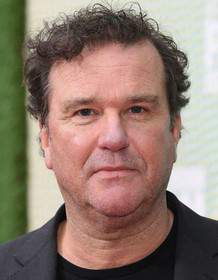
John the Baptist / Bosey (Douglas Hodge)
Played by Douglas Hodge
A stern prophet figure who condemns moral hypocrisy in the play-within-a-play. His public censure of Herod and Salome heightens the stakes of the sexual and political intrigue. He embodies moral rigidity that contrasts with the brothel's hedonistic ambience.
- ✝️ Religious figure
- ⚖️ Moral authority
- 🔥 Provocation
- H(
Herod (Herod/Alfred Taylor) (Stratford Johns)
Played by Stratford Johns
A ruler who tries to balance power with desire, easily swayed by Salome's seduction. His promises and posturing reveal political fragility beneath regal bravado. His complicity in the moral drama accelerates the tragic turn of events.
- 👑 Ruler
- ⚖️ Power
- 🔥 Desire
- H(
Herodias (Glenda Jackson)
Played by Glenda Jackson
The sharp-witted mother-figure who challenges Herod's authority and guards Salome's vulnerability. She is protective, calculating, and acutely aware of social reputations. Her presence frames the family and courtly interference at the heart of the drama.
- 👑 Queen
- 🧭 Authority
- 💬 Maternal
- S(
Salome (Salome / Rose) (Imogen Millais Scott)
Played by Imogen Millais Scott
Herod's stepdaughter, a young woman who uses seduction as a tool to exert power. She dances to force Herod's generosity and ultimately to demand John the Baptist's head. Her choices illuminate themes of desire, manipulation, and the peril of allure.
- 💃 Seductress
- 🧭 Ambition
- 🔥 Manipulation
Where and When Is Salome’s Last Dance Set?
Salome’s Last Dance is set in Alfred Taylor's brothel and England (1892). Here is why the time and place matter to the story.
When
1892
Late Victorian England, 1892, a period of strict public morality and cultural censorship. Public performances of controversial works like Salome faced legal and social challenges under censorship laws and the Lord Chamberlain's office. The events unfold during a celebrated scandal surrounding Wilde's life, culminating in his arrest.
Where
Alfred Taylor's brothel, England
Set inside Alfred Taylor's brothel on Guy Fawkes Day, 1892. The space doubles as a stage for Wilde's Salome, blending brothel reality with theatre. The intimate, clandestine atmosphere highlights the era's strict social mores and the tension between art and morality.
- 🏚️ Victorian brothel
- 🕰️ 1892 England
- 🎭 Theatrical staging
What Are the Themes of Salome’s Last Dance?
4 ideas the story keeps returning to, among them Censorship, Desire and Theatre Within.
-
01
Censorship
The film centers on the suppression of Wilde's Salome by the Lord Chamberlain, underscoring how art clashes with moral authority. The brothel setting becomes a private stage where forbidden ideas surface away from public scrutiny. Wilde's arrest at the end reinforces the real-world consequences of censorship and scandal in late 19th-century England.
-
02
Desire
Desire drives power dynamics among Herod, Salome, and John the Baptist, as sensual requests collide with religious and political authority. The dance and the head-craving promise reveal how longing can corrupt judgment and ignite dangerous bargains. The characters’ private ambitions clash with public reputations, intensifying the drama.
-
03
Theatre Within
The tale repeatedly blurs lines between performance and reality as actors play both brothel clients and biblical figures. The staging mirrors Wilde’s own theatrical life, using role-switching to critique hypocrisy and spectacle. This meta-layer highlights how theatre can expose, distort, or magnify moral anxieties of the era.
-
04
Duality
Characters inhabit dual roles, balancing public personas with private impulses. The double exposure of life on the brothel floor and the biblical drama echoes the double standards of Victorian society. The play probes how appearance and reality diverge, revealing hidden desires beneath propriety.
What Kind of Film Is Salome’s Last Dance?
Whimsical in tone, with steady pacing and a straightforward story, going by the plot summary.
- Tone
- Whimsical
- Pacing
- Steady
- Story
- Straightforward
- Intensity
- Low
- Ending
- Happy
A playful and meta-theatrical exploration where Oscar Wilde gets to witness his banned play performed by an eccentric cast, blending elements of eroticism and artistic expression in a steady historical narrative.
- performative
- artistic
- meta-theatrical
- sensual
- playful
- historical
- meta-theatricality
- artistic expression
- eroticism
- banned performances
Quiz
How well do you remember Salome’s Last Dance? Test yourself on the story.