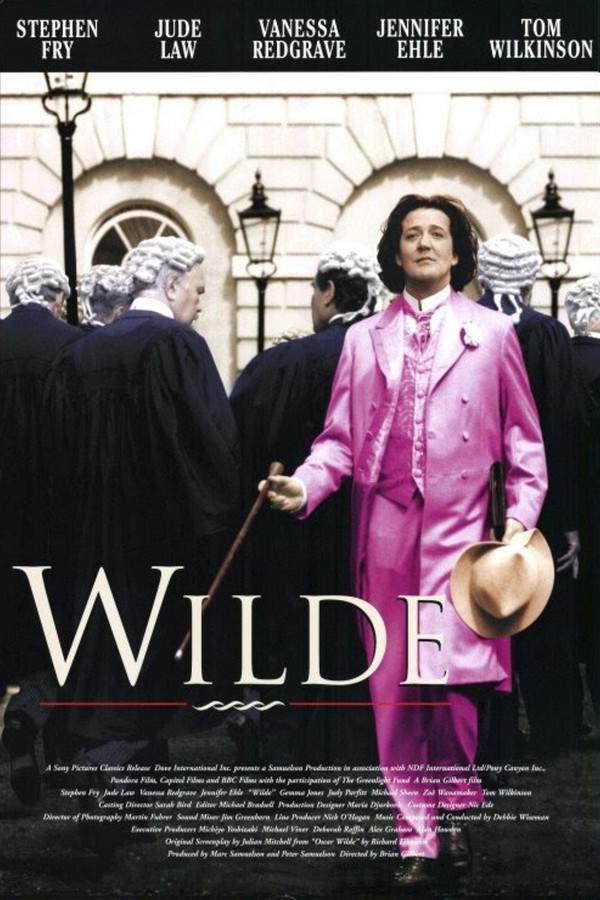
Wilde 1998

Directed by

Brian Gilbert
Made by

BIM Distribuzione
Where to Watch Wilde
See current US streaming, rental, and purchase options for Wilde (1998) via JustWatch.






Wilde Plot Summary
Read the complete plot summary and ending explained for Wilde (1998). From turning points to emotional moments, uncover what really happened and why it matters.
During his 1882 lecture tour in the United States, Oscar Wilde visits Leadville, Colorado. His flamboyant personality and urbane wit win over the local silver miners as he regales them with tales about Renaissance silversmith Benvenuto Cellini.
Back in London, Wilde marries Constance Lloyd and the couple welcome two sons in quick succession. While their second child is still an infant, they host a young Canadian named Robbie Ross, who seduces Wilde, and Ross’s love for him endures.
On the opening night of his play Lady Windermere’s Fan, Wilde is re-introduced to the dashingly handsome and foppish poet Bosie Lord Alfred Douglas, and the two fall into a passionate and tempestuous relationship. The bond is marked by hedonism: Bosie is not content to remain monogamous and frequently engages in sexual activity with rent boys while Wilde plays the role of voyeur.
Bosie’s father, the Marquess of Queensberry, a violent and cruel man, objects to the affair and publicly demeans Wilde after the opening of The Importance of Being Earnest. When Wilde sues the Marquess for criminal libel, his homosexuality is publicly exposed, and he is eventually tried for gross indecency and sentenced to two years’ hard labor. Constance is advised by friends to go abroad and change her name to protect the children.
Prison life is grueling; the penal treadmill permanently wrecks Wilde’s health. Bosie tells Robbie he will look after Wilde in some pleasant sunny place when he is released. Constance visits him in prison, and she is sending Cyril to school in Germany, and she may need back surgery. He tells her he has always loved her, and that he did not know himself in the beginning. She tells him she does not want a divorce. The children love him and he is welcome to visit as long as he never sees Bosie again.
Loyal friend Ada Leverson meets Wilde when he is released from prison in May 1897, carrying the manuscript of De Profundis. He goes straight into exile, to continental Europe, and later places flowers on Constance’s grave. Since she died in April 1898, he is no longer allowed to see his children. He eventually meets with Douglas. A printed epilogue notes that they parted after three months and describes Wilde’s death in Paris in November 1900 at age 46, alongside the fates of Bosie and Ross.
Portions of the beloved Wilde story The Selfish Giant are woven throughout the film, beginning when Wilde tells the story to his children, then as Constance reads the book to them and so on until Wilde almost finishes the story in a voice-over as the film nears its end.
Wilde Timeline
Follow the complete movie timeline of Wilde (1998) with every major event in chronological order. Great for understanding complex plots and story progression.
Leadville lecture and Cellini tales
During his 1882 US lecture tour, Wilde visits Leadville, Colorado and captivates the miners with his flamboyant wit. He regales them with tales of Renaissance silversmith Benvenuto Cellini, drawing laughter and astonishment from the crowd. The episode underscores Wilde’s appeal beyond the stage.
Opening night encounter with Bosie
On the opening night of Lady Windermere's Fan, Wilde is re-introduced to Lord Alfred Douglas, known as Bosie. Sparks fly as they begin a passionate, tempestuous relationship. This new liaison will cast a long shadow over Wilde's personal and public life.
Marriage to Constance Lloyd
Wilde returns to London and marries Constance Lloyd in 1884; the couple soon welcomes two sons in quick succession. They cultivate a poised domestic life as Wilde’s fame rises. Yet the marriage will be tested by Wilde’s later affairs and public trials.
Robbie Ross visits and seduction
During the second child's infancy, the couple host Robbie Ross, a young Canadian who seduces Wilde. Ross's affection for Wilde endures and complicates the triangulated relationships. He will become a loyal, enduring friend.
Bosie relationship deepens
Wilde and Bosie's relationship becomes stormy and sexual; Bosie seeks other partners while Wilde remains a voyeur at times. The volatile dynamic strains Wilde's marriage and fuels his public persona. The affair becomes central to Wilde's later legal troubles.
Queensberry confrontation and libel suit
The Marquess of Queensberry publicly objects to Wilde's relationship with Bosie and insults him, prompting Wilde to sue for criminal libel. The case exposes Wilde's homosexuality before the public and press. The feud triggers Wilde's fall from social grace.
Trial and imprisonment
Wilde is convicted of gross indecency and sentenced to two years' hard labor. The harsh sentence devastates his health and spirits, marking a brutal nadir in his life. He endures grueling conditions that will haunt him for years.
Constance visits and Cyril to Germany
During his imprisonment, Constance visits Wilde and manages practical matters, including sending their son Cyril to study in Germany and discussing medical needs such as back surgery. Wilde contemplates his marriage and love, knowing his family remains distant. The scenes reveal the emotional strain behind the public trial.
Release and De Profundis; exile
Wilde is released in May 1897 and is greeted by Ada Leverson carrying the manuscript of De Profundis. He immediately goes into exile on the European continent, leaving Britain behind. The act marks the beginning of a new, solitary chapter in his life.
Constance's death and estrangement
Constance Lloyd dies in April 1898; Wilde visits her grave yet remains estranged from his children. Since her death he is not allowed to see his offspring, deepening the rift with his family. The loss further isolates him in exile.
Reunion with Bosie in exile
In exile, Wilde eventually reunites with Bosie Douglas; they meet but part after about three months, their relationship rekindled for a brief period. The reunion offers a fleeting glimpse of the past before it fades. The film hints at the unresolved nature of their bond.
Wilde's death
A final epilogue notes Wilde's death in Paris in November 1900 at age 46. The fates of Bosie and Robbie Ross are sketched in brief glimpses, rounding out the portrait of a life in exile. The closing moments reflect on the consequences of Wilde's extraordinary career.
The Selfish Giant weaves through the film
Portions of The Selfish Giant are woven throughout the film, first told to Wilde's children, then read by Constance, and finally heard in a closing voice-over as the story echoes his life. The motif mirrors Wilde's concerns with generosity, fame, and family. It anchors the film's emotional arc from childhood storytelling to farewell.
Wilde Characters
Explore all characters from Wilde (1998). Get detailed profiles with their roles, arcs, and key relationships explained.
Oscar Wilde (Michael Sheen)
A flamboyant, urbane wit whose theatrical brilliance and magnetic personality win over crowds, yet invite intense public scrutiny. His life on stage and in romance oscillates between dazzling artistry and personal peril as he navigates love with Bosie and the consequences of scandal. The film portrays his charisma alongside vulnerability under the pressure of Victorian morality.
Bosie, Lord Alfred Douglas (Jude Law)
A dashingly handsome, volatile poet whose passionate relationship with Wilde becomes a lightning rod for controversy. He flirts with monogamy and indulges in pleasure, fueling Wilde's desire and their eventual downfall. His presence destabilizes Wilde's life, drawing censure from society and family alike.
Robbie Ross (Ioan Gruffudd)
A young Canadian visitor who seduces Wilde and remains a lifelong confidant. His encounter with Wilde intersects with Wilde's exile and personal turmoil, illustrating the complexities of love and loyalty in the playwright's life. He embodies the era's blurred lines between friendship, affection, and obligation.
Constance Lloyd (Vanessa Redgrave)
Wilde's wife, protective of their children, who advises abroad exile and resists divorce. Her devotion is tested by scandal, yet she remains central to the family’s survival and Wilde’s personal history. She embodies resilience and the strain of public life on private bonds.
Ada Leverson (Jennifer Ehle)
A loyal friend within Wilde's circle, offering companionship and wit amidst the turbulence of fame and scandal. She embodies the literary friendship that sustains Wilde through exile and hardship. Her presence anchors the social and artistic world around Wilde.
Marquess of Queensberry (Tom Wilkinson)
Bosie's father, a violent, domineering aristocrat who objects to the relationship and publicly demeans Wilde. His aggression catalyzes Wilde's legal battles and exposes the strain between class, power, and personal liberty. He embodies the societal forces pressuring Wilde into ruin.
Wilde Settings
Learn where and when Wilde (1998) takes place. Explore the film’s settings, era, and how they shape the narrative.
Time period
1882-1900
The story unfolds in the late 19th century, beginning with Wilde's 1882 US lecture tour and extending through his London years, trial, imprisonment, and eventual exile to continental Europe. The timeline captures a world of rigid social mores, theatrical fame, and legal persecution. It concludes with Wilde's death in 1900, marking a life defined by artistic triumph and public scandal.
Location
Leadville, Colorado, London, England, Paris, France
Leadville, Colorado is depicted as a rugged silver mining town where Wilde reliably captivates working men with his tales. The action also moves through London, the epicenter of Wilde's theatrical career and public scrutiny. Later, Wilde flees to continental Europe, with Paris serving as a symbolic stage for his exile and final years.
Wilde Themes
Discover the main themes in Wilde (1998). Analyze the deeper meanings, emotional layers, and social commentary behind the film.
💔
Love and Scandal
The film centers on Wilde's passionate relationship with Bosie, challenging Victorian norms and exposing private desires to the public eye. This love affair drives the central conflict, culminating in legal peril and social ruin. The narrative links personal longing to its catastrophic consequences for Wilde, his wife, and friends.
🎭
Art and Morality
Wilde's wit, theater, and storytelling exist in constant tension with rigid moral codes. The film presents art as both a refuge and a battleground where creators confront censorship and public judgment. Wilde's genius is celebrated even as his fame becomes a weapon used against him.
🗝️
Persecution and Exile
Imprisonment reveals the brutal cost of persecution on body and spirit, with Wilde's health and reputation deteriorating under the weight of scandal. Exile frays personal ties, forcing him to live apart from family and audience alike. The narrative closes on Wilde's death and the lingering impact of the era's intolerance.

Coming soon on iOS and Android
The Plot Explained Mobile App
From blockbusters to hidden gems — dive into movie stories anytime, anywhere. Save your favorites, discover plots faster, and never miss a twist again.
Sign up to be the first to know when we launch. Your email stays private — always.
Explore the mobile appWilde Spoiler-Free Summary
Discover the spoiler-free summary of Wilde (1998). Get a concise overview without any spoilers.
In the glittering yet restrained world of late‑Victorian London, a charismatic figure strides across stages and salons with a flamboyance that both dazzles and unsettles. Oscar Wilde is celebrated for his razor‑sharp wit, his dazzling plays, and his ability to turn even the most staid gatherings into lively spectacles. The film paints this era with rich textures—lavish drawing‑rooms, smoky lecture halls in America, and the glitter of high society—while allowing Wilde’s own exuberant voice to echo through every scene, setting a tone that is simultaneously elegant, mischievous, and tinged with the melancholy of a man who knows how to mask deeper yearning behind glittering repartee.
Amid the public adulation, Wilde’s private life unfolds in quieter, more intimate spaces. He shares a home with his devoted wife, Constance Lloyd, and their two young sons, carving moments of ordinary family warmth that contrast with his larger‑than‑life public persona. Their world is briefly brightened by the arrival of a charismatic young Canadian, Robbie Ross, whose presence hints at connections that will linger long after his departure. These domestic interludes anchor the story, revealing a man who, despite his fame, seeks affection and acceptance in the simplest of gestures.
The narrative shifts when the opening night of one of Wilde’s most beloved comedies brings him face‑to‑face with the striking poet Lord Alfred Douglas. Their reunion sparks a relationship that crackles with intensity, creativity, and a daring disregard for convention. The chemistry between them radiates a heady mix of admiration, longing, and the thrill of defying societal expectations, drawing the audience into a whirlwind of private moments set against the public glare of the theater world.
Yet, the romance does not exist in a vacuum. Douglas’s formidable father, the Marquess of Queensberry, looms as a disapproving force whose disdain for the pair adds a palpable undercurrent of tension. The film balances the luminous joy of artistic and romantic communion with the ominous shadows of family opposition and societal scrutiny, creating a rich, immersive tableau that leaves the viewer perched on the edge of an inevitable clash between love, reputation, and the unforgiving strictures of the time.
Movies with Similar Twists and Themes
Uncover films that echo the narrative beats, emotional arcs, or dramatic twists of the one you're exploring. These recommendations are handpicked based on story depth, thematic resonance, and spoiler-worthy moments — perfect for fans who crave more of the same intrigue.








Featured on this page

What's After the Movie?
Not sure whether to stay after the credits? Find out!
Check out our other apps:

SAT Sphere
Build confidence for the Digital SAT.

Mori Atlas
Discover wild places worth protecting.

Luntero
Search smarter for a home in Amsterdam.

Plot Explained
Unravel movie endings and hidden clues.

Pokechamp
Dive into Pokémon data and battle logic.

Driving Theory
Get ready for your European theory test.

Movie Dust
Plan your next cinema trip with ease.

Musemap
Find art and culture as you travel.

Selkobase
Compare credentials before committing.

Local Manual
Turn an unfamiliar country into practical next steps.

Lernavi
Compare school systems before your next move.

GymRoam
Find a workout stop wherever your plans take you.
Explore Our Movie Platform
New Movie Releases (2026)
Famous Movie Actors
Top Film Production Studios
Movie Plot Summaries & Endings
Major Movie Awards & Winners
Best Concert Films & Music Documentaries
Movie Collections and Curated Lists
© 2026 What's After the Movie. All rights reserved.
Privacy Policy