The Housemaid 2025


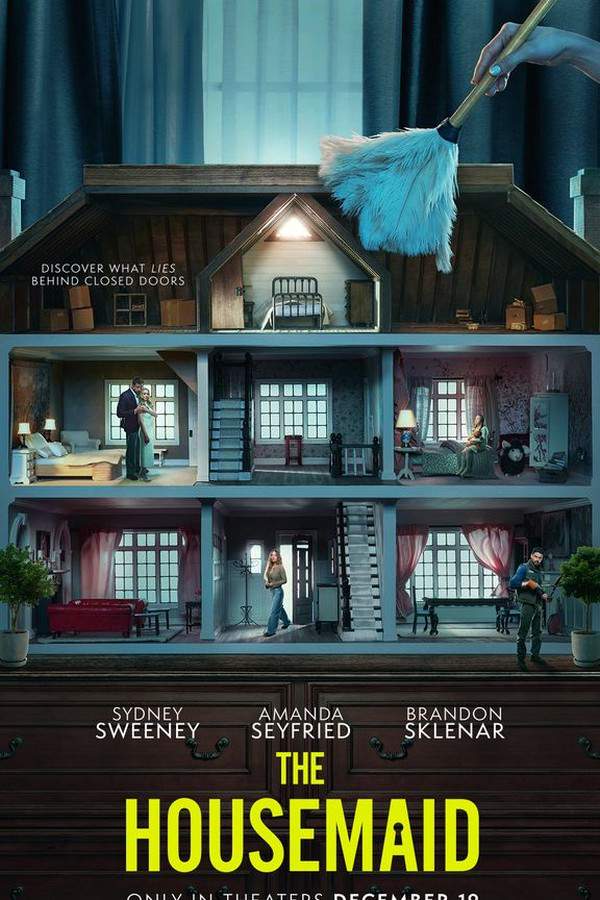
Trying to escape her troubled past, Millie (Sydney Sweeney) takes a live‑in position as housemaid for the affluent couple Nina (Amanda Seyfried) and Andrew Winchester (Brandon Sklenar). What begins as an ideal job quickly becomes a perilous, seductive battle of secrets, scandal and power, as hidden intrigues surface behind the Winchesters’ closed doors.


Does The Housemaid have end credit scenes?
No!
The Housemaid does not have end credit scenes. You can leave when the credits roll.
Where to Watch The Housemaid
See current US streaming, rental, and purchase options for The Housemaid (2025) via JustWatch.

Philo
HD
Starz
HD
Starz Amazon Channel
HD
Starz Apple TV channel
HD
Starz Roku Premium Channel
HD
Amazon Video
4K
Apple TV Store
4K
Fandango At Home
4K
FlixFling
HD
Google Play Movies
SD
Plex
HD
YouTube
SD Streaming availability powered by 
Meet the Full Cast and Actors of The Housemaid
Explore the complete cast of The Housemaid, including both lead and supporting actors. Learn who plays each character, discover their past roles and achievements, and find out what makes this ensemble cast stand out in the world of film and television.

Michele Morrone
Enzo

Amanda Seyfried
Nina

Sydney Sweeney
Millie

Iván Amaro Bullón
Theater Patron

Elizabeth Perkins
Evelyn

Amanda Joy Erickson
Suzanne

Maury Ginsberg
Therapist

Don DiPetta
Officer Jenkins

Brandon Sklenar
Andrew
Megan Ferguson
Jilianne
Einar Haraldsson
Police Detective
Matt Walton
Lynch
Ellen Tamaki
Patrice
Reagan Fitzgerald
5-Year Old Cece
Arabella Olivia Clark
Young Nina
Indiana Elle
Cecilia
Alaina Surgener
Amanda
Hannah Cruz
Lexi
Sophia Bunnell
Kelsey
Alexandra Seal
Officer Jessica Connors
External Links and Streaming Options
Discover where to watch The Housemaid online, including streaming platforms, rental options, and official sources. Compare reviews, ratings, and in-depth movie information across sites like IMDb, TMDb, Wikipedia or Rotten Tomatoes.








Ratings and Reviews for The Housemaid
See how The Housemaid is rated across major platforms like IMDb, Metacritic, and TMDb. Compare audience scores and critic reviews to understand where The Housemaid stands among top-rated movies in its genre.

The Movie Echo Score
The Housemaid delivers a competent, if uneven, thriller that leans on its lively performances and playful tone to offset its narrative and stylistic flaws. Critics note the film’s energetic pacing and occasional visual flair, but also point to a bloated runtime and a script that stumbles. User feedback echoes this split, praising the cast while flagging predictability. The result is an entertaining, popcorn‑ready entry that stops short of excellence.
The Movie Echo Score Breakdown for The Housemaid

Art & Craft
In terms of direction and visual craft, Paul Feig applies a glossy, B‑movie aesthetic that some critics find stylish and smoothly executed. The cinematography and set design reinforce the steamy, twisty atmosphere, yet remarks of over‑egging and occasional clunky editing suggest inconsistency. Overall, the film’s artful surface supports the genre tone, though it lacks the sophistication of higher‑budget thrillers.

Character & Emotion
When examining character work, the cast receives broadly favorable comments. Amanda Seyfried’s nuanced delivery and Sydney Sweeney’s energetic presence are highlighted as strengths, while Brandon Sklenar’s solid support rounds out the trio. Some viewers note Sweeney’s limited expressiveness and occasional over‑acting, indicating uneven emotional depth. The net impression is a capable ensemble that elevates the material despite isolated performance gaps.

Story & Flow
The narrative unfolds as a by‑the‑numbers erotic thriller with a lengthy, 131‑minute runtime that some critics deem indulgent. While the plot’s twists and playful tone generate moments of engagement, reviewers criticize clunky dialogue and predictable beats that undermine cohesion. Audience reactions mirror this split, finding the story fun yet strained by pacing issues. Consequently, the storytelling is serviceable but not memorable.

Sensory Experience
Sensory elements receive modest acknowledgment, with the film’s steamy visual style and occasional atmospheric scoring noted as fitting the genre. However, specific commentary on sound design or musical themes is sparse, and some critics perceive the overall sensory impact as generic rather than distinctive. The effect is a competent, if unremarkable, auditory‑visual package that supports but does not enhance the viewing experience.

Rewatch Factor
Rewatch potential is bolstered by the film’s playful energy and the chemistry among its leads, which many viewers cite as reasons to return. While the plot’s predictability and uneven pacing limit depth on subsequent viewings, the blend of humor and tension offers enough novelty for occasional repeat enjoyment. Overall, the movie provides a satisfying, popcorn‑friendly experience that can be revisited without feeling stale.

65
Metascore
5.9
User Score


%
TOMATOMETER

0%
User Score

6.7 /10
IMDb Rating

73
%
User Score
Full Plot Summary and Ending Explained for The Housemaid
Read the complete plot summary of The Housemaid, including all major events, twists, and the full ending explained in detail. Explore key characters, themes, hidden meanings, and everything you need to understand the story from beginning to end.
Millie Calloway, Sydney Sweeney, becomes the live-in maid for the wealthy Winchester family in Great Neck, Long Island, while on parole. Her room sits in the attic behind a sealed window, and a door that locks from the outside, a constant reminder that her movements are watched and controlled. The household revolves around Nina, Amanda Seyfried, the mother and wife who carries an unsettling blend of charm and fragility, hinting at deeper troubles that ripple through every room.
Nina’s past haunts the present in disturbing ways. Years earlier, she attempted to drown her daughter Cecelia, nicknamed Cece, and then tried to overdose, acts that left a dark stain on the family and on Nina’s mind. The memory resurfaces in whispered conversations with neighbors and in the uneasy dynamic that develops between Nina and Millie, as Nina’s moods swing from affectionate to accusatory with alarming speed. The attic becomes a symbolic and literal fortress around Millie, a place where she is kept in a state of limbo, while Nina’s outward warmth masks a volatile undercurrent that many in the house prefer to overlook.
A weekend plan changes the course of Millie’s life. Nina asks Millie to arrange a trip to the city for herself and her husband, Andrew, played by Brandon Sklenar, to see a Broadway musical titled Showdown and to stay overnight in a hotel. When ticket refunds fall through, Nina denies having asked for the arrangement, and Millie is told the cost will come out of her paycheck. With Nina distracted, Millie and Andrew quietly decide to attend the show themselves, hoping for a chance to escape from the uneasy, ever-present tension at home. They enjoy the performance, dine out, and check into a hotel, a brief moment of freedom that quickly collides with the house’s oppressive routines upon their return.
Back home, Millie discovers several angry texts from Nina and, in a moment of panic, Misses messages that culminate in a firing. The betrayal cuts deep, and Millie finds solace with Andrew as they navigate a new, illicit closeness. The couple’s secret becomes a fragile anchor as Millie tries to repair a chipped heirloom china plate—an artifact tied to Andrew’s family. He consoles her, insisting the break can be fixed, but the incident triggers a deeper reckoning about the power dynamics at play. Millie, ever practical, collects the shards in a plastic bag, a silent archive of the growing danger. When Andrew returns, he and Millie retreat to her old attic room, where he locks her inside, reasserting control.
The past resurfaces in a chilling letter-like revelation: the attic’s hidden history includes Andrew’s earlier control over Nina. In a terrifying memory, he forced Nina to pull out hair by the handful, then deprived her of water, and kept her in the attic until she was broken and compliant. The truth explains the present’s fragile balances, the room’s oppressive feel, and the way Nina’s surface kindness can abruptly fold into something colder and more calculating. Grounded in fear and manipulation, the household’s power plays become clearer as Enzo, the groundskeeper, Michele Morrone, begins to realize what happened and strives to protect Nina from the moral wreckage he sees around them.
In a brutal sense of punishment that echoes the past, Andrew confronts Millie with a cruel demand: she must cut her stomach 21 times—the number of broken china shards—before he will release her. The act is a mediated, horrifying moment where Millie asserts herself through violence, stabbing Andrew in the neck with a cheese knife Nina had stashed for her. A chaotic struggle ends with Millie locking Andrew inside the attic and breaking more of the china in a visceral claim to agency.
Nina, pressed by Cece’s urging to rescue Millie, returns to the house. She finds the attic’s light still on and unlocks the door just as Andrew closes in again. Yet Millie manages to slip away during the confrontation, and Nina refuses to resume her life with Andrew. In a final, fatal confrontation, Millie reappears to push Andrew over a spiral staircase, and Nina produces a staged accident by dropping a light bulb next to the body, aided by Enzo to make the incident look like a tragic but ordinary mishap.
Officer Jessica Connors, Alexandra Seal, begins an inquiry into the case and notices inconsistencies in Nina’s account. Her investigation is tempered by historical knowledge of Andrew’s previous fiancée, who remains a shadowy figure in Nina’s past, and Connors chooses not to press further. After Andrew’s funeral, Nina offers Millie a check for one hundred thousand dollars, a gesture framed as a payoff for starting anew. Millie, now tied to a hollow sense of victory, heads to a new life with the option of continuing her work in the service of others.
The story closes on Millie’s horizon, where the shadow of the Winchester house lingers, and the possibility of a fresh start glimmers on the edge of the next opportunity. In a quiet, unsettling way, the film suggests that survival can come at a price, and that the line between victim and survivor is often blurred by power, vulnerability, and the quiet insistence of those who refuse to be erased. Millie’s path forward becomes a careful balance between independence and dependence, between trust and caution, as she steps toward a future that may finally belong to her own terms.

Coming soon on iOS and Android
The Plot Explained Mobile App
From blockbusters to hidden gems — dive into movie stories anytime, anywhere. Save your favorites, discover plots faster, and never miss a twist again.
Sign up to be the first to know when we launch. Your email stays private — always.
Explore the mobile appWatch Trailers, Clips & Behind-the-Scenes for The Housemaid
Watch official trailers, exclusive clips, cast interviews, and behind-the-scenes footage from The Housemaid. Dive deeper into the making of the film, its standout moments, and key production insights.
The Housemaid Themes and Keywords
Discover the central themes, ideas, and keywords that define the movie’s story, tone, and message. Analyze the film’s deeper meanings, genre influences, and recurring concepts.
The Housemaid Other Names and Titles
Explore the various alternative titles, translations, and other names used for The Housemaid across different regions and languages. Understand how the film is marketed and recognized worldwide.
Similar Movies To The Housemaid You Should Know About
Browse a curated list of movies similar in genre, tone, characters, or story structure. Discover new titles like the one you're watching, perfect for fans of related plots, vibes, or cinematic styles.








Quick Links: Summary, Cast, Ratings, More

What's After the Movie?
Not sure whether to stay after the credits? Find out!
Check out our other apps:

SAT Sphere
Build confidence for the Digital SAT.

Mori Atlas
Discover wild places worth protecting.

Luntero
Search smarter for a home in Amsterdam.

Plot Explained
Unravel movie endings and hidden clues.

Pokechamp
Dive into Pokémon data and battle logic.

Driving Theory
Get ready for your European theory test.

Movie Dust
Plan your next cinema trip with ease.

Musemap
Find art and culture as you travel.

Selkobase
Compare credentials before committing.

Local Manual
Turn an unfamiliar country into practical next steps.

Lernavi
Compare school systems before your next move.

GymRoam
Find a workout stop wherever your plans take you.
Explore Our Movie Platform
New Movie Releases (2026)
Famous Movie Actors
Top Film Production Studios
Movie Plot Summaries & Endings
Major Movie Awards & Winners
Best Concert Films & Music Documentaries
Movie Collections and Curated Lists
© 2026 What's After the Movie. All rights reserved.
Privacy Policy