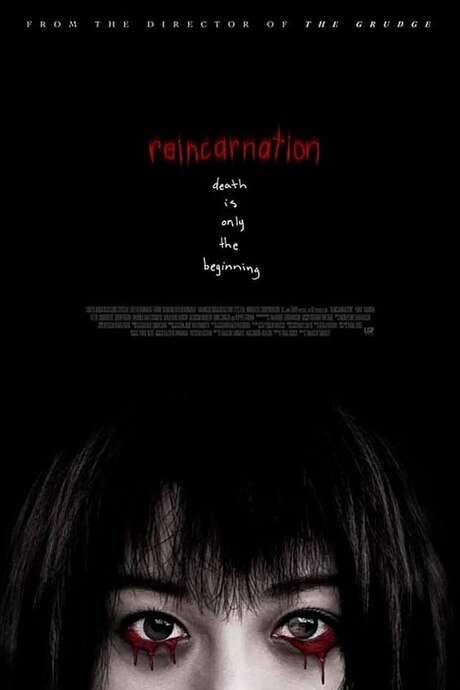
What Is Reincarnation About?
The premise of Reincarnation in 284 words, with nothing given away. The full story follows below.
In contemporary Japan, a daring horror filmmaker decides to bring a long‑forgotten tragedy to the screen, turning a real‑life massacre into a cinematic spectacle. The project attracts a tight‑knit crew eager to explore the unsettling possibility that art might echo forces beyond its control. As cameras roll, the production becomes a study in atmosphere, where the ordinary world of studios and sets is haunted by the residual weight of the past, suggesting that some stories refuse to stay buried.
The centerpiece of the venture is Nagisa Sugiura, a young actress tasked with embodying a pivotal figure from the original event. Her dedication quickly draws her into a vortex of vivid dreams and uncanny sensations that feel less like performance and more like recollection. Guiding the vision is Ikuo Matsumura, a director whose fascination with horror borders on obsession, while Yayoi Kinoshita, a curious college student, and Yuka Morita, another actress with an unsettling sense of déjà vu, become entangled in the project’s mysteries. Their interactions blend professional ambition with a shared unease, hinting at deeper, unseen currents shaping their experience.
The film’s tone is a slow‑burning blend of psychological dread and eerie folklore, emphasizing mood over spectacle. Themes of memory, identity, and the cyclical nature of existence linger in every frame, inviting viewers to question where performance ends and reality begins. As the cast delves deeper into their roles, they encounter subtle signs that the past may be reaching out, suggesting that death could be merely a doorway rather than an end. The result is a haunting meditation on the power of stories to resurrect what we thought was gone, leaving the audience with a lingering sense of unease long after the credits fade.
What Happens in Reincarnation?
The complete story of Reincarnation, from the first scene to the last, in 704 words (about 3 minutes). Spoilers throughout. Names in the text link to 6 cast member pages.
Spoilers ahead
Norihasa Omori (Atsushi Haruta)—a professor bent on uncovering the mysteries of reincarnation—travels to a local hotel in 1970 and records himself committing a brutal slaughter: eleven lives, including guests, staff, and his own children. He then dies by his own hand, leaving behind a controversial piece of footage that dissolves into the ether and vanishes from memory. The act is chilling in its certainty, a calculated rite meant to probe what lies beyond death, and its disappearance stirs a quiet puzzle that future generations will chase.
Thirty-five years later, Ikuo Matsumura (Kippei Shiina), a horror filmmaker, resolves to make a film about the massacre. As the production draws near, Nagisa Sugiura (Yûka)—the actress cast to portray Omori’s daughter Chisato—begins to be haunted by the victims’ spirits. Her nights fracture into vivid nightmares, and she experiences unsettling hallucinations that blur the line between fiction and the past. Amid the creeping dread, she stumbles upon an old film camera that resembles the one Omori used, a relic that seems to unlock something ancient and ominous within the project.
In the midst of these eerie premonitions, Yayoi Kinoshita (Karina)—a college student drawn into the project—meets Yuka Morita (Marika Matsumoto), another actress who had auditioned for Ikuo’s film. Yuka claims she remembers things from a “past life” and shows Yayoi a birthmark that appears to echo signs of strangulation. The unsettled atmosphere thickens as unseen presences insinuate themselves, and soon Yuka is seized by ghostly forces that drag her away, leaving Yayoi with more questions than answers and a growing sense that the line between cinema and the supernatural is dangerously thin.
Yayoi’s research leads her to Ayumi Omori (Miki Sanjō), the massacre’s lone survivor and Omori’s wife. Ayumi explains that Omori had become obsessed with the idea that the body is merely a vessel, a vessel that could be emptied and reused by another presence after death. Her testimony adds a chilling layer to the myth surrounding the killings and hints at why the film’s cast might be drawing on forces they don’t fully understand.
As filming progresses, Nagisa’s hallucinations intensify. Her agent reviews the camera—the very instrument that holds Omori’s murders—expecting a straightforward artifact, only to find it contains a loop of events that seem to reenact themselves in real time. When the film begins to play, Nagisa and the other performers appear to step into the roles they portray, and the people she sees begin transforming into those roles before her eyes. The victims drift toward her as she makes a desperate escape, sprinting through the town while her agent watches everything unfold through Omori’s point of view, a perspective that becomes increasingly unreliable and claustrophobic.
In a climactic moment, Nagisa is cornered in a shop and seizes a shard of glass to end her life. She gazes into the window and sees Omori’s face staring back at her, a mirror of the original crime that now seems to foretell her own fate. Her agent watches, witnessing Omori reveal Nagisa’s reflection in the glass rather than his own before he cuts his throat. The boundary between killer and victim blurs as Nagisa slowly begins to reenact Omori’s suicide, only to be halted by a malevolent force in the form of a doll that utters a chilling claim: they will be together forever.
Behind the scenes, a group of executives reviews Nagisa’s take on the film. Among them is Ayumi, the survivor who carries the pain of the past into the present. As the production spirals toward its close, Nagisa collapses, her body shaking and her voice raw with fear, as crew members rush to assist. The finale unfolds in a mental ward, where Nagisa is restrained in a full-body wrap, still haunted by the souls of Omori’s children. Ayumi appears at the door, peering in as Nagisa’s world tightens around her. She passes Nagisa the toys the children loved— a red ball and a doll—signaling a eerie continuity between the living and the dead. Nagisa’s scream echoes down the corridor, but a sinister, almost serene smile spreads across her face as the ghosts close in, leaving the audience with a haunting image of possession, memory, and the price of peering too deeply into the past.
Reincarnation Timeline: Every Key Event in Order
12 key events in the order they happen, from “1970 Hotel Slaughter” to “Nagisa’s Collapse and the Ward”. 12 events name a place, across 11 locations.
- 1
1970 Hotel Slaughter
In 1970, Omori records himself committing a brutal slaughter of eleven people at a local hotel, including guests, staff, and his own children. He then dies by his own hand, leaving behind a chilling piece of footage. The act is meticulous and ceremonial, intended to probe what lies beyond death. The footage dissolves into ether and vanishes from memory, sparking a quiet puzzle for future generations.
When:1970 Where:Local hotel
- 2
Footage Vanishes from Memory
Immediately after the act, the recorded footage dissolves and vanishes from memory, leaving no enduring record of what happened. The mystery surrounding Omori’s crime deepens as the past seems to erase itself. Witnesses are left with only rumors and fear of what truly occurred that night.
When:1970 Where:Local hotel
- 3
Ikuo Begins the Film Project
Thirty-five years later, horror filmmaker Ikuo Matsumura resolves to make a film about the massacre. He assembles a crew and begins planning shoots, driven by a desire to illuminate the forgotten event. The project starts to echo the past, hinting that cinema may awaken shadows better left buried.
When:2005 Where:Film production site
- 4
Nagisa’s Premonitions Intensify
As production approaches, Nagisa Sugiura, cast to portray Omori’s daughter Chisato, begins to suffer nightmare-haunted nights and unsettling hallucinations. The visions blur lines between fiction and the massacre, deepening a creeping sense of dread. The boundary between the on-set world and the past grows dangerously thin.
When:2005 Where:Film production set
- 5
Yayoi Meets Yuka; Past Life Signs
Yayoi Kinoshita, drawn into the project, encounters Yuka Morita, another actress who claims memories from a past life and shows a birthmark echoing signs of strangulation. The two women sense a living echo of the victims and feel the film’s reach extending beyond fiction. Their meeting amplifies the sense that something older and more malevolent watches from behind the camera.
When:2005 Where:Audition room
- 6
Ayumi’s Survivor Testimony
Ayumi Omori, the massacre’s lone survivor and Omori’s wife, explains that the body is a vessel that can be emptied and reused after death. Her testimony adds a chilling layer to the myth surrounding the killings and hints at why the film’s cast might be drawn to forces they don’t fully understand. The past thus begins to breathe through living memory.
When:2005 Where:Ayumi’s home
- 7
The Camera Reveals a Real-Time Loop
As filming progresses, Nagisa’s agent reviews Omori’s camera and discovers a looping reel that reenacts events in real time. When the film begins to play, the performers seem to step into the roles they portray, and the people she sees begin transforming into those roles before her eyes. The perspective grows increasingly unreliable and claustrophobic as the past infiltrates the present.
When:2005 Where:On-set / camera room
- 8
Actors Enter Their Roles; Reality Shifts
With the loop active, the cast drifts into their on-screen personas, and the victims drift toward Nagisa in the real world. The town and set become a dark stage where past horrors intrude on present lives. The line between cinema and the supernatural seems dangerously thin.
When:2005 Where:Town / on-location set
- 9
Nagisa’s Desperate Escape
Cornered in a climactic sequence, Nagisa seizes a shard of glass and flees through the town, glimpsing Omori’s face reflected in a shop window rather than his own. The agent watches, increasingly unsettled, as events unfold from Omori’s perspective. The pursuit marks a turning point where killer and victim threaten to swap places.
When:2005 Where:Shop window / town
- 10
The Doll’s Ominous Message
Inside the shop, a malevolent doll utters a chilling claim: they will be together forever. The haunting intensifies as objects around Nagisa seem to carry the past into the present. The boundary between film prop and living spirit blurs in a palpable, unnerving way.
When:2005 Where:Shop
- 11
Executives Review Nagisa’s Take
Behind the scenes, executives review Nagisa’s performance as the production races toward completion. Ayumi, the survivor, sits among them, her presence a grim reminder of the history being reanimated. Tension rises as the footage and past crimes exert their influence on the crew.
When:2005 Where:Production office
- 12
Nagisa’s Collapse and the Ward
Nagisa collapses in fear, and crew members restrain her in a full-body wrap inside a mental ward. Ayumi appears at the door, offering the red ball and a doll—the same objects tied to the children’s memories. The scream echoes as ghosts close in, leaving a haunting image of possession and memory.
When:2005 Where:Mental ward
Who Are the Main Characters in Reincarnation?
6 characters, among them Nagisa Sugiura (Yûka), Yayoi Kinoshita (Karina) and Yuka Morita (Marika Matsumoto): who each one is and the part they play in the story. Every profile links to the actor’s page.
- NS
Nagisa Sugiura (Yûka)
Played by Yûka
An actress cast to portray Omori’s daughter Chisato, Nagisa becomes the focus of the haunting. She experiences vivid nightmares and unsettling hallucinations that blur fiction and past reality. As the film progresses, she seems to be drawn into reenacting parts of the massacre, culminating in a traumatic confrontation that echoes the original crime.
- 🎭 Actress
- 👻 Haunting
- 🧠 Hallucinations
- 🎬 Film within
- YK
Yayoi Kinoshita (Karina)
Played by Karina
A college student drawn into the project, Yayoi encounters the spreading mystery as she meets another actress and becomes entangled in the past. Her curiosity drives her to question signs of a past life and the boundaries between reality and cinema. She navigates the increasingly unsettled environment with a mix of doubt and intrigue.
- 🎓 Student
- 👀 Curiosity
- 🧭 Investigation
- 🪄 Fate
- YM
Yuka Morita (Marika Matsumoto)
Played by Marika Matsumoto
An actress who auditioned for Omori’s daughter, Yuka claims memories from a past life and points to a birthmark that echoes signs of strangulation. Her experiences link the past trauma to the present production, fueling the sense that the massacre can reach into the current story. Her role becomes a catalyst for the eerie connections between memory and identity.
- 🧿 Recollection
- 👁️ Past-life
- 🎭 Actress
- AO
Ayumi Omori (Miki Sanjō)
Played by Miki Sanjō
Ayumi is the massacre’s lone survivor and Omori’s wife, whose testimony about the body being a vessel adds a chilling dimension to the myth surrounding the killings. Her perspective deepens the sense that the past’s ideas about life and death may persist across generations. She anchors the narrative’s ghostly logic with personal memory.
- 🩸 Trauma
- 👩👧 Family
- 🧭 Survivor
- NO
Norihasa Omori (Atsushi Haruta)
Played by Atsushi Haruta
The professor obsessed with reincarnation, Omori’s actions lead to the massacre. He dies by his own hand, leaving behind a controversial legacy and the possibility that the body is merely a vessel for another presence. His life and beliefs drive the central mystery that successive generations attempt to unravel.
- 🧠 Obsession
- 🗡️ Crime
- 👁️ Trauma
- IM
Ikuo Matsumura (Kippei Shiina)
Played by Kippei Shiina
A horror filmmaker who resolves to make a movie about the massacre, Ikuo pursues the past through the act of filming. His project blurs boundaries between reality and fiction, drawing the cast into a feedback loop of memory and fear. He embodies the meta-narrative core of the story as cinema becomes a conduit to the dead.
- 🎬 Filmmaker
- 🕵️♂️ Investigation
- 🌀 Obsession
Where and When Is Reincarnation Set?
Reincarnation is set in Local hotel (1970s and mid-2000s). Here is why the time and place matter to the story.
When
1970s and mid-2000s
The story begins with the 1970 massacre in the hotel, witnessed through the professor’s camera. About 35 years later, a horror filmmaker revisits the past in the early 2000s, bringing the events into a contemporary frame. The narrative thus moves between a bygone era and the near-present, linking memory to new creation.
Where
Local hotel
The primary setting is a local hotel where a professor records a brutal massacre in 1970. Its dim corridors and secluded rooms become the cradle of memory and guilt that echoes into the present. The hotel’s atmosphere is tense and claustrophobic, functioning almost as a character that absorbs the trauma of past events.
- 🏨 Hotel
- 👻 Haunted
- 🕰️ Time-worn
- 🗝️ Mystery
What Are the Themes of Reincarnation?
4 ideas the story keeps returning to, among them Past vs Present, Haunting and Film Within Film.
-
01
Past vs Present
Past traumas continually intrude on the present as footage and memories resurface. The film blurs the line between what happened and what is being re-enacted, challenging the stability of memory. The hotel and the on-screen production become living conduits for a history that refuses to stay buried.
-
02
Haunting
The victims’ spirits interact with the living, intruding into dreams and waking life. These presences push characters to doubt reality, memory, and culpability. The hauntings are as much psychological as supernatural, reflecting grief and unresolved trauma.
-
03
Film Within Film
A film about the massacre creates a feedback loop where fiction awakens real danger. The camera and footage serve as portals to past violence, distorting time and identity. The story asks whether cinema can summon memory or trap those who seek to understand it.
-
04
Memory and Obsession
The pursuit of reincarnation and bodies as vessels mirrors the film’s fixation with controlling death. Characters chase answers across decades, often at the cost of safety and sanity. Memory, when summoned, reshapes those who seek to unearth it.
What Kind of Film Is Reincarnation?
Dark in tone, with variable pacing and a moderate story, going by the plot summary.
- Tone
- Dark
- Pacing
- Variable
- Story
- Moderate
- Intensity
- High
- Ending
- Bleak
A deeply unsettling Japanese horror film that builds a suffocating atmosphere of dread, blurring the line between a film production and a real-life massacre as the cast becomes psychically linked to the sins of the past.
- ominous
- haunting
- claustrophobic
- anxious
- dreamlike
- melancholic
- reincarnation
- supernatural horror
- past lives
- film within a film
Content notes: mass murder, suicide, child death, throat slitting, psychological torment, hallucinations.
Quiz
How well do you remember Reincarnation? Test yourself on the story.