What Is Reincarnation About?
The premise of Reincarnation in 284 words, with nothing given away. The full story follows below.
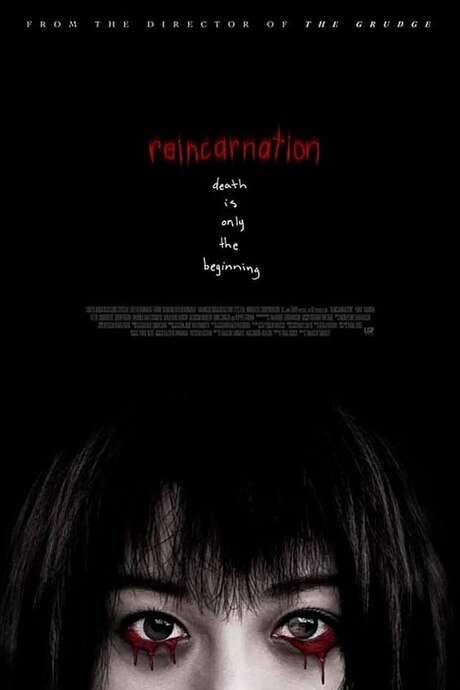
In a remote, weather‑worn hotel that once hosted a chilling real‑life tragedy, a film crew gathers to resurrect the story on screen. The project, helmed by a director known for his unsettling atmospheric horror, invites a cast of actors who must confront more than just their roles. Yuka is a Japanese actress drawn to the eerie allure of the script, only to find the set itself humming with an unsettled presence that seems to echo the past.
The production’s centerpiece is Nagisa Sugiura, an emerging talent cast as the professor’s young daughter. As rehearsals begin, the line between performance and reality blurs, and the hotel’s lingering energy begins to seep into the actors’ lives, prompting whispered doubts and nocturnal visions. Overseeing the venture is Ikuo Matsumura, a filmmaker whose curiosity about the original events borders on obsession, and whose dedication to authenticity brings the location’s ghostly reputation into sharp focus.
Amid the charged atmosphere, Ayumi—the sole surviving witness to the historical catastrophe—offers a quiet, enigmatic perspective that hints at deeper questions about memory, guilt, and the possibility of rebirth. The ensemble finds themselves caught in a slow‑burning tension where each scene feels like a step deeper into a labyrinth of unresolved sorrow. The film’s tone is unmistakably dark and hypnotic, a blend of psychological unease and lingering dread that mirrors the director’s signature style.
As the story within the story unfolds, the characters grapple with the weight of the past that refuses to stay buried. Their interactions become a dance between curiosity and fear, inviting the audience to wonder whether the act of reenactment can ever truly lay old wounds to rest, or if it merely awakens something far more persistent beneath the surface.
What Happens in Reincarnation?
The complete story of Reincarnation, from the first scene to the last, in 475 words (about 2 minutes). Spoilers throughout.
Spoilers ahead
In 1970, a disturbing pursuit of answers leads Professor Norihasa Omori to a local hotel where he records himself killing eleven people—including hotel guests, staff, and his own children—before taking his own life. He does this in a rarefied attempt to grasp the idea of reincarnation, but after the act, the footage mysteriously vanishes, as if the truth itself had hidden away with the crime.
Thirty-five years pass, and horror movie director Ikuo Matsumura decides to bring the massacre to life on screen. As the production nears, Nagisa Sugiura, the actress set to star as Omori’s daughter Chisato, is besieged by the lingering presence of the victims’ ghosts. Her reality begins to blur as she experiences vivid hallucinations and nightmares of the killings, and she stumbles upon an old film camera that resembles the one Omori used.
Meanwhile, college student Yayoi Kinoshita encounters Yuka Morita, an actress who had auditioned for Matsumura’s film. Yuka speaks of a “past life” and shows Yayoi a birthmark that she believes serves as evidence of strangulation. Soon after, the ghosts reappear and drag Yuka away, leaving Yayoi to piece together the eerie clues. Her investigation leads to Ayumi, Omori’s wife and the massacre’s sole survivor, who explains Omori’s fixation on the body as merely a vessel and his unsettling belief that deeper forces governed what a body could become.
As filming continues, Nagisa’s visions intensify. Her agent reviews the recovered camera—the same device Omori used to document his killings—and as the film runs, Nagisa is pulled into reenactment after reenactment of the past. She watches the people around her—Yayoi, Ikuo, and the two men from the opening—transform into the very figures they portray. The victims begin to walk toward her, and she bolts away, fleeing into the town. At the same moment, her agent observes Nagisa’s escape from Omori’s own point of view. Cornered in a shop, Nagisa seizes a shard of glass and teeters on the edge of suicide; when she looks into the glass, she sees Omori’s face reflected back at her. Her agent witnesses Omori witnessing Nagisa’s reflection instead of his own before he cuts his throat. Nagisa tries to repeat Omori’s suicide, but a doll stops her, whispering that they will be together forever.
A team of executives watches Nagisa’s performance, including Ayumi, who remains a quiet, ominous presence. As the shoot nears its end, Nagisa collapses—trembling, screaming—while crew members rush to assist. Later, in a mental ward, Nagisa lies wrapped in a full-body restraint, still haunted by the souls of Omori’s children. Ayumi looks in through the door window and then presents Nagisa with her children’s favorite toys—a red ball and a doll. Nagisa screams at first, but a chilling calm gradually settles over her as the ghosts of the children close in, leaving a lingering sense that the past has not finished speaking.
Reincarnation Timeline: Every Key Event in Order
15 key events in the order they happen, from “Omori's hotel massacre and suicide” to “Final haunting: Nagisa's smile amid the spirits”. 14 events name a place, across 12 locations.
- 1
Omori's hotel massacre and suicide
In 1970, Professor Norihasa Omori murders eleven hotel guests, employees, and his own children on camera as he seeks to understand reincarnation. He records the killings and then commits suicide, leaving behind a mysterious film. The footage vanishes and becomes a whispered legend that haunts later generations.
When:1970 Where:Local hotel
- 2
The vanished footage fuels the legend
Decades pass and the mysterious film remains missing, fueling theories and rumors about its existence and power. Filmmakers and investigators chase the elusive footage, but no copy is ever recovered. The legend begins to blur the line between myth and reality.
- 3
Matsumura chooses to make a film about the massacre
Thirty-five years after the killings, horror director Ikuo Matsumura decides to make a film about the massacre. Casting includes Nagisa Sugiura, who will play Omori's daughter Chisato. Production begins as the crew prepares to bring the tragedy to the screen.
When:2005 Where:Film studio
- 4
Nagisa's haunting intensifies as filming nears
As the shoot draws near, Nagisa is haunted by the ghosts of the victims and experiences disturbing nightmares. She feels the past press in on the present and worries about becoming possessed by Omori's story. The sense of dread intensifies even before filming starts.
When:Pre-production Where:Studio / Nagisa's dressing room
- 5
Nagisa finds a camera similar to Omori's
Nagisa discovers an old film camera similar to the one Omori used, suggesting a direct link between the camera and the hauntings. The find deepens her sense that the equipment carries memories rather than just film. She pockets the instrument as a strange omen.
When:Pre-production Where:Studio
- 6
Yayoi meets Yuka, and past-life clues surface
Yayoi Kinoshita, a college student, meets Yuka Morita, an actress who had auditioned for Matsumura's project. Yuka claims memories from a past life and shows Yayoi a birthmark that resembles evidence of strangulation. Soon after, ghosts drag Yuka away, hinting that the past is far from over.
When:Pre-production Where:City outskirts
- 7
Ayumi the survivor shares the truth
Yayoi's research leads her to Ayumi, Omori's wife and the massacre's sole survivor. Ayumi explains that Omori had become obsessed with the idea that the body is just a vessel for something greater. Her testimony deepens the sense that the film's ghostly legacy is alive and watching.
When:Pre-production Where:Ayumi's home
- 8
Filming triggers Nagisa's hallucinatory reenactments
During filming, Nagisa's hallucinations sharpen and she reenacts moments from Omori's crime as the camera turns on. The production team reviews the original footage taken by Omori's camera, and the events begin to bleed into reality as Nagisa slips into the killer's perspective. The line between performance and possession becomes dangerously thin.
When:During production Where:Studio set
- 9
The cast begins to transform; Nagisa escapes to town
As the film progresses, the actors start transforming into the characters they portray, and the victims appear to walk toward Nagisa. Terrified, she runs from the studio and into town, chased by a growing sense that the past intends to reclaim them all. The supernatural sequence deepens with each step.
When:During production Where:Town
- 10
Agent watches Nagisa's escape from Omori's POV
Back on the film's footage, Nagisa's escape unfolds from Omori's point of view, and she is cornered in a store. She grabs a shard of glass to attempt suicide, and during the moment she sees Omori's face reflected in the glass while Omori’s film reveals Nagisa's reflection instead. The moment cements the ghostly film as a living force.
When:During production Where:Town store
Show the other 5 events of Reincarnation Hide the last 5 events
- 11
Doll interruption and foretold union
As Nagisa begins to reenact Omori's suicide, a mysterious doll interrupts her and tells her they will be together forever. The doll's interruption fuels a sense that the haunting has acquired a voice of its own. The boundary between the living and the dead grows thinner.
When:During production Where:Studio
- 12
Executives review the take; Ayumi among them
A group of executives watches Nagisa's performance, and Ayumi is among them. Tension rises as the past seems to intrude on the present, and the screening hints that the film's legacy will not stay on the screen. The power of the murder's memory looms over their heads.
When:Late production Where:Executive screening room
- 13
Nagisa collapses; shift toward confinement
Near the end of the shoot, Nagisa collapses and crew members rush to her side. The episode foreshadows a deeper tragedy as the line between performance and haunting remains blurred. The film's completion hangs in the balance as the mystery deepens.
When:End of shoot Where:Set / studio
- 14
In the mental ward: Ayumi's visit and the toys
Sometime later, in a mental ward, Nagisa is bound in a full-body wrap and remains haunted by the souls of Omori's children. Ayumi visits through the door window and passes Nagisa her children's red ball and doll, a grim symbol of the past's grip. The haunting intensifies as the toys become focal points of possession.
When:Some time later Where:Mental ward
- 15
Final haunting: Nagisa's smile amid the spirits
Nagisa screams but finally smiles with a sinister calm as the ghosts close in. The red ball and doll linger as the spirits surround her, leaving the ending ambiguously haunted rather than resolved. The tale ends with the haunting continuing beyond the screen.
When:Afterward Where:Mental ward
Who Are the Main Characters in Reincarnation?
3 characters, among them Maestro (Xiang Ting Li), Boyfriend (Joshua Michaell) and Young Protégé (Julia Sun): who each one is and the part they play in the story. Every profile links to the actor’s page.
- M(
Maestro (Xiang Ting Li)
Played by Xiang Ting Li
An enigmatic figure tied to the film’s world, Maestro exudes a calm that blurs the line between art and horror. Their presence on set hints at a disturbing control over events and a sense that history is orchestrating what happens next. The character embodies the idea that creation can unleash the very vengeance it seeks to understand.
- 🕯️ Haunting presence
- 🎭 Mystery
- 🎬 On-set figure
- B(
Boyfriend (Joshua Michaell)
Played by Joshua Michaell
A character connected to the film’s behind-the-scenes drama, whose interactions on set contribute to the growing tension as reality and fiction intertwine. Their role underscores the fragility of relationships amid a project consumed by a terrifying past. The part emphasizes how personal bonds can be tested when a production grounds itself in murder and memory.
- 🎬 Supporting role
- 🎭 Drama
- 🕯️ Haunting
- YP
Young Protégé (Julia Sun)
Played by Julia Sun
An aspiring performer within the story, the Young Protégé mirrors vulnerability and ambition while navigating a production haunted by its history. Her presence highlights how new talent confronts old traumas and the lure of reinvention through cinema. The character also serves as a conduit for the meta-narrative about memory and performance.
- 🎭 Drama
- 🪞 Past life
- 🎬 On-set companion
Where and When Is Reincarnation Set?
Reincarnation is set in Hotel, Film studio, Town and Mental ward (1970s, mid-2000s). Here is why the time and place matter to the story.
When
1970s, mid-2000s
The timeline starts with the 1970 massacre at the hotel, establishing a traumatic past. Thirty-five years later, a horror director uses the same setting to recreate the events, bringing the story into the mid-2000s. This shift creates a contrast between a discreet, secretive era of horror and a contemporary world obsessed with reviving old crimes on screen. The film thus threads the years together through memory and séance-like repetition.
Where
Hotel, Film studio, Town, Mental ward
The story unfolds across several locations: a desolate local hotel where the 1970 massacre occurred, a film studio and on-location shoots in the surrounding town during the later era, and a mental ward where Nagisa is confined. Each setting anchors a different layer of the haunting—historic tragedy, modern filmmaking, and psychological containment. The town serves as a stage for the ghosts to traverse between past and present, while the ward embodies the attempt to separate nightmare from reality.
- 🎭 Horror
- 🕯️ Haunted
- 🎬 Film production
What Are the Themes of Reincarnation?
4 ideas the story keeps returning to, among them Past Lives, Obsession and Reality vs Illusion.
-
01
Past Lives
The narrative treats bodies and places as vessels for memories that refuse to stay buried. Ghosts of the victims reappear across decades, suggesting souls traverse the living world through the film’s frame. Reincarnation is depicted less as metaphysical certainty and more as a process that bleeds into acting, filming, and spectatorship. The film invites viewers to question whether identity is fixed or carried forward by haunting histories.
-
02
Obsession
Characters chase answers about reincarnation by immersing themselves in the past through the massacre’s footage. The director’s fixation to reconstruct the event mirrors the killer’s original fixation, linking creation and destruction. On-set hauntings intensify when fiction starts to mirror reality, making the line between cinema and horror dangerously thin. This obsession catalyzes the characters’ psychological unraveling.
-
03
Reality vs Illusion
The film relentlessly blurs what is real with what is staged, as Nagisa reenacts events during her hallucinatory experiences. The camera’s eye seems to capture shifting truths, turning the act of filming into a gateway for supernatural influence. When actors transform into their roles and the past speaks through reflective surfaces, spectators are forced to doubt what they see. The result is a meta-narrative where storytelling becomes a dangerous conduit for spirits.
-
04
Haunting Presence
Ghosts of the victims permeate every layer of the production, from the hotel’s past to the present shoot and the mental ward’s isolation. The souls request recognition through images, objects, and memory, unsettling both characters and viewers. The film builds atmosphere by letting hauntings intrude on choice, control, and the ethics of revisiting murder for art. The final images imply that the past remains active and jealous of the living.
What Kind of Film Is Reincarnation?
Dark in tone, with steady pacing and a moderate story, going by the plot summary.
- Tone
- Dark
- Pacing
- Steady
- Story
- Moderate
- Intensity
- High
- Ending
- Bleak
A deeply unsettling and atmospheric horror film that steadily builds a sense of dread as an actress becomes psychologically trapped within the reenactment of a gruesome mass murder, blurring the lines between past and present.
- haunting
- unsettling
- ominous
- claustrophobic
- paranoid
- melancholic
- supernatural horror
- psychological trauma
- reincarnation
- cursed film production
Content notes: mass murder, suicide, child death, psychological horror, mental breakdown.