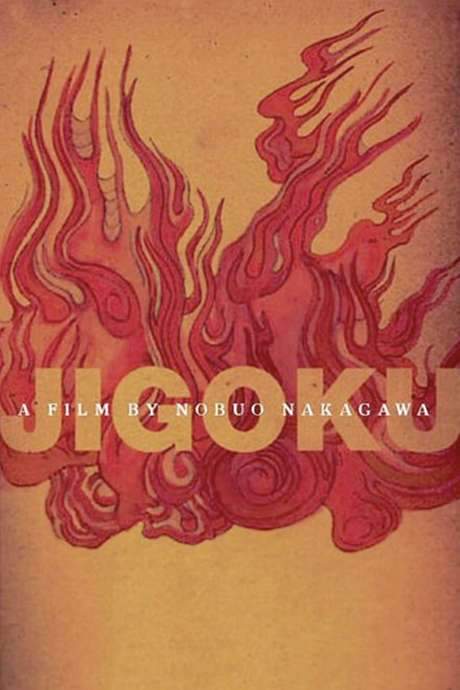
What Is Jigoku About?
The premise of Jigoku in 316 words, with nothing given away. The full story follows below.
In a world where modern Tokyo’s neon pulse meets the ancient weight of Buddhist after‑life myth, a tangled web of repentant souls drifts toward a common, ominous destination. The film paints a city that feels both familiar and nightmarish, its streets shadowed by unseen judgments and whispered promises of redemption. The atmosphere is suffused with a slow‑burning dread, as ordinary lives slowly unfurl into a kaleidoscope of guilt, longing, and the ever‑present specter of the Gates of Hell waiting beyond the veil of everyday routine.
At the heart of this uneasy tapestry is Shirō, a university student on the brink of marriage, whose quiet ambitions are shattered by an unexpected collision that forces him to confront responsibilities far beyond his own desires. He is drawn into a circle of disparate companions—a detached colleague named Tamura, a nightclub worker named Yoko who bears the weight of her own losses, and a retired community populated by a painter, a former reporter, a compromised detective, a doctor, and a nurse whose uncanny resemblance to his vanished love blurs the line between past and present. Their intersecting stories pulse with secret histories, unspoken betrayals, and fragile alliances, each character carrying a burden that ties them to a larger, unseen reckoning.
The tone is stark and contemplative, blending stark realism with surreal, almost theatrical set‑pieces that echo traditional Japanese depictions of the afterlife. Visuals are drenched in muted palettes, punctuated by moments of harsh, vivid color that hint at the inner turmoil of each sinner. As their paths converge, the film suggests an inevitable gathering at the metaphysical threshold of Hell, where the characters must face the sum of their deeds. The narrative invites viewers to linger on questions of responsibility, forgiveness, and whether the weight of sin can ever truly be lifted, all while maintaining a relentless, haunting allure that keeps the audience guessing what lies beyond the next turn.
What Happens in Jigoku?
The complete story of Jigoku, from the first scene to the last, in 614 words (about 3 minutes). Spoilers throughout. Names in the text link to 5 cast member pages.
Spoilers ahead
Shirō is a student who is about to marry his girlfriend, Yukiko, the daughter of his professor, Professor Yajima. After the engagement is announced, Shirō’s colleague Tamura drives him home and, at Shirō’s request, takes a side street. On that street, Kyōichi, a feared yakuza gang leader, is fatally struck by the car. Kyōichi’s mother, Kyōichi’s Mother, who witnesses the crash, vows to hunt them down and exact revenge.
Tamura feels no guilt for the hit-and-run, while Shirō is wracked with remorse and contemplates going to the police. After telling Yukiko what happened, Shirō insists they take a taxi to the station, despite Yukiko’s pleas to walk. The taxi crash that follows kills Yukiko, and her funeral soon after deepens Shirō’s sense of loss and responsibility. At the funeral, Shirō encounters Yoko, a strip-bar worker and Kyōichi’s grieving girlfriend. Yoko learns of Shirō’s role in the accident after spending the night with him, and, together with Kyōichi’s mother, begins to plot revenge.
As Shirō mourns, he learns that his mother, Ito, who lives in a retirement community run by his father, Gōzō, is dying. At the community, Shirō meets a painter named Ensai, a former reporter named Akagawa, a corrupt detective named Hariya, the community doctor Dr. Kusama, and Sachiko, a nurse who bears a striking resemblance to Yukiko and who is Ensai’s daughter. Ito’s death sets off a fierce confrontation: Ensai, once Ito’s lover, chastises Gōzō for his years-long affair with a mistress. Tamura returns and reveals that every resident at the home bears some complicity in past murders—Yajima’s apparent war-time killing, Hariya and Akagawa’s frames that led to suicides, and Kusama’s misdiagnosis.
Yoko tracks Shirō down and confronts him on a rope bridge, revealing her identity and attempting to shoot him. She trips and falls to her death, and Tamura reappears, only to fall into the gorge after a struggle. Shirō then attends the community’s tenth anniversary party, where Gōzō has allowed cheap, rancid fish to be served. As the party devolves into intoxication and chaos, Mr. and Mrs. Yajima kill themselves by leaping in front of a train, and Gōzō’s mistress dies during a heated confrontation. The tainted fish claim the lives of many residents, and Kyōichi’s mother poisons the remaining wine. Tamura, nearing death, staggers into the party and shoots Sachiko; in a fit of rage, Shirō strangles Tamura, while Kyōichi’s Mother exacts her own fatal retribution.
In Limbo, Shirō meets Yukiko again, who reveals she was pregnant when she died and that she sent their baby girl, named Harumi, floating away on the Sanzu River. She pleads with Shirō to save his child. Shirō descends into Hell, where Lord Enma judges him for his sins. There, he witnesses the torments of those from his life—boiling, burning, flaying, and endless cycles of punishment—before Tamura taunts him with the illusion that there is no escape. Shirō searches for his daughter and encounters Sachiko, only to be confronted by Ito, who reveals that Sachiko is her daughter and Shirō is Ensai’s son. In a harrowing moment, Shirō sees his baby daughter spinning on a massive wheel as damned souls swirl around him; Lord Enma grants him a single chance to save her, but Shirō, bolstered by calls from Yukiko, Sachiko, and his mother, cannot reach Harumi in time.
Back in the living world, the party has ended in tragedy: Ensai has hanged himself after finishing his Hell portrait and setting it ablaze. In a final, poignant image, Sachiko and Yukiko appear, smiling and calling to Shirō as sister and lover, while lotus petals drift down, implying that Shirō’s effort to save his daughter may have freed their souls to ascend to Heaven.
Jigoku Timeline: Every Key Event in Order
11 key events in the order they happen, from “Engagement announced and fatal drive” to “Final living world: deaths and purifications”. 11 events name a place, across 10 locations.
- 1
Engagement announced and fatal drive
Shirō and Yukiko announce their engagement, tying their future together. Tamura drives them home and, on a side street, hits Kyōichi, a yakuza leader, killing him. Kyōichi's mother witnesses the crash and vows to track them down for revenge.
When:Afternoon, shortly after engagement announcement Where:Side street near Shirō's and Yukiko's home
- 2
Taxi to police and Yukiko's death
Shirō, wracked by guilt, wants to report the hit-and-run to the police. He and Yukiko decide to take a taxi toward the station, despite her pleas to walk. The taxi crashes, killing Yukiko and plunging Shirō deeper into despair.
When:After the engagement incident Where:Taxi ride to the police station
- 3
Yukiko's funeral and revenge plotting
Yukiko's funeral follows her sudden death, leaving Shirō grief-stricken. He meets Yoko, a strip bar worker, who senses Shirō's culpability and reveals her own vendetta against those involved. Yoko, along with Kyōichi's mother, begins plotting revenge against Shirō and the others.
When:Later that day Where:Funeral home and related gathering
- 4
Shirō visits Ito and meets the retirement community
Shirō learns his mother Ito is dying and travels to the retirement community her husband Gōzō runs. He meets a circle of residents, including Ensai the painter, Akagawa the former reporter, Hariya the detective, Kasuma the doctor, and Sachiko the nurse who bears a striking resemblance to Yukiko. Ito's condition worsens as the visit unfolds.
When:Late afternoon Where:Ito's retirement community
- 5
Ito's death and Tamura's confession
Ito dies as Shirō visits, and Ensai berates Gōzō for his open affair and missed responsibilities. Tamura then appears and reveals that each resident has some complicity in a murder, listing Yajima, Hariya, Akagawa, and Kasuma as participants in various past wrongs. The revelation unsettles Shirō and deepens the sense that everyone is implicated.
When:Evening, after Ito's death Where:Ito's retirement community
- 6
Yoko confronts Shirō on the rope bridge
Yoko tracks Shirō and confronts him on a rope bridge, revealing her identity as Kyōichi's grieving girlfriend. She confronts him about his role in the hit-and-run while asking for vengeance. The confrontation ends with her slipping and falling to her death.
When:Night Where:Rope bridge
- 7
Tamura's fall and near-death
Tamura reappears amid the community's turmoil and, after a struggle, falls into the gorge, leaving his fate uncertain. The act underscores the collapse of any safety within Shirō's circle. The event paves the way for the coming turmoil at the tenth anniversary celebration.
When:Shortly after the rope-bridge incident Where:Gorge area near the retirement community
- 8
Tenth anniversary party and collective doom
Shirō returns for the community's tenth anniversary party, where cheap, rancid fish is served to the residents. Chaos erupts as the intoxicated crowd witnesses suicides and murders—Mr. and Mrs. Yajima kill themselves, and other residents fall to the tainted fish. Kyōichi's mother poisons the remaining wine, sealing the victims' fate.
When:Evening at the tenth anniversary party Where:Community hall/party venue
- 9
Tamura attacks Sachiko at the party
Amid the mayhem, Tamura shoots Sachiko, enraging Shirō. In a fury, Shirō strangles Tamura to death, and Kyōichi's mother delivers a similar fate to him, ensuring Tamura's demise by both hands. The deaths intensify the sense of moral rot that has infected the community.
When:During the party Where:Tenth anniversary party
- 10
Limbo and the search for Harumi
Shirō is cast into Limbo, where Yukiko reveals she was pregnant with their child. She sends the baby girl Harumi away on the Sanzu River and begs Shirō to save her. In Hell, Shirō encounters the torments of people from his life until he faces Enma's judgment and learns that Sachiko is Ito's daughter and that Shirō is Ensai's son.
When:After death Where:Limbo/Hell
- 11
Final living world: deaths and purifications
Back in the realm of the living, the party's attendees lie dead, including Ensai who hanged himself after finishing a portrait of Hell. Yukiko and Sachiko appear, smiling and calling to Shirō as sister and lover, suggesting their souls are purified to ascend to Heaven together with Shirō's. The scene closes with a sense that Shirō's sacrifices may lead to Heaven for the remaining souls.
When:Finale, after death and Hell sequence Where:Realm of the living, at the party
Who Are the Main Characters in Jigoku?
12 characters, among them Shirô Shimizu (Shigeru Amachi), Yukiko (Utako Mitsuya) and Tamura (Yôichi Numata): who each one is and the part they play in the story. Every profile links to the actor’s page.
- SS
Shirô Shimizu (Shigeru Amachi)
Played by Shigeru Amachi
A university student who becomes tormented by guilt after a fatal hit-and-run. His attempt to do the right thing collides with Yukiko’s pleas, revealing a conflict between personal duty and the consequences of a single impulsive act.
- 💼 Student
- ⚖️ Guilt
- 🕊️ Responsibility
- Y(
Yukiko (Utako Mitsuya)
Played by Utako Mitsuya
Shirō’s fiancée who dies in a taxi crash while trying to reach the police. Her death haunts Shirō and she later appears as a spectral presence connected to the other victims and the unraveling of family secrets.
- 💔 Fiancée
- 👻 Ghost
- 🪞 Refrain
- T(
Tamura (Yôichi Numata)
Played by Yôichi Numata
Shirō’s colleague who drives the fatal route and shows little guilt. He becomes a catalyst for the unraveling of everyone around him and meets a violent end, underscoring the film’s fatalistic mood.
- 🚗 Carelessness
- 🗡️ Violence
- 🧭 Fate
- K'
Kyōichi 'Tiger' Shiga (Hiroshi Izumida)
Played by Hiroshi Izumida
A yakuza gang leader whose death sets off a chain of vengeance and complicates the moral calculus of the main characters. His presence looms as a reminder of street-level violence behind the social facade.
- 🗡️ Gangster
- ⚖️ Violence
- 🧭 Fate
- Y(
Yoko (Akiko Ono)
Played by Akiko Ono
A strip bar worker who becomes entangled with Shirō and Kyōichi’s circle. Her pursuit of truth about Shirō’s culpability leads to a fatal turn that intensifies the vengeance loop.
- 🎭 Love
- 🗡️ Violence
- 🪬 Destiny
- IS
Ito Shimizu (Kimie Tokudaiji)
Played by Kimie Tokudaiji
Shirō’s dying mother who lives in a retirement community. She embodies aging, hidden sins, and the weight of a generation’s private wrongs that echo into the present.
- 🏚️ Family
- 🕯️ Mortality
- 🧭 Secrets
- GS
Gōzō Shimizu (Hiroshi Hayashi)
Played by Hiroshi Hayashi
Shirō’s father, who maintains an open affair, representing the moral decay within the family. His actions are part of the larger web of complicity that drives the story toward catastrophe.
- 👔 Patriarchy
- 👁️ Deceit
- 🧭 Consequences
- ET
Ensai Taniguchi (Jun Ōtomo)
Played by Jun Ōtomo
A painter in the retirement community who is suspected of a crime and who embodies the film’s fixation on Hell. His past romance with Ito threads into the current disintegration of the family.
- 🎨 Art
- 🖤 Past
- 🔥 Hell
- DK
Dr. Kusama (Tomohiko Ôtani)
Played by Tomohiko Ôtani
The community doctor whose diagnostic missteps contribute to Ito’s illness. His quiet professional complicity highlights how systemic corruption can affect ordinary lives.
- 🩺 Medicine
- 🕵️♂️ Complicity
- 🗺️ Deceit
- PY
Professor Yajima (Akira Nakamura)
Played by Akira Nakamura
Yukiko’s father and Shirō’s professor; his authority and decisions intersect with the broader web of guilt and responsibility.
- 🎓 Authority
- 🧭 Secrets
- ⚖️ Guilt
- MY
Mrs. Yajima (Fumiko Miyata)
Played by Fumiko Miyata
Yajima’s wife, whose life is entangled with the community’s hidden sins, contributing to the collective downfall that unfolds at the climactic party.
- 👩👧 Family
- 🕯️ Mortality
- 🧪 Deceit
- KM
Kyōichi's Mother (Kiyoko Tsuji)
Played by Kiyoko Tsuji
A witness to the hit-and-run who becomes a determined figure of vengeance, orchestrating actions that escalate the community’s doom.
- 👵 Vengeance
- ⚖️ Justice
- 🗡️ Power
Where and When Is Jigoku Set?
Jigoku is set in Japan (Postwar Japan). Here is why the time and place matter to the story.
When
Postwar Japan
Set in a Japan still dealing with the aftereffects of war, the narrative examines guilt, authority, and social decay within a rapidly modernizing society. The story unfolds in a contemporary timeframe where personal choices ripple through families and communities, revealing how past actions haunt the present.
Where
Japan
The action unfolds in a contemporary Japanese setting, centering on a university student world and a nearby retirement community. Scenes move between urban streets, a rope bridge, and the tainted party where the drama peaks, reflecting a society in tension between modern life and traditional judgments. The film also ventures into mythic spaces like Hell, highlighting a stark contrast between everyday life and the afterlife.
- 🏙️ Japanese City
- 🗺️ Postwar Society
What Are the Themes of Jigoku?
3 ideas the story keeps returning to, among them Guilt and Justice, Damnation and Afterlife and Family Secrets.
-
01
Guilt and Justice
Guilt saturates the lives of Shirō and those around him as past deeds ripple into the present. The film shows that personal and collective wrongdoing cannot be escaped, driving characters toward drastic choices. Punishment emerges not only through the law but through moral reckonings that echo into the afterlife.
-
02
Damnation and Afterlife
Jigoku casts Hell as a literal stage where souls endure retribution for their sins. The journey through Limbo, encounters with Enma, and the relentless fates of the characters probe the possibility of purification through suffering. The finale suggests that salvation may come at a tremendous personal cost.
-
03
Family Secrets
Hidden ties progressively surface, revealing Shirō, Sachiko, Yukiko, and Ito are entwined by lineage and shared sins. These revelations recast responsibility and loyalty, transforming revenge into a confrontation with a family's dark past. The discovery of true relations becomes the moral center that drives the film toward its explosive climax.
What Kind of Film Is Jigoku?
Dark in tone, with fast pacing and a complex story, going by the plot summary.
- Tone
- Dark
- Pacing
- Fast
- Story
- Complex
- Intensity
- High
- Ending
- Bittersweet
A harrowing and surreal descent into a vividly realized Hell, driven by relentless guilt and moral decay, which culminates in a feverish orgy of violence before a final, ambiguous note of spiritual possibility.
- nightmarish
- oppressive
- surreal
- melancholic
- anxious
- unsettling
- hell and damnation
- guilt and punishment
- revenge
- death and the afterlife
Content notes: extreme violence, gore, suicide, mass death, poisoning, dismemberment.
Quiz
How well do you remember Jigoku? Test yourself on the story.
Where to Watch Jigoku
. US availability and prices from JustWatch.
Streaming availability in the US, powered by