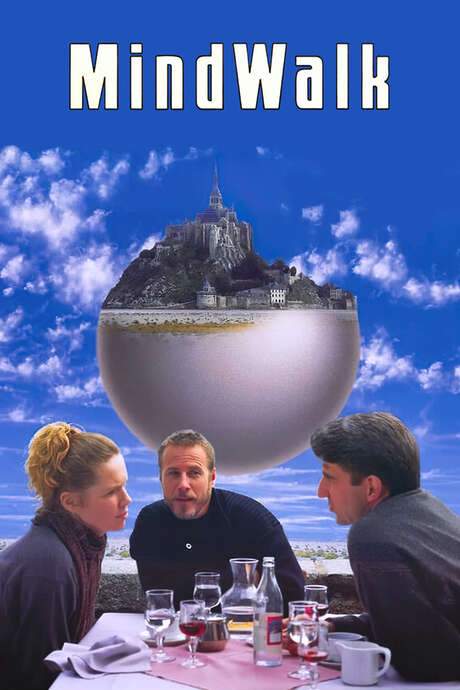
What Is Mindwalk About?
The premise of Mindwalk in 275 words, with nothing given away. The full story follows below.
In the timeless silhouette of Mont Saint‑Michel, three strangers find themselves drawn together by circumstance and curiosity. Sonia, a Norwegian physicist who has stepped away from a lucrative career after learning that her research was being weaponised, walks the ancient stone corridors with a quiet intensity, her mind always oscillating between the elegant equations of the universe and the moral weight of their applications. Beside her, Jack, a former American political hopeful still tasting the bitterness of a recent presidential loss, carries the ache of public defeat while searching for a new compass in a world that feels increasingly fragmented.
The third voice in this unlikely trio belongs to Tom, a poet whose once‑sharp political speechwriting has given way to disillusionment, and who now seeks meaning through verse and conversation. As they meander through cloisters, tide‑swept walkways, and vaulted chambers, their dialogue becomes the film’s heartbeat, weaving together strands of quantum mechanics, systems theory, and the poetry of everyday life. The setting itself—an isolated medieval abbey perched on a tidal island—creates a reverent atmosphere where the past and present seem to merge, amplifying the intellectual sparring that unfolds.
The tone is contemplative yet lively, balancing the weight of philosophical inquiry with the playful banter of friends who are strangers at first. Their perspectives—Sonia’s holistic view of interconnected systems, Jack’s political pragmatism, and Tom’s lyrical sensibility—offer distinct lenses through which the audience can glimpse the larger social and political questions that linger beneath the surface of modern existence. The film invites viewers to linger in the space between ideas, encouraging a quiet curiosity about how science, governance, and art might together sketch a more thoughtful world.
What Happens in Mindwalk?
The complete story of Mindwalk, from the first scene to the last, in 835 words (about 4 minutes). Spoilers throughout. Names in the text link to 3 cast member pages.
Spoilers ahead
On the windswept corridors and tidal horizons around Mont Saint-Michel, the film unfolds as a long, contemplative conversation among three central figures: Sonia Hoffman, Liv Ullmann a Norwegian physicist who abandons a lucrative career after discovering that parts of her research were being used for weapons development; Jack Edwards, Sam Waterston an American politician who is trying to make sense of his recent presidential defeat; and Thomas Harriman, John Heard a poet and former political speechwriter, now disillusioned, as they wander the island’s ancient stones and shifting tides. Their dialogue takes place against the island’s quiet magic—the stone stairways, the cloisters, and the ever-present pull of the sea—creating a setting that feels at once intimate and monumental.
The film’s core engine is intellectual curiosity, not a plot-driven payload. It introduces and reverberates with systems theory and systems thinking, using them as a framework to view problems as interconnected webs rather than isolated dilemmas. Rather than offering simple solutions, the conversations map out how ideas, technologies, and social structures loop back on themselves, inviting viewers to consider how one decision can ripple through economies, ecosystems, and cultures. The philosophical cadence is measured, almost mathematical, underscoring how patterns emerge when different perspectives interact over time and space.
Alongside these conceptual threads, the work lingers on the language of science—quantum mechanics and particle physics—not as dry abstractions but as symbolic lenses through which to examine social choice, ethics, and power. The dialogue treats scientific theory as a living tool for analyzing uncertainty, causality, and the limits of prediction. By juxtaposing Sonia’s disciplined, holistic mindset with Jack’s pragmatic political sensibility and Tom’s lyrical, skeptical sensibility, the film suggests that truth may be less a fixed verdict than a spectrum of interpretations shaped by context, measurement, and experience.
Sonia Hoffman’s perspective is foregrounded as the holistic, systems-theory viewpoint. She challenges the speed and scale of modern decision-making, pressing the others to consider long chains of consequences—how a political maneuver, a technological advance, or a poetic impulse can cascade through families, communities, and nations. Her insistence on interconnections invites a broader ethics of responsibility, one that looks past short-term gains to the sturdy, sometimes stubborn, resilience of systems that endure beyond any single actor’s moment.
Jack Edwards enters the conversation as a figure of political gravity and personal recalibration. His recent defeat becomes not a terminal setback but a prompt to reframe ambition, doubt, and public service in a more reflective key. The film uses his interior recalibration to probe questions about leadership, accountability, and the limits of rhetoric when faced with ambiguity and consequence. He listens, negotiates meaning, and occasionally squares with—the tension of—Sonia’s broad vantage points and Tom’s insistence on the human heartbeat beneath politics.
Thomas Harriman, the poet, plays the role of the conscience and the counterweight. Through his calm, verbal cadence, he tests abstract theories against lived experience and the intimate ache of disillusionment. His presence grounds the discussion in the everyday, offering poetry as a method of making sense of confusion and a reminder that beauty and moral inquiry can emerge from doubt rather than dogma.
The film maintains a patient, almost elegiac tempo, letting the landscapes of Mont Saint-Michel echo the inner landscapes of its three protagonists. The walk becomes a model for philosophical inquiry: ongoing, incremental, and shaped by surroundings that are themselves ancient, imperfect, and alive with memory. The conversations unfold in a way that rewards attentive listening, revealing how a shared horizon can arise from divergent starting points.
As the core debate broadens, the characters explore possible alternative paths to social and political progress without surrendering nuance. The dialogue sketches multiple routes—technological stewardship balanced by ethical oversight, civic engagement animated by humility, and scientific curiosity tethered to humane ends—without claiming that any one route is definitive. The emphasis remains on seeing the whole rather than selecting a single correct answer, a stance that aligns with Sonia’s holistic emphasis on interdependence and the webs that connect people, ideas, and institutions.
In the film’s quiet, decisive moment, the discussion reaches a lyrical resolution rather than a pointed conclusion. The poet Tom Harriman closes the core discussion with a recitation of Pablo Neruda’s poem Enigmas (based on the Robert Bly translation), a lingering, poignant note that underscores the film’s interest in mystery as a mode of understanding rather than avoidance. The recitation acts as a bridge between intellect and emotion, inviting viewers to carry the conversation forward in their own lives, long after the final image fades.
Ultimately, the film asks viewers to consider how knowledge, power, and art shape one another across the thresholds of science, politics, and poetry. It presents a portrait of three thoughtful minds wandering through a place where history and nature intersect, using their dialogue to illuminate how systems, uncertainties, and human values interact in a world that is always in motion. The result is a meditation on responsibility, curiosity, and the many ways we seek meaning when the path ahead is not clearly illuminated, but nonetheless real and compelling.
Mindwalk Timeline: Every Key Event in Order
12 key events in the order they happen, from “Three wanderers begin a thoughtful walk around Mont Saint-Michel” to “Ending with Neruda’s Enigmas recited by Tom”. Every event takes place in Mont Saint-Michel, Normandy.
- 1
Three wanderers begin a thoughtful walk around Mont Saint-Michel
Three travelers begin a thoughtful walk around Mont Saint-Michel, establishing the film's contemplative mood. The conversation settles on big questions about society and knowledge as Sonia, Jack, and Tom take turns speaking. Their surroundings become a silent interlocutor that shapes the tone of the dialogue.
Where:Mont Saint-Michel, Normandy
- 2
Sonia reveals a deep moral conflict about her past work
Sonia reveals a deep moral conflict stemming from her past work in physics. She explains that elements of her research were used in weapons development, which led her to abandon a lucrative career. She foregrounds holistic systems thinking as a way to address problems without ignoring their wider context.
Where:Mont Saint-Michel, Normandy
- 3
Jack confronts his presidential defeat and seeks meaning
Jack grapples with his recent defeat in the presidential race and searches for meaning beyond the campaign. He questions political narratives and the distance between public perception and reality. He looks for a way to respond that feels substantial rather than merely strategic.
Where:Mont Saint-Michel, Normandy
- 4
Tom offers a lyrical perspective as poet and former speechwriter
Tom contributes as a poet and former speechwriter, offering a lyrical angle to the discussion. He suggests that language and poetry can reveal connections that numbers alone miss. His presence brings a human touch to the debate and reminds the group of the stakes in public discourse.
Where:Mont Saint-Michel, Normandy
- 5
Systems theory introduced as a framework for understanding problems
Sonia introduces systems theory, explaining that problems are embedded in larger networks rather than being isolated. She argues that holistic thinking accounts for feedback loops, dependencies, and the interconnected consequences of actions. The others begin to see how politics, science, and culture influence each other beyond surface issues.
Where:Mont Saint-Michel, Normandy
- 6
Multiple perspectives are considered for problem solving
They discuss that different frameworks such as holistic, reductionist, and others offer valuable but incomplete insights. The emphasis shifts from finding a single correct solution to considering multiple lenses. Together they begin to see how combining viewpoints can yield a more robust understanding.
Where:Mont Saint-Michel, Normandy
- 7
Physics as metaphor for complexity and interconnection
The conversation uses ideas from quantum mechanics and particle physics as metaphors for complexity. They talk about uncertainty, probability, and nonlocal connections to illustrate how systems influence one another. This framing helps them view social and political issues as dynamic and intertwined rather than linear.
Where:Mont Saint-Michel, Normandy
- 8
Acknowleding the limits of any single framework
They acknowledge that no single framework fully captures reality. They warn against dogmatic adherence to any one school of thought. The dialogue points toward a path that honors diverse viewpoints and ongoing inquiry.
Where:Mont Saint-Michel, Normandy
- 9
Science and policy carry moral responsibilities
Sonia links scientific responsibility to policy implications. They discuss the moral duty of scientists when discoveries could be misused, and how policy must reflect systemic interdependencies. Ethical consideration is placed alongside practical solutions in their talk.
Where:Mont Saint-Michel, Normandy
- 10
Broad problems, diverse viewpoints, not fixed answers
They identify broad political and social problems but note that the film is not about finalized answers. Instead, the characters present alternative ways to view problems—through systems thinking, poetic insight, or pragmatic politics. The aim is to widen the frame for understanding rather than prescribe a single solution.
Where:Mont Saint-Michel, Normandy
- 11
Tensions and mutual influence among the trio
The dialogue reveals tensions and mutual influence among the trio. Jack challenges Sonia's approach while she responds with patient reasoning. Tom mediates with lyrical observation, guiding the conversation toward a shared exploratory stance.
Where:Mont Saint-Michel, Normandy
- 12
Ending with Neruda’s Enigmas recited by Tom
At the end, Tom recites Pablo Neruda's Enigmas, in the translation by Robert Bly, closing the core discussion. The recitation casts the exchange in a humanistic light and emphasizes mystery and interconnectedness. The film leaves a sense of unresolved questions rather than tidy answers.
Where:Mont Saint-Michel, Normandy
Who Are the Main Characters in Mindwalk?
4 characters, among them Sonia Hoffman (Liv Ullmann), Jack Edwards (Sam Waterston) and Thomas Harriman (John Heard): who each one is and the part they play in the story. Every profile links to the actor’s page.
-
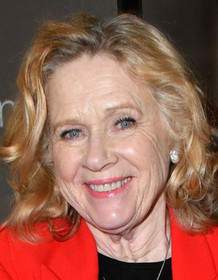
Sonia Hoffman (Liv Ullmann)
Played by Liv Ullmann
A Norwegian physicist who left a lucrative career after learning that parts of her work were being used for weapons. She advocates a holistic, systems-thinking approach and emphasizes ethical responsibility in science. Her calm, analytical demeanor challenges others to reconsider problems beyond political or disciplinary boundaries.
- 🔬 Scientist
- 🧭 Holist thinker
- 🕊️ Ethical
- 💬 Conversationalist
-
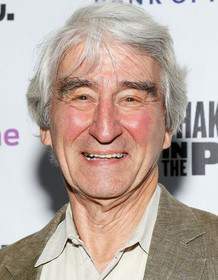
Jack Edwards (Sam Waterston)
Played by Sam Waterston
An American politician recently defeated in a presidential bid, he is introspective and seeking meaning in defeat. He engages with Sonia and Tom to explore practical governance and humane solutions. His perspective shifts as he encounters holistic thinking and upholds the value of open inquiry.
- 🏛️ Politician
- 🗣️ Debater
- 🤝 Negotiator
-
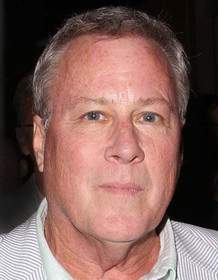
Thomas Harriman (John Heard)
Played by John Heard
A poet and disillusioned former political speechwriter who provides lyrical counterpoint to the discourse. He recites Neruda’s Enigmas at the end, offering a reflective voice that questions grand narratives. His presence adds emotional depth and emphasizes the power of art in understanding truth.
- 🎭 Artist
- 🗒️ Writer
- 🗨️ Voice of doubt
-
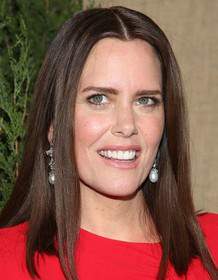
Kit Hoffman (Ione Skye)
Played by Ione Skye
A younger participant who joins the conversations, serving as a bridge between ideas and emotions. Her presence helps ground the dialogue in human experience, offering fresh perspective as the group wrestles with complex theories.
- 🌟 Ally
- 🧠 Curious
- 👥 Participant
Where and When Is Mindwalk Set?
Mindwalk is set in Mont Saint-Michel, Normandy and France. Here is why the place matters to the story.
When
The story unfolds in a contemporary milieu, reflecting late-20th-century ideas about science, politics, and ethics as it centers on dialogue and reflection rather than action.
Where
Mont Saint-Michel, Normandy, France
Mont Saint-Michel is a dramatic tidal island off the coast of Normandy crowned by a medieval abbey. The site is famed for its striking silhouette and historical significance as a pilgrimage destination and fortress. Its unique geography—accessible by causeway at low tide—adds a sense of awe and isolation that frames the film’s contemplative atmosphere.
- 🏰 Landmark
- 🗺️ Tourist Destination
- 🌊 Island
- 🕰️ Medieval Abbey
What Are the Themes of Mindwalk?
3 ideas the story keeps returning to, among them Holism, Politics and Science & Ethics.
-
01
Holism
The film foregrounds systems thinking, showing how problems emerge from interconnections rather than isolated causes. Sonia represents the holistic lens, urging viewers to consider relationships and dependencies across disciplines. Through dialogue, the narrative explores how solutions may arise when boundaries between fields are dissolved.
-
02
Politics
Jack’s post-defeat perspective invites a reexamination of political narratives and personal responsibility. Tom’s poetic insights challenge conventional rhetoric, proposing non-linear ways to understand governance. The conversations emphasize process, empathy, and shared inquiry over definitive political dogmas.
-
03
Science & Ethics
Sonia’s past raises questions about the ethical boundaries of scientific work and its real-world consequences. The film ties modern physics ideas to human impact, urging responsibility in the pursuit of knowledge. It treats science as a social endeavor that must align with humane ends.
What Kind of Film Is Mindwalk?
Melancholic in tone, with slow pacing and a complex story, going by the plot summary.
- Tone
- Melancholic
- Pacing
- Slow
- Story
- Complex
- Intensity
- Medium
- Ending
- Ambiguous
A slow-paced, intellectually dense drama that feels like a long, melancholic walk through history, centered on a deep philosophical conversation among disillusioned experts questioning the foundations of modern society.
- intellectual
- contemplative
- melancholic
- philosophical
- disillusioned
- conversational
- systems theory
- political disillusionment
- scientific ethics
- philosophical dialogue