

What Is Love Field About?
The premise of Love Field in 286 words, with nothing given away. The full story follows below.
In the sweltering heat of Dallas on a historic November day, a quiet housewife finds herself haunted by the image of a beloved First Lady. Lurene Hallett has built her private world around Jacqueline Kennedy, feeling a kinship that makes the sudden, national tragedy feel unbearably personal. The city’s streets are awash with grief, and Lurene’s ordinary life is suddenly framed by the weight of a country’s mourning. The film opens with a delicate balance of 1960s Americana and the electric shock of loss, setting a tone that is both intimate and reverberant with the era’s collective sorrow.
Spurred by a fierce need to witness the aftermath, Lurene defies the practical expectations of her husband, Ray Hallett, and resolves to travel to Washington, D.C., to attend the president’s funeral. On the bus, she encounters a young Black girl, Jonell, whose quiet resilience hints at a story far deeper than a simple passenger seat. Jonell’s connection to a man named Paul Cater, a figure who has quietly shouldered a heavy responsibility, introduces a subtle, cross‑racial dynamic that the journey will gently explore. Their meeting suggests a fragile alliance that challenges the rigid social boundaries of the time without spelling out the obstacles they will face.
The road ahead becomes a moving portrait of 1960s America—a landscape marked by hopeful optimism and underlying tension. As Lurene, Jonell, and Paul travel together, their differing backgrounds and shared grief create an atmosphere charged with quiet curiosity and unspoken questions. The film’s tone remains contemplative, weaving personal longing with the broader historic backdrop, inviting the audience to wonder how one woman’s devotion to a public figure will intersect with an unexpected bond that could reshape her sense of family and purpose.
What Happens in Love Field?
The complete story of Love Field, from the first scene to the last, in 1,213 words (about 5 minutes). Spoilers throughout. Names in the text link to 6 cast member pages.
Spoilers ahead
On November 22, 1963, Dallas housewife Lurene Hallett, Michelle Pfeiffer, is obsessed with First Lady Jacqueline Kennedy. She feels a deep kinship with Jackie after her own loss and a shared sense of vulnerability in a shaken nation. When the President and his wife arrive in Dallas, Lurene travels to Dallas Love Field in hopes of catching a glimpse as they land, and she comes perilously close to shaking Jackie’s hand. The moment is swallowed by tragedy as she learns that President Kennedy has been assassinated. Grief floods the streets and the shop windows, and Lurene’s personal sorrow becomes inseparable from the national mourning that shrouds the city. She watches the news through a storefront window, voices hushed and screens flickering with images of a shaken country, and she decides that she must witness the funeral, even if it means bucking the will of her husband, Ray Hallett, Brian Kerwin, who vetoes the plan.
Driven by a stubborn mixture of devotion and despair, Lurene leaves a note for Ray and sets out toward a path that will test her loyalties and redefine her sense of family. She intends to travel to Washington, D.C., by bus to attend the funeral, and along the way she befriends Jonell, Stephanie McFadden, the young Black daughter of Paul Cater. The journey is jolted when the bus encounters trouble, and Lurene takes Jonell to the restroom, where she discovers old wounds that hint at a harsher reality than she imagined. She asks Jonell if Paul is her father, and Jonell’s answer unsettles her: Paul is not the man she had expected to be connected with Jonell by blood alone. Paul Cater, Dennis Haysbert, explains the complicated truth — Jonell’s mother died, and he rescued Jonell from an abusive orphanage without formal permission. He presents photographs that trace the familiar faces of Jonell, her mother, and himself, revealing a quiet, stubborn love that has driven him to fight for custody in a legal system that hasn’t always rewarded such devotion.
Paul’s story of rescue and responsibility sets the stage for a fragile alliance. He must stay ahead of authorities long enough to reach Pennsylvania and pursue custody rights, a cross-country odyssey that forces Lurene to confront not only legal barriers but also the embers of a potential future she never planned. As the pair flee the bus, Paul seizes a car from a repair shop to continue their journey, and Lurene, who had begun the trip for Jackie’s memory, ends up sharing the wheel with him. The FBI soon suspects a kidnapping, and Ray receives word that the woman he once believed to be his wife might be abducted by Paul, a suspicion that hardens his resolve even as it complicates Lurene’s moral landscape.
The road trip grows tougher when the car breaks down near Tazewell, Virginia. Local rednecks notice a white woman traveling with a Black man and assault Paul, a brutal reminder of the era’s brutal racial tensions. Hazel Enright, Beth Grant, the daughter of a local work associate, and her parents offer shelter and aid. Mrs. Enright, Louise Latham, disapproves of Lurene’s interracial companionship, and her admonitions remind Lurene that every step forward comes with a price. Yet the Enrights lend them their car and a sense of temporary sanctuary, thinning the line between charity and judgment as the trio spends the night together. The next morning, the encounter becomes a turning point in Lurene’s heart: a private, unplanned night of intimacy with Paul deepens the complexity of their bond and foreshadows the difficult choices ahead.
Back in the nation’s capital, the day of Kennedy’s funeral intensifies the conflict. Ray waits for Lurene at the motel, determined to reclaim his wife and restore what he believes to be solid ground. Lurene insists on handling the situation alone, but Paul and Jonell remain in the car. A heated confrontation ensues, with Ray armed and Lurene caught in a maelstrom of loyalties. Paul intervenes, disguising himself as the motel manager in the tense moment, and a struggle over the weapon erupts. Paul wrests the gun away, and the two families retreat to the car with Jonell, only to be pursued by police who finally close in on them. The outcome is a harsh reality: Paul is sentenced to a year in jail for stealing the car, a consequence that marks a sobering milestone in the journey that began with a shared moment of grief.
In 1964, Lurene continues to visit Jonell in a foster home, keeping a day-to-day vigil that becomes a lifeline for the girl and a quiet testament to the motherly impulse that transcends conventional legality. Lurene tells Jonell that her father is coming back to take her home, and Paul makes a late, poignant appearance to reclaim his daughter. The two adults share a hard-won embrace as Lurene confesses that she and Ray have divorced. The moment is both a goodbye and a pledge, a mutual recognition of the life they have chosen and the child whose future depends on their choices. As Lurene drives away, a sudden impulse draws her back to the group home, where she reconnects with Paul and Jonell, choosing to stay by their side. The ending remains hopeful in its quiet defiance: a woman’s steadfast love for a child and a man who has proven his devotion can still carve out a space for belonging amid a country’s most wrenching upheaval.
The film’s atmosphere rests on the tension between private desire and public tragedy, between a personal quest for belonging and a national tragedy that reshapes the characters’ sense of responsibility. Across the odyssey, the bond between Lurene, Jonell, and Paul unfolds with a patient realism that avoids melodrama while capturing the moral and emotional weights carried by those who navigate the era’s rigid social boundaries. The story is anchored by performances that balance tenderness with stubborn resilience, painting a portrait of a woman who refuses to be defined solely by her husband’s expectations, a man who chooses to fight for his child, and a child whose resilience shines through even the most painful moments.
The film also weaves in historical texture through its attention to Kennedy’s assassination and funeral, using archival elements to remind viewers of the era’s fragile optimism and the ache that followed. The narrative refrains from simplification, presenting instead a mosaic of choices that illuminate the complexities of love, duty, and the pursuit of a safe, stable family in a time of national vulnerability. The closing image is less about reevaluating a single event and more about honoring the quiet, stubborn persistence that propels people to seek connection even when the world around them seems unsteady. And in a subtle nod to the era’s iconography, the film includes archival footage of Jack Ruby, a reminder that history often intersects personal stories in unexpected ways.
In the end, the story remains a testament to the power of human connection: Lurene’s devotion to Jonell and Paul’s steadfast commitment to his child forge a fragile, hopeful bond that survives even the most daunting external pressures. It’s a story of grief transformed into action, of love that refuses to be deterred by social conventions, and of a family formed not merely by blood, but by choice, sacrifice, and unwavering care.
Love Field Timeline: Every Key Event in Order
13 key events in the order they happen, from “Lurene Hallett's fixation on Jacqueline Kennedy” to “A final join: Lurene chooses to stay with Paul and Jonell”. 13 events name a place, across 10 locations.
- 1
Lurene Hallett's fixation on Jacqueline Kennedy
On November 22, 1963, in Dallas, Lurene Hallett, a housewife, feels a kinship with Jacqueline Kennedy after her own loss. Her obsession with Jackie mirrors her grief over a child she has lost and deepens as the day unfolds. This fixation foreshadows a personal journey born from both private sorrow and national tragedy.
When:November 22, 1963 Where:Dallas, Texas
- 2
Lurene goes to Love Field to glimpse the Kennedys
Knowing the President and First Lady will arrive in Dallas, she goes to Dallas Love Field hoping for a glimpse. She feels the crowd's energy as the plane lands and the moment seems to connect her to history. Her resolve to witness the funeral becomes a personal mission tied to her heartbreak.
When:November 22, 1963 Where:Dallas Love Field
- 3
Lurene narrowly misses Jackie’s handshake and learns of the assassination
She almost shakes Jackie’s hand as the crowd surges and security moves in. News floods in that Kennedy has been assassinated, crashing the moment into collective grief. The shock sharpens her determination to attend Kennedy's funeral and participate in the national mourning.
When:November 22, 1963 Where:Dallas, Texas
- 4
Defying her husband, Lurene plans to attend the funeral
She leaves Ray a note declaring she will stay at the honeymoon motel in Washington, D.C., and travel by bus to the funeral. She rejects his veto, choosing independence at a moment of national crisis. This decision marks the start of a long, uncertain road trip across the country.
When:November 1963 Where:Dallas, Texas
- 5
Lurene befriends Jonell on the long bus journey
On the bus toward Washington, Lurene befriends Jonell, the young Black daughter of Paul Cater. They form a bond against the backdrop of a perilous journey. Lurene's empathy for Jonell broadens the meaning of her own grief as the road wears on.
When:November 1963 Where:On the bus toward Washington, D.C.
- 6
Bus accident reveals deeper truths about Jonell
After the bus accident, Lurene tends to Jonell in the restroom and notices old wounds on her body. She asks Jonell if Paul is her father, and Jonell replies that he isn’t at first. Moments later, Paul explains the truth and Lurene calls the FBI to report a kidnapping, triggering a confrontation with the real stakes of the journey.
When:November 1963 Where:On the road toward Washington, D.C.
- 7
Paul reveals Jonell’s father and the truth of her rescue
Paul explains that Jonell's wounds came from an orphanage where she was abused and that he rescued her. He reveals that he is Jonell's father and shows photos of himself, Jonell's mother, and Jonell as a baby. The revelation reframes the trip as a custody fight rather than a simple rescue.
When:November 1963 Where:On the road, toward Pennsylvania
- 8
Paul steals a car; Lurene joins the escape; FBI suspects kidnapping
Paul steals a car from a repair shop to keep their escape going, and Lurene ends up riding along with Jonell and Paul. The FBI, convinced Lurene has been kidnapped, intensifies its pursuit. They continue a perilous journey across America with law enforcement in pursuit.
When:November 1963 Where:On the road across America
- 9
Tazewell, Virginia: the car breaks down and a violent welcome
Their car breaks down near Tazewell, Virginia, where locals spot a white woman traveling with a Black man and beat Paul severely. Lurene recalls Hazel Enright’s family living nearby and seeks help there. The Enrights tend to Paul’s wounds and offer shelter, foreshadowing the era’s social tensions.
When:November 1963 Where:Tazewell, Virginia
- 10
The Enrights lend a car and challenge the relationship
Mrs. Enright disapproves of Lurene’s interracial relationship and offers to help by lending them their car. The social friction is palpable, but the Enrights’ hospitality allows the journey to continue. Paul urges Lurene to stay with them, deepening the bond among the trio.
When:November 1963 Where:Tazewell, Virginia (Enright residence)
Show the other 3 events of Love Field Hide the last 3 events
- 11
Kennedy funeral day in Washington: confrontation at the motel
Back in Washington on the day of Kennedy's funeral, Ray waits for Lurene at the motel. The argument turns violent as Ray confronts her about her affair, and Paul intervenes, disguising as the motel manager while a gun is drawn. Paul wrestles the gun away; they escape back to the car with Jonell, but the police close in and Paul is sentenced to a year for car theft.
When:November 22-23, 1963 Where:Washington, D.C.
- 12
1964: Lurene and Jonell's ongoing bond and a custody truth
In 1964, Lurene visits Jonell in a foster group home and explains that her father is coming back for her. Paul arrives to pick up Jonell, and Lurene confirms that she and Ray are divorced. They share a hug and declare they have no regrets about their decisions, choosing to pursue a life together with Jonell.
When:1964 Where:Group home, Washington, D.C. area
- 13
A final join: Lurene chooses to stay with Paul and Jonell
After a moment of farewell, Lurene turns the car around and rushes back into the group home to join Paul and Jonell. The trio commits to a future together, a fragile but hopeful family forged on the road and in their hearts.
When:1964 Where:Group home, Washington, D.C. area
Who Are the Main Characters in Love Field?
7 characters, among them Lurene Hallett (Michelle Pfeiffer), Paul Cater (Dennis Haysbert) and Jonell (Stephanie McFadden): who each one is and the part they play in the story. Every profile links to the actor’s page.
-

Lurene Hallett (Michelle Pfeiffer)
Played by Michelle Pfeiffer
Dallas housewife, grieving the loss of her own child while also bearing witness to national mourning after JFK's assassination. She travels to Dallas Love Field to catch a glimpse of Jacqueline Kennedy and ends up embarking on a perilous cross-country journey with Paul and Jonell. Her determination drives the plot as she seeks connection and meaning beyond her stalled marriage.
- ❄️ Grief-driven
- 🏃♀️ Determined
- 🧭 Cross-country journey
-

Paul Cater (Dennis Haysbert)
Played by Dennis Haysbert
A protective father figure who rescued Jonell from an abusive orphanage and fights to secure custody across state lines. He travels with Lurene, evading authorities and improvising to keep Jonell safe. His resourcefulness and steadfastness provide a counterpoint to Lurene's impulsive search for connection.
- 🛡️ Protective
- 🧭 Resourceful
- 🧷 Fatherhood
- J(
Jonell (Stephanie McFadden)
Played by Stephanie McFadden
A young Black girl who bears the marks of an orphanage's abuse and whose father is Paul. Jonell's quiet resilience reveals vulnerability and complexity, and her bond with Lurene shapes the trip's emotional center. Her story highlights vulnerability and the need for trusted guardians.
- 🧒 Child
- 🧩 Trust and belonging
-
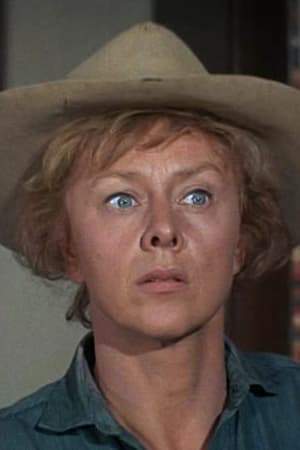
Mrs. Enright (Louise Latham)
Played by Louise Latham
The mother figure who embodies social judgment and propriety. Her disapproval of interracial companionship surfaces during the journey, but she also embodies the local hospitality that helps the travelers, including lending their car in a pinch.
- ⚖️ Social norms
- 👵 Community aid
-

Hazel Enright (Beth Grant)
Played by Beth Grant
Lurene's work associate whose family ties in Tazewell anchor part of the road trip. Hazel's family context grounds the story in small-town life and provides a concrete setting for the journey's encounters.
- 🏡 Small-town America
- 🧭 Local ties
- RH
Ray Hallett (Brian Kerwin)
Played by Brian Kerwin
Lurene's husband who vetoes her plan to attend the funeral and later clashes with Paul. His presence intensifies the film's tension and dramatizes the strain of a marriage under public grief and private desire.
- 💢 Domestic conflict
- 🔒 Authority
-

Jacqueline Kennedy (Rhoda Griffis)
Played by Rhoda Griffis
A symbolic figure of national grief whom Lurene fixates on; the presence underscores the private tether to public mourning and memory during Kennedy's era.
- 👑 Public memory
- 🕊️ Iconic figure
Where and When Is Love Field Set?
Love Field is set in Dallas Love Field, Dallas, Texas, Washington, D.C., Tazewell, Virginia, Foster… (1963–1964). Here is why the time and place matter to the story.
When
1963–1964
The narrative centers on November 22, 1963, the day of Kennedy's assassination, and follows the ensuing grief and public memory. It then extends into 1964, tracking Lurene and Paul as they navigate a national moment of change, travel across America, and confront custody and foster-care realities.
Where
Dallas Love Field, Dallas, Texas, Washington, D.C., Tazewell, Virginia, Foster care group home (Virginia)
The film unfolds across key sites tied to national mourning and personal pursuit. It opens at Dallas Love Field during JFK's visit and assassination, then shifts to Washington, D.C. for the funeral, before moving through rural Virginia to a foster-care setting as Lurene and Paul contend with family and custody.
- ❄️ Kennedy era
- 🛣️ Road trip
- 🏛️ 1960s America
- 💔 Grief and healing
What Are the Themes of Love Field?
3 ideas the story keeps returning to, among them Grief, Interracial Relationship and Family & Custody.
-
01
Grief
The assassination of Kennedy frames personal sorrow in Love Field, turning private heartbreak into a reflection of a nation in mourning. Lurene's grief guides her choices and fosters a longing for connection. The film treats grief as a catalyst for human bonds rather than solitary sorrow.
-
02
Interracial Relationship
A white housewife and a Black father form an unlikely alliance during a cross-country journey, challenging social norms of the era. They face external judgments while choosing trust and care for a vulnerable child. The story uses their bond to explore prejudice, resilience, and the cost of choosing love.
-
03
Family & Custody
Jonell's custody dispute highlights what constitutes family beyond bloodlines, and the lengths parents will go to protect a child. Lurene and Paul navigate legal and moral obstacles to keep Jonell safe. The narrative frames family as a chosen, protective bond in the face of societal constraints.
What Kind of Film Is Love Field?
Bittersweet in tone, with steady pacing and a moderate story, going by the plot summary.
- Tone
- Bittersweet
- Pacing
- Steady
- Story
- Moderate
- Intensity
- Medium
- Ending
- Bittersweet
A steady, melancholic drama that charts a woman's personal odyssey of grief and defiance against the backdrop of national tragedy, blending tense racial conflict with quiet moments of tender connection.
- melancholic
- gripping
- hopeful
- tense
- reflective
- somber
- grief and loss
- racial tension
- found family
- road trip
Content notes: racial violence, child abuse references, police pursuit, assault.
Quiz
How well do you remember Love Field? Test yourself on the story.


