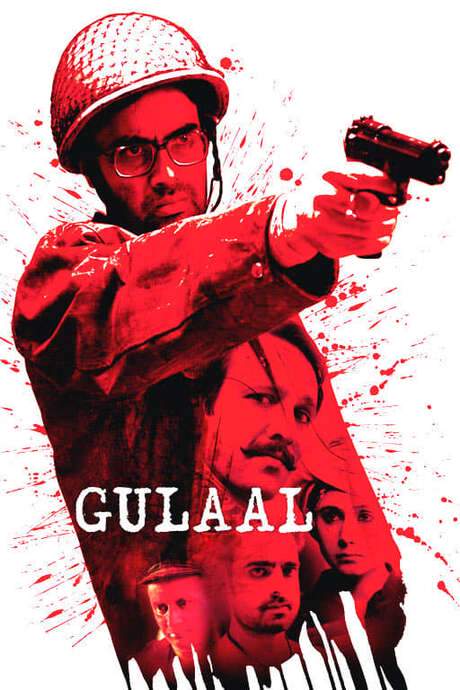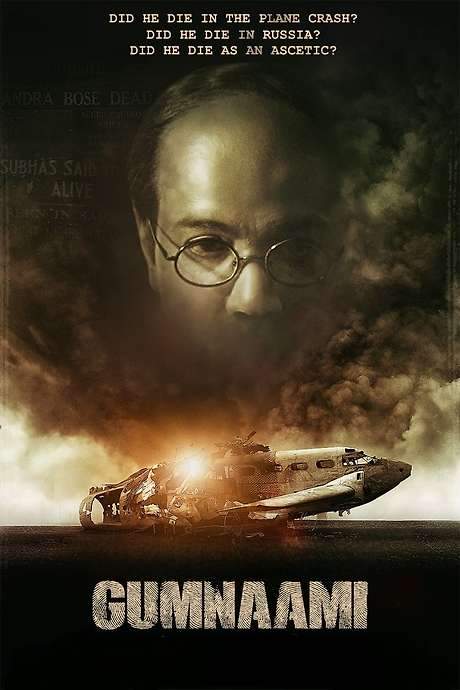
What Is Gumnaami About?
The premise of Gumnaami in 285 words, with nothing given away. The full story follows below.
In a quiet courtroom that feels like a crossroads of history, the film opens on the lingering enigma of Netaji Subhas Chandra Bose. The nation’s unresolved grief and relentless speculation have birthed a formal inquiry, and the atmosphere is thick with the weight of decades‑long debate. The story is set against a backdrop of post‑independence India, where archives, testimony, and whispered recollections converge, creating a world that is at once scholarly and deeply personal. The tone is measured yet charged, blending the procedural rigor of a commission hearing with the undercurrents of a nation still searching for closure.
At the heart of this intellectual tug‑of‑war is Chandrachur Dhar, a determined journalist whose obsession with the “Gumnaami Baba” theory drives him to sift through scraps of evidence and interview shadowy witnesses. His meticulous approach and quiet intensity contrast sharply with the composure of the official representative—a seasoned lawyer tasked with defending the long‑accepted plane‑crash narrative. Their exchanges are less about courtroom drama and more about the collision of belief, memory, and the elusive nature of truth.
Beyond the legal sparring, the film hints at the personal cost of such a pursuit. Chandrachur’s relentless quest strains his marriage, suggesting that the search for historical certainty can ripple into the most intimate corners of life. As the hearing unfolds, the audience is invited to linger on the mood of quiet desperation, the flicker of hope that a hidden truth might finally surface, and the reverberating echo of a leader whose legacy still commands devotion.
Through a restrained, investigative lens, the narrative captures the essence of a nation’s collective imagination, the procedural solemnity of a commission, and the stubborn curiosity of those unwilling to let a mystery remain unsolved.
What Happens in Gumnaami?
The complete story of Gumnaami, from the first scene to the last, in 531 words (about 2 minutes). Spoilers throughout. Names in the text link to 4 cast member pages.
Spoilers ahead
The film is based on the Mukherjee Commission hearings and offers a dramatized portrait of the work surrounding Bose’s mystery, highlighting the efforts of Anuj Dhar, Chandrachur Dhar Anirban Bhattacharya, and the Mission Netaji voluntary organization, as three theories compete to explain the death or disappearance of Netaji Subhash Chandra Bose Prosenjit Chatterjee.
Set against a pivotal moment in Indian history, the narrative follows Bose at the Congress Conference, where a courageous Bose refuses Gandhi’s nonviolent path and resigns from the Indian National Congress. He then travels the world to forge alliances and confront the British Empire, pursuing a course of action that he believes is essential to India’s freedom. The story moves through decades of pursuit, public doubt, and personal cost, painting Bose as a figure who relentlessly challenges the status quo while navigating a complex political landscape.
In 2003, journalist Chandrachur Dhar (Anirban Bhattacharya) takes on a high-stakes assignment to craft a detailed report about the Bose mystery. His quest consumes months of research and evidence gathering, and it begins to strain his marriage to Ronita Dhar Tanushree Chakraborty, who ultimately divorces him. Left emotionally battered yet undeterred, Dhar forms a dedicated group united by a single purpose: to uncover the truth behind Bose’s fate, no matter how contentious the conclusions may be.
At the 2005 Mukherjee Commission hearing, Dhar presents a provocative hypothesis: there was no plane crash in 1945. He argues that Bose may have preplanned a calculated ruse to fake his death and enlisted his most trusted INA soldier, Habibur Satyam Bhattacharya, to stand by him and guard the secret. The film emphasizes the kinds of questions Dhar raises—why a smaller or differently configured aircraft was used, the absence of a definitive crash record, and the lack of conclusive evidence about the fate of Japanese soldiers connected to the event.
The narrative also explores the personal and familial threads surrounding Bose’s disappearance. The judge presses for a trace of where Bose went, and Dhar reveals that Bose lived for years as an ascetic in Uttar Pradesh, visible to only a few through a veil or curtain. A handful of people who visited him heard his voice and recognized him, while close colleagues and family members reportedly knew he was alive, though he appeared as “Gumnaami Baba.” The story traces Bose’s later life and his death in 1985, noting that his funeral was attended by only 13 disciples, a detail that deepens the mystery surrounding his post-1945 whereabouts.
Despite the commission’s conclusion that there was no plane crash and Bose did not die in 1945, the government’s decision in 2006 to reject the verdict keeps the controversy alive. The film follows Dhar’s overwhelming sense of frustration as he burns his three years of work, yet the narrative also highlights a counterpoint of resolve: his former wife’s urging to continue the fight and the idea that Bose’s legacy demands persistent pursuit of justice and truth.
In a powerful closing flashback, Bose is shown singing Shubh Sukh Chain—the emblematic anthem associated with the Provisional Government of Free India and the Indian National Army—an image that crystallizes the enduring legend and emotional resonance of Bose, even as the mystery persists.
Gumnaami Timeline: Every Key Event in Order
13 key events in the order they happen, from “Bose resigns from the Indian National Congress” to “INA flashback: Bose sings Shubh Sukh Chain”. 13 events name a place, across 10 locations.
- 1
Bose resigns from the Indian National Congress
The film opens with Subhas Chandra Bose at a Congress Conference. He challenges Gandhi's nonviolent approach and resigns from the INC. This bold move sets him on a path of broader activism and international outreach against the British.
Where:Congress Conference
- 2
Bose seeks allies worldwide
He travels across continents to build international momentum for India's independence. He confronts the British Army during his campaigns and seeks foreign support for the freedom cause.
Where:Various countries
- 3
Dhar begins investigative assignment
In 2003, journalist Chandrachur Dhar is given the assignment to write a detailed report on Bose's mysterious death. He spends months gathering evidence and studying Bose's life, pursuing new leads. His neglect of his wife leads to a divorce.
When:2003 Where:Kolkata
- 4
Dhar forms a private group to solve the mystery
Frustrated with official narratives, Dhar quits his job and forms a private group dedicated to solving Bose's disappearance. The team begins collecting testimonies, historical records, and corroborating documents to build a case.
When:2003–2004 Where:Kolkata
- 5
Mukherjee Commission hearing begins
In 2005, Dhar appears before the Mukherjee Commission and presents a bold case that Bose did not die in a 1945 plane crash. He argues that the available evidence challenges the official version and seeks to re-examine the mystery.
When:2005 Where:Kolkata, Mukherjee Commission
- 6
Evidence against the crash is presented
Dhar points to anomalies such as the choice of a six-seater plane over a twelve-seater, the absence of crash records, and the lack of credible reports about alleged Japanese soldiers. He presents these as crucial clues questioning the crash narrative.
When:2005 Where:Kolkata
- 7
Revelation: Bose lived as an ascetic 'Gumnaami Baba' in UP
Dhar reveals that Bose lived incognito as an ascetic in Uttar Pradesh, seen only behind a curtain. He says Bose stayed there under the name 'Gumnaami Baba,' with only a few visitors able to recognize him by voice.
When:2005 Where:Uttar Pradesh (Gumnaami)
- 8
Recognition by close associates and family knowledge
Leela Roy, Samar Guha, and other close associates reportedly recognized Bose and kept in touch. The film suggests that Bose's own family knew he was alive but chose not to disclose his fate publicly.
When:2005 Where:Gumnaami / Uttar Pradesh
- 9
Bose's death and funeral
The narrative notes Bose died in 1985, and his funeral was attended by only 13 disciples. This historical detail anchors the mystery within Bose's later life and the secrecy surrounding his fate.
When:1985 Where:Gumnaami, Uttar Pradesh
- 10
Verdict: no plane crash
The commission concludes there was no plane crash and that Bose did not die in 1945. The judge's questions leave the fate of Bose unresolved in official memory, fueling ongoing debate.
When:2005 Where:Kolkata
Show the other 3 events of Gumnaami Hide the last 3 events
- 11
Government rejection and Dhar's burnout
In 2006, the Government refuses to accept the commission's verdict. Dhar is frustrated and burns his years of work, questioning whether justice for Bose can ever be achieved.
When:2006 Where:New Delhi
- 12
Wife's encouragement and renewed resolve
Dhar's former wife encourages him to keep fighting for Bose's legacy, echoing Bose's own decades-long perseverance. This support rekindles Dhar's determination to continue the pursuit of truth.
When:2006 Where:India
- 13
INA flashback: Bose sings Shubh Sukh Chain
In a poignant flashback sequence, Bose is shown singing Shubh Sukh Chain with the Indian National Army, reinforcing his unwavering commitment to India's freedom. The moment ties his wartime leadership to the present mystery.
When:1940s Where:INA era
Who Are the Main Characters in Gumnaami?
6 characters, among them Pandit Nehru (Sanjay Gurbaxani), Subhas Chandra Bose / Netaji (Prosenjit Chatterjee) and Ronita Dhar (Tanushree Chakraborty): who each one is and the part they play in the story. Every profile links to the actor’s page.
- PN
Pandit Nehru (Sanjay Gurbaxani)
Played by Sanjay Gurbaxani
A key political figure in the Indian independence era who interacts with Bose during the Congress period. The portrayal highlights the internal debates within the movement and Bose's decision to diverge from Gandhi's nonviolent path.
- 🎭 Historical
- 🗳️ Politics
- SC
Subhas Chandra Bose / Netaji (Prosenjit Chatterjee)
Played by Prosenjit Chatterjee
The central historical figure at the heart of the mystery, Bose’s reputation and fate drive the film's central questions. The narrative blends his wartime leadership with the myth of a hidden life as Gumnaami Baba. The story reexamines his choice to pursue a different path from the mainstream independence strategy.
- 🎭 Historical
- 🕵️ Mystery
- RD
Ronita Dhar (Tanushree Chakraborty)
Played by Tanushree Chakraborty
Dhar’s wife, whose tension with her husband’s obsessive investigation leads to estrangement. Her perspective anchors the personal cost of the inquiry and its impact on family life.
- 🎭 Drama
- 💔 Family
- H(
Habibur (Satyam Bhattacharya)
Played by Satyam Bhattacharya
A trusted INA soldier who is tied to Bose’s inner circle, and who later leaves partitioned India for higher posts in Pakistan. His role embodies the complexities and loyalties within Bose’s circle.
- 🎭 Historical
- 🧭 Loyalty
- G(
Gandhi (Surendra Rajan)
Played by Surendra Rajan
The leader of nonviolence whose methods Bose rejected in his pursuit of a bold, global strategy. The film positions Gandhi as a foil to Bose’s more militant approach.
- 🎭 Historical
- 🕊️ Nonviolence
- CD
Chandrachur Dhar (Anirban Bhattacharya)
Played by Anirban Bhattacharya
The journalist who becomes the catalyst for the investigation, gathering evidence and pushing the case to the Mukherjee Commission. His drive shapes the film’s tension between fact and inference.
- 🎭 Drama
- 🧭 Investigation
Where and When Is Gumnaami Set?
Gumnaami is set in India and Uttar Pradesh (Mid-20th century and early 2000s). Here is why the time and place matter to the story.
When
Mid-20th century and early 2000s
The film shifts between the 1940s, when Bose plays a pivotal role in the independence movement, and the early 2000s, following journalists and investigators seeking the truth. It juxtaposes Bose’s wartime actions with modern-day inquiries into his fate, including the 2005 Mukherjee Commission hearing. The timeline spans Bose’s alleged life in the 1940s and the subsequent decades up to 2006.
Where
India, Uttar Pradesh
Primarily set in India, the narrative moves from Bose's wartime decision at the Congress Conference to present-day investigations in India. Uttar Pradesh features as the home of the enigmatic Gumnaami Baba and the setting for flashbacks to Bose's hidden life. The Indian political landscape, including the Congress era and post-independence debates, frames the investigation.
- 🗺️ India
- 🏛️ Uttar Pradesh
What Are the Themes of Gumnaami?
3 ideas the story keeps returning to, among them Truth vs Legend, Patriotism and Investigation.
-
01
Truth vs Legend
The film centers on competing narratives about Bose’s death, testing what is accepted as fact versus what is contested by evidence. An investigator challenges official accounts, weighing indirect clues, testimonies, and hush-hush political pressures. It explores how national memory can be shaped by rumors, research, and official silence.
-
02
Patriotism
Bose’s break with Gandhi’s nonviolence and his push for international alliances are framed as a struggle for the soul of the nation. The story pits militant strategic thinking against peaceful methods within the broader independence movement. It questions whether methods define a nation’s character as much as its leaders.
-
03
Investigation
A journalist-led inquiry drives the narrative, revealing how evidence is gathered, interpreted, and contested. The group formed to solve the mystery mirrors the real-world pursuit of truth beyond official statements. The film examines the ethics and personal costs of investigative work and its impact on historical memory.
What Kind of Film Is Gumnaami?
Tense in tone, with steady pacing and a complex story, going by the plot summary.
- Tone
- Tense
- Pacing
- Steady
- Story
- Complex
- Intensity
- High
- Ending
- Ambiguous
A tense and intellectually demanding investigative drama that follows a journalist's obsessive quest to solve a historical mystery, culminating in profound frustration and an unresolved, emotionally heavy conclusion.
- tense
- investigative
- frustrating
- driven
- skeptical
- historical
- political mystery
- historical investigation
- truth seeking
- national icon
Content notes: political cover-up.
Quiz
How well do you remember Gumnaami? Test yourself on the story.