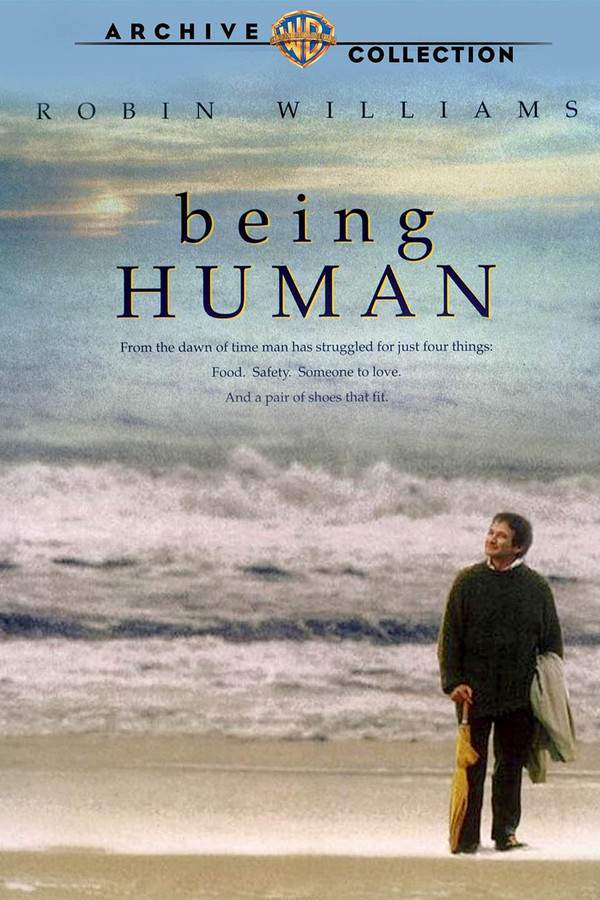
What Is Being Human About?
The premise of Being Human in 338 words, with nothing given away. The full story follows below.
In a sweeping meditation on what it means to be alive, a single soul walks the ages, resurfacing in five distinct worlds that span from mist‑shrouded Celtic villages to the neon‑lit streets of contemporary New York. Guided by the luminous presence of Robin Williams, this journey is less a chronological adventure than a poetic exploration of memory, love, and the quiet echo of choices left unanswered. Each incarnation offers a fresh canvas, yet an invisible thread ties them together, hinting that the heart never truly leaves the story it began.
The film paints each era with a signature visual palette: the raw, earthy tones of an ancient tribal landscape give way to the marble grandeur of a Roman estate, the rugged mist of a Scottish highland, the gilt‑edged splendor of a Portuguese Renaissance port, and finally the bustling, glass‑capped skyline of modern Manhattan. A gentle, almost lyrical tone runs through these shifts, inviting viewers to feel the continuity of human yearning rather than the disjunction of time. The world feels both intimate and expansive, as familiar emotions ripple beneath ever‑changing backdrops.
At the center of this tapestry is Hector, a spirited individual whose curiosity and tenderness are as boundless as the centuries he inhabits. In every life he encounters love, loss, and the temptation to repeat the same hesitations. His relationships—whether with friends, partners, or mentors—reappear in new guises, offering both comfort and a challenge to break old patterns. Through his eyes, the audience senses a restless drive to understand why certain moments linger, why certain faces reappear, and how each decision reverberates far beyond its own moment.
The mood is one of wistful introspection tempered by flashes of humor, mirroring the paradoxical nature of the human condition. Supporting figures, hinted at through familiar glances and fleeting connections, suggest a network of souls that move alongside Hector across time, each seeking their own redemption. The film leaves us with a lingering question: can a single heart, ever‑reincarnated, finally grasp the fullness of what it means to be human?
What Happens in Being Human?
The complete story of Being Human, from the first scene to the last, in 382 words (about 2 minutes). Spoilers throughout. Names in the text link to 1 cast member page.
Spoilers ahead
Across five lifetimes, a single soul named Hector confronts the consequences of cowardice and indecision, spanning eras from a prehistoric dawn to a modern New York.
In the first incarnation, a caveman’s family is torn from him by raiders, a brutal consequence of his own hesitation and fear. Before his wife is taken, she cries out, > Don’t lose the children! The moment lingers as a haunting test of resolve, echoing across the ages and shaping the choices that will follow.
In the second incarnation, in ancient Rome, the slave [Hector] is bound to a foolish master who loses his fortune and is driven by creditors to kill himself, with the master ordering Hector to join him. The slave longs for the freedom to reunite with the children and wife he had before slavery, but a new love blossoms with another slave, and the memory of his waiting family begins to blur as desire and destiny pull him in a new direction.
In the third incarnation, Hector becomes a Scottish crusader traveling home to his children. The soul of the master from the Roman life now appears as a crusader who wrestles with whether to embrace a priestly path. They journey together until Hector encounters a soul mate from the Rome life, a widow who wishes to join her family with him, yet his responsibilities to his children in Scotland pull him toward home.
In the fourth incarnation, Hector is a Portuguese man in the Renaissance, shipwrecked on the coast of Africa. He is the master in this life, with his wife from the first incarnation surfacing as his spurned lover, and the raider who spirited her away standing by as her steadfast friend. The decisions he makes here test the limits of courage and commitment, and the bonds between lovers, friends, and captors become increasingly tangled.
In the fifth incarnation, Hector is a modern man in New York, facing the consequences of his lifelong indecision and finding the strength to address the children he lost across lifetimes. He is joined in this life by his master/slave/friend/soul mate, and ex-wife Janet, and her husband/raider from past lifetimes. They offer support while each of them wrestles with their own paths, trying to chart a way forward just as they did in the long-ago cycles.
Being Human Timeline: Every Key Event in Order
12 key events in the order they happen, from “Raid and the warning: Don't lose the children” to “The ongoing cycle: courage and choice”. 11 events name a place, across 9 locations.
- 1
Raid and the warning: Don't lose the children
In the caveman incarnation, a raid tears his family away because of his cowardice. The event marks the beginning of a lifelong struggle with indecision as he watches chaos unfold around him. His wife shouts, Don't lose the children!, a line that becomes the memory that drives future lifetimes.
When:Paleolithic era Where:Prehistoric cave
- 2
Hector becomes a slave in Ancient Rome
In Ancient Rome, Hector is enslaved by a foolish master who squanders his fortune. As creditors tighten their grip, the master is driven to end his life and orders Hector to join him. The new life as a slave begins with a quiet hunger for freedom that will haunt Hector.
When:1st century CE Where:Ancient Rome
- 3
The master’s death and a forbidden affection
With the master dead, Hector remains a slave but longs for escape from the Roman world. He falls in love with another slave, a forbidden bond that further detaches him from the family he once hoped to protect. This romance deepens his pattern of attachment and indecision.
When:1st century CE Where:Ancient Rome
- 4
The Scottish Crusade: homeward bound
In the third incarnation, Hector is a Scottish crusader traveling home to his children. The soul of his Rome master accompanies him as a crusader, grappling with whether to become a priest. Together they journey, their fates entwined as Hector seeks a path between duty and desire.
When:12th century Where:Scotland and Crusade routes
- 5
A widow from Rome and a renewed connection
During the journey, Hector meets the widow who is the Rome-life soulmate, and she longs to join the family she left behind. Hector's duty to his Scottish children tugs him toward home, creating a tension between love and obligation. Their connection complicates his already fragile balance of love and responsibility.
When:12th century Where:Scotland/Crusade routes
- 6
Duty vs desire: the pull to stay with his loved one
Hector's indecision resurfaces as he weighs staying with his soulmate against his responsibilities to his children. The choice tests his ability to reconcile personal happiness with parental duty. The struggle reinforces the recurring theme of choosing between passion and responsibility.
When:12th century Where:Scotland
- 7
Renaissance voyage: a master in trouble
In the Renaissance, Hector becomes a Portuguese master and is shipwrecked on the coast of Africa. His wife from the first incarnation travels with him as his spurned lover, while a raider from their lifetimes past appears as her steadfast friend. The voyage exposes old loyalties colliding with new dangers.
When:16th century Where:African coast / Atlantic
- 8
A web of past loyalties: the spurned lover and the raider
The raider from lifetimes past stands as a steadfast friend to Hector’s wife, complicating the triangle of love and loyalty aboard the ship. The spurned lover’s presence continues to haunt the relationship across the voyage. Past betrayals echo into the present, shaping every choice they make.
When:16th century Where:African coast
- 9
The shipwreck aftermath: testing loyalties
The shipwreck forces a reckoning between past loyalties and present needs. Hector must navigate the shifting loyalties of his wife, the spurned lover, and the raider friend. The incident reveals how deeply past lives influence present decisions.
When:16th century Where:African coast
- 10
Modern New York: a reckoning with cowardice
In the modern incarnation, Hector faces the consequences of long-simmering indecision in New York. He begins to address the children he has kept at bay across lifetimes and seeks a path toward responsibility. The present life becomes a test of whether he can finally act with courage.
When:Early 21st century Where:New York, USA
- 11
A circle of support across lifetimes
Hector is joined by his master/slave/friend/soul mate, and by Janet and her husband from past lives. They support him in his awakening while also struggling to find their own directions. Their presence mirrors the interwoven fates of the earlier lifetimes.
When:21st century Where:New York
- 12
The ongoing cycle: courage and choice
The timeline suggests that cowardice, love, duty, and reconciliation recur across eras, urging each incarnation to break the pattern. The present life offers a chance to choose courage for his children and for himself, with the others standing as witnesses and guides. The saga remains open, inviting a resolution to the cycle.
When:Present day
Who Are the Main Characters in Being Human?
4 characters, among them Hector (Robin Williams), Janet and Master: who each one is and the part they play in the story. 1 of them link to the actor’s page.
- H(
Hector (Robin Williams)
Played by Robin Williams
Across five lifetimes, Hector is a man tormented by cowardice and indecision, repeatedly confronted with choices that affect his children and lovers. In Rome, a slave who longs for freedom, he battles the pull of past commitments and the risk of losing his family again. His arc tracks a slow, hard-won growth toward agency and responsibility, culminating in a decision that breaks the cycle.
- ⚔️ Protagonist
- 🌱 Growth
- 🎭 Flawed
- J
Janet
In the modern life, Janet is Hector's ex-wife who remains connected to him across lifetimes. She and her husband/raider from past lives provide the social network that grounds his present struggles. She embodies loyalty and the complexity of love that survives time.
- 💞 Partner
- 🕊️ Resilience
- 🧠 Memory
- M
Master
In ancient Rome, the master is a foolish figure who loses his fortune and pushes Hector toward ruin. Across lifetimes, the master's soul persists as a friend and guide, shaping Hector's path. The dynamic explores power, dependency, and the possibility of redemption through choice.
- 🗝️ Master
- 🤝 Ally
- 🗺️ Lifetime
- SM
Soul Mate
In Rome, she is a slave who captures Hector's heart; in Scotland, she appears as a widow who longs for Hector to join her family. Across lifetimes, she embodies the thread that ties past and present together.
- 💖 Destiny
- 🪞 Echoes
- 🔮 Future
Where and When Is Being Human Set?
Being Human is set in Caveman Era, Ancient Rome, Medieval Scotland, Renaissance Africa Coast and…. Here is why the place matters to the story.
When
The film spans from prehistoric times to the present day, weaving five lifetimes into one arc. It uses reincarnation to link acts of love, duty, and fear across eras. The shifts in time emphasize that questions of family, honor, and courage recur, no matter the century.
Where
Caveman Era, Ancient Rome, Medieval Scotland, Renaissance Africa Coast, Modern New York
The story moves across several historical settings, beginning in a harsh prehistoric world where family bonds are tested by danger. It then shifts to ancient Rome, a place of slavery and power struggles that shape Hector’s choices. The journey continues through medieval Scotland and a Renaissance shipwreck off Africa's coast, before landing in modern New York. Each setting serves as a canvas for Hector's struggle with cowardice and the consequences of indecision.
- 🗺️ Epic Across Eras
- ⏳ Time-Spanning
- 🌍 Global Journeys
What Are the Themes of Being Human?
3 ideas the story keeps returning to, among them Time, Courage and Love.
-
01
Time
The central concept is that a single soul traverses multiple lifetimes, with time acting as both constraint and teacher. Each life forces choices that echo across eras, linking past promises to present consequences. Memory fades between lives, yet the longing for family and responsibility persists. The narrative uses reincarnation to explore how time tests courage and accountability.
-
02
Courage
The hero's cowardice in the first life haunts later incarnations, forcing him to confront hesitation in critical moments. Action and inaction determine outcomes for his family and lovers. Courage is learned through repeated failures, with redemption achieved only by choosing despite fear. The theme ties personal growth to family ties across centuries.
-
03
Love
Romantic bonds recur across lifetimes, from a forbidden love in Rome to a widow seeking connection in Scotland. The film treats love as a force that endures beyond death and time, guiding choices. Love tests loyalty, demands sacrifice, and ultimately anchors the protagonist to his children.
What Kind of Film Is Being Human?
Melancholic in tone, with variable pacing and a complex story, going by the plot summary.
- Tone
- Melancholic
- Pacing
- Variable
- Story
- Complex
- Intensity
- Medium
- Ending
- Bittersweet
A deeply melancholic yet ultimately hopeful journey through time, exploring the weight of human connection, the pain of regret, and the slow path toward redemption across multiple lifetimes.
- reflective
- melancholic
- hopeful
- introspective
- cyclic
- spiritual
- reincarnation
- existentialism
- life lessons
- love and loss
Content notes: suicide, slavery, death sentence.