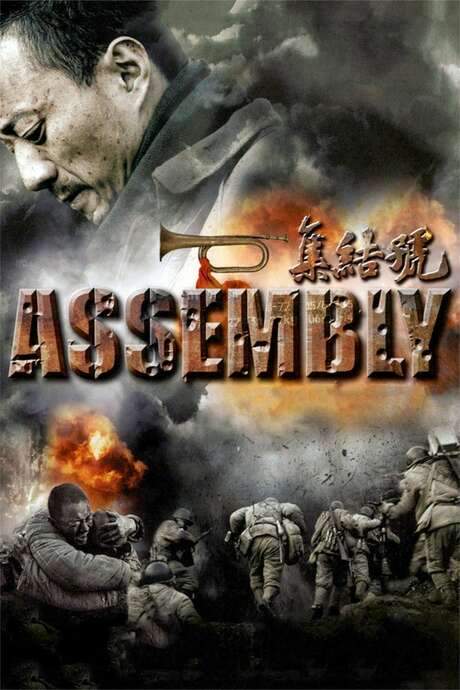
What Is Assembly About?
The premise of Assembly in 336 words, with nothing given away. The full story follows below.
In the waning days of the Chinese Civil War, the nation teeters between hope and devastation. The film opens amid the massive clashes of 1948, when the communist forces and the nationalist Kuomintang vie for control of a shattered landscape. Snow‑capped hills and soot‑blackened towns bear witness to an era where every sunrise could be the last, and the weight of history presses down on every soldier’s shoulders. The cinematography captures both the brutal immediacy of battle and the lingering quiet of abandoned fields, establishing a world where memory itself feels like a battlefield.
At the heart of this turmoil stands Gu Zidi, a young lieutenant whose sense of duty is matched only by his yearning to give voice to those who have vanished without record. Orphaned in famine and raised by a humble shoemaker, he carries a personal history of loss that fuels his quest for recognition. Though hardened by combat, Gu is haunted by the faces of his comrades and the silence that follows their sacrifice. His determination to secure an official testament to their bravery becomes a quiet rebellion against the erasure that war so readily imposes.
Guiding Gu is a cadre of fellow soldiers and leaders whose differing ideals shape his journey. Wang Jincun, a former teacher thrust into the front lines, offers a reflective counterpoint, embodying the intellectual struggle to reconcile personal conscience with collective duty. Later, a steadfast ally, Lieutenant Zhao Erdou, emerges, representing the bonds forged in the crucible of conflict. Their interactions are marked by restrained camaraderie, underscored by the ever‑present specter of uncertainty that defines life in a war‑torn nation.
The film’s tone is meditative yet unflinching, weaving together themes of sacrifice, remembrance, and the relentless search for truth amid chaos. It asks how a single individual can confront the anonymity of loss and whether a nation can honor the silent heroes of its past. Through understated performances and a stark, immersive setting, the story invites viewers to contemplate the fragile line between forgetting and preserving history.
What Happens in Assembly?
The complete story of Assembly, from the first scene to the last, in 801 words (about 3 minutes). Spoilers throughout. Names in the text link to 3 cast member pages.
Spoilers ahead
In the waning days of 1948, during the Huaihai Campaign of the Chinese Civil War, the Gu Zidi of the 9th Company, 139th Regiment of the PLA leads a bold push to seize a town held by the NRA, only to endure brutal, concentrated fire that leaves the unit badly mauled. Fueled by anger over the death of his political commissar, he makes a perilous attempt to execute surrendering NRA soldiers, a decision that lands him in the brig for three days under the watch of Col. Liu Zeshui. While behind bars, he forms an uneasy bond with Wang Jincun, a foot soldier and former teacher who has been jailed for cowardice, a reminder that courage and culpability can wear different faces in war.
When Gu is released, he and his 46 surviving men are sent to defend a coal mine perched on the bank of the Wen River near Tai’an, in the heart of Shandong Province. They are ordered to hold their ground until a distant bugle call signals a regrouping. With Liu’s permission, the educated Wang steps into the role of the 9th Company’s new political commissar, aiming to steady the ranks with ideas and faith. Almost immediately, the unit endures a brutal onslaught from NRA forces, fending off infantry, supporting armor, and even destroying two enemy tanks. The company dwindles to a handful of men, and as some soldiers claim to hear a distant bugle, Captain Gu, who has been temporarily deafened by an explosion, refuses to believe that relief is near and orders everyone to fight to the last man. In the end, the entire 9th Company is wiped out except for Gu, who is knocked unconscious by a tank shell.
The PLA eventually recaptures the area and discovers Gu unconscious, wearing a NRA uniform he had stolen in a bid to survive, not long after he had secretly bombed an enemy fuel depot. He tries to explain that he is a PLA captain who pretended to be an enemy soldier to procure food, but the army has undergone reorganization in the meantime, and there is little memory of the 139th Regiment. The hospital becomes a cold arena of doubt, and Gu is treated with suspicion as a possible deserter rather than a survivor of a doomed unit.
As the Korean War looms in 1950, Gu volunteers to fight again as a foot soldier with the People’s Volunteer Army. On a dangerous artillery-spotting mission, he and his team disguise themselves as soldiers from the RoK Army’s 6th Infantry Division. Gu risked his life to shield his unit’s commander, Lieutenant Zhao Erdou, after Zhao accidentally triggers a hidden anti-personnel mine. Gu hunkers down under the blast, preserves Zhao’s life, but loses his right eye in the explosion. The two men grow close, and Zhao becomes a steadfast ally who backs Gu’s efforts to earn rightful recognition for the 9th Company’s sacrifices.
Back home after the fighting, Gu makes a long, quiet pilgrimage to the Wen River battlefield, hoping to locate how the mines and the fateful day unfolded. He finds the mine seems to have reopened and the old entry buried beneath new coal. He also encounters Wang’s widow and convinces her to marry Zhao, weaving a fragile thread of personal resolution into the national saga. Zhao later uncovers the tomb of Col. Liu Zeshui, where a caretaker—an old subordinate who survived the war but lost an arm—confirms that the bugle call was never sounded. The revelation shatters the narrative Gu carried for so long: the 9th Company had been sacrificed to buy time for the rest of the regiment.
Armed with this knowledge, Gu sets up camp at the mine and, with miners’ protests in the background, begins a painstaking effort to recover his fallen comrades. A surviving former officer of the 139th Regiment steps forward a month later to corroborate the unit’s deeds, and the PLA issues an official recognition for the 9th Company. Yet Gu remains tormented by the missing bodies. A powerful flashback reveals the cruel sacrifice: as enemy forces closed in, Gu and Wang bury their comrades deep inside the mine; Wang, mortally wounded, detonates the mine entrance to prevent its capture, sacrificing himself in the process.
In the years that follow, the remains of the other soldiers are eventually found during an irrigation project excavation. The PLA erects a monument near the site and holds a full military funeral for the men of the 9th Company. At last, Gu finds a measure of peace. The closing titles recount that he died in 1987, at the age of 71. Orphaned at three months old by famine, he had been discovered by a shoemaker in a millet field and named Gu Zidi, a name that now carries the weight of a long, hard-earned memory.
Assembly Timeline: Every Key Event in Order
13 key events in the order they happen, from “1948: Gu Zidi and the 9th Company seize a town” to “Gu Zidi dies and the story of his origins”. 12 events name a place, across 12 locations.
- 1
1948: Gu Zidi and the 9th Company seize a town
During the 1948 Huaihai Campaign, Captain Gu Zidi leads the 9th Company of the 139th Regiment to seize a town controlled by the NRA. They suffer heavy casualties from intense enemy fire. Gu, enraged by the death of his political commissar, orders the execution of surrendered NRA soldiers, an act that earns him three days in jail.
When:1948 Where:Huaihai Campaign battlefield, China
- 2
Gu is jailed and befriends Wang in prison
Gu is jailed for three days by Colonel Liu Zeshui after the incident with the surrendered NRA soldiers. While in jail, he befriends Wang Jincun, a foot soldier and former teacher who has been jailed for cowardice.
When:1948 Where:Military jail (China)
- 3
Release and reassignment: 9th Company defends Wen River coal mine
Upon release, Gu and his surviving men are assigned to defend a coal mine on the Wen River near Tai'an, Shandong, holding their position until a bugle call for assembly. With Liu’s permission, Wang Jincun becomes the 9th Company’s new political commissar, bringing education and leadership to the unit.
When:Late 1948 Where:Coal mine on the Wen River, near Tai'an, Shandong
- 4
Brutal NRA assault and the last stand of the 9th Company
The 9th Company comes under heavy attack by NRA forces, repelling infantry and armor and destroying two tanks. By the end, only a handful of men remain. Gu, who has been temporarily deafened by an explosion, refuses to believe the bugle call is real and orders the survivors to fight to the death; the unit is wiped out except for Gu, who is knocked unconscious by a tank shell.
When:1948 Where:Wen River coal mine battleground, Shandong
- 5
Gu is found by the PLA and faces identity doubts
PLA forces recapture the area and find Gu unconscious wearing an NRA uniform he had stolen to survive behind enemy lines. At a military hospital, Gu attempts to prove he is a PLA captain, but a reorganization has erased memories of the 139th Regiment, and other patients treat him as a deserter.
When:1948-1949 Where:Military hospital, Wen River region
- 6
1950: Gu fights in the Korean War and loses an eye
In 1950, China enters the Korean War and Gu volunteers to fight as a PVA infantryman. On an artillery-spotting mission, Gu and his team disguise themselves as soldiers of the Republic of Korea Army's 6th Infantry Division to protect their unit commander, Lieutenant Zhao Erdou, after Zhao steps on a landmine. Gu holds the landmine down during the blast and escapes, but loses his right eye in the explosion; the two become close friends and Zhao supports Gu's bid to regain recognition for the 9th Company.
When:1950 Where:Korean War front lines
- 7
Post-war return to Wen River and mine search
After the war, Gu returns to the Wen River battlefield and tries to locate the old mine. He discovers the mine is still operating and the entrance is buried beneath piles of coal. He also meets Wang Jincun's widow and convinces her to marry Zhao Erdou.
When:1950s Where:Wen River battlefield, Tai'an region
- 8
Tomb of Liu Zeshui and the truth about the bugle call
Zhao Erdou finds the tomb of Colonel Liu Zeshui, whose caretaker reveals that the bugle call was never sounded and the 9th Company was sacrificed to buy time for the rest of the regiment. Gu initially erupts in anger but calms himself, accepting the painful truth.
When:Post-war Where:Tomb of Colonel Liu Zeshui, Wen River area
- 9
Gu camps at the mine to recover the fallen
Gu camps at the mine and begins digging out the bodies with a shovel, despite resistance from the miners. A surviving former officer of the 139th Regiment comes forward a month later to verify the unit’s deeds, and the PLA issues an official notice to honor the 9th Company.
When:1950s Where:Mine site near Wen River
- 10
Flashback reveals Wang Jincun’s sacrifice
A memory reveals that as enemy forces closed in, Gu and Wang buried the other bodies deep inside the mine. When Gu left to fight, a mortally wounded Wang blew up the entrance to prevent capture, sacrificing himself for his comrades.
When:1948 (flashback) Where:Wen River mine shaft
Show the other 3 events of Assembly Hide the last 3 events
- 11
Remains found and the memory honored
Years later, the remains of the other soldiers are found during an irrigation-project excavation, and the PLA erects a monument near the site to honor the 9th Company. Gu is unable to locate the final bodies but accepts the broader tribute.
When:late 20th century Where:Wen River site, near mine
- 12
Military funeral and Gu’s peace
The PLA conducts a military funeral with full honors for the fallen 9th Company and erects a monument at the site. Gu finally finds some peace as he comes to terms with the sacrifices of his comrades.
When:late 20th century Where:Wen River site
- 13
Gu Zidi dies and the story of his origins
Ending titles reveal Gu died in 1987 at the age of 71. They also recount his origins — abandoned as an infant during famine, found by a shoemaker in a millet field and given the name Gu Zidi, which literally means millet field.
When:1987
Who Are the Main Characters in Assembly?
4 characters, among them Gu Zidi (Zhang Hanyu), Wang Jincun (Yuan Wenkang) and Zhao Erdou (Deng Chao): who each one is and the part they play in the story. Every profile links to the actor’s page.
- GZ
Gu Zidi (Zhang Hanyu)
Played by Zhang Hanyu
A capable PLA captain who insists on holding strategic positions at all costs. His strict adherence to orders leads him to controversial actions, including attempting to execute surrendering NRA soldiers, and later to brutal consequences when truth and memory collide. He endures injury, loss of status, and years of seeking recognition for his unit.
- 🪖 Soldier
- 🗺️ Leader
- WJ
Wang Jincun (Yuan Wenkang)
Played by Yuan Wenkang
A former teacher turned foot soldier who has been jailed for cowardice. He becomes the 9th Company's political commissar, using his education to organize and inspire. His friendship with Gu and his ironic path from punishment to duty drive much of the moral core of the story.
- 🪖 Educator
- 🕯️ Strategist
- ZE
Zhao Erdou (Deng Chao)
Played by Deng Chao
A lieutenant who rises to become a close ally and commander figure for Gu. He supports Gu's efforts and shares frontline risk, ultimately forging a deeper bond through joint peril and survival.
- 🪖 Ally
- 🏷️ Leadership
- LZ
Liu Zeshui (Hu Jun)
Played by Hu Jun
Colonel who jails Gu after the failed massacre of surrendering soldiers; later plays a role in the postwar reorganization that erases the 139th Regiment from memory. His decisions catalyze Gu's obsession with recognition and the ultimate revelation about the 9th Company's fate.
- 🪖 Authority
- 🧭 Memory
Where and When Is Assembly Set?
Assembly is set in Wen River coal mine, near Tai'an and Shandong (1948-1950). Here is why the time and place matter to the story.
When
1948-1950
The film spans the Huaihai Campaign in 1948, when Captain Gu Zidi leads the 9th Company in brutal urban and rural fighting, and continues into the early stages of the Korean War in 1950 as Gu and his comrades carry on their duties. It then follows the long postwar years, where memory, recognition, and uncovering the truth become central to the characters’ lives. The narrative culminates in revelations about the 9th Company and the fate of its soldiers.
Where
Wen River coal mine, near Tai'an, Shandong
Set around a coal mine on the Wen River near Tai'an in Shandong, the story unfolds amid frontline combat and rugged industrial terrain. The mine and its riverbank trenches become a grim backdrop for endurance and sacrifice as PLA troops push back NRA forces. The location ties the soldiers' fate to the land they defend and the memory of those who died there.
- 🪖 War
- 🗺️ Historical
- ⛏️ Coal mining
What Are the Themes of Assembly?
3 ideas the story keeps returning to, among them Duty, Memory and Friendship.
-
01
Duty
The narrative centers on the obligations soldiers bear to their unit and to orders, even when those orders clash with personal morality. Gu Zidi's strict adherence to duty leads to controversial actions and severe consequences, highlighting the moral complexity of wartime decisions. The film examines how duty can drive courage and, at times, blind individuals to the human cost of conflict.
-
02
Memory
Memory and truth are contested as decades pass. The 9th Company's sacrifice is revealed only through survivors' testimonies and later official records, not in the battlefield narrative. The search for remains, the memorials, and Gu's awakening realization illuminate how communities remember war and decide whom to honor.
-
03
Friendship
Gu Zidi's bonds with Wang Jincun and Zhao Erdou anchor the story in human connection amid war. Their loyalty, mentorship, and acts of sacrifice demonstrate resilience when institutions fail to recognize those who fought and died. The film frames friendship as a counterbalance to the violence and indifference of the broader conflict.
What Kind of Film Is Assembly?
Dark in tone, with variable pacing and a moderate story, going by the plot summary.
- Tone
- Dark
- Pacing
- Variable
- Story
- Moderate
- Intensity
- High
- Ending
- Bittersweet
A grim and emotionally heavy war epic that swings between intense battlefield chaos and the slow, sorrowful pursuit of remembrance for fallen comrades.
- grim
- sorrowful
- tense
- determined
- somber
- traumatic
- war survival
- grief and loss
- memory and legacy
- military sacrifice
Content notes: war violence, gore, suicide attempt, mutilation, torture, mass death.
Quiz
How well do you remember Assembly? Test yourself on the story.