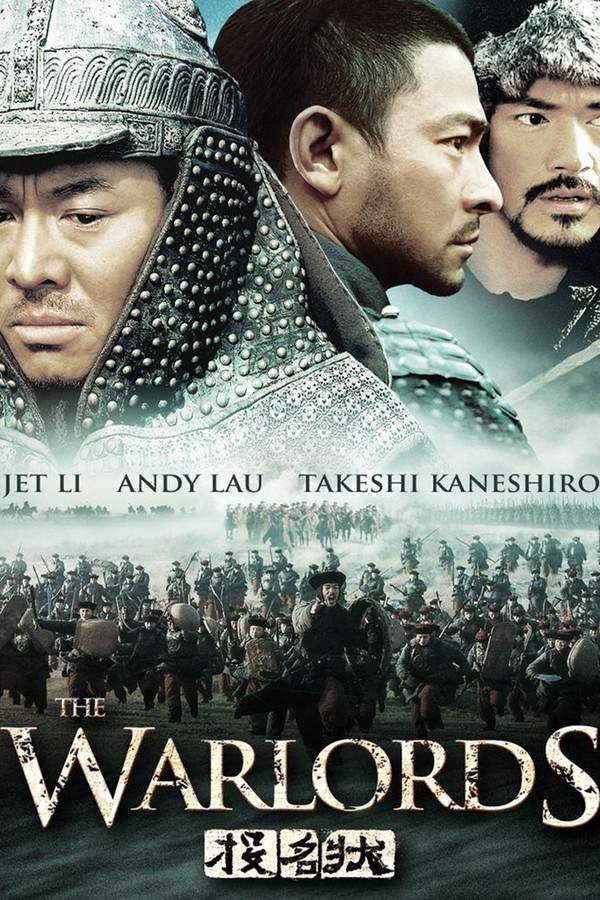
What Is The Warlords About?
The premise of The Warlords in 273 words, with nothing given away. The full story follows below.
In the throes of 19th‑century China, a nation is torn apart by a sweeping civil war that pits imperial forces against a relentless rebellion. The landscape is a bleak tapestry of scorched villages, starving townsfolk, and shattered loyalties, where survival depends as much on the strength of one’s resolve as on the blade at one’s side. Against this backdrop, the film breathes a somber, gritty atmosphere, blending the harsh realities of battlefield hardship with moments of quiet, human connection that flicker like lanterns in the darkness.
When General Pang, a battle‑hardened commander, is left gravely wounded on a conflict‑scarred plain, fate intervenes. A striking young woman named Lian and two seasoned men—Zhao Er‑Hu and Jiang Wu‑Yang—appear, rescuing him from the brink. Their chance encounter quickly evolves into a pact forged in blood and shared purpose, as each carries personal grievances and a yearning for retribution against the forces threatening their homeland. The quartet’s uneasy alliance is underscored by a blend of honor, ambition, and the lingering hope that united strength can tip the scales in an otherwise hopeless war.
Together they navigate a world where every decision is weighed against the cost of lives and the ever‑shifting tides of power. Their camaraderie is tempered by the stark reality that loyalty can be both a shield and a burden, and the reverberations of their bond echo through the contested countryside. As they move deeper into the conflict, the film sustains an atmosphere of relentless tension, inviting viewers to contemplate the fragile line between duty and desire, and to wonder how far men will go when the fate of a nation hangs in the balance.
What Happens in The Warlords?
The complete story of The Warlords, from the first scene to the last, in 789 words (about 3 minutes). Spoilers throughout. Names in the text link to 4 cast member pages.
Spoilers ahead
The film unfolds in 1860s China amid the Taiping Rebellion against the Qing Empire. Pang Qingyun, an imperial battalion commander, survives a brutal clash between imperial and rebel forces and finds himself drawn into a perilous alliance. He soon befriends Zhao Er-Hu and Jiang Wu-Yang, the influential leaders of a bandit network based in a nearby village, a crew led by Bandit Shi Jin Biao that operates on the edge of law and loyalty. Together, they raid a rebel convoy for food, a move that highlights the desperate hunger that grips the people and the fragile codes that bind these disparate figures. That night, imperial troops arrive in the village and seize the supplies, a blow that pushes Pang to seek power and influence beyond his immediate post. Around this time, Pang begins a secret affair with Lian, whose presence adds a dangerous personal dimension to the already tense power dynamics.
As the villagers’ misery grows, Pang persuades them to form a militia that will support imperial efforts to suppress the rebellion. With Pang as their leader, the trio swears a blood oath and pledges brotherhood on pain of death, a bond that blends camaraderie with competing ambitions. The militia, though hampered by irregular support from the regular army, scores a string of victories against the rebels, feeding Pang’s appetite for greater control. His growing success stirs jealousy among higher-ups in the imperial hierarchy, who withhold reinforcements and scarce supplies, turning what should be a swift campaign into a protracted struggle. The siege intensifies as the rebel-held city of Suzhou becomes a focal point, and the frontline becomes a grind that tests loyalties, ethics, and the limits of mercy.
In Suzhou, Zhao disguises himself to infiltrate the city and prepare an assassination of the rebel commander. He discovers the commander is already prepared to surrender if certain conditions are met: the rebels and civilians will be spared, and the city’s trauma will end without a wholesale bloodbath. Meanwhile, Pang manages to secure ten days’ worth of provisions from a rival imperial commander, but when he learns Zhao has struck a separate deal with the rebels, he refuses to honor it—feeling the supply line cannot support both the militia and those who might have just surrendered. A tense dispute erupts between the two, and Pang temporarily places Zhao in chains to prevent interference. He then orders Jiang to oversee the massacre of the surrendered rebels, a brutal act Jiang carries out with heavy heart and mounting regret.
Zhao, embittered but loyal, plans to desert the militia; Pang pleads for him to stay, arguing that the massacre was a grim but necessary step to preserve resources for their next campaign toward the rebel capital, Nanjing. Zhao ultimately agrees to stay, convinced that Pang’s logic, though harsh, serves a greater strategic purpose. After the Battle of Nanjing—widely considered the turning point that ends the rebellion—Pang rises to a high position as a viceroy, rewarded by the imperial government. Yet the camaraderie between Pang and Zhao begins to fray as mistrust threads its way through their alliance; Zhao’s tendency to distribute funds to the men without Pang’s approval stirs further tensions, and political rivals begin to hint that Zhao might be a threat.
Realizing he is losing control over Zhao and the loyalists, Pang contemplates disbanding the militia and quietly plots to remove Zhao. When Jiang learns of Pang’s plan, he tries to dissuade him and, in the process, uncovers Pang’s ongoing affair with Lian. Jiang sees this as a betrayal of their brotherhood and kills Lian, a blow that shakes the trio’s fragile foundations. Meanwhile, Zhao is tricked into thinking Pang is in danger and goes to rescue him, only to fall into a trap and die, not realizing that Pang had intended his death as part of a larger political calculation.
When Jiang discovers that Pang was responsible for Zhao’s demise, he confronts Pang and a deadly confrontation ensues. Pang fights back and defeats Jiang, but a sniper hired by his political rivals fatally wounds him. As he collapses, he allows Jiang to deliver the coup de grâce to fulfill their oath. Offscreen, Jiang is arrested and made the scapegoat for Pang’s assassination, eventually executed by lingchi. His final words linger in the mind: “dying is easy, living is harder.”
Throughout the narrative, the thread of loyalty collides with ambition, love, and betrayal, constructing a humane portrait of men who navigate impossible moral terrain in a collapsing world. The film weighs the cost of survival against the price of power, asking whether duty can ever be clean in a time when every choice is stained by necessity, and whether comradery can endure when the ultimate aim shifts from liberation to control.
The Warlords Timeline: Every Key Event in Order
13 key events in the order they happen, from “Pang survives the battle and meets the bandit leaders” to “Jiang pays the price; lingchi and a stark last line”. 13 events name a place, across 12 locations.
- 1
Pang survives the battle and meets the bandit leaders
Pang Qingyun survives a brutal battle between imperial and rebel forces, emerging as the sole survivor. He meets Zhao Erhu and Jiang Wuyang, the leaders of a bandit gang based in a nearby village, and agrees to join their raids for food. This alliance marks the beginning of a fragile brotherhood and a new power dynamic.
When:1860s, Taiping Rebellion era Where:Battlefield near the bandit village
- 2
Imperial troops seize the raided supplies; Pang begins a secret affair
That night, imperial troops arrive in the village and seize the raided supplies. Around this time, Pang begins a secret affair with Liansheng, Zhao's wife. The personal entanglement complicates loyalties within the group.
When:1860s Where:Village
- 3
Pang forms a militia and binds the trio with a blood oath
With the villagers hungry, Pang convinces them to form a militia to support the imperial cause. The three men—Pang, Zhao, and Jiang—swear a blood oath and pledge lifelong brotherhood on the pain of death. The oath solidifies their bond and sets a grim code for their actions.
When:Early stage Where:Nearby village
- 4
Militia wins early victories; ambition turns toward Suzhou
With minimal support from regular imperial forces, the militia scores a series of victories against the rebels. Pang's ambitions grow as he plans to attack the rebel-controlled city of Suzhou. The momentum broadens the scope of their operations.
When:Early-mid 1860s Where:Frontlines toward Suzhou
- 5
Imperial jealousy and the year-long Suzhou siege begins
Pang's successes provoke jealousy among his imperial superiors, who withhold reinforcements and supplies. The siege of Suzhou begins and stretches for a year, during which the militia gradually runs out of food. The strain exposes fractures within their alliance.
When:During the Suzhou siege Where:Suzhou vicinity
- 6
Zhao infiltrates Suzhou and assassinates the commander under surrender terms
Zhao disguises himself and infiltrates Suzhou to assassinate the rebel commander. The commander, already planning to surrender, allows Zhao to kill him on the condition that imperial forces spare rebels and civilians in the city. Pang learns of Zhao's clandestine deal with the rebels.
When:During the siege Where:Suzhou, inside the city
- 7
Limited supplies spark a fierce dispute and Zhao is chained
Pang procures ten days' worth of supplies from a rival imperial commander. When he learns Zhao has made a deal with the rebels, Pang refuses to honor it, arguing the limited supplies cannot support both his men and the surrendered rebels. A dispute erupts, and Pang temporarily puts Zhao in chains to prevent interference; Jiang is tasked with overseeing the massacre of the surrendered rebels.
When:During the siege Where:Suzhou
- 8
Zhao contemplates desertion; Pang pleads for loyalty
Zhao is embittered by Pang's decision and intends to desert the militia. Pang pleads with him to stay, arguing the massacre was necessary and they must conserve their supplies for their next battle toward Nanjing. The rift between them deepens but their oath still binds them.
When:During the siege Where:Suzhou
- 9
The war ends; Pang is rewarded, but loyalties fray
Following the Battle of Nanjing, which marks the end of the war, Pang is rewarded with the position of viceroy by the imperial government. Pang and Zhao grow apart due to mistrust, especially after Zhao distributes funds to their men without Pang's approval. Yet Zhao refuses to turn against Pang when political rivals push him to betray him.
When:Post-war Where:Nanjing and surrounding territories
- 10
Pang plots Zhao's assassination; Jiang uncovers the affair
Realizing he is losing control over Zhao and the group, Pang considers disbanding the militia and reluctantly plots Zhao's assassination. Jiang learns of Pang's plan and tries to dissuade him; he also discovers Pang's ongoing secret affair with Liansheng. The internal conspiracy deepens as personal loyalties clash with political expediency.
When:Post-war Where:Military encampment near the capital
Show the other 3 events of The Warlords Hide the last 3 events
- 11
Jiang kills Liansheng; Zhao dies trapped in Pang's web
Jiang confronts Liansheng, blaming her for breaking their brotherhood and kills her. Meanwhile Zhao is tricked into thinking Pang is in danger and goes to save him, only to fall into a trap and die without realizing Pang's intent. The tragedy cements the final fracture in the trio's relationship.
When:Post-war Where:Capital region
- 12
Pang is mortally wounded; Jiang delivers the coup de grâce
Pang is fatally wounded by a sniper sent by his political rivals. As he collapses, he allows Jiang to deliver the coup de grâce and fulfill their oath of brotherhood. The moment seals the fate of the trio and their vows.
When:End of war Where:Outskirts of Nanjing
- 13
Jiang pays the price; lingchi and a stark last line
Offscreen, Jiang is arrested and executed by lingchi as the scapegoat for Pang's assassination. His last words are reported as 'dying is easy, living is harder'. The ending underscores the costs of ambition, betrayal, and loyalty.
When:Aftermath Where:Political court
Who Are the Main Characters in The Warlords?
4 characters, among them Pang Qingyun (Jet Li), Zhao Er-Hu (Andy Lau) and Jiang Wu-Yang (Takeshi Kaneshiro): who each one is and the part they play in the story. Every profile links to the actor’s page.
-
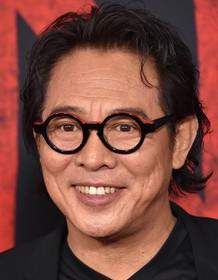
Pang Qingyun (Jet Li)
Played by Jet Li
Pang rises from a lone imperial commander to the militia’s ambitious leader, driven by strategic genius and a hunger for control. His decisions reflect pragmatic realism and a willingness to sacrifice civilians for the larger aim of quelling the rebellion. Over time, his authority strains the brotherhood as he balances loyalty with political advancement, ultimately paying with his life.
- 🗡️ Leader
- 🏛️ Ambition
- ⚖️ Pragmatism
-
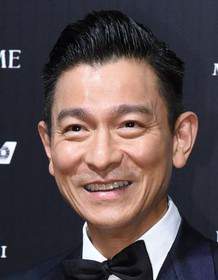
Zhao Er-Hu (Andy Lau)
Played by Andy Lau
Zhao is the charismatic leader of the bandit group who becomes Pang’s closest ally. He embodies loyalty and bold action, infiltrating enemy lines to strike decisive blows. His idealism clashes with Pang’s calculated moves, and his fate exemplifies the high price of loyalty in a faction-riven war.
- 🪖 Loyalist
- 🗡️ Strategist
- 💔 Tragic
-

Jiang Wu-Yang (Takeshi Kaneshiro)
Played by Takeshi Kaneshiro
Jiang serves as a fierce enforcer within the trio, capable of brutal acts yet capable of regret. He reluctantly carries out massacres and later confronts Pang, illustrating the moral gray areas of leadership and brotherhood. His pursuit of balance between loyalty and conscience ends with his execution as a scapegoat.
- 🗡️ Enforcer
- 🗝️ Loyal
- 🏺 Tragic
- L(
Lian (Liansheng) (Xu Jinglei)
Played by Xu Jinglei
Lian is Zhao’s wife who becomes Pang’s secret lover, fueling a dangerous love triangle. Her presence intensifies jealousy and political calculations within the group. Her death, at the hands of Jiang, marks a turning point that deepens the schism among the leaders.
- 💘 Forbidden Love
- 💔 Tragedy
Where and When Is The Warlords Set?
The Warlords is set in China, Suzhou and Nanjing (1860s). Here is why the time and place matter to the story.
When
1860s
The events unfold during the Taiping Rebellion against the Qing Dynasty, a turbulent decade marked by banditry, sieges, and political intrigue. Military campaigns swing between hopeful victories and brutal setbacks, revealing how power and resources drive people to extreme measures. The era’s chaos frames the moral choices faced by Pang, Zhao, and Jiang as they navigate loyalty and survival.
Where
China, Suzhou, Nanjing
Set in 1860s China amid the Taiping Rebellion, the story moves from a frontier village to the besieged cities of Suzhou and Nanjing. The film portrays the harsh realities of war, famine, and shifting loyalties that define life during a long civil conflict. The imperial forces and rebel factions both contend for dominance as brothers in arms struggle with their own ambitions.
- 🗺️ Historical
- ⚔️ War
- 🧭 Rebellion
- 🕊️ Brotherhood
What Are the Themes of The Warlords?
4 ideas the story keeps returning to, among them Brotherhood, War and Survival and Power and Politics.
-
01
Brotherhood
A central bond forms between Pang, Zhao, and Jiang as they swear a blood oath and fight together. The brotherhood drives their decisions, even when it leads to brutal outcomes. The loyalty is tested by ambition, envy, and the brutal necessities of war.
-
02
War and Survival
The siege of Suzhou and the march toward Nanjing expose how scarcity and constant threat shape choices. Each fight becomes a test of courage, strategy, and the willingness to sacrifice civilians and surrendering enemies to survive. The leaders balance tactical wins with the cost in human lives.
-
03
Power and Politics
As Pang ascends to political reward, imperial jealousy and rival factions attempt to control the militia. The narrative questions when ambition becomes coercion and whether ends justify means. Jiang’s role as the scapegoat reveals the fragility of leadership under a system of competing loyalties.
-
04
Tragedy and Consequence
Secret affairs, betrayals, and the deaths of Zhao and Liansheng underscore the personal costs of war. The fansy of brotherhood gives way to tragedy as trust breaks and revenge factors into the final confrontation. The tale ends with sacrifice and the harsh truth that living with consequences is harder than dying.
What Kind of Film Is The Warlords?
Dark in tone, with variable pacing and a moderate story, going by the plot summary.
- Tone
- Dark
- Pacing
- Variable
- Story
- Moderate
- Intensity
- High
- Ending
- Bleak
A grim and emotionally heavy epic that follows a bond of brotherhood through the brutal realities of civil war, building tension as ambition and moral compromises lead to inevitable betrayal and tragic consequences.
- grim
- tense
- oppressive
- tragic
- somber
- brutal
- brotherhood
- betrayal
- war
- political ambition
Content notes: war violence, massacre, beheading, assassination, betrayal, torture (lingchi).
Quiz
How well do you remember The Warlords? Test yourself on the story.
Where to Watch The Warlords
Stream it on Kanopy and Magnolia Selects, or rent or buy it from Amazon Video and Apple TV Store. US availability and prices from JustWatch.
 Kanopy
  Magnolia Selects Amazon Channel
  Philo
Philo  Warriors and Gangsters Amazon Channel




Streaming availability in the US, powered by