
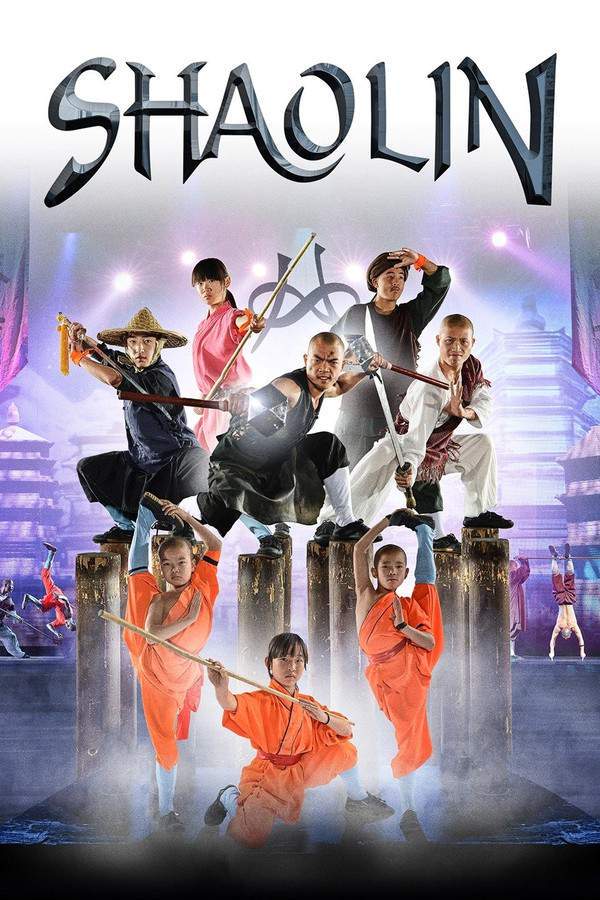
What Is Shaolin About?
The premise of Shaolin in 270 words, with nothing given away. The full story follows below.
In a China torn apart by rival warlords, the volatile landscape of early Republican Henan pulses with the clang of swords and the echo of desperate cries. Amid the rubble of villages and the shouts of soldiers, the formidable army commander Hao Jie and his fiercely loyal brother Huo Lung cut a path of conquest that leaves both fear and reverence in their wake. Their reputation spreads like wildfire, drawing the eyes of those who would either submit to the new order or cling to the fading hope of resistance.
Seeking sanctuary from the relentless tide of conflict, a wounded band of fighters stumbles upon the ancient Shaolin Temple, a bastion of serenity perched on the mist‑shrouded slopes of Dengfeng. By daylight the monks dispense medicine and food to the surrounding villagers, embodying the timeless discipline and compassion that have defined the temple for centuries. When night falls, however, the same sacred walls conceal a different purpose: cloaked disciples slip into the darkness, covertly aiding the oppressed and stitching together a fragile network of quiet defiance.
The film balances the stark brutality of warlords with the luminous, almost mystical aura of Shaolin’s rituals. Martial arts sequences are woven into moments of introspection, creating a rhythm that feels both visceral and meditative. The contrasting worlds—one of ruthless power and one of measured enlightenment—intersect through Hao Jie’s uneasy presence, setting up a tension that hints at redemption without spelling out its path. The tone remains gritty yet hopeful, inviting the audience to wonder how a man accustomed to command will navigate a realm where the greatest weapons are humility and inner peace.
What Happens in Shaolin?
The complete story of Shaolin, from the first scene to the last, in 801 words (about 3 minutes). Spoilers throughout.
Spoilers ahead
In Dengfeng, Henan, during the unsettled warlord era of early Republican China, a brutal power struggle unfolds. [Hou Jie] becomes the ruthless force who defeats his rival, [Huo Long], and seizes control of the town. Huo Long flees to the sacred Shaolin Temple to hide, but Hou Jie dupes him into surrendering a treasure map and then shoots him, mocking the Shaolin monks as he departs. The balance of power, already fragile, is tipped toward Hou Jie’s merciless rule.
A web of loyalties and betrayals tightens around him. He suspects his sworn brother, [Song Hu], of seeking advantage, and lays a trap in a restaurant under the ruse of arranging his daughter’s engagement to Song’s son. Meanwhile, his deputy, [Cao Man], hungry for power and feeling used, decides to betray his superior. As dinner unfolds, Song reveals a plan to retire and hand over everything to Hou, but a tip-off awakens him to Hou’s deadly intent. Enraged and humiliated, Hou fatally wounds Song, and the two families are struck by Cao’s assassins. In a last act of unlikely mercy, Song saves Hou before dying.
Chaos erupts as lines of kin and ally disconnect. During the escape, Hou’s wife and daughter become separated. The wife is rescued by Shaolin monks who have been quietly stealing rice from the military granary to feed refugees living at the temple. Hou escapes with his severely injured daughter, but a cliff fall seals her fate. Desperation drives him to Shaolin, where he pleads with the monks to save her life, only to confront the grim reality of her death. In a surge of rage, Hou assaults the monks, but is quickly subdued. He wanders, shell-shocked, near the temple until he meets the cook [Wudao], who offers him food and a place to stay after he has spent days trapped in a pit.
A path of repentance slowly opens. Witnessing the suffering around him, Hou resolves to become a monk and seek forgiveness through study, discipline, and martial arts. In time, he absorbs Shaolin principles and begins to reform, seeking a simple life away from violence. Through the plight of the refugees, he learns that Cao is recruiting male laborers under the pretense of building a railway, only to kill them once they are no longer useful. Hou confronts the cruel system by scaring away the guards who dig up corpses, and he drags the victims’ bodies to the temple gate, where the villagers and refugees recognize their missing loved ones.
The conflict with Cao intensifies as the temple becomes the battleground. When Cao learns that Hou still lives, he leads his soldiers to capture him. Hou offers to accompany Cao, intending to buy time for the monks to strike at Cao’s base and rescue the imprisoned workers. A fragile victory is achieved when Hou is able to reunite with his wife and escape, though the temple’s senior monk [Jingneng] is brutally killed while shielding others.
The temple’s fate and a shared sacrifice. Back at Shaolin, the monks decide to flee to avoid further bloodshed. [Wudao] guides the refugees away, while Hou and the remaining monks stay behind to hold off Cao’s assault and protect the escape route. The attackers arrive as foreigners, who have discovered they’ve been misled, rain down artillery on the temple, killing many monks and Cao’s soldiers. Hou defeats Cao in direct combat but ultimately sacrifices himself to save Cao from a falling beam, tumbling into the palm of a Buddha statue and dying peacefully. The surviving monks turn their rage on the outsiders and end the bombardment, while the refugees, watching from a mountainside, mourn the destruction of the temple. [Wudao] reassures them that the Shaolin spirit will live on in them even as the temple lies in ruins.
A final moment of reconciliation and responsibility. Before evacuating, Hou meets his wife one last time. In a gesture of atonement, he gives her the urn containing their daughter’s ashes and chooses to remain to defend the temple and ensure the refugees’ escape. She forgives him, recognizing that his true self now is closer to the person she wished he had always been. Hou speaks of Cao’s evil as born from his own past misdeeds, and he takes on the weighty responsibility of guiding Cao toward a better path, even as the world around them collapses.
From ruin to resolve, a spirit endures. The end of the conflict leaves the Shaolin community scattered, but not broken. The story emphasizes the possibility of redemption through sacrifice and the enduring belief that courage, duty, and compassion can withstand the darkest times. It is a tale of transformation, of a ruthless warlord who seeks peace through atonement, and of a temple’s legacy that survives in the memories and resolve of those who carry its spirit forward.
Shaolin Timeline: Every Key Event in Order
14 key events in the order they happen, from “Hou Jie defeats Huo Long and seizes Dengfeng” to “Hou passes the moral burden to Cao”. 14 events name a place, across 10 locations.
- 1
Hou Jie defeats Huo Long and seizes Dengfeng
In a ruthless campaign, Hou Jie defeats his rival Huo Long and seizes control of Dengfeng. Huo Long flees to the Shaolin Temple, where Hou tricks him into surrendering his treasure map and shoots him. Hou then ridicules the Shaolin monks as he departs.
Where:Dengfeng, Henan
- 2
Dinner trap: Hou manipulates Song Hu under the guise of engagement
Hou arranges a dinner in a restaurant under the pretense of arranging his daughter's engagement to Song Hu's son. The meal features a tense exchange in which Song declares his plan to retire and cede everything to Hou, while a tip off hints at an assassination. Fueled by anger at the betrayal, Hou fatally wounds Song during the confrontation.
Where:Restaurant, Dengfeng
- 3
Cao Man betrays Hou
Cao Man, Hou's ambitious deputy, betrays his master and aligns with rivals to weaken him. The betrayal foreshadows the coming attacks on Hou's family and the temple. It signals a fracture in the inner circle that will fuel the ensuing conflict.
Where:Dengfeng
- 4
Song Hu dies saving Hou
Cao's assassins attack Song and Hou's families. Song, though mortally wounded, saves Hou during the flee, and dies from his injuries. The deaths deepen Hou's sense of loss and set him on a darker path.
Where:Dengfeng vicinity
- 5
Family separation and daughter's death near Shaolin
Hou's wife and daughter are separated during the chaos. Shaolin monks who aid refugees steal rice to feed them at the temple. Hou's daughter falls from a cliff and dies despite the monks' efforts. The wife blames Hou and leaves him; Hou attacks the monks but is subdued.
Where:Near Shaolin Temple
- 6
Hou seeks redemption; becomes a Shaolin monk
Hou wanders near Shaolin in shock until he meets the cook Wudao, who offers food and shelter after he is trapped in a pit. Through this encounter he feels guilt about his past sins and resolves to reform. He begins to study Shaolin principles and martial arts, choosing to become a monk to atone.
Where:Shaolin Temple vicinity
- 7
Cao recruits male refugees to unearth relics; plan to silence them
Hou learns from refugees that Cao has been recruiting male laborers to unearth relics under the pretext of building a railway, intending to kill them once the job is done. He confronts the grim reality of Cao's scheme and the danger to innocent people. He then exposes the brutal plan by dragging recently buried victims' corpses to the temple gate to reveal the truth.
Where:Temple area
- 8
Cao attacks Shaolin; Hou distracts to save labourers
Cao returns with his troops to capture Hou at Shaolin. Hou volunteers to go with Cao so the monks can break into Cao's base and rescue the imprisoned laborers, buying time for the escape. He is briefly reunited with his wife, and they manage to flee together.
Where:Shaolin Temple
- 9
Jingneng dies protecting the escape
During the chaotic exit, Jingneng, Hou's senior monk, is killed by Cao while covering his juniors. Hou and his wife escape with the refugees, carrying with them the burden of the temple's fate.
Where:Shaolin Temple vicinity
- 10
Refugees flee as the temple is attacked
Cao returns with heavy forces and the foreigners bombard Shaolin with artillery. Many monks and soldiers are killed, and the refugees are forced to flee while the temple is pounded into ruin. The monks decide to hold off long enough for the escape to succeed.
Where:Shaolin Temple
Show the other 4 events of Shaolin Hide the last 4 events
- 11
Hou defeats Cao but sacrifices himself
Hou engages Cao in a final confrontation and defeats him, but sacrifices himself to prevent Cao from being crushed by a falling beam. He falls into the Buddha statue’s palm and dies peacefully, leaving Cao guilt-ridden. The surviving monks and refugees purge the attackers and end the bombardment.
Where:Shaolin Temple ruins
- 12
Shaolin spirit endures despite destruction
On a mountainside, the refugees cry as they look down at the temple ruins. Wudao consoles them, telling them that the Shaolin spirit will live on in them despite the destruction of the temple.
Where:Mountainside near Shaolin
- 13
Final reunion and urn of the daughter's ashes
Before evacuation, Hou meets his wife for a final time. He repents for his past deeds and gives her the urn containing their daughter's ashes. She forgives him and accepts his transformed self, even as they cannot be together. He chooses to stay and defend the refugees at Shaolin.
Where:Shaolin Temple vicinity
- 14
Hou passes the moral burden to Cao
Hou acknowledges that Cao's evil actions stem from his own past misdeeds and asserts that it is his responsibility to guide Cao toward the correct path. The moment marks a shift from vengeance to mentorship and a belief in reform.
Where:Shaolin Temple vicinity
Who Are the Main Characters in Shaolin?
5 characters, among them Hou Jie, Cao Man and Song Hu: who each one is and the part they play in the story.
- HJ
Hou Jie
A ruthless warlord who seizes Dengfeng and devastates the region, he undergoes a profound transformation after seeking shelter at Shaolin. Haunted by his past, he embraces Shaolin teachings and martial arts, gradually reforming his character. His arc culminates in a selfless sacrifice to protect others and steer Cao toward a better path.
- 🗡️ Warlord
- 🕊️ Redemption
- 🧭 Transformation
- 💔 Guilt
- CM
Cao Man
Hou Jie's ambitious deputy who betrays his superior out of disillusionment and greed. He leads troops against the temple and laborers, and his actions are confronted by the consequences of betrayal. His arc is shaped by the moral reckoning that follows Hou’s sacrifice.
- 🪙 Ambition
- ⚖️ Betrayal
- 🔥 Conflict
- SH
Song Hu
Hou Jie’s sworn brother whose plans for retirement are upended by political machinations. He demonstrates loyalty and courage by aiding Hou, but dies saving him from calamity. His death accelerates Hou’s path to redemption and reinforces the temple’s resolve.
- 🤝 Brotherhood
- 🗡️ Loyalty
- 🎭 Tragedy
- J
Jingneng
Hou Jie’s senior monk who fights to protect juniors and the temple’s inhabitants. He is killed by Cao’s forces while ensuring the escape of others, illustrating the cost of defending peace. His sacrifice underscores the leadership and duty within Shaolin.
- 🧭 Mentor
- 🗡️ Sacrifice
- 🕊️ Wisdom
- W
Wudao
The Shaolin cook who provides food, shelter, and guidance to Hou during his stay. He becomes a crucial link between the monks and refugees, helping to organize escapes and maintain hope. His compassion embodies the temple’s humanitarian spirit.
- 🍲 Caregiver
- 🌾 Refuge
- 🕊️ Hope
Where and When Is Shaolin Set?
Shaolin is set in Dengfeng, Henan and Shaolin Temple (Early Republican China, 1910s–1920s). Here is why the time and place matter to the story.
When
Early Republican China, 1910s–1920s
The narrative unfolds in a period of fragmentation and factional fighting as warlords vie for power. Skirmishes, shifting allegiances, and upheaval define daily life, creating a setting where redemption and restraint become pivotal themes. The timeframe emphasizes the transformation from violence to contemplation that drives Hou Jie’s arc.
Where
Dengfeng, Henan; Shaolin Temple
Dengfeng in Henan Province serves as the political backdrop during China’s warlord era. The Shaolin Temple near the town is depicted as a refuge for refugees and a center of martial and spiritual discipline. The film contrasts the harsh, martial landscape of the countryside with the serene, austere atmosphere of the temple.
- 🏯 Temple
- 🗺️ Historical site
- ⚔️ Warlord Era
What Are the Themes of Shaolin?
3 ideas the story keeps returning to, among them Redemption, Sacrifice and Destruction and resilience.
-
01
Redemption
A former warlord seeks forgiveness by embracing Shaolin principles and abandoning brutality. The story follows Hou Jie’s gradual shift from aggression to restraint, highlighting how personal atonement can redefine a life shaped by conflict. This theme anchors the character’s moral arc and his interactions with others.
-
02
Sacrifice
Hou Jie sacrifices his own safety and comfort to protect laborers, refugees, and even his adversaries. The monks also place communal safety above individual gain, reinforcing the idea that true power lies in selflessness. The climactic acts of giving up one’s life underscore this moral pivot.
-
03
Destruction and resilience
The temple and its inhabitants endure bombardment and ruin, illustrating the fragility of sanctuary in wartime. Yet the surviving monks and refugees carry the Shaolin spirit forward, embodying resilience and continuity beyond physical destruction. The narrative links tragedy with enduring faith and communal strength.
What Kind of Film Is Shaolin?
Bittersweet in tone, with steady pacing and a moderate story, going by the plot summary.
- Tone
- Bittersweet
- Pacing
- Steady
- Story
- Moderate
- Intensity
- High
- Ending
- Bittersweet
A spiritually charged and violent epic that charts a ruthless warlord's arduous path to redemption, set against the brutal backdrop of a war-torn China, culminating in a bittersweet sacrifice for a greater good.
- redemptive
- somber
- violent
- spiritual
- tragic
- heroic
- redemption
- martial arts
- warlord era
- sacrifice
Content notes: war violence, child death, mass killing, betrayal and assassination.
Quiz
How well do you remember Shaolin? Test yourself on the story.


