
The Founding of a Republic 2009

Directed by
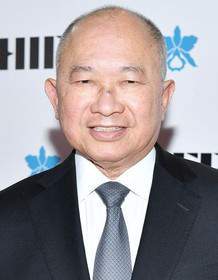
John Woo
Made by

China Film Group Corporation
The Founding of a Republic Plot Summary
Read the complete plot summary and ending explained for The Founding of a Republic (2009). From turning points to emotional moments, uncover what really happened and why it matters.
In August 1945, Japan announced its unconditional surrender, bringing eight years of resistance warfare to a close. Yet, national unification remained unfinished. The Kuomintang (KMT) claimed to hold the reins of the country, but its authority was uneven at best, while the Communist Party (CCP) had already built a strong political, military, and popular base in the areas it had liberated behind enemy lines. It was in this tense moment that Mao Zedong Tang Guoqiang and Chiang Kai-shek Zhang Guoli travelled to Chongqing to explore the possibility of a peace negotiation and a path toward a democratic nation. They were joined by supporters from the China Democratic League, led by Zhang Lan Wang Lan, who hoped to help broker a compromise. The stage was set for a high-stakes encounter that would shape China’s future for decades to come.
On October 10, 1945, the two sides signed the Double Tenth Agreement, a formal attempt to halt the civil war and to lay the groundwork for a multi-party government within a united China. In theory, the pact pledged to stop the fighting and to broaden political participation, but in practice deep-seated differences between the CCP and the KMT proved difficult to bridge. The mutual trust required for a true power-sharing arrangement never fully materialized, and by the following year the cooperation frayed as each side pressed its own path forward. As fighting paused, the CCP began consolidating power in liberated zones, while the KMT moved to reassert its control in other regions.
From July 1947 onward, the People’s Liberation Army shifted from a strategy of defense to offense in territories under KMT control, marking a turning point in the war and signaling the start of a broad push to liberate large parts of the country. In the political arena, Chiang Kai-shek convened a National Assembly in Nanjing, where he was elected president, with Li Zongren as his vice president Wang Xueqi noted as a rival inside the party. The CCP seized on these developments, and by May 1948 issued the May Day Declaration from Baoding, Hebei, calling for the prompt convening of a Political Consultative Conference and the establishment of a People’s Congress to realize a democratic coalition government. The move helped broaden a democratic united front, drawing in partners such as the China Democratic League and other political actors, alongside influential figures like Zhang Lan, Soong Ching-ling Xu Qing, and Li Jishen Jin Xin.
As CCP victories mounted across central and southern China, the political momentum shifted decisively. Chiang Kai-shek was compelled to resign as president, and his forces retreated to Taiwan in December 1949. The political pulse of the country culminated with the First Plenary Session of the Chinese People’s Political Consultative Conference in Beijing on September 21, 1949, followed by Mao’s proclamation of the founding of the People’s Republic of China on October 1, 1949. Beijing, then commonly known as Beiping, was named as the capital of the new nation, signaling a historic transition to a new era. The war’s end brought a sweeping reorganization of China’s political map and established a socialist-leaning state apparatus that would define the country for decades to come.
The Founding of a Republic Timeline
Follow the complete movie timeline of The Founding of a Republic (2009) with every major event in chronological order. Great for understanding complex plots and story progression.
Japan's surrender reshapes China's postwar power landscape
In August 1945, Japan announced its unconditional surrender, ending eight years of war. The Kuomintang proclaims control over the country, but its authority is patchy beyond major cities. The Chinese Communist Party, by contrast, has built a strong political, military, and popular base in liberated areas behind enemy lines.
Mao Zedong and CCP leaders travel to Chongqing for peace talks with Chiang Kai-shek
Mao Zedong and other CCP leaders travel to Chongqing to meet with Chiang Kai-shek, seeking a peace negotiation and the framework for a democratic nation. The talks aim to ease civil conflict and establish a power-sharing path, though underlying distrust remains. The meeting underscores a brief window of cooperation between the warring sides.
Double Tenth Agreement signed to halt civil war
On October 10, 1945, Mao Zedong and Chiang Kai-shek signed the Double Tenth Agreement with the China Democratic League's assistance. The pact pledged to stop the civil war and to work toward a multi-party government within China. It represented a formal, high-profile bid for peace, even as fundamental differences persisted.
Breach of the Double Tenth: breakdown and return to conflict
Despite the signing, deep-rooted differences between the CCP and KMT proved insurmountable. The following year, 1946, the agreement broke down, and civil war pressures resumed across the country. The fragile peace gave way to renewed hostilities as both sides vied for control.
PLA launches offensive as liberation begins
From July 1947 onward, the PLA shifts from strategic defense to offense in regions under KMT rule. This marks the start of a broad liberation campaign as Communist forces press their momentum across central and southern China. The balance of power begins to tilt decisively in favor of the CCP.
National Assembly in Nanjing; Chiang Kai-shek elected president
Chiang Kai-shek calls for a National Assembly in Nanjing as part of the ROC's postwar reshaping. He is elected as the first President of the Republic of China, signaling an attempt to legitimize governance amid the escalating civil conflict.
Li Zongren elected vice president amid the new assembly
Li Zongren, a rival within the KMT, is elected vice president, highlighting internal party tensions despite the new political facade. The arrangement underscores competing factions within the ROC government during the transitional period.
May Day Declaration in Baoding proclaims democratic coalition and reform
In May 1948, the CCP issued the May Day Declaration in Baoding, Hebei, proclaiming the overthrow of the KMT and urging the prompt convening of a Political Consultative Conference. It also called for the establishment of a People’s Congress and a democratic coalition government. The declaration energized the united front and intensified the political struggle.
KMT corruption and the northeast front accelerate the crisis
During this period, corruption within the KMT escalates, undermining governance and eroding public support. At the same time, the Northeastern front grows more urgent as CCP forces gain ground and pressure mounts on ROC positions.
Democratic united front expands; CCP declares War of Liberation
The CCP declares the opening of a War of Liberation against the ROC government, and the democratic united front expands as parties like the China Democratic League, the Revolutionary Committee (China), and notable figures join the movement. This broad alliance consolidates opposition to the KMT across multiple political circles.
CPPCC First Plenary Session signals a new political era
Following CCP victories, the First Plenary Session of the Chinese People's Political Consultative Conference is held in Beijing, signaling a move toward a coordinated political framework outside the KMT-dominated system.
Founding of the People's Republic of China proclaimed by Mao
On October 1, 1949, Mao Zedong proclaims the founding of the People's Republic of China, with Beiping (Beijing) formally named as the capital. The ceremony marks the dawn of a new era in Chinese history.
Chiang Kai-shek resigns and retreats to Taiwan
In December 1949, Chiang Kai-shek is forced to resign as president, and his forces retreat to Taiwan. The ROC government relocates its seat as the CCP consolidates control over the mainland.
The Founding of a Republic Characters
Explore all characters from The Founding of a Republic (2009). Get detailed profiles with their roles, arcs, and key relationships explained.
Mao Zedong (Tang Guoqiang)
Chairman of the Chinese Communist Party, Mao Zedong is portrayed as a central architect of postwar strategy. He navigates between ideological commitments and practical politics, seeking a path to power that preserves CCP leadership. Mao’s charisma and tactical decisions push for a broad coalition while ensuring CCP influence remains decisive. His interactions reveal both ideological resolve and political caution.
Chiang Kai-shek (Zhang Guoli)
Leader of the Kuomintang, Chiang Kai-shek strives to maintain national unity and KMT control. He negotiates with Mao while remaining wary of CCP influence and constrained by internal corruption and rivals. He prioritizes a strong, centralized government and faces the prospect of retreat to Taiwan as power shifts. The character embodies the tension between ambition and political survival.
Li Zongren (Wang Xueqi)
A senior KMT military leader and politician who advocates for a coalition government during peace talks. He balances military campaigns with political maneuvering to secure a role for the CCP within a democratic framework. His pragmatic stance helps shape the terms of peace, though he remains cautious of hardline outcomes. He embodies the complexities of negotiation between war and diplomacy.
Zhang Lan (Wang Bing)
Leader of the China Democratic League, Zhang Lan acts as a bridge between the CCP and other parties, pushing for broader participation in a democratic process. He navigates factional pressures to preserve influence for his league. His role highlights the importance of third-party actors in postwar politics. He demonstrates diplomacy and coalition-building across competing interests.
Soong Ching-ling (Xu Qing)
Soong Ching-ling is a prominent political figure allied with the CCP, advocating for democratic governance and peace. She participates in negotiations and represents a vision of a more inclusive political order. Her involvement signals the empowerment of women in high-level diplomacy and broad societal engagement. Her stance lends legitimacy to multiparty efforts in the narrative.
Li Jishen (Li Qiang)
An important KMT figure who participates in peace talks, supporting a democratic coalition. He weighs internal party dynamics and external pressure to determine concessions. He seeks to balance traditional Kuomintang authority with reformist demands. His role underscores the challenges of coalition-building during a volatile transition.
The Founding of a Republic Settings
Learn where and when The Founding of a Republic (2009) takes place. Explore the film’s settings, era, and how they shape the narrative.
Time period
1945-1949
The narrative spans the immediate post–World War II era, beginning with Japan's surrender in 1945 and the ensuing power vacuum. It traces failed peace efforts, including the Double Tenth Agreement, and the shifting momentum between cooperation and confrontation. The period culminates with the founding of the People's Republic of China in 1949 and the political realignments that led to the Kuomintang retreat to Taiwan.
Location
Chongqing, Nanjing, Beiping (Beijing)
Chongqing is depicted as the wartime capital where the KMT and CCP negotiate away from the front lines. Nanjing serves as a key political center and the site of major power plays during the postwar period. Beiping, later renamed Beijing, stands as the seat of political maneuvering and eventually the capital associated with the new order described in the timeline.
The Founding of a Republic Themes
Discover the main themes in The Founding of a Republic (2009). Analyze the deeper meanings, emotional layers, and social commentary behind the film.
🤝
Diplomacy
Leaders on both sides pursue a peaceful settlement after years of civil conflict. The Double Tenth Agreement is shown as a pivotal effort to share power and establish a multi-party government. The film highlights the fragility of coalitions and the difficulties of translating negotiations into lasting political change.
⚔️
Conflict
Underlying ambitions and distrust fuel the struggle for supremacy between the CCP and KMT. The peace process contends with corruption, shifting loyalties, and strategic concessions. As violence resurges, provincial control and military momentum swing, underscoring the high cost of civil war.
🏛️
Founding
The story moves toward a new national order and the question of legitimacy. Beijing becomes the symbolic and political center as milestones toward a unified state are pursued. The film frames the founding moment as a turning point that redefines governance, sovereignty, and national identity.

Coming soon on iOS and Android
The Plot Explained Mobile App
From blockbusters to hidden gems — dive into movie stories anytime, anywhere. Save your favorites, discover plots faster, and never miss a twist again.
Sign up to be the first to know when we launch. Your email stays private — always.
Explore the mobile appThe Founding of a Republic Spoiler-Free Summary
Discover the spoiler-free summary of The Founding of a Republic (2009). Get a concise overview without any spoilers.
In the smoky remnants of a world war‑torn China, the collapse of an empire leaves a fractured nation teetering between chaos and the promise of a new beginning. The country’s battered cities and scar‑red countryside pulse with an uneasy hope, as competing visions for its future clash beneath a sky heavy with lingering artillery smoke. Against this backdrop of political turbulence, the film immerses the viewer in a period where every handshake could reshape history and every whispered conversation carries the weight of an entire people’s destiny.
At the heart of this volatile tableau stands Mao Zedong, a charismatic leader whose resolve is forged in the crucible of resistance. His presence radiates a mix of fierce idealism and pragmatic cunning, drawing allies and skeptics alike into a delicate dance of power. Opposite him, Chiang Kai-shek embodies the remnants of a once‑dominant order, striving to maintain control while confronting the erosion of his authority. Their intersecting paths set the stage for a high‑stakes encounter that feels as much personal as it is political, each man representing a distinct answer to the question of how a nation should be reborn.
Beside the titans, a quieter yet pivotal voice emerges in Zhang Lan, a determined advocate for a broader coalition who believes that compromise might bridge the chasm between divergent ideologies. Her efforts to mediate reflect the film’s underlying tension between unity and division, and her resolve adds a human dimension to the sweeping historical forces at play. Through these central figures, the story paints a portrait of leadership tested by ambition, sacrifice, and an unrelenting drive to forge a lasting legacy.
The tone is starkly atmospheric, blending the gravitas of a political thriller with the intimate pulse of personal conviction. Cinematic vistas capture the weary beauty of a land in transition, while muted dialogues echo the fragile negotiations that could either kindle a fledgling republic or plunge the country back into darkness. This richly textured world invites the audience to linger on the edge of impending change, feeling the weight of each character’s choices before the ultimate outcomes are revealed.
Movies with Similar Twists and Themes
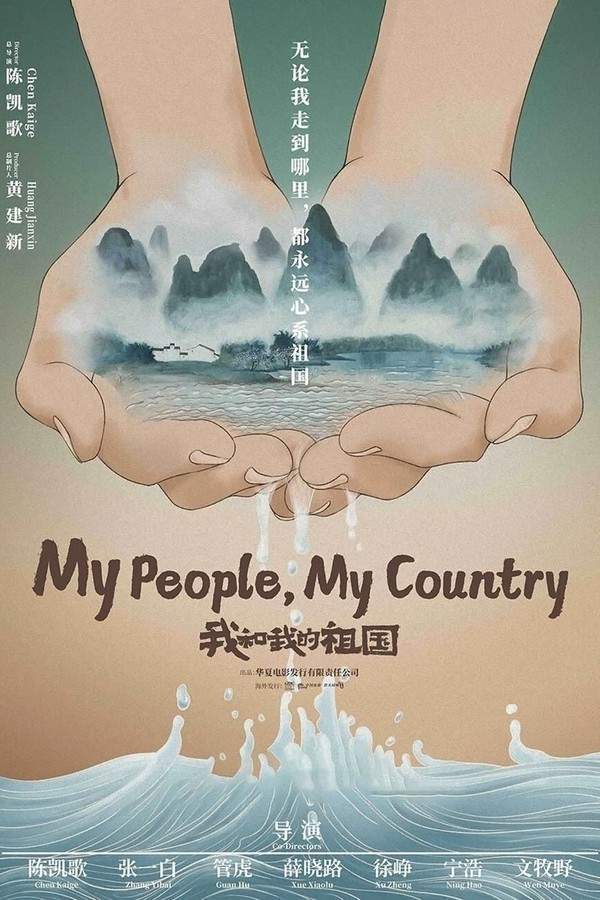
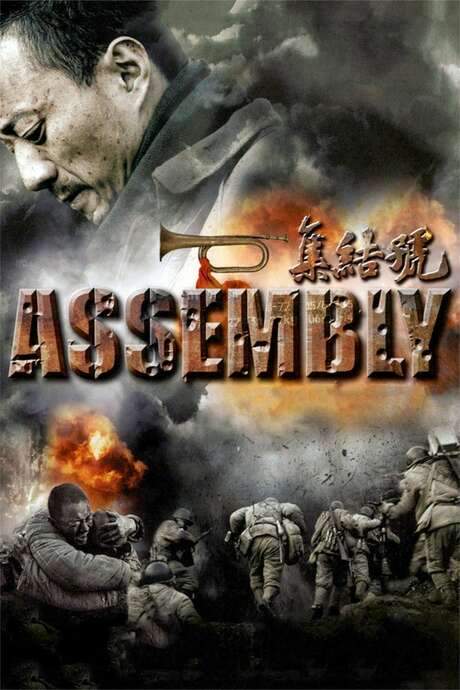
Uncover films that echo the narrative beats, emotional arcs, or dramatic twists of the one you're exploring. These recommendations are handpicked based on story depth, thematic resonance, and spoiler-worthy moments — perfect for fans who crave more of the same intrigue.


Featured on this page

What's After the Movie?
Not sure whether to stay after the credits? Find out!
Check out our other apps:

SAT Sphere
Build confidence for the Digital SAT.

Mori Atlas
Discover wild places worth protecting.

Luntero
Search smarter for a home in Amsterdam.

Plot Explained
Unravel movie endings and hidden clues.

Pokechamp
Dive into Pokémon data and battle logic.

Driving Theory
Get ready for your European theory test.

Movie Dust
Plan your next cinema trip with ease.

Musemap
Find art and culture as you travel.

Selkobase
Compare credentials before committing.

Local Manual
Turn an unfamiliar country into practical next steps.

Lernavi
Compare school systems before your next move.

GymRoam
Find a workout stop wherever your plans take you.
Explore Our Movie Platform
New Movie Releases (2026)
Famous Movie Actors
Top Film Production Studios
Movie Plot Summaries & Endings
Major Movie Awards & Winners
Best Concert Films & Music Documentaries
Movie Collections and Curated Lists
© 2026 What's After the Movie. All rights reserved.
Privacy Policy