
The Founding of a Republic (2009): Cast, Box Office & Plot
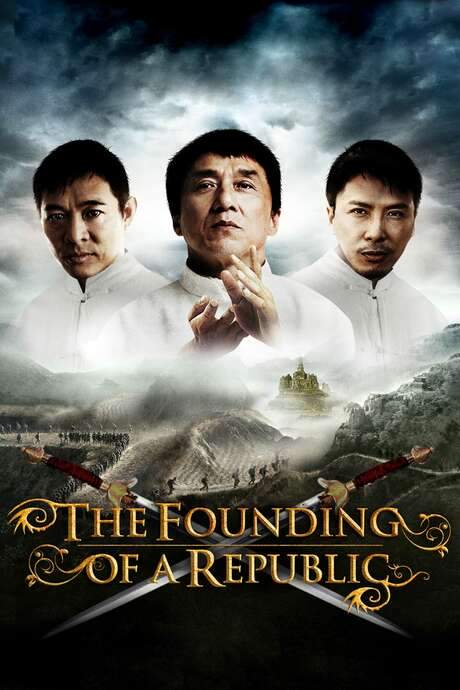
The Founding of a Republic is a 2009 historical drama directed by Huang Jianxin and Han Sanping, starring Tang Guoqiang as Mao Zedong, Chen Kun and Zhang Jianya. It runs 2 hours 18 minutes and earned $1 million worldwide.
- Released
- Runtime
- 2h 18m (138 min)
- Directors
- Huang Jianxin and Han Sanping
- Original language
-
 Chinese
 - Studio
- China Film Group Corporation
- After the credits
- No No extra scene
What Is The Founding of a Republic About?
The premise of The Founding of a Republic without spoilers. The whole story is in the plot summary further down.
When an empire falls a nation is born. The tale of one man who fought against the tyranny of a ruler and led his people in battle in the ultimate sacrifice for his country.
The Founding of a Republic Themes & Keywords
· 50 tags- communist party of china
- reference to joseph stalin
- mao zedong character
- chiang kai shek character
- socialism
- year 1945
- year 1949
- year 1947
- year 1948
- man
- military uniform
- army general
+38 more Show fewer
- general
- interview
- press
- republican era china
- communist leader
- political leader
- leader
- stretcher
- go
- listening to a radio
- radio broadcast
- radio
- military parade
- parade
- rifle
- yangtze river
- strategy
- gangster
- hoarding
- national anthem
- cook
- people's liberation army
- national flag
- flag
- u.s. embassy
- camera
- chinese revolution
- chinese government
- chinese military
- chinese army
- chinese
- chinese history
- yan'an china
- nationalist china
- rural china
- nanjing china
- people's republic of china
- communist party
The Founding of a Republic Cast & Characters
Tang Guoqiang leads the cast as Mao Zedong, with Chen Kun as Chiang Ching-kuo and Zhang Jianya as Chiang Kai-shek's Bodyguard. Directed by Huang Jianxin and Han Sanping; 89 actors are credited in all.
- Co-director Huang Jianxin
- Co-director Han Sanping
- Tang Guoqiang as Mao Zedong
- Chen Kun as Chiang Ching-kuo
- Zhang Jianya as Chiang Kai-shek's Bodyguard
- Zhang Guoli as Chiang Kai-shek
Also Starring in The Founding of a Republic
· 85 more- Hou Yong Zhang Wentian
- Yang Xiaodan Zhang Zhizhong
- Wang Bing Zhang Lan
- Tony Leung Ka Fai Representative of the People's Liberation Army
- Liu Ye Old Red Army Soldiers
- Gong Beibi Female Soldiers of the People's Liberation Army
- Guo Xiaodong Sentinel National Army
- Yongli Che People's Liberation Army
- Teddy Lin National Army Officers
- Wang Xueqi Li Zongren
- Xu Qing Soong Ching-ling
- Jin Xin Li Jishen
- Jackie Chan Reporter
- Andy Lau Yu Jishi
- Donnie Yen Tian Han
- John Woo Liu Wenhui
Show all 89 cast members Show fewer cast members
- Jet Li Chen Shaokuan
- Vivian Wu Song Meiling
- Leon Lai Cai Tingkai
- Tony Leung
- Ge You Commander Shino
- Wang Baoqiang Field Warrior
- Huang Xiaoming Li Yingiao
- Fan Wei Guo Bencai
- Hu Jun Gu Zhutong
- Jiang Wen Mao Renfeng
- Zhao Wei CPPCC Representative
- Zhang Ziyi Gong Peng
- Feng Xiaogang Du Yuesheng
- Wu Gang Wen Yiduo
- Zhang Hanyu Liu Congwen
- Deng Chao Xu Beihong
- Xu Fan Liao Mengxing
- Tong Dawei Kong Lingkan
- Wang Xuebing Old Red Army Soldiers
- Sun Honglei Reporter of Central Daily
- Liu Yiwei Li Huang
- Chen Kaige Feng Yuxiang
- Li Bin He Xiangning
- You Yongzhi Bai Chongxi
- Liu Hua Officer at the School Entrance
- Daniel Chan Hiu-Tung Liu Bocheng
- Liu Jin Zhou Enlai
- Chen Shu CPPCC Representative
- Chen Daoming Yan Jinwen
- Ning Jing CPPCC Representative
- Tao Zeru Wu Tiecheng
- Feng Yuanzheng Fu Jingbo
- Ying Da CPPCC Representative
- Chen Hao Fu Dongju
- Guo Degang Photographer
- Li Qiang Chen Cheng
- Miao Pu CPPCC Representative
- Huang Shengyi Female Announcer
- Xinghuo Zhong Huang Shaohong
- Xu Huanshan Yu Youren
- Wang Wufu Zhu De
- Chen Baoguo Zhou Zhirou
- Cao Kefan Wu Guozhen
- Wang Jian Ren Bishi
- Feng Gong CPPCC Representative
- Ge Cunzhuang Tan Pingshan
- Sun Xing Du Yuming
- Chen Hong Reporter
- You Liping Lin Biao
- Zong Liqun Peng Dehuai
- Ma Yue Yan Changlin
- Wang Jianguo
- Bi Yanjun Luo Longji
- Liu Sha Liu Shaoqi
- Shi Xin Deng Xiaoping
- Xie Gang Gao Gang
- Wang Fuli CPPCC Representative
- Xiu Zongdi Fu Zuoyi
- Ding Zhicheng Lu Guangsheng
- Wang Yajie Female Representative
- Xiaotong Che Liu Bocheng
- Mu Bai Gentleman
- Donald Freeman Hurley
- Zhao Yong He Long
- Shen Aojun CPPCC Representative
- Huang Wei Deng Yingchao
- Gu Wei Chen Yi
- Yang Ruoxi Female Soldiers of the People's Liberation Army
- Zhao Jingpei
The Founding of a Republic Plot Summary
What happens in The Founding of a Republic from start to finish, spoilers included, with a timeline of 13 key events. The opening is below; the full summary is a 3-minute read.
Spoilers ahead
In August 1945, Japan announced its unconditional surrender, bringing eight years of resistance warfare to a close. Yet, national unification remained unfinished. The Kuomintang (KMT) claimed to hold the reins of the country, but its authority was uneven at best, while the Communist Party (CCP) had already built a strong political, military, and popular base in the areas it had liberated behind enemy lines. It was in this tense moment that Mao Zedong Tang Guoqiang and Chiang Kai-shek Zhang Guoli travelled to Chongqing to explore the possibility of a peace negotiation and a path toward a democratic nation. They were joined by supporters from the China Democratic League, led by Zhang Lan Wang Lan, who hoped to help broker a compromise.
Full summary
The whole story of The Founding of a Republic, scene by scene
The Founding of a Republic Box Office
The Founding of a Republic grossed $1 million worldwide.
Worldwide gross
$1M
- International
- $1M
The Founding of a Republic Trailers & Videos
The trailer of The Founding of a Republic.
How Well Do You Know The Founding of a Republic?
10 questions about the story, each with a hint if you get stuck. Pick an answer to see whether you were right.
Question 1 of 10
- Question 1: not answered
- Question 2: not answered
- Question 3: not answered
- Question 4: not answered
- Question 5: not answered
- Question 6: not answered
- Question 7: not answered
- Question 8: not answered
- Question 9: not answered
- Question 10: not answered
Who is the leader of the Communist Party shown negotiating with the Kuomintang?
The Founding of a Republic Also Known As
8 alternative titles, including “Jian guo da ye” and “Основание Китая”.
- Also known as
-
- Jian guo da ye
- Основание Китая
- הולדתה של הרפובליקה
- 건국대업
- La fondation d'une République
- Основаването на Китай
- 建國大業
- A Fundação de uma República, ჩინეთის დაარსების მიზეზი
Seen The Founding of a Republic?
Movies Like The Founding of a Republic
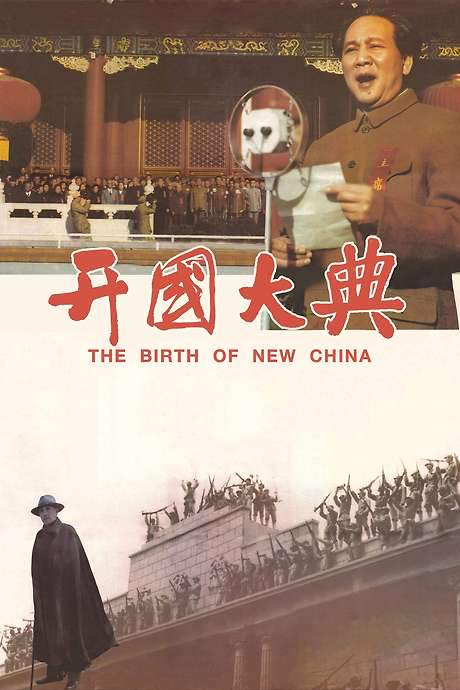
Films with a similar story, tone or audience, including The Founding of an Army, My People, My Country and The Birth of New China.






The Founding of a Republic FAQ: Cast & Box Office
Runtime, release date, director, cast, box office, post-credit scenes and language of The Founding of a Republic, each answered in a sentence.
How long is The Founding of a Republic?
The Founding of a Republic runs 2 hours 18 minutes (138 minutes).
When was The Founding of a Republic released?
The Founding of a Republic was released on September 17, 2009.
Who directed The Founding of a Republic?
The Founding of a Republic was directed by Huang Jianxin and Han Sanping.
More films by Huang Jianxin Who is in the cast of The Founding of a Republic?
The Founding of a Republic stars Tang Guoqiang as Mao Zedong, Chen Kun as Chiang Ching-kuo and Zhang Jianya as Chiang Kai-shek's Bodyguard, among 89 credited actors.
How much did The Founding of a Republic make at the box office?
The Founding of a Republic grossed $1 million worldwide.
Does The Founding of a Republic have a post-credit scene?
No. The Founding of a Republic has no extra scene during or after the credits.
What language is The Founding of a Republic in?
The original language of The Founding of a Republic is Chinese.
Coming soon to your phone
The Plot Explained Movie Summary App
From blockbusters to hidden gems: plot summaries, endings explained and timelines on your phone. Save your favorites and never miss a twist again.
Be the first to know when it launches. Your email stays private, always. Learn more about the app
