The Best House in London 1969


In Victorian London, the British Government launches an ambitious scheme to curb prostitution by creating an opulent establishment dubbed the ‘best place in town.’ The plan results in the world’s most extravagant brothel, a lavish venue where decadence and social experiment collide.



Does The Best House in London have end credit scenes?
No!
The Best House in London does not have end credit scenes. You can leave when the credits roll.
Where to Watch The Best House in London
See current US streaming, rental, and purchase options for The Best House in London (1969) via JustWatch.





Meet the Full Cast and Actors of The Best House in London
Explore the complete cast of The Best House in London, including both lead and supporting actors. Learn who plays each character, discover their past roles and achievements, and find out what makes this ensemble cast stand out in the world of film and television.

David Hemmings
Benjamin Oakes / Walter Leybourne
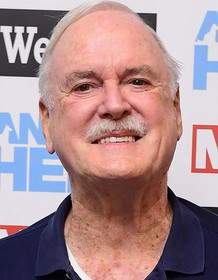
John Cleese
Jones
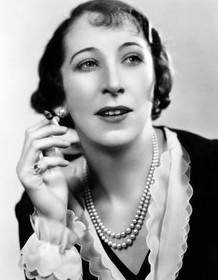
Martita Hunt
Headmistress
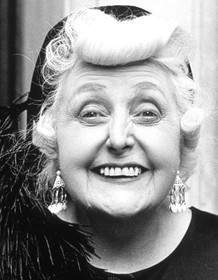
Tessie O'Shea
Music Hall Singer
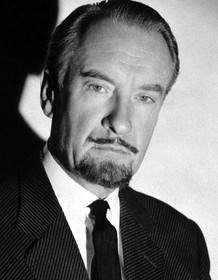
George Sanders
Sir Francis Leybourne

Margaret Nolan
Busty Prostitute
Milton Reid
Henchman
Peter Jeffrey
Sherlock Holmes
Ferdy Mayne
Jessie Robins
Joanna Pettet
Josephine Pacefoot
Maurice Denham
Editor, The Times
Warren Mitchell
Count Pandolfo
Thorley Walters
Doctor Watson
Veronica Carlson
Lily
John Bird
Home Secretary
Roy Beck
Times Newspaper Reporter (uncredited)
Betty Marsden
Felicity
William Rushton
Sylvester Wall
Marianne Stone
Avril Angers
Flora's Mother
Arnold Diamond
Charles Dickens
Bill Fraser
Inspector MacPherson
Jan Holden
Lady Dilke
William Mervyn
Eric Barker
Hugh Burden
Lord Tennyson
Charles Lloyd Pack
Queenie Watts
Old Crone
Dany Robin
Babette
Penny Spencer
Evelyn
Clement Freud
Mr Mason
Carol Friday
Flora
External Links and Streaming Options
Discover where to watch The Best House in London online, including streaming platforms, rental options, and official sources. Compare reviews, ratings, and in-depth movie information across sites like IMDb, TMDb, Wikipedia or JustWatch.





Take the Ultimate The Best House in London Movie Quiz
Challenge your knowledge of The Best House in London with this fun and interactive movie quiz. Test yourself on key plot points, iconic characters, hidden details, and memorable moments to see how well you really know the film.
The Best House in London Quiz: Test your knowledge of the 1969 film *The Best House in London* with these ten questions ranging from easy to difficult.
Which actor portrayed the aristocratic Sir Francis Leybourne?
Full Plot Summary and Ending Explained for The Best House in London
Read the complete plot summary of The Best House in London, including all major events, twists, and the full ending explained in detail. Explore key characters, themes, hidden meanings, and everything you need to understand the story from beginning to end.
Victorian London hums with a strange mix of opulence and underlying tension as Sir Francis Leybourne [George Sanders] stands at the center of a shifting power play. A married aristocrat, land baron, and businessman with far‑reaching interests, he maintains a kept woman, Babette [Dany Robin], who also shares a complicated bond with his estranged son, Walter Leybourne, played by Benjamin Oakes / Walter Leybourne [David Hemmings]. This tangled personal web sets the stage for a public scheme that could rewrite the city’s social order.
Sir Francis is approached by a minister to pilot a bold new experiment—London’s first bordello. The goal is to acknowledge the hidden role of prostitutes in aristocratic society while steering them off the streets and into a controlled, French‑inspired establishment. The plan places Sir Francis at the helm, with the house to be run as a project that would bridge private desire and public reform, a dichotomy that tempts and unsettles everyone involved.
Into this volatile mix steps Josephine Pacefoot [Joanna Pettet], the orphaned niece who leads the League of Social Purity, a reformist movement intent on empowering streetwalkers with skills to escape prostitution. She has allied with Benjamin Oakes [David Hemmings], a publicist by trade, whose current assignment to promote Italian Count Pandolfo’s dirigible becomes a public relations backdrop for their work. Benjamin reveals a deeply personal thread—he is a bastard, the child of a former servant, and the birthmark on his wrist is a quiet, stubborn clue to his uncertain parentage. His partnership with Josephine is more than professional: it’s a chance to publicly chart a humane path for vulnerable women, even as his own past complicates every step of their campaign.
Count Pandolfo [Warren Mitchell] appears as a foaming engine of modern spectacle, building an airship that seems to symbolize progress itself. With Pandolfo in the wings, the pair launches a public push to reshape perceptions of mobility, technology, and class. The story threads through a cast of vivid figures—Sherlock Holmes [Peter Jeffrey] and Doctor Watson [Thorley Walters] lend their sharp wit and observational prowess to the backdrop of political and social maneuvering, while Lily [Veronica Carlson] and other colorful personalities populate the fringes of this high‑stakes drama.
When Sir Francis unexpectedly dies, the will reveals a shocking twist: he has left his entire estate—Belgravia Hall and, crucially, the future of the bordello—to Josephine Pacefoot. Babette, who was to set up the house in his absence, discovers she may be eclipsed by the young reformer’s control over the property. Walter, aided by Babette, makes a concerted effort to claim Belgravia Hall and run the bordello as envisioned, pushing Josephine into a corner she never anticipated. Josephine, in her innocence, imagines the hall as a sanctuary to advance her League’s mission, not as a potential revenue stream for a private establishment.
The conspiracy thickens as the political and criminal undercurrents weave through the narrative. The Home Secretary [John Bird], a press‑savvy editor of The Times [Maurice Denham], and a roguish mix of henchmen and informants—Milton Reid as a henchman and Margaret Nolan as a Busty Prostitute—all move chess pieces on a city map where power, propriety, and principle collide. Inspector MacPherson [Bill Fraser], Lord Tennyson [Hugh Burden], and Lady Dilke [Jan Holden] add layers of intrigue and authority, while the theater and social world mingle in and around a world where a music hall singer [Tessie O’Shea], a host of colorful characters, and a reluctant reform movement brush shoulders with the men who pull the levers of influence.
As the plan unfolds, the bordello becomes not just a business venture but a battleground for ideas about sex, class, reform, and independence. The project tests the boundaries between virtue and vice, between the social purity sought by Josephine and the practical, sometimes morally ambiguous maneuvers of those who think they know what London needs. The cast—ranging from the celebrated stage faces to the sharp-eyed victorians who populate Sir Francis’s glittering world—gives the story texture and texture to the moral questions at its heart.
Throughout the narrative, the characters grapple with loyalty, scandal, and the costs of reform. Flora [Carol Friday] and Flora’s mother [Avril Angers], along with Evelyn [Penny Spencer] and a host of other figures, inhabit the margins of this dramatic experiment, offering humanity, humor, and vulnerability to a plan that could either modernize society or unbalance it beyond repair. The tension between public duty and private desire drives the action, as each player—whether a clever publicist, a noble patron, a sharp‑witted detective, or a compassionate reformer—contributes to a story that asks whether London can accommodate both progress and propriety without losing its soul.
In the end, the fate of Belgravia Hall, the bordello, and the lives entwined around them remains a delicate negotiation between ambition and ethics, between reform and desire, a reflection of a city itself at the crossroads of tradition and change. The film shirts its political and social questions in wit, drama, and a richly drawn ensemble, reminding us that every calculated move in a city of splendor and shadow ripples through the lives of those who inhabit it.

Coming soon on iOS and Android
The Plot Explained Mobile App
From blockbusters to hidden gems — dive into movie stories anytime, anywhere. Save your favorites, discover plots faster, and never miss a twist again.
Sign up to be the first to know when we launch. Your email stays private — always.
Explore the mobile appDiscover Film Music Concerts Near You – Live Orchestras Performing Iconic Movie Soundtracks
Immerse yourself in the magic of cinema with live orchestral performances of your favorite film scores. From sweeping Hollywood blockbusters and animated classics to epic fantasy soundtracks, our curated listings connect you to upcoming film music events worldwide.
Explore concert film screenings paired with full orchestra concerts, read detailed event information, and secure your tickets for unforgettable evenings celebrating legendary composers like John Williams, Hans Zimmer, and more.


The Best House in London Themes and Keywords
Discover the central themes, ideas, and keywords that define the movie’s story, tone, and message. Analyze the film’s deeper meanings, genre influences, and recurring concepts.
The Best House in London Other Names and Titles
Explore the various alternative titles, translations, and other names used for The Best House in London across different regions and languages. Understand how the film is marketed and recognized worldwide.
Similar Movies To The Best House in London You Should Know About
Browse a curated list of movies similar in genre, tone, characters, or story structure. Discover new titles like the one you're watching, perfect for fans of related plots, vibes, or cinematic styles.


Quick Links: Summary, Cast, Ratings, More

What's After the Movie?
Not sure whether to stay after the credits? Find out!
Check out our other apps:

SAT Sphere
Build confidence for the Digital SAT.

Mori Atlas
Discover wild places worth protecting.

Luntero
Search smarter for a home in Amsterdam.

Plot Explained
Unravel movie endings and hidden clues.

Pokechamp
Dive into Pokémon data and battle logic.

Driving Theory
Get ready for your European theory test.

Movie Dust
Plan your next cinema trip with ease.

Musemap
Find art and culture as you travel.

Selkobase
Compare credentials before committing.

Local Manual
Turn an unfamiliar country into practical next steps.

Lernavi
Compare school systems before your next move.

GymRoam
Find a workout stop wherever your plans take you.
Explore Our Movie Platform
New Movie Releases (2026)
Famous Movie Actors
Top Film Production Studios
Movie Plot Summaries & Endings
Major Movie Awards & Winners
Best Concert Films & Music Documentaries
Movie Collections and Curated Lists
© 2026 What's After the Movie. All rights reserved.
Privacy Policy