Tow (2026) Movie Review & Reception Analysis: Critic Consensus, Audience Reactions, and Rose Byrne’s Oscar-Worthy Performance
As March 2026 brings a fresh slate of cinematic releases to theaters, moviegoers are increasingly turning to search engines with specific queries: “Tow movie review,” “Is Tow worth watching,” and “Tow 2026 reception.” This indie drama starring Rose Byrne has generated significant buzz for its gritty, based-on-real-life narrative about an unhoused woman’s fight against corporate overreach. At What’s After the Movie, we’ve analyzed the full spectrum of critical consensus and audience reactions to bring you a comprehensive breakdown of where this film stands in the current cinematic landscape. Whether you’re researching through our Tow movie page or browsing our extensive summaries section for spoiler-free insights, this deep dive examines why Tow has become one of the most discussed independent films of the year, despite—or perhaps because of—its deliberately small-scale storytelling approach.
Tow (2026) Critical Reception: Examining the Divided Critic Consensus
The critical reception for Tow (2026) presents a fascinating case study in how modern film criticism navigates socially conscious indie dramas. Scoring across a surprisingly wide spectrum—from 50/100 at outlets like Collider and The A.V. Club to 75/100 from The Seattle Times, RogerEbert.com, The Travers Take, and the San Francisco Chronicle—the film has achieved what could best be described as a “respectfully mixed” consensus. What unifies these disparate reactions, however, is a near-universal acknowledgment of Rose Byrne’s commanding lead performance, which most reviewers cite as the primary reason to seek out this low-budget underdog story.
Major publications have gravitated toward different aspects of the film’s execution. The New York Times drew compelling parallels to established classics, noting that the movie steers into a “beat the system” narrative that packs some stirring “Erin Brockovich” energy. This comparison to Steven Soderbergh’s 2000 Oscar-winning drama suggests that Tow successfully taps into the righteous anger and procedural engagement that makes corporate accountability narratives so compelling. Similarly, RogerEbert.com praised the film’s “distinct tone” for avoiding the clichés that typically plague courtroom dramas, specifically highlighting how the screenplay subverts expectations of “Amanda delivering an impassioned courtroom speech that brings the judge to tears.” Instead, the review notes, the film is “often quite funny—turning the expected into the unexpected.”
However, not all critics found this tonal balancing act successful. Collider delivered one of the harsher assessments at 50/100, arguing that “Tow isn’t a movie that anyone will outright hate, but it squanders so much of its potential that it fails to deliver the important message that it wants to share.” This sentiment was echoed by The A.V. Club, which criticized the narrative scope, suggesting that *“by making the film about one woman (kind of) helping herself, with only vague connections to the world and the people around her, the filmmakers give up any worthwhile point about poverty, injustice, or community.” This critique highlights a central tension in the reception: whether the film’s intimate, character-focused approach serves as a strength or a limitation when addressing systemic issues like homelessness and corporate exploitation.
For those tracking awards season predictions or exploring our box office analysis for indie darlings, Tow represents the quintessential critical paradox—a film where the lead performance significantly outshines its surrounding material. As we examine in our movie wiki, this dynamic often creates interesting discrepancies between critic aggregates and audience appreciation, particularly for films tackling difficult social subjects with limited production resources.
Rose Byrne’s Performance: The Universal Highlight Across Tow Reviews
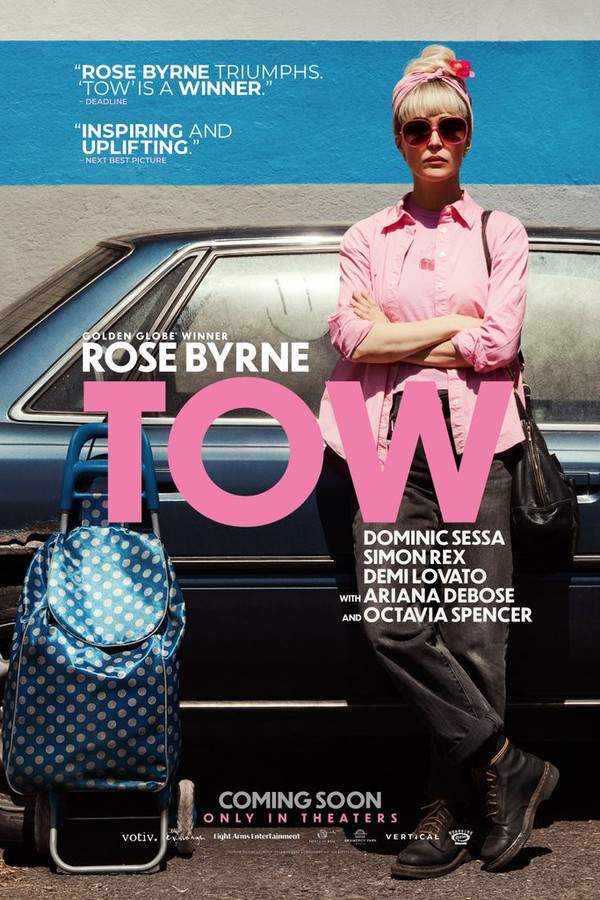
If there exists a single thread binding the disparate critical reactions to Tow, it is the extraordinary work of Rose Byrne as Amanda Ogle, the unhoused woman fighting to reclaim her vehicle and her dignity. Reviewers from across the political and aesthetic spectrum of film criticism have coalesced around superlatives for Byrne, with many suggesting this performance could earn her serious consideration during awards season—a prediction echoed by audience members who cited her as “likely gets nominated for an Oscar” for this role, following her recent nomination for If I Had Legs I’d Kick You.
The Seattle Times emphasized Byrne’s capacity to “hold it together,” a deceptively simple phrase that speaks to the technical difficulty of portraying housing insecurity without veering into caricature or sentimentality. This notion of “holding” becomes central to understanding the performance: Byrne grounds Amanda in a physical reality that communicates the exhaustion, determination, and fragile hope of someone living in their vehicle. The Travers Take expanded on this, noting that “even when her film dips into melodrama, Rose Byrne grounds her portrayal of an unhoused woman living her car in a humanity that feels detailed and true.” The repetition of “grounded” across reviews suggests Byrne has achieved that rare alchemy where an actor’s technical skill disappears completely into behavioral truth.
The San Francisco Chronicle perhaps best captured the dichotomy of the film’s reception, stating that “Byrne makes Amanda compelling from the first moments of ‘Tow,’” while acknowledging the production limitations with “a moving if also obviously low-budget and occasionally corny underdog story.” This acknowledgment that Byrne elevates the material appears throughout the critical corpus. Screen Rant, despite giving the film a modest 60/100, conceded that “it’s something of a disappointment that the film, as a whole, fails to live up to Byrne’s great work in it.”
Audience reactions mirrored this critical consensus with remarkable consistency. One viewer summarized the experience with the hyperbolic yet telling declaration: “I can watch Rose Byrne read the telephone book. She made me laugh, she made me cry, she’s so fantastic.” Even those who found the film’s pacing problematic, like user Marc S who noted it “drags at times,” simultaneously praised the “good performances, as usual, by Byrne.” This separation of acting quality from overall film satisfaction suggests that Byrne has created a character study compelling enough to justify the viewing experience even when other elements falter.
For fans interested in exploring Byrne’s filmography further, our person profiles offer comprehensive career breakdowns, while our movie collections feature curated lists of similar indie dramas showcasing powerhouse performances in modest productions.
Real Audience Reactions: Viewer Sentiment and the “Is Tow Worth Watching?” Debate
While critics debate the film’s structural merits, audience reactions to Tow reveal a more personal, emotionally charged spectrum of responses that often correlate with viewers’ expectations and patience for indie cinema pacing. The user review landscape spans from dismissive 1-star ratings to enthusiastic 5-star endorsements, creating a fascinating dialogue about what constitutes “entertainment” when dealing with real-world hardship stories.
On the critical end of user sentiment, reviewer Nicolette delivered a blunt assessment that “Very very slow long drug out boring movie. Don’t waste your time!” This reaction to the film’s deliberately methodical pacing—a 1 hour and 45 minute runtime spent largely on the procedural details of retrieving a 1991 Toyota Camry from a towing company—highlights the risk inherent in micro-budget storytelling. Similarly, Marc S acknowledged it as “a sad true story” with “good performances” but admitted being “eager to get to the end” due to dragging sequences.
Yet for viewers who connected with the film’s specificities, the experience proved deeply rewarding. User Aaron C provided one of the most detailed reactions, noting: “Look, it’s a very good movie. Based on a true story. And Ms Byrne likely gets nominated for an Oscar. But it’s 1:45mins about getting an old beat up 1991 Toyota Camry (complete with the short lived auto-seat belt) back from a greedy tow yard. Glad I saw it, but it’s one of those movies you like. But probably wont watch it again.” This “glad I saw it, but won’t rewatch” sentiment encapsulates the film’s challenging nature—it offers insight and emotional resonance rather than escapist pleasure.
The political and social resonance of the film found particular traction with viewers like Grant H, who praised it as “another Indie Film victory that gives you a sense of hope when taking the bullies, while also making you rage at the habitual lack of kindness from corporations and their scams.” This reviewer identified the specific thematic angle that distinguishes Tow from broader social issue films: its focus on the mundane bureaucratic violence of towing companies as a microcosm of systemic oppression. User A M similarly noted that “if this film excels anywhere it’s in showing how shelters in Seattle work or a specific part of the legal system works,” suggesting educational value for viewers interested in policy specifics, even while questioning whether that alone constitutes entertainment.
Supporting cast members also generated specific appreciation. Fatou B highlighted that “Demi Lovato sings too,” adding musical appeal, while Todd T observed that “Corbin Bernsen is getting pretty good at playing completely unlikable characters”—a testament to the film’s successful creation of antagonistic corporate figures that fuel audience outrage.
For those still deciding whether to see the film, our quizzes and games section offers interactive ways to discover if Tow aligns with your cinematic preferences, while our movie lists feature curated selections of similar true-story dramas for comparative viewing.
Narrative Execution and Thematic Scope: Analyzing Tow’s Storytelling Choices
The most contentious critical debates surrounding Tow center not on performance quality but on narrative architecture—specifically, whether the film’s intimate focus on one woman’s bureaucratic battle effectively serves its larger thematic ambitions regarding homelessness, corporate greed, and social justice. This tension between micro and macro storytelling generates the primary fault lines in the film’s reception.
The New York Times’s invocation of Erin Brockovich energy points to the film’s successful deployment of the “small person vs. big system” template. However, where that 2000 film expanded its scope to include community impact and collective action, Tow maintains a stubbornly individualistic focus that divided critics. The A.V. Club’s critique that the film features “only vague connections to the world and the people around her” suggests a missed opportunity to contextualize Amanda’s struggle within broader housing crisis narratives. This criticism finds partial validation in user Christina A’s observation that “the main theme got to broad in the script… there are like 7 major human rights and other issues they try to include in one scripted movie,” implying that the film’s thematic ambition exceeded its narrative grasp, creating a scattered rather than focused impact.
Conversely, defenders argue that this narrow scope constitutes the film’s authenticity. The specificity of the 1991 Toyota Camry—a detail user Aaron C found notable enough to mention specifically—anchors the story in material reality rather than abstraction. The avoidance of what RogerEbert.com termed the expected “impassioned courtroom speech” reinforces this commitment to lived experience over cinematic fantasy. When the film does gesture toward systemic critique, it does so through the procedural details of how Seattle shelters operate and the legal mechanisms available to unhoused individuals, as noted by user A M.
The film’s tonal complexity also generates analytical interest. Described by RogerEbert.com as “often quite funny” despite its grim subject matter, Tow navigates the precarious balance between humor and pathos that characterizes the best social realist cinema. However, The Travers Take acknowledged that the film “dips into melodrama” despite Byrne’s grounding presence, while user Todd T found it “a little uneven at times but maybe that’s the point of what the character has to go through.” This interpretation of unevenness as intentional aesthetic choice—mirroring the chaotic, unpredictable nature of navigating social services and corporate indifference—offers a generous reading of the film’s structural quirks.
The San Francisco Chronicle’s description of the film as “occasionally corny” yet “moving” captures the tightrope walk between earnestness and manipulation that defines the underdog genre. Whether these moments of corniness undermine the film’s serious subject matter or provide necessary emotional release depends largely on viewer tolerance for inspirational cinema conventions.
For deeper analysis of narrative structures in contemporary indie films, visit our movie wiki, where we examine storytelling techniques across various genres and budget levels.
Production Context and Genre Positioning: Tow Within the Modern Indie Landscape
Understanding Tow’s reception requires situating it within the current landscape of independent cinema, where micro-budget productions increasingly tackle macro-social issues with varying degrees of success. The film’s “obviously low-budget” aesthetic, as noted by the San Francisco Chronicle, creates specific expectations and viewer relationships that differ from mainstream studio offerings.
The film joins a growing subgenre of procedurally-focused social issue films that prioritize the accumulation of bureaucratic detail over traditional plot mechanics. Unlike the high-stakes legal thrillers of the 1990s, Tow derives its tension from parking tickets, towing fees, and administrative hearings—mundane indignities that compound into existential threats. This approach aligns with contemporary “slow cinema” movements while maintaining enough narrative momentum to satisfy viewers expecting traditional three-act structures, though as user Nicolette’s review demonstrates, this balance doesn’t satisfy everyone.
When compared to similar films in the What’s After the Movie database, Tow distinguishes itself through its refusal to sanitize the experience of vehicle residency. While many films about homelessness focus on the transition to shelter or redemption arcs, Tow centers the car itself—the 1991 Toyota Camry—as both setting and objective, creating a unique spatial dynamic that limits and focuses the narrative.
The film’s March 2026 release positions it within the “prestige indie” window, where awards hopefuls and serious dramas counterprogram against blockbuster season. For those tracking box office trends for similar releases, Tow represents the kind of modest performer that relies on critical word-of-mouth and star recognition rather than marketing budgets. Its presence in the conversation alongside major studio releases testifies to the continuing relevance of Rose Byrne as a bankable dramatic lead capable of opening niche films.
Final Verdict: Tow’s Reception Legacy and Whether You Should Watch
As the critical dust settles on Tow (2026), a clear consensus emerges: this is a film defined by its central performance rather than its directorial vision or screenplay mechanics. The divided reception—ranging from 50/100 dismissals to 75/100 endorsements—ultimately matters less than the universal acknowledgment that Rose Byrne has delivered something special, a performance that transcends its material to offer genuine insight into the psychology of persistence under impossible circumstances.
For viewers asking “Is Tow worth watching?” the answer depends largely on your tolerance for indie film pacing and your interest in procedural social realism. If you appreciate films that teach you something specific about municipal legal systems and shelter operations while offering a showcase of exceptional acting, Tow delivers substantial value. If you require fast-paced plotting or comprehensive solutions to the social issues it raises, the film may prove frustrating, as noted by critics who found its scope too narrow and its resolutions too modest.
The film’s lasting legacy likely resides in its contribution to conversations about housing insecurity and corporate accountability, using the specific, almost absurd premise of a towing dispute to illuminate broader systems of indifference. While some viewers may find the 1991 Toyota Camry too small a stage for such weighty themes, others will recognize in that specificity the authentic voice of lived experience—the recognition that revolutions often begin not with grand speeches but with the refusal to accept unfair parking fees.
At What’s After the Movie, we recommend Tow for fans of character-driven drama, Rose Byrne’s career highlights, and socially conscious cinema that prioritizes authentic detail over crowd-pleasing catharsis. For your next viewing, explore our concert films section for lighter entertainment, or dive deeper into similar dramas through our curated collections. Visit our Tow movie page for ongoing updates on streaming availability and additional viewer reactions as this indie release finds its audience.
| Site | Link |
|---|---|
| Tow IMDB | IMDB |
| Tow TMDB | TMDB |
| Tow Wikipedia | WIKIPEDIA |
| Tow Rotten Tomatoes | ROTTEN_TOMATOES |
| Tow Metacritic | METACRITIC |
| Tow JustWatch | JUST_WATCH |
| Tow Box Office Mojo | BOX_OFFICE_MOJO |