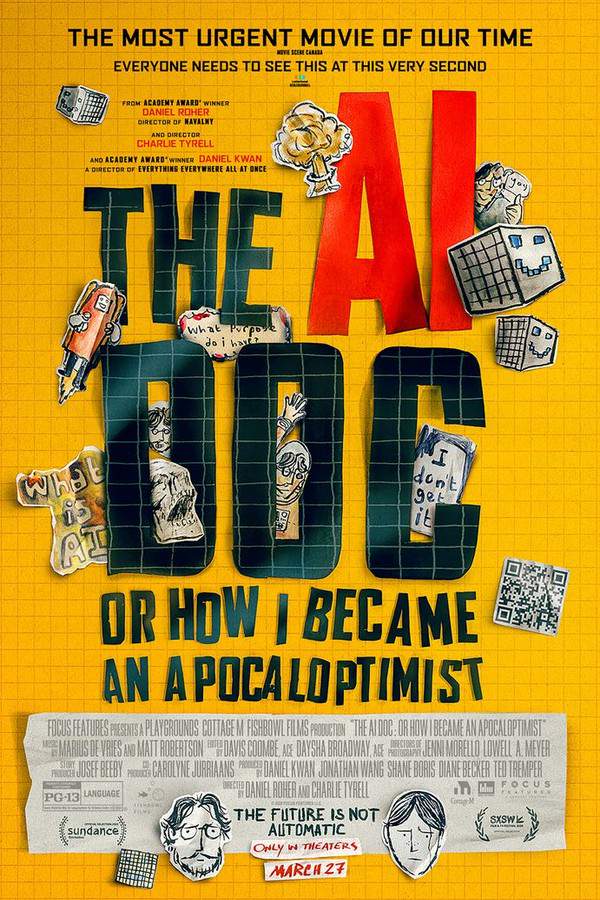
The AI Doc: Or How I Became an Apocaloptimist (2026) Reviews & Reception Analysis – Critical Consensus and Audience Reactions
In an era where artificial intelligence dominates headlines and fuels both utopian dreams and existential dread, documentary filmmakers face the unenviable task of making sense of a technological revolution happening in real-time. When The AI Doc: Or How I Became an Apocaloptimist premiered in March 2026, it entered a crowded field of AI-focused nonfiction cinema, immediately prompting filmgoers to ask: Is this essential viewing or just another algorithmically generated take on our automated future? The reception has proven fascinatingly polarized, creating a distinct divide between critical consensus and audience enthusiasm that merits deep exploration. While some reviewers have dismissed the film as “algorithmically mushy” and lacking bite, others have hailed it as a “scary, dizzying and essential documentary” that demands immediate attention. This divergence has sparked intense online discussion about the film’s accessibility, its balanced approach to complex subject matter, and whether its personal narrative framework strengthens or weakens its investigative rigor. For viewers searching for spoiler-free reviews and honest assessments of whether this documentary deserves their time, the landscape of opinions offers a complex tapestry of perspectives that we will dissect thoroughly. Whether you’re seeking viewer reactions, critical analysis, or simply wondering if this film is worth watching during its theatrical run or on streaming platforms, understanding the full spectrum of reception provides crucial context for your viewing decision.
Critical Consensus and Mixed Reactions to The AI Doc: Or How I Became an Apocaloptimist (2026)
The critical reception of The AI Doc: Or How I Became an Apocaloptimist represents one of the most sharply divided responses to a documentary in recent memory, with scores ranging from a dismal 30/100 to an enthusiastic 91/100 across major publications. This 61-point spread on the critical spectrum signals not just disagreement about quality, but fundamental divergences regarding what audiences should expect from AI-themed documentary cinema in 2026. On one end of the spectrum, Variety delivered a glowing assessment, declaring the film “a scary, dizzying and essential documentary” and urging immediate viewership with the imperative: “If you have any interest in artificial intelligence (which is to say: the future), you should go out and see it right now.” This endorsement positions the film as mandatory cultural homework, suggesting it successfully navigates the treacherous waters between alarmism and advocacy.
Conversely, Screen Daily offered perhaps the harshest critique, awarding a mere 30/100 and lambasting director Roher’s “willingness to blindly accept any and all of his speakers’ pronouncements,” which left the film feeling “toothless.” The publication argued that while the filmmakers clearly intended to present material in an evenhanded fashion allowing viewers to make up their own minds, this commitment to so-called fairness resulted in a documentary lacking “any real perspective or inquisitiveness.” This criticism strikes at the heart of the film’s methodological approach, questioning whether balanced presentation constitutes journalistic cowardice or democratic respect for viewer intelligence.
TheWrap similarly expressed reservations with a 44/100 score, noting that “the pros don’t come from trustworthy sources and the cons require a lot more elaboration,” suggesting structural flaws in the film’s argumentative architecture. Meanwhile, the Los Angeles Times characterized the documentary as “a well-intentioned but aggravating soup of information and opinion that wants to move at the speed of machine thought”—a particularly damning assessment given that velocity without clarity represents a cardinal sin in documentary filmmaking.
However, several major outlets found significant merit in the execution. Original-Cin awarded an impressive 91/100, acknowledging that while the visual approach might be “pretty standard — lots of talking heads, B-roll of robots, and cutesy animation,” the film succeeds as “a grand primer on the topic,” strategically skipping standard headline-grabbing questions about job displacement and suicide in favor of a sophisticated “point-counterpoint-synthesis setup.” IndieWire (83/100) appreciated this restraint, noting that beyond calling for “bland common sense regulations that should be uncontroversial to any sane person,” Roher avoids preachiness, instead focusing on “the human story of how each of us has to wrap our own mind around an impossibly large topic.”
The Hollywood Reporter (70/100) praised the “first-person approach and dynamic visual style” for making the film “more engaging and livelier than you might expect such a well-researched documentary about this serious subject to be,” while The New York Times (60/100) offered a measured middle-ground assessment, finding the result “less clarifying than bewildering, though it’s often very interesting.” Perhaps most tellingly, The Globe and Mail captured the central tension in their 60/100 review, explaining that while the documentary was spurred by Roher’s “existential anxiety about what kind of AI-dominated world he would be bringing his unborn son into,” the determination to walk the middle road between “doom times and boom times” resulted in a message that “cannot help but land as something almost algorithmically mushy.”
This critical fragmentation suggests that The AI Doc: Or How I Became an Apocaloptimist refuses to satisfy viewers seeking either pure technological optimism or apocalyptic fear-mongering. For those researching critic reviews and trying to determine whether the film aligns with their expectations, the consensus appears to be that this is a documentary prioritizing accessibility over edginess, synthesis over provocation. If you’re looking for comprehensive movie analysis beyond this review, our detailed breakdowns provide additional context for navigating these conflicting critical perspectives.
Audience Reactions and Viewer Reception: Is The AI Doc Worth Watching?
Where critics saw inconsistency and methodological softness, general audiences have largely embraced The AI Doc: Or How I Became an Apocaloptimist with enthusiasm that borders on evangelical advocacy. User reviews consistently award perfect or near-perfect scores, with the majority clustering at 5/5 stars and 10/10 ratings, creating a stark contrast to the critical median that hovers around 60/100. This disconnect between professional evaluation and popular appreciation offers fascinating insights into what contemporary documentary audiences actually desire from nonfiction cinema about complex technological subjects.
User tenminer117 captured the prevailing sentiment with a perfect 10/10 score, describing the film as “one of those movies that just stays in your head after you leave the theater.” Their appreciation centered on the film’s refusal to “talk down to you or try to scare you into caring,” highlighting how the director’s personal journey as an expectant father created an emotional hook that made the material “feel real and relatable instead of like a lecture.” This reaction suggests that while critics may have bristled at the personal narrative framing, audiences found it essential for emotional accessibility. The reviewer specifically valued the comprehensive expert consultation, noting that talking to “a ton of experts on all sides” left them feeling like they “actually understood the conversation better”—a direct rebuke to critics who found the film lacking in definitive conclusions.
Multiple viewers emphasized the documentary’s educational value without sensationalism. Marie H called it a “must see film for all,” stressing the importance of increasing awareness about AI’s transformative impact on society, while Paul K offered the succinct but emphatic endorsement: “Excellent. Highly recommend. Eye opening.” Eddie B appreciated that the film remained “easy to watch” and accessible, acknowledging that while it doesn’t “dive deep into what AI is,” it successfully addresses the universal question of “what does AI in our society mean for us,” awarding it a definitive “5 out of 5.”
The sense of urgency and comprehensiveness resonated strongly with viewers like Victor H, who emphasized that the director “managed to bring together almost every major player in the AI industry: scientists, CEOs, journalist, all in one film,” declaring it “incredibly important to understand what’s happening right now.” Chima praised the film as “Very informative, educative, and with a good sense of humor,” noting that bringing “most of the players in the tech world to the table” resulted in “very jarring and serious intelligent discussion.” Even jakkson P, offering a brief but telling review, described the film as “Existential and optimistic,” perfectly capturing the “apocaloptimist” balance that critics found muddled.
However, audience reception wasn’t universally positive, and the dissenting voices provide crucial counterpoints for potential viewers. Kar L awarded only 2.5/5 stars, criticizing the film for straddling “the line between information and sensationalism” and noting that the final third “becomes repetitive and uninformative, voiced by what seems like a series of mid-level AI computer corporate hacks.” This viewer specifically wanted “more interview with the top tier guys” and found the narrator’s family background story “tedious after a while,” suggesting that the personal angle alienated rather than engaged some audience members. Similarly, Jim E, while giving a respectable 4/5, expressed frustration that “nobody seems to have definite answers!” and noted the conspicuous absence of “two of the big crooks out of the major AI CEO’s in zuckerberg and musk [who] refused to come for the interview.”
For viewers wondering is The AI Doc worth watching, the audience consensus suggests that if you value accessibility, emotional resonance, and balanced perspective over hard-hitting investigative journalism or technical deep-dives, this film delivers significant value. Those seeking deeper dives into box office performance data for documentaries or comparisons with other concert films and documentaries can explore our comprehensive database for additional context on 2026’s documentary landscape.
Tone and Storytelling Analysis: The Apocaloptimist Approach to AI
The central conceit of The AI Doc: Or How I Became an Apocaloptimist—its titular neologism combining apocalypse and optimism—has generated the most substantive debate among reviewers regarding the film’s tonal architecture and narrative strategy. This hybrid worldview, intended to navigate between technological utopianism and existential dread, has been interpreted variously as refreshingly nuanced, frustratingly noncommittal, and wisely pragmatic depending on the reviewer’s own ideological positioning regarding artificial intelligence.
The Globe and Mail’s critique of the film walking the “middle road between doom times and boom times” captures the essential tension that has divided reception. For critics seeking polemical clarity, this middle positioning rendered the message “algorithmically mushy”—a particularly evocative criticism suggesting that the film’s attempt to please all perspectives resulted in a product as personality-less as the machine learning systems it documents. This criticism aligns with Screen Daily’s observation about the film’s lack of “real perspective or inquisitiveness,” implying that true documentary courage requires taking stands rather than facilitating debate.
However, defenders of the film’s approach, including IndieWire and numerous audience members, argue that this very refusal to land definitively on one side constitutes the film’s greatest strength. By avoiding the “standard news headlines of Will It Take My Job? (maybe) and Does it Espouse Suicide (tragically, sometimes yes)“—as Original-Cin noted—the film elevates itself above the sensationalist coverage that typically dominates AI discourse. Instead, it embraces what might be called epistemological humility, acknowledging that the subject matter is too vast, too rapidly evolving, and too multifaceted to reduce to simple binary conclusions.
The personal narrative thread—Roher’s journey as an expectant father contemplating the world his child will inherit—serves as the emotional anchor that makes this tonal balancing act possible. While Kar L found this element “tedious” and manipulative, most viewers and several critics appreciated how this framing transformed abstract technological speculation into concrete human stakes. The Hollywood Reporter specifically praised this “first-person approach” for making the film more engaging than typical research-heavy documentaries, suggesting that the vulnerability of impending parenthood provided an accessible entry point for viewers who might otherwise tune out technical discussions about neural networks and large language models.
Variety’s description of the film as “scary, dizzying and essential” suggests that despite its commitment to balance, the documentary doesn’t shy away from genuine terror. The scariness apparently derives not from hysterical fear-mongering but from the measured presentation of genuinely unsettling possibilities filtered through the director’s personal anxiety. This creates a unique affective experience: the film induces fear without despair, hope without naivety—the essence of “apocaloptimism.”
The Los Angeles Times criticism that the film moves at “the speed of machine thought” yet proves “aggravating” in its information density raises interesting questions about documentary pacing in the attention economy. If the film attempts to mirror the rapid processing capabilities of AI systems it investigates, this formal choice may inadvertently alienate viewers seeking the contemplative pace traditionally associated with serious documentary cinema. Yet tenminer117 and other audience members specifically praised the film for not feeling like a lecture, suggesting that the kinetic energy served accessibility rather than hindering it.
For those interested in film analysis of documentary storytelling techniques or looking to compare this approach with other movie collections in the technology documentary genre, our platform offers extensive resources for understanding how The AI Doc: Or How I Became an Apocaloptimist fits into broader cinematic trends regarding science communication and personal essay filmmaking.
Visual Style and Pacing: Documentary Craftsmanship in The AI Doc
Beyond its ideological positioning and narrative framework, The AI Doc: Or How I Became an Apocaloptimist has garnered significant attention for its visual execution and structural pacing—elements that have proven equally divisive among reviewers. The film’s aesthetic choices reflect broader tensions in contemporary documentary filmmaking between traditional informational delivery and the kinetic demands of modern viewership accustomed to digital media consumption.
Original-Cin provided perhaps the most detailed technical assessment, noting that visually the film remains “pretty standard” within the documentary tradition. The description of “lots of talking heads, B-roll of robots, and cutesy animation to make it more personal” establishes a familiar visual vocabulary that documentary audiences will recognize from countless technology-focused nonfiction films. This reliance on established conventions—expert interviews supplemented by illustrative footage and personalizing graphics—led some critics to dismiss the film as visually unadventurous. However, Original-Cin ultimately judged this conventional approach functional rather than flawed, noting that it served the film’s purpose as “a grand primer on the topic.”
The Hollywood Reporter offered a more enthusiastic evaluation of these same elements, praising the “dynamic visual style” that, combined with the first-person approach, rendered the film “more engaging and livelier than you might expect.” This suggests that while the individual components may be familiar, their orchestration and pacing create an energy that transcends the apparent simplicity of the visual strategy. The use of “cutesy animation” mentioned by Original-Cin and appreciated by audiences like G. S (“Very creative throughout”) apparently successfully mitigates the potential dryness of the subject matter, providing visual relief and emotional accessibility without undermining the serious nature of the content.
Pacing, however, emerged as a significant point of contention, particularly in the film’s final third. Kar L’s criticism that the “last 1/3 becomes repetitive and uninformative” suggests structural issues that several other reviewers hinted at without fully developing. The accusation that this section features “what seems like a series of mid-level AI computer corporate hacks” rather than top-tier voices indicates a potential sag in the film’s argumentative momentum, possibly resulting from the director’s commitment to showing multiple perspectives without sufficient curatorial discrimination. This structural criticism aligns with TheWrap’s broader complaint about the reliability of sources and the need for greater elaboration on certain points.
Conversely, audience members like Eddie B found the pacing accessible and never burdensome, describing the film as “easy to watch” despite its weighty subject matter. G. S specifically noted that the documentary “Covered both sides, doom and boom” while remaining engaging enough to warrant repeat viewings (“Would watch again with my wife and kids”), suggesting that the film’s rhythm successfully sustains interest across multiple acts.
The visual standardness that critics noted may actually serve a strategic purpose: by avoiding flashy aesthetic gimmicks, the film forces attention onto the content of the interviews and the gravity of the subject matter. In an era where documentaries increasingly compete with fictional cinema for visual spectacle, The AI Doc: Or How I Became an Apocaloptimist apparently chose informational clarity over stylistic innovation—a choice that IndieWire and Variety appreciated as appropriate to the subject’s seriousness, even if Screen Daily found it lacking in cinematic distinction.
For viewers researching spoiler-free reviews and wondering about the film’s visual accessibility, the consensus suggests a straightforward, clear presentation that prioritizes content comprehension over artistic experimentation. Those interested in exploring movie lists of visually innovative documentaries or comparing this film’s style with other works in the genre can find curated selections on our platform.
Missing Voices and Interview Limitations: Gaps in The AI Doc’s Coverage
One of the most substantive criticisms leveled against The AI Doc: Or How I Became an Apocaloptimist concerns not who appears on screen, but who remains conspicuously absent. The documentary’s access to major players in the AI industry, while impressive in scope according to supporters, came under scrutiny from reviewers who noticed significant gaps in the lineup of interview subjects—gaps that may fundamentally limit the film’s ability to deliver the comprehensive overview it promises.
User Jim E’s blunt observation that “two of the big crooks out of the major AI CEO’s in zuckerberg and musk refused to come for the interview” exposes a critical vulnerability in the film’s journalistic architecture. The refusal of Meta’s Mark Zuckerberg and X/Tesla’s Elon Musk to participate—two figures who have dominated headlines regarding AI development, regulation, and societal impact—creates a significant hole in the documentary’s coverage of industry leadership. While Victor H praised the film for bringing together “almost every major player,” the absence of these two controversial but undeniably central figures suggests that the “apocaloptimist” balance may have been achieved partly by default rather than by design, simply because the most extreme voices on either side declined to participate.
Kar L expanded this criticism by noting that beyond the missing celebrity CEOs, the final third of the film relies on “what seems like a series of mid-level AI computer corporate hacks,” suggesting a descent from high-level expertise to corporate public relations speak. This criticism resonates with Screen Daily’s broader complaint about Roher’s “willingness to blindly accept any and all of his speakers’ pronouncements” and the resulting lack of “real perspective or inquisitiveness.” If the film indeed substitutes middle-management perspectives for absent top-tier leadership, it risks becoming exactly what critics feared: a toothless survey that accepts industry framing without sufficient interrogation.
TheWrap’s criticism that “the pros don’t come from trustworthy sources” further complicates the film’s sourcing, implying that the documentary may have included voices favorable to AI development without adequately vetting their credibility or potential conflicts of interest. This is particularly problematic given the high stakes of AI regulation and the well-documented history of tech companies using documentary films and media appearances to shape public perception favorable to minimal oversight.
However, defenders might argue that the absence of Musk and Zuckerberg actually serves the film’s purposes. By excluding the most polarizing and publicity-savvy figures in the AI space, the documentary avoids the cult-of-personality distractions that often derail serious technological discourse. IndieWire’s appreciation for the film’s focus on “the human story of how each of us has to wrap our own mind around an impossibly large topic” suggests that The AI Doc: Or How I Became an Apocaloptimist intentionally pivots away from tech-bro celebrity toward ground-level reality—a choice that sacrifices headline-grabbing interviews for authentic perspective.
The tension here reflects broader debates about documentary ethics and access journalism. Is it better to include flawed or incomplete perspectives from major players, or to exclude them and focus on accessible, relatable narratives? tenminer117 and other audience members clearly valued the latter approach, appreciating that the film helped them “actually understood the conversation better” without the distraction of celebrity tech mogul personalities. Yet for viewers seeking comprehensive critical consensus on AI industry accountability, these absences may represent deal-breaking omissions.
For those interested in person profiles and detailed breakdowns of who appears in the film versus who declined participation, our comprehensive database provides additional context on the cast of experts and the missing voices that shaped this documentary’s reception.
Conclusion: Navigating the Divided Reception of The AI Doc: Or How I Became an Apocaloptimist
As the credits roll on The AI Doc: Or How I Became an Apocaloptimist, viewers are left with a film that has succeeded magnificently by some metrics while falling short by others—a documentary that has achieved the rare feat of generating genuine enthusiasm from general audiences while leaving many professional critics wanting more rigor, more edge, and more definitive conclusions. This reception divide ultimately reveals less about the film’s objective quality and more about the divergent expectations that different viewing communities bring to nonfiction cinema in 2026.
For audiences seeking accessible entry points into the complex, often terrifying world of artificial intelligence development, the film appears to deliver precisely what is needed: a comprehensive, balanced, emotionally grounded survey that respects viewer intelligence without demanding specialized technical knowledge. The perfect and near-perfect user scores suggest that The AI Doc successfully demystifies a subject often clouded by jargon and hysteria, providing the “grand primer” that Original-Cin identified and the “eye opening” experience that casual viewers like Paul K celebrated. The personal narrative of impending fatherhood clearly resonated as an effective storytelling device, transforming abstract technological anxiety into relatable human stakes.
Conversely, for critics and viewers seeking investigative journalism, polemical clarity, or cinematic innovation, the film’s commitment to balance—its “apocaloptimist” positioning—reads as avoidance, its conventional visual style reads as unambitious, and its missing high-profile interviews read as gaps in due diligence. The criticism that the film is “algorithmically mushy” or “toothless” suggests that in attempting to serve everyone, The AI Doc may have diluted its potential impact, sacrificing the sharp edges that make documentaries culturally essential.
Ultimately, whether this film is “worth watching” depends entirely on what you seek from documentary cinema. If you want to understand the AI conversation better, to feel equipped to participate in democratic discussions about technological regulation, and to process your own anxiety about an automated future through the lens of another worried parent’s journey, this film comes highly recommended by audiences who found it “essential” and “fascinating.” If you seek exposés, definitive answers, or avant-garde filmmaking, you may find yourself aligned with the critics who found the experience “bewildering” or “aggravating.”
As What’s After the Movie continues to track the evolving reception of 2026’s documentary slate, The AI Doc: Or How I Became an Apocaloptimist stands as a fascinating case study in the tension between accessibility and ambition, between balance and boldness. Whether you ultimately stream it, see it in theaters, or explore our quizzes and games to test your knowledge of AI cinema, this documentary has undeniably contributed to the crucial cultural conversation about our technological future. For complete awards information, detailed summaries, and ongoing updates about viewer reactions to this and other films, continue exploring our comprehensive movie database.
| Site | Link |
|---|---|
| The Movie Database (TMDB) | The AI Doc: Or How I Became an Apocaloptimist on TMDB |
| Wikipedia | The AI Doc: Or How I Became an Apocaloptimist on Wikipedia |
| Rotten Tomatoes | The AI Doc: Or How I Became an Apocaloptimist on Rotten Tomatoes |
| Metacritic | The AI Doc: Or How I Became an Apocaloptimist on Metacritic |
| JustWatch | The AI Doc: Or How I Became an Apocaloptimist on JustWatch |
| Box Office Mojo | The AI Doc: Or How I Became an Apocaloptimist on Box Office Mojo |