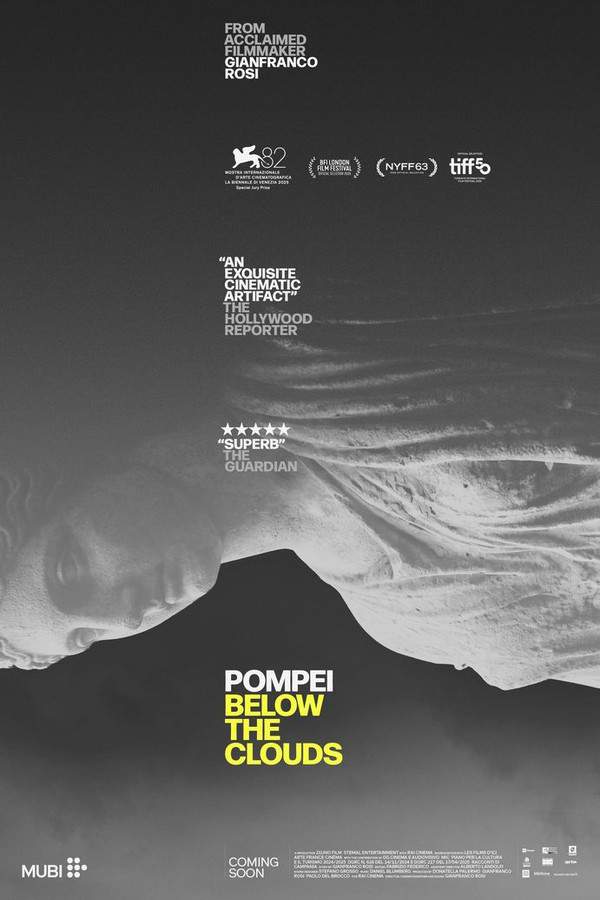
Pompei: Below the Clouds (2026) Reviews, Reception & Critical Consensus: Is Gianfranco Rosi’s Venice Winner Worth Watching?
When a film arrives bearing the title Pompei: Below the Clouds (2026), audiences naturally anticipate a visceral exploration of ancient Roman catastrophe—the volcanic fury of Vesuvius, the preserved ruins, the archaeological majesty of a civilization frozen in ash. However, Gianfranco Rosi’s Special Prize-winning entry from the Venice Film Festival delivers something markedly different: a meditative, black-and-white observational essay on contemporary Naples and its spectral relationship with history. This divergence between expectation and reality has created one of the most polarized reception landscapes in recent documentary cinema, resulting in a stark divide between critical adoration and audience frustration.
At What’s After the Movie, we specialize in decoding exactly these kinds of complex reception dynamics. Whether you’re searching for a spoiler-free review before committing to this challenging watch, or you’re curious about how this essay film fits into the broader landscape of Italian cinema, understanding the critical consensus versus actual viewer reactions is essential. The film sits at an intriguing crossroads of art house cinema and historical documentary, prompting questions about genre expectations, marketing transparency, and the patience required for “slow cinema.”
As we analyze the Pompei: Below the Clouds film reception, we find a fascinating case study in how a movie’s perceived identity can color its acceptance. While critics celebrate Rosi’s philosophical approach to time and destruction, many viewers express betrayal at the lack of educational content about Pompeii itself. This comprehensive review analysis will explore both perspectives, examining the cinematographic poetry that earned perfect scores from major outlets alongside the accessibility concerns that left general audiences checking their watches.
Pompei: Below the Clouds Critical Reception: Why Film Critics Celebrate Rosi’s “Angel of History”
The critical consensus surrounding Pompei: Below the Clouds leans heavily toward admiration, with several major publications awarding the film near-perfect scores. At RogerEbert.com, the film received a rare 100/100 rating, with the critic describing it as “a meditative and moving document showing that process and possibility” regarding time’s cyclical nature of destruction and preservation. This sentiment captures the essence of critical appreciation for Rosi’s work—recognition of the film as a philosophical treatise rather than a conventional historical documentary.
The Los Angeles Times (80/100) characterized the documentary as capturing “the notion of Naples as a place in perpetual contact with its ghostly, grand history,” praising its “strangely beautiful atmosphere of reflection and restlessness.” This review highlights a crucial element that critics embraced: the film treats Naples itself as an archaeological site, where the past isn’t buried beneath ash but breathes through the present-day city’s stones and citizens. For viewers seeking in-depth film analysis beyond surface-level entertainment, this interpretation offers rich territory for exploration.
The New Yorker (90/100) emphasized Rosi’s signature observational style, noting he remains “as quietly watchful as ever,” while The Irish Times (90/100) offered perhaps the most evocative descriptor, calling the film “a pristine, durable snapshot of Naples” that takes its cues from ancient remains themselves. These critic reviews suggest a uniform appreciation for the film’s temporal patience—its willingness to let the camera linger on modern Neapolitan life as a way of understanding historical continuity.
New York Magazine (Vulture) (90/100) provided one of the most quoted observations, stating that despite being “filled with images of collapse,” Below the Clouds is “nevertheless a strangely hopeful work.” This paradox lies at the heart of the film’s critical appeal. While audiences might scan movie summaries expecting volcanic disaster footage, critics found profundity in Rosi’s decision to focus on life’s persistence in the shadow of potential destruction. The Austin Chronicle (78/100) reinforced this by noting that while the black-and-white cinematography is “stunning to behold,” the film ultimately articulates that “beauty is in the eye of the beholder”—a meta-commentary on viewing history itself.
However, not all critical voices were unanimous in their praise. Next Best Picture offered a more measured 50/100, acknowledging the “nobility of Rosi’s intentions” while warning that the film is “a taxing watch that intentionally tries modern viewers’ patience, which is sure to repel most.” This candid assessment serves as a bridge to the audience reception, acknowledging that even within critical circles, there was recognition that Pompei: Below the Clouds demands a specific type of viewer—one comfortable with the languid pacing of slow cinema and essayistic filmmaking.
Audience Reactions & Viewer Reviews: The Disconnect Between Marketing and Experience
While critics penned rhapsodic appreciations of Rosi’s visual poetry, the audience reactions to Pompei: Below the Clouds reveal a chasm of disappointment, primarily stemming from misaligned expectations. For those checking viewer reactions on various platforms, a recurring theme emerges: viewers expected a documentary about Pompeii’s destruction and instead received a contemporary portrait of Naples that touches only tangentially on the ancient city’s fate.
User reviewer Brent_Marchant articulated this frustration with particular eloquence, awarding the film 4/10 and stating: “Fewer cinematic experiences are more frustrating than movies that fail to live up to expectations. While the title and billing for this release lead one to believe that it’s a film about the ancient Roman city of Pompeii and the volcanic catastrophe that destroyed it, there’s surprisingly little in this title addressing those subjects squarely on point.” This sentiment was echoed across multiple user reviews, suggesting that the film’s marketing fundamentally misrepresented its content to general audiences.
Marvin B (1/5) expressed similar confusion: “I was expecting a movie about how the neopolitans live under the threat of Vesuvius. What you get if a lot of scenes with no explanations and no connections.” This critique highlights a crucial divide in documentary expectations—between those seeking educational, information-dense content and those appreciating observational, experiential cinema. At What’s After the Movie, we often see this tension in film reception analysis, where genre classification significantly impacts viewer satisfaction.
The pacing and narrative structure also came under fire from general viewers. virginia S (1.5/5) admitted that despite having “visited Pompeii and the surrounding area several times,” she found the film “painfully slow and often repetitive.” This critique is particularly telling because it comes from someone with deep subject matter investment, suggesting that even the target demographic of history enthusiasts found the film’s rhythm inaccessible.
Perhaps the most scathing indictment came from Leprechaun K (1.5/5), who conceded that the film is “visually stunning” but declared that “as a documentary, it fails in every way. It gives little to no information on the subject matter.” This review also touched on platform-specific concerns, noting disappointment with MUBI originals—a reminder that streaming service branding can influence audience composition and expectations.
Interestingly, Stephen C provided a neutral 5/10 rating while noting the film’s worldwide gross of $219,560.00—a figure that suggests limited theatrical exposure and, perhaps, a mismatch between art house ambitions and mainstream accessibility. For those tracking box office performance alongside critical merit, this financial reception suggests that despite festival accolades, the film struggled to find its audience in commercial venues.
Visual Poetry vs. Narrative Clarity: Analyzing the Film’s Aesthetic Choices and Pacing
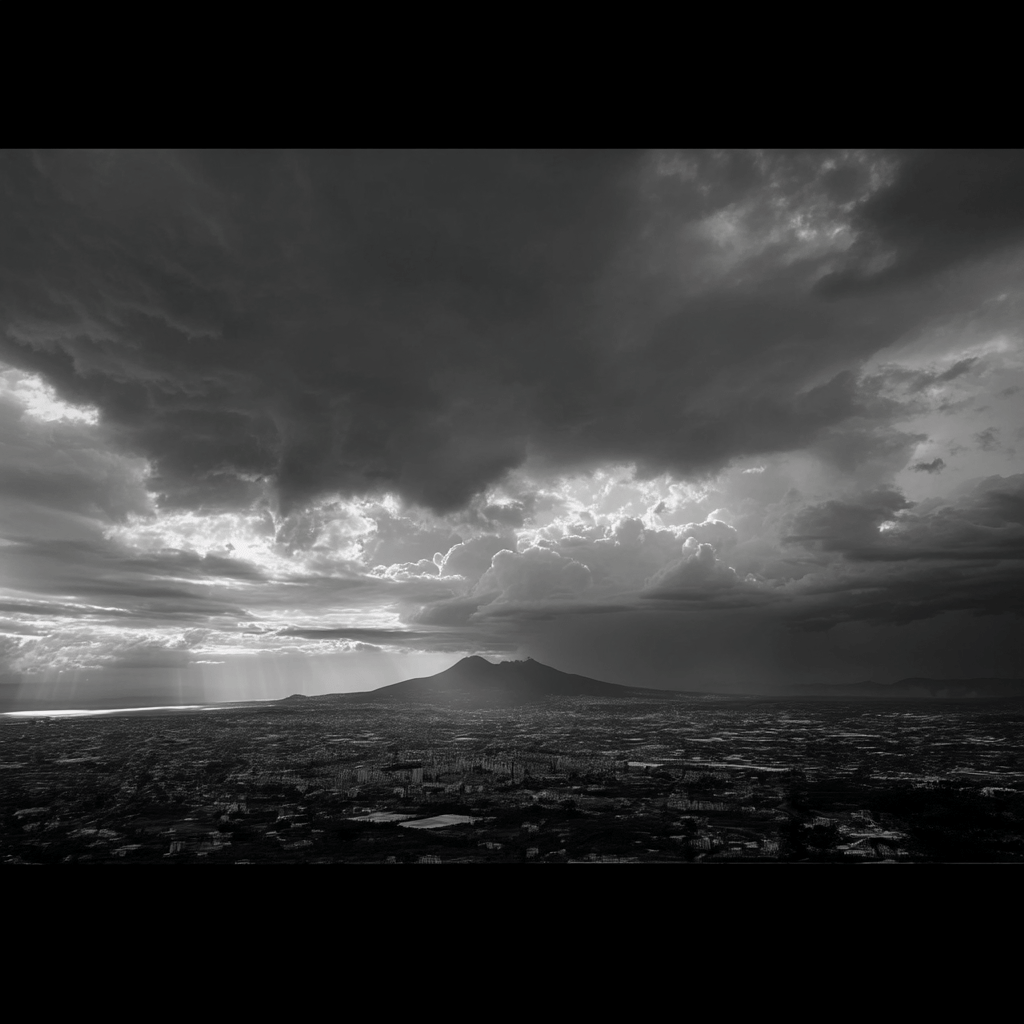
The most divisive element in Pompei: Below the Clouds reviews remains Gianfranco Rosi’s decision to shoot in black and white, employing a patient, almost surveillance-like observational style that critics hailed as transcendent and audiences deemed tedious. This aesthetic choice sits at the center of the film’s identity crisis—simultaneously its greatest artistic achievement and its biggest barrier to accessibility.
Little White Lies (70/100) described the film as “ambling, gentle and doesn’t strain too hard to force a point,” which serves as both praise and warning. The publication noted that the film “allows you to appreciate the multifarious nature of life in a city where the spectre of destruction lurks ominously in the clouds.” This observation captures the atmospheric dread that the monochrome palette enhances—the ever-present threat of Vesuvius rendered in gradients of grey rather than spectacular color.
Slant Magazine (75/100) reinforced this interpretation, describing “long, languorous, often hushed snapshots of the area between Vesuvius and the Gulf of Naples” that “conjure a sense of life here being suspended in time.” For film students and cinephiles exploring the film wiki, these reviews offer a roadmap to appreciating Rosi’s technique—the way he transforms geographical space into temporal meditation.
However, user critics found this same quality alienating. Multiple reviews cited the black-and-white cinematography as “pretentious” (Brent_Marchant) and the dialogue as sounding “more ‘written’ than spoken.” The disconnect suggests that while critics viewed these stylizations as appropriate to the film’s essayistic nature, general audiences expecting a traditional documentary about ancient Rome experienced them as unnecessary artifice obscuring informative content.
IONCINEMA.com (70/100) noted that Rosi “approaches obscured angles of Naples, going above and below, inside and out,” indicating a architectural and spatial curiosity that rewards careful viewing but may frustrate those seeking narrative momentum. This approach—focusing on a Syrian freighter crew, an antique store owner running an after-school program, and emergency dispatchers—represents what some critics call “preemptive time travel” (Next Best Picture), capturing contemporary life as future archaeology.
The pacing criticism deserves particular attention because it reveals shifting genre expectations. Modern documentary viewers, influenced by the rapid cuts and dramatic arcs of streaming content, often approach observational cinema with different patience levels than art house regulars. When Below the Clouds spends extended minutes on ambient soundscapes and static compositions of Neapolitan streets, it asks viewers to abandon expectations of explanatory narration or character-driven plot—a request that many audience members were unwilling to grant.
The Pompeii Problem: Marketing Misalignment and Essay Film Expectations
At the heart of Pompei: Below the Clouds’ polarized reception lies a fundamental question of categorization: Is this a documentary about Pompeii, or an essay film about Naples using Pompeii as a thematic anchor? The answer, according to critics, is firmly the latter—but marketing materials and distribution packaging often suggested the former, creating a “bait-and-switch” perception that soured viewer reactions.
The film’s handling of actual Pompeii content illustrates this tension. As Brent_Marchant detailed in his comprehensive critique, “the film’s handling of what happened to Pompeii is somewhat underplayed, told largely through the eyes of investigators looking into the theft of antiquities stolen from buried volcanic tombs and the work of a team of Japanese archaeologists seeking to uncover hidden gems from the lost city’s past.” This narrative thread, while present, takes a backseat to contemporary Neapolitan vignettes that, while thematically linked to cultural crossroads and preservation, lack the explicit historical explanation many viewers sought.
This structure places Below the Clouds firmly in the tradition of the essay film—a genre that prioritizes personal reflection, poetic association, and thematic resonance over informational delivery. For audiences browsing movie collections or searching for educational content about ancient history, this genre distinction proves crucial. The film is less interested in teaching viewers about Pompeii’s destruction than in exploring Walter Benjamin’s concept of the “angel of history”—blown backward into the future while staring at the wreckage of the past, a concept explicitly referenced in RogerEbert.com’s glowing analysis.
The title itself becomes a point of contention. “Below the Clouds” suggests a vantage point—perhaps the perspective of those living in Vesuvius’s shadow, or perhaps the archaeological layers beneath modern Naples. Critics embraced this ambiguity as poetic; audiences experienced it as obfuscation. When viewers search for a movie review expecting to learn whether the film delivers on its titular promise, they encounter a work that subverts those expectations entirely.
Marketing materials emphasizing the Vesuvius threat also contributed to confusion. While the volcano looms as a metaphorical presence—a reminder of impermanence and potential catastrophe—the film offers no CGI recreations of eruptions, no dramatic reenactments of ancient panic, and limited geological explanation. Instead, as the Austin Chronicle noted, the people featured are largely “in the path of danger,” going about contemporary lives while the threat remains abstract, suspended in the clouds above.
For content creators and film analysts, this reception gap offers valuable lessons in audience expectation management. The film’s critical consensus suggests that when approached as a work of art cinema—compared perhaps to the slow cinema of Tsai Ming-liang or the urban symphonies of early documentary—Below the Clouds succeeds magnificently. But when filtered through the lens of National Geographic-style educational documentary, it inevitably disappoints.
Is Pompei: Below the Clouds Worth Watching? Final Verdict for Different Viewer Profiles
Determining whether Pompei: Below the Clouds deserves your time requires honest self-assessment about your viewing preferences and patience for experimental documentary forms. Based on the divergence between critical praise and audience dissatisfaction, we can establish clear guidelines for who should stream this film and who should skip it in favor of more conventional movie options.
You should watch if:
- You appreciate slow cinema and essay films that prioritize mood over exposition
- You have a background in or curiosity about Italian culture, specifically Naples’ unique position as a living museum
- You value black-and-white cinematography as an artistic choice rather than a pretentious affectation
- You enter with adjusted expectations—understanding this is a contemporary city portrait, not an ancient history lesson
- You enjoyed Rosi’s previous works or similar observational documentaries that trust viewers to draw their own connections
You should skip if:
- You want a traditional documentary about Pompeii’s destruction with historical reenactments or detailed archaeological explanation
- You require narrative momentum or clear through-lines connecting scenes
- You find meditative pacing frustrating rather than contemplative
- You’re seeking family-friendly educational content—the film’s abstract nature may lose younger viewers or those wanting clear takeaways
The financial reality mentioned by user Stephen C—that $219,560 worldwide gross—suggests this film found its audience in boutique cinemas and specialized streaming platforms rather than multiplexes. For viewers wondering “is Pompei: Below the Clouds worth watching,” the answer depends entirely on which cinema tradition you value more: the accessible, informative documentary or the challenging, poetic essay film.
Critics clearly align with the latter camp, finding in Rosi’s work a “pristine, durable snapshot” that captures the uncanny feeling of living atop buried history. The film’s Special Prize at Venice wasn’t awarded for educational value but for artistic vision—the ability to make visible the invisible connections between past catastrophe and present endurance.
However, the chorus of user reviews scoring the film 1.5/5 and 1/5 cannot be dismissed as mere philistinism. They represent a legitimate frustration with marketing that promised spectacle and delivered contemplation, that suggested volcanic drama and offered urban poetry. When a film’s title references one of history’s most dramatic disasters but its content focuses on grain shipments and after-school programs, some dissonance is inevitable.
Ultimately, Pompei: Below the Clouds stands as a testament to the importance of context. Approached as a festival-winning art piece, it offers profound rewards. Approached as popcorn documentary entertainment, it represents a frustrating bait-and-switch. Before you commit your evening, check our movie page for updated viewer reactions, and perhaps test your documentary preferences with our cinema quizzes to see if your taste aligns with critical darlings or mainstream favorites.
Conclusion: Navigating the Critical Consensus and Audience Divide
The reception of Pompei: Below the Clouds (2026) serves as a fascinating case study in how genre expectations, marketing framing, and cinematic literacy shape our experience of film. While critics celebrate Gianfranco Rosi’s 100/100 achievement as a philosophical meditation on time, destruction, and the persistence of culture, audience scores averaging closer to 2/5 remind us that artistic ambition does not guarantee popular accessibility.
This divide doesn’t necessarily indicate failure on either side. Rather, it highlights the film’s position as a specialized work—what used to be called “art house” cinema—now competing in a landscape where documentaries are expected to entertain, educate, and move with equal efficiency. The critical consensus recognizes Rosi’s achievement in creating what The Irish Times called a “durable snapshot”—a time capsule of Naples that will likely grow in stature as years pass and the city continues its eternal conversation with its buried past.
For viewers seeking spoiler-free reviews and reception analysis, the key takeaway is this: Below the Clouds is a film about looking—about the patience required to see history in the present moment, catastrophe in the clouds, and beauty in the mundane. It demands a different kind of viewing energy than the historical documentaries its title suggests, rewarding those who surrender to its rhythm with a unique perspective on mortality and place.
Whether you ultimately decide to stream this Venice Film Festival winner or skip it for more conventional fare, understanding this reception landscape helps set appropriate expectations. For more film analysis, box office data, and curated movie lists, continue exploring What’s After the Movie—your resource for decoding the complex world of cinema beyond the credits.
| Site | Link |
|---|---|
| What’s After the Movie | Pompei: Below the Clouds Summary & Reviews |
| TMDB | Pompei: Below the Clouds TMDB |
| Rotten Tomatoes | Pompei: Below the Clouds Rotten Tomatoes |
| Metacritic | Pompei: Below the Clouds Metacritic |
| JustWatch | Pompei: Below the Clouds JustWatch |
| Box Office Mojo | Pompei: Below the Clouds Box Office Mojo |