
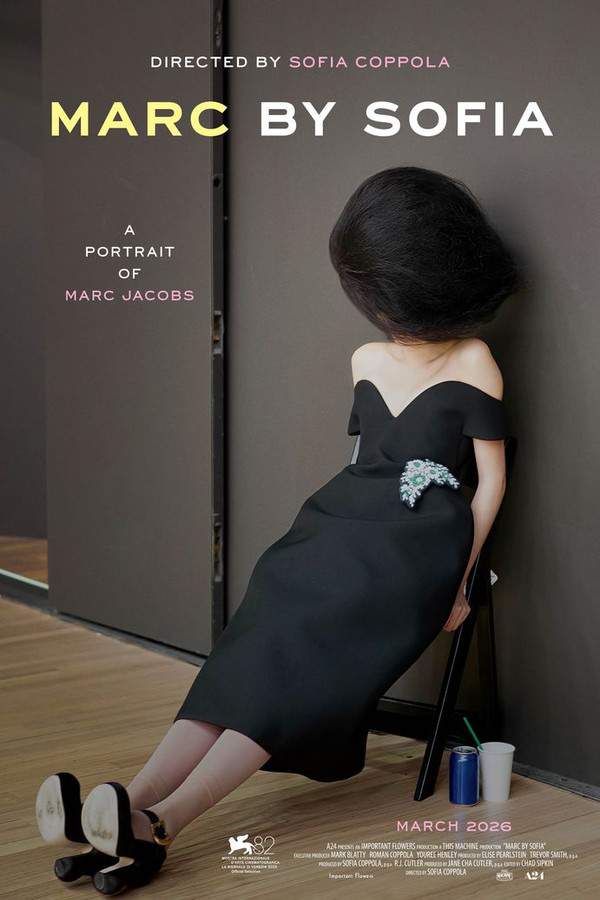
Marc by Sofia (2026) Reviews: Critical Consensus vs. Audience Reactions - Is It Worth Watching?
When Sofia Coppola turned her distinctive lens toward the world of high fashion, anticipation ran high among cinephiles and industry insiders alike. Marc by Sofia (2026), released on March 27, 2026, promised an intimate documentary portrait of legendary designer Marc Jacobs, filtered through the ethereal, detail-oriented aesthetic that has defined Coppola’s career. For those seeking comprehensive movie information and summaries, our detailed Marc by Sofia page offers complete coverage of this fashion-world deep dive. But as the film hit theaters and streaming platforms, a fascinating divergence emerged between critical reception and audience sentiment that has sparked intense debate about accessibility, celebrity portraiture, and the insularity of the fashion industry.
The film arrives at a time when documentaries about creative figures are experiencing a renaissance, yet audiences are increasingly demanding substance over style. With Coppola’s reputation for capturing the ennui and elegance of privileged worlds, expectations were set for something more revealing than a standard hagiography. However, the resulting conversation has split remarkably along lines of insider knowledge versus general accessibility. Is this a must-watch fashion documentary for the ages, or a frustrating exercise in aesthetic over substance? Our analysis dives deep into the Marc by Sofia reviews, critic ratings, and real audience reactions to help you decide whether this cinematic experience deserves your time.
Critical Reception and Film Analysis: What Critics Are Saying About Marc by Sofia
The critical landscape for Marc by Sofia (2026) reveals a film that has thoroughly divided opinion, with scores ranging from a dismal 30/100 to a solid 75/100 across major publications. This wide spectrum reflects fundamental disagreements about the film’s purpose and execution, creating a complex critical consensus that resists easy categorization. For film buffs tracking critic reviews and reception data, understanding these nuanced perspectives is essential before committing to a viewing.
On the positive end of the spectrum, several critics found value in Coppola’s observational approach. The New Yorker awarded the film a 70/100, praising how “Coppola observes the connection of big ideas to fine details, the power of intensive collaborations, and the ultimate creative helplessness once the show starts.” This perspective views the film as a meditation on artistic process rather than biography, appreciating the director’s ability to capture the tension between preparation and performance. Similarly, IndieWire (75/100) found compelling material in Jacobs’ psychological vulnerability, noting that “someone as successful as Jacobs is so beset by a lack of confidence is a compelling conceit.” The review suggests that Coppola’s genuine interest in her subject’s anxiety creates authentic moments of connection that transcend typical documentary formats.
RogerEbert.com (75/100) took a more charitable stance on the film’s opacity, suggesting that understanding isn’t always the goal of portraiture: “We might not come away understanding Jacobs or his world better, but we can still enjoy spending time with him.” This assessment positions Marc by Sofia as an experiential film rather than an educational one—a vibe-forward journey into a rarefied world. The San Francisco Chronicle (75/100) embraced this aesthetic approach wholeheartedly, describing the film as “a visually pleasing, vibe-rich diversion that is as enjoyable as flipping through a well-laid-out fashion magazine, or perhaps perusing through Coppola’s accompanying coffee table book on Jacobs of the same name.”
However, detractors found this very quality infuriatingly superficial. The Wall Street Journal delivered a scathing 30/100, questioning the creative choices behind such a surface-level treatment: “Why an Oscar-winning screenwriter would make a film that makes so little attempt to dig into its central character is baffling. That an Oscar-nominated director with a celebrated eye for the ethereal, strange world of girl-women living in beautiful boxes could make a film as workaday as this one is frustrating.” This critique cuts to the heart of disappointment among viewers expecting Coppola’s trademark psychological depth.
The Hollywood Reporter (60/100) identified the central flaw as the illusion of intimacy without revelation, noting that “despite all the insider’s access, though, in the end the behind-the-scenes episodes offer the illusion of intimacy, rather than anything really illuminating.” This sentiment was echoed by The New York Times (60/100), which pointed out the inherent challenge of self-documentation: “Two creative decision makers more at ease behind the scenes, they are, perhaps, not the most natural chroniclers of their own careers and social lives, and as the film goes on, it strains to arrive at even the most basic personal revelations.”
Slant Magazine (63/100) captured the dichotomy perfectly, stating the film “proves entertaining and enlightening when exploring Jacobs’ contributions to the world of fashion. But more often, it’s just like listening in on an engaging chat between two artist friends who share a fan-like admiration of each other’s craft.” This suggests that while fashion enthusiasts might find sufficient rewards in the garment-focused sequences, those seeking narrative propulsion or character study will likely find themselves frustrated.
Perhaps most tellingly, Next Best Picture (70/100) highlighted the demographic split in potential enjoyment: “Amazingly, Coppola’s intimate portrait manages to have mass appeal, thanks to both her entertaining approach and Jacobs’ down-to-earth, relatable personality. It turns out the pair work well together, leading to a film that both label chasers and thrift store fanatics will love.” Yet this optimism stands in stark contrast to actual audience reactions, suggesting critics may have overestimated the film’s accessibility. For those interested in celebrity profiles and director filmographies, examining Coppola’s evolution from The Virgin Suicides to this documentary offers fascinating context for these critical divisions.
Audience Reactions and Viewer Sentiment: Real Fan Opinions on Marc by Sofia
While critics debated the film’s artistic merits, general audiences delivered a far more brutal verdict on Marc by Sofia. User reviews across platforms have been overwhelmingly negative, with ratings plummeting to as low as 0.5/5 stars, creating one of the most significant critic-audience divides in recent documentary releases. This disconnect raises important questions about marketing, audience expectations, and the reality of “fashion insider” cinema for mainstream viewers.
The most frequently cited complaint involves Jacobs’ speech patterns and on-screen persona. User Mimi T delivered a devastating 1.5-star review with a memorable observation: “If I had a nickel for every time Marc Jabobs says ‘LIKE’ I could afford to buy one of everything he’s ever produced. Completely annoying. Left after 30 minutes because he was so insufferable to listen to.” This visceral reaction suggests that the intimate access Coppola cultivated may have backfired with general audiences, exposing mannerisms and verbal tics that prove grating rather than endearing over the film’s runtime.
The visceral disgust expressed by viewer Ross M—simply stating “Pardon me while I sick up” alongside a 0.5-star rating—indicates that for some viewers, the film crossed into physically unbearable territory. While such extreme reactions might seem hyperbolic, they represent a genuine segment of the audience who found the combination of subjects and style completely unpalatable.
More substantive criticisms emerged regarding narrative clarity and educational value. ROBERT awarded the film 2 stars while articulating a common frustration: “All over the place with no clear narrative at what it was showing. Marc and Sofias relationship? Marcs creative process? This particular show? Who knows aside from the gorgeous clothes, didnt walk away learning anything I didnt already assume or perceive about Marc. He deserves a proper documentary.” This review highlights a crucial failure in documentary filmmaking: the inability to define its own scope. Viewers expecting a linear biography, a process study, or a relationship portrait instead received what many perceived as an unfocused collage of moments lacking cumulative impact.
Reginald L (2 stars) summarized this as a “throwaway fashion project that lacked depth,” while Carl B (2.5 stars) expanded on the accessibility issue: “Not so much about Jacobs as a person but as a professional. So much chatter and not much substance. Rather boring for someone not into fashion, since there’s little opportunity to learn about that which you don’t already know.” This confirms the Boston Globe critic’s suspicion that “if you’re familiar with the designer and his history, you’ll find this movie entertaining. But there’s nothing here for newbies or those wanting to know more about its subject.”
The disparity between these user reactions and the more generous critical assessments suggests that film journalists and industry insiders may have evaluated Marc by Sofia through a lens of professional courtesy or aesthetic appreciation that doesn’t translate to general entertainment value. While critics celebrated the “vibe” and visual polish, audiences found themselves unable to connect with subjects who appeared inaccessible, self-absorbed, or simply uninteresting when stripped of narrative context.
For viewers debating whether to stream or skip this title, checking our comprehensive movie database and curated movie lists can help contextualize where this documentary fits within both Coppola’s filmography and the broader fashion documentary genre. The overwhelming negative sentiment from verified viewers suggests that unless you possess pre-existing knowledge of or interest in Jacobs’ work, you may find yourself among the frustrated rather than the fascinated.
The Accessibility Debate: Is Marc by Sofia Too Insular for General Audiences?
The most persistent thread running through both professional reviews and user reactions concerns the fundamental accessibility of Marc by Sofia (2026). The film appears to exist within a bubble of fashion industry privilege that, while authentically captured, creates significant barriers to entry for viewers without specialized knowledge or interest in haute couture. This insularity has become the central point of contention in discussions about whether the film succeeds as a documentary or merely as a vanity project.
The Boston Globe review crystallized this concern with its observation that the film offers “little of use” for those unfamiliar with Jacobs’ career trajectory, resulting in “a long, dreary slog to get to the end credits.” This assessment positions the documentary as a failure of documentary ethics—specifically, the obligation to provide context and entry points for viewers entering unfamiliar territory. Unlike successful fashion documentaries that use clothing as a lens to explore broader themes of identity, labor, or cultural history, Marc by Sofia appears to assume that viewers already possess the vocabulary and cultural capital to appreciate what they’re witnessing.
This insider perspective creates what we might call the “coffee table book” problem, referenced by the San Francisco Chronicle in its somewhat backhanded compliment comparing the film to “perusing through Coppola’s accompanying coffee table book on Jacobs of the same name.” While such books serve as beautiful objects for fans and collectors, they rarely function as standalone educational tools for the uninitiated. The film seems to suffer from this same limitation—it functions as a supplementary text for the already-converted rather than a gateway for the curious.
The criticism from Carl B regarding “so much chatter and not much substance” suggests that the film’s conversational tone, while potentially charming to fashion insiders, reads as exclusionary navel-gazing to outsiders. When Jacobs and Coppola discuss industry figures, specific collections, or technical processes without explanation, they effectively erect invisible walls around their conversation. This creates a viewing experience akin to attending a party where everyone knows each other except you—technically you’re present, but you’re not really invited to participate in the discourse.
However, defenders of the film might argue that not every documentary needs to be an introductory course. Some films serve as deep dives for existing communities, and Next Best Picture’s assertion that the film works for “both label chasers and thrift store fanatics” suggests that appreciation for fashion culture broadly might suffice for enjoyment. Yet the overwhelming negative response from general audiences indicates that the barrier to entry may be higher than this optimistic assessment suggests.
The question of audience positioning becomes crucial when considering the box office performance and streaming metrics for Marc by Sofia. If the film was marketed as a mainstream documentary appealing to fans of Coppola’s narrative work (Lost in Translation, Marie Antoinette, The Beguiled), then the negative reception reflects a marketing misfire as much as a creative one. Fans of those films expecting similar emotional resonance or narrative clarity found themselves confronted with an entirely different, more ephemeral cinematic language.
For those seeking alternative viewing options or wondering how this compares to other fashion documentaries, our movie comparison tools provide valuable context. The accessibility problem ultimately defines whether Marc by Sofia deserves a place in your watchlist—if you’re seeking education, emotional narrative, or character development, the reviews suggest looking elsewhere. But if you crave atmospheric immersion into the rarefied world of luxury fashion without the burden of exposition, this might align with your preferences.
Direction and Intimacy: Sofia Coppola’s Approach to Fashion Documentary
Sofia Coppola’s transition into documentary filmmaking with Marc by Sofia invited inevitable comparisons to her distinctive narrative style, with critics and audiences alike scrutinizing how her signature themes translated into non-fiction. Known for her fascination with enclosed worlds of privilege, ennui, and feminine interiority, Coppola seemed theoretically well-suited to documenting the insulated universe of high fashion. Yet the resulting film has sparked debate about whether her aesthetic translates effectively when applied to real subjects rather than constructed characters.
The director’s approach appears to prioritize observation over interrogation, creating what IndieWire described as a portrait where Jacobs’ “lack of confidence is a compelling conceit.” This represents classic Coppolian territory—the exploration of successful figures haunted by private insecurities, echoing themes from Lost in Translation and Somewhere. However, where her narrative films use fictional frameworks to explore universal emotions, Marc by Sofia’s documentary format raises questions about the ethics and effectiveness of such a gentle touch when dealing with real people and their real accomplishments.
The New Yorker praised her ability to observe “the connection of big ideas to fine details,” suggesting that Coppola found her documentary rhythm in capturing the micro-moments of creation—the adjustments of a hem, the selection of a fabric, the quiet moments before a show begins. This approach aligns with her cinematic reputation for finding profundity in the mundane and the beautiful. However, The Hollywood Reporter’s critique that the film offers “the illusion of intimacy, rather than anything really illuminating” suggests that her observational style may lack the rigor required for substantial documentary filmmaking.
The “vibe-rich” quality noted by the San Francisco Chronicle speaks to Coppola’s undeniable strength in creating atmospheric visual experiences. Her background in photography and music videos serves the fashion world well, translating runway energy into cinematic language. Yet this strength simultaneously becomes a weakness when the film needs to pivot from aesthetics to substance. The Wall Street Journal’s frustration that an “Oscar-nominated director with a celebrated eye for the ethereal, strange world of girl-women living in beautiful boxes could make a film as workaday as this one” indicates that Coppola’s usual transcendent visual language failed to elevate the material beyond the functional.
The collaborative nature of the project raises questions about directorial distance. Unlike traditional documentaries where the filmmaker maintains objective remove, Marc by Sofia presents itself as a collaboration between friends—Coppola and Jacobs share a long-standing relationship that predates the camera. Slant Magazine characterized the dynamic as “listening in on an engaging chat between two artist friends who share a fan-like admiration of each other’s craft.” While this might create warm, authentic moments, it potentially compromises the critical distance necessary for revealing documentary work. When The New York Times notes that the subjects are “not the most natural chroniclers of their own careers,” it highlights the risk of self-directed portraiture—the inability to see oneself clearly or critically.
For fans interested in exploring Coppola’s complete filmography and directorial evolution, or those seeking interactive content about cinema, understanding how her style adapts to different formats illuminates the specific challenges of Marc by Sofia. The film represents a test case for whether her particular brand of intimate, atmospheric storytelling can sustain a feature-length documentary, with the divided reception suggesting that her translation to non-fiction remains a work in progress.
The Verdict: Should You Watch Marc by Sofia? Final Reception Summary
After synthesizing the wide spectrum of Marc by Sofia (2026) reviews and audience reactions, a clear profile emerges of a film destined for a specific niche rather than broad appreciation. The critical consensus suggests a beautifully crafted but ultimately insubstantial experience that prioritizes mood over information, while audience sentiment warns that without prior investment in either Marc Jacobs or Sofia Coppola’s aesthetic universe, viewers may find the experience tedious rather than transcendent.
The film works best, according to the more positive reviews, for viewers who approach it as a sensory experience rather than a biographical study. If you find pleasure in the visual language of fashion—fabric textures, backstage atmosphere, the choreography of runway shows—Coppola’s eye provides sufficient rewards. RogerEbert.com’s assessment that you can “enjoy spending time with him” without understanding him better serves as an accurate litmus test: are you comfortable with superficial charm, or do you require narrative progression and psychological revelation?
Conversely, the overwhelming negative user reactions suggest that general audiences seeking engaging documentary content should approach with extreme caution. The complaints about Jacobs’ verbal mannerisms, the lack of clear narrative focus, and the failure to educate viewers about fashion history indicate that the film fails basic documentary obligations for many viewers. ROBERT’s assertion that “he deserves a proper documentary” implies that this collaborative project serves the subjects’ egos more than the audience’s curiosity.
For those tracking award-worthy documentaries or considering this for movie night selections, the mixed reception suggests this works better as background viewing or fashion industry ephemera than as a centerpiece documentary. It lacks the universal appeal of breakthrough fashion docs like The September Issue or McQueen, which balanced insider access with human drama accessible to all viewers.
Ultimately, Marc by Sofia joins the ranks of films that divide viewers along lines of cultural capital and aesthetic preference. It is less a documentary than an artifact—a beautiful object created by beautiful people about beautiful things, best appreciated by those already initiated into the world it depicts. For everyone else, the consensus suggests that your time might be better spent elsewhere in the vast landscape of streaming content.
Conclusion: Understanding the Legacy and Long-Term Reception of Marc by Sofia
As the initial theatrical run of Marc by Sofia (2026) concludes and the film settles into its streaming afterlife, the reception trends point toward a work that will likely be remembered as a minor entry in Sofia Coppola’s filmography rather than a definitive portrait of Marc Jacobs. The divergence between modest critical appreciation and severe audience rejection creates a complicated legacy that reflects broader tensions in modern documentary filmmaking about celebrity and creative industries.
The film’s failure to achieve consensus suggests that it misunderstands the current documentary landscape, where audiences increasingly demand both aesthetic sophistication and informational substance. In an era of true crime investigations, political exposés, and deeply researched biographical studies, a film that offers only “vibe” and “illusion of intimacy” struggles to justify its existence beyond the immediate circle of its subjects’ admirers. The negative user reactions, particularly those citing the inability to endure Jacobs’ on-screen presence, indicate that the access Coppola gained may have compromised rather than enhanced the final product.
Yet for the fashion faithful and Coppola completists, Marc by Sofia likely retains value as a time capsule of a specific moment in Jacobs’ career, captured with the director’s unmistakable visual elegance. It may find its true audience years later, when the temporal distance allows viewers to appreciate it as period piece rather than current commentary. For now, however, the overwhelming sentiment suggests that unless you’re specifically seeking fashion industry content or completing director filmographies, this particular cinematic experience offers limited returns on your attention.
For definitive movie information, reception data, and viewing recommendations, bookmark our comprehensive coverage at What’s After the Movie. Whether you’re researching box office trends, exploring award season contenders, or simply looking for your next movie night selection, we provide the analysis you need to navigate an increasingly crowded entertainment landscape. Marc by Sofia serves as a reminder that not every collaboration between great artists produces great art—and that sometimes, the most beautiful packaging can’t compensate for a lack of substance inside.
| Site | Link |
|---|---|
| The Movie Database (TMDB) | Marc by Sofia on TMDB |
| Wikipedia | Marc by Sofia on Wikipedia |
| Rotten Tomatoes | Marc by Sofia on Rotten Tomatoes |
| Metacritic | Marc by Sofia on Metacritic |
| JustWatch | Marc by Sofia on JustWatch |
| Box Office Mojo | Marc by Sofia on Box Office Mojo |