
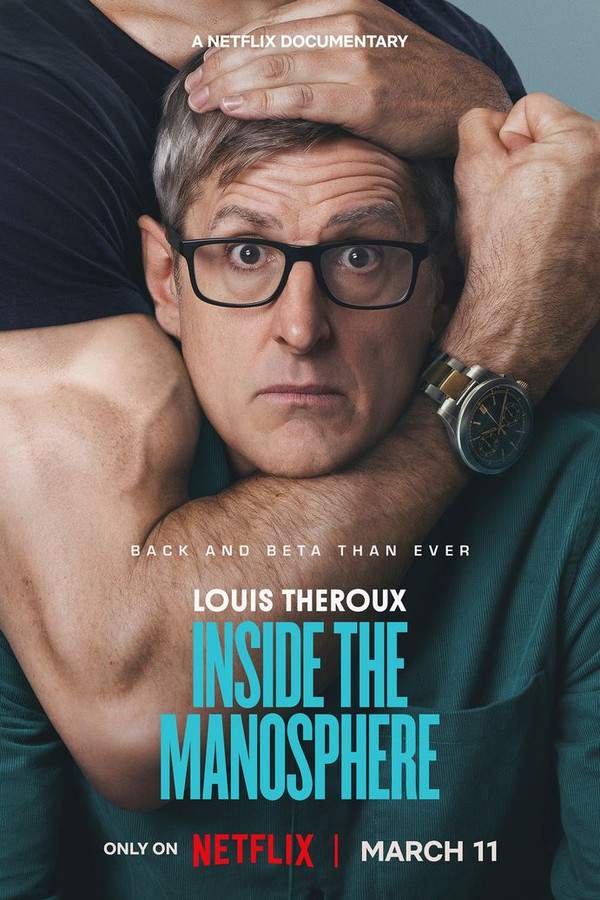
Louis Theroux: Inside the Manosphere Review and Reception Analysis – Is This 2026 Documentary Worth Watching?
When Louis Theroux: Inside the Manosphere premiered on March 11, 2026, it arrived not merely as a documentary but as a cultural flashpoint. In an era where discussions about masculinity, algorithmic radicalization, and the influence of online personalities dominate headlines, Theroux’s latest investigation into the so-called “manosphere” has generated precisely the kind of heated discourse that defines must-see documentary filmmaking. Whether you’re searching for a spoiler-free review of this controversial release, seeking to understand the critical consensus surrounding Theroux’s methodology, or simply wondering if Inside the Manosphere is worth watching, the reception landscape reveals a film that refuses to offer easy answers.
At What’s After the Movie, we’ve analyzed the full spectrum of critic reviews and audience reactions to provide you with a comprehensive breakdown of how this documentary has been received across different demographics. From perfect scores hailing it as a meta masterpiece to scathing user reviews decrying it as partisan propaganda, the film’s reception tells us as much about our fractured media environment as the content itself. For those looking to explore detailed movie summaries or check how this title performs in our box office tracking, our dedicated Louis Theroux: Inside the Manosphere movie page offers additional context alongside this deep-dive analysis.
Critical Consensus and Divided Reception: How Critics Reacted to Louis Theroux: Inside the Manosphere
The critical reception of Louis Theroux: Inside the Manosphere presents a fascinating case study in how documentary filmmaking is evaluated in 2026. With scores ranging from a dismal 40/100 to perfect 100/100 ratings, the film has clearly struck different chords depending on the reviewer’s expectations regarding journalistic objectivity, entertainment value, and social commentary. This divergence makes understanding the film reception particularly crucial for viewers deciding whether to invest their time in this Netflix release.
NME delivered perhaps the most effusive praise, awarding the documentary a perfect score and describing it as a “meta masterpiece that tackles the algorithmic poison being served to young men.” Their analysis extends beyond the immediate subject matter, suggesting the film operates on multiple levels: “it also says so much about the battle between new and old media, as well as the toxic battleground of social platforms, contemporary conspiracy theories and the parasocial relationships that make some influencers rich.” This interpretation positions the documentary not merely as an exposé of toxic masculinity but as a broader meditation on our digital ecosystem—a reading that elevates it beyond standard investigative fare.
Conversely, The Independent offered a blistering critique that questions the ethics of the film’s very existence, scoring it merely 40/100. Their review cuts to the heart of a debate that has dominated viewer reactions: “Ultimately this is an expensive Netflix documentary that’s provided maximum exposure to individuals who consider any kind of attention a win. It leaves a bitter, nasty taste in the mouth.” This perspective raises crucial questions about the documentary paradox—whether shining a light on dangerous ideologies inadvertently amplifies them, a concern that has surfaced repeatedly in audience reactions across social media platforms.
The Guardian (60/100) and Empire (60/100) occupy the middle ground, acknowledging Theroux’s craft while questioning its efficacy. The Guardian notes that “we know he is an intelligent man who lives in this world,” yet finds that “the silent supposed bafflement and dependence on giving people enough rope to hang themselves, which are such a large part of his arsenal, look like increasingly feeble weapons when the matters are of such increasing importance in all of our lives.” This critique suggests that Theroux’s signature style—characterized by awkward silences and feigned naivety—may no longer be sufficient for the gravity of the subject matter. Empire echoes this ambivalence, calling it “a fascinating, frightening — if frustrating — account of masculinity in crisis,” noting the presence of “genuinely shocking moments” while implying the overall impact remains incomplete.
The Telegraph (100/100) aligns with NME’s enthusiasm but focuses on the revelatory aspect of the content: “I don’t know how shocking Inside the Manosphere will be to people who are already inside it, but I was gobsmacked and appalled by the extent to which this regressive spiral has been packaged and sold via international tech platforms that should know better.” This reaction highlights how film analysis of this documentary must account for the viewer’s prior familiarity with online misogynist communities—the film serves as a horrifying introduction for some while offering little new information to others already immersed in internet culture discourse.
The Times (80/100) crystallizes this tension with their halfway-point observation: “Halfway through Louis Theroux: Inside the Manosphere (Netflix) I thought, yes, these toxic young men are awful but are we actually learning anything new?” This question haunts the documentary’s reception, dividing critics between those who view the film as essential documentation of a societal crisis and those who see it as redundant preaching to the choir. For readers interested in how this documentary compares to other investigative works in our database, our awards section tracks recognition for documentary filmmaking, while our box office analysis contextualizes its commercial performance within the broader landscape of streaming releases.
Audience Reactions and Viewer Sentiment: Polarized Opinions on the Manosphere Documentary
While critical consensus offers valuable film analysis, the audience reactions to Louis Theroux: Inside the Manosphere reveal a chasm that mirrors the very cultural divisions the documentary seeks to explore. User reviews have coalesced into distinct camps, creating a binary that makes viewer reactions essential reading for anyone seeking a balanced perspective on whether this documentary deserves their attention.
On the supportive end, Lara B awarded the film five stars, noting that “Theroux doesn’t have to do or say much to highlight how absurd these men are. The frightening part is the culture of young impressionable men who buy into their crap. Of course the manosphere isn’t new but every man who exposes it for the toxicity that it is pushes back against a growing trend.” This perspective views the documentary as a necessary counter-narrative, praising Theroux’s understated approach as effective exposure. Similarly, Marco C declared it “Easily Louis’ best documentary. Insightful, terrifying, hilarious. Important.” These fan opinions suggest that for viewers already skeptical of the manosphere, the film provides cathartic validation and alarming education.
Sam A (4/5 stars) offers more specific praise regarding Theroux’s targets: “Louis does a good job at exposing these sexist bigots. His claims women are thick, but perhaps it’s the type he attracts. What a load of moronic scammers.” While the syntax suggests translation or rapid composition, the sentiment aligns with viewers who appreciate Theroux’s willingness to confront these figures directly.
However, the negative user reviews are equally passionate and reveal a significant portion of the audience reception that views the film as partisan hit-pieces rather than journalism. Roy T delivered a scathing one-star critique that has been widely circulated in film reception discussions: “Dressed as journalism. Built as a verdict. There is a particular kind of documentary that arrives already knowing its conclusion. The camera rolls not to discover but to illustrate — to find faces, voices and footage that will serve a predetermined narrative. Welcome to the Manosphere is that kind of film… This is not documentary filmmaking. It is story construction with a living cast. Nasty film making from a darling of the left.”
This accusation of predetermined narrative construction finds echoes in Joshua H’s 1.5-star review: “I do feel like this documentary is very one sided, after watching full form content of the interviews I can’t help but feel that it was cut up and edited to show all of the featured peoples worst sides and moments. I get that this is the aim but a wider picture needs to be shown. I do not agree with all the people inside of the ‘manosphere’ I do not feel as if more than one side was shown.” These viewer reactions raise legitimate questions about documentary ethics and selective editing that prospective viewers should consider.
The most vitriolic audience reactions come from Will F (0.5/10), who wrote: “Without question one of the worst things ever made by anyone, ever. It actually uses the term ‘manosphere’ which no man has ever used, to force a narrative against masculinity that is literally the reason woman are wondered where all the men went. Louis Theroux is a biased hack and no one should take any of his work seriously, ever.” This review, along with K C’s dismissive “Typical. Not anything worth anything. Left garbage,” indicates that the film has activated the very defensive masculinity it seeks to document.
Simon T (3.5/5) offers a more measured critique from the middle: “I have very little to say about this sorry bunch of wannabes and losers parading their insecurities and half-baked misogyny while hiding behind their cellphones and social media ‘clicks’. Louis Theroux swims in their effluent and seems content to be sidelined. Pointless egos, empty lives.” Meanwhile, Elmer F (3/5) notes the redundancy issue: “Was alright. Didn’t tell us anything we didn’t already know if you were interested enough to be watching in the first place,” while referencing Theroux’s complicated history with Jimmy Saville as a moment of unintended irony.
For those looking to test their knowledge of documentary filmmaking or explore similar titles, our quizzes and games section offers interactive content, while our person profiles provide detailed filmographies for Theroux and his contemporaries.
Methodology and Ethical Debates: Is Louis Theroux: Inside the Manosphere Journalism or Prosecution?
Beyond the surface-level critic reviews and star ratings lies a profound debate about documentary ethics and methodology that has come to define the reception analysis of Louis Theroux: Inside the Manosphere. This conversation centers on a fundamental question: when does investigation become indictment, and does Theroux’s signature style remain appropriate for the gravity of modern extremism?
The most articulate expression of concern comes from Roy T, whose review explicitly frames the documentary as prosecutorial rather than journalistic: “The structure is telling. From the opening minutes, the editorial architecture is not one of inquiry but of prosecution. Subjects are introduced with framing devices — music cues, chyrons, selective editing — that signal to the viewer how to feel before a single argument has been made.” This critique suggests that the film analysis must account for the documentary’s rhetorical strategies, which allegedly prime the audience for condemnation before genuine engagement occurs. For viewers seeking spoiler-free reviews that nonetheless address these ethical dimensions, this represents a crucial consideration: the film may not be interested in understanding its subjects so much as cataloging their worst excesses for public shaming.
The Guardian’s critique aligns with this assessment, arguing that Theroux’s “silent supposed bafflement and dependence on giving people enough rope to hang themselves” constitute “increasingly feeble weapons” when confronting issues of such societal importance. This suggests a temporal disconnect—Theroux’s method, developed in an era of television documentary where subtlety was prized, may be ill-suited to the urgent, algorithmically accelerated crisis of online radicalization. The reviewer implies that Theroux’s pretense of ignorance, once charming or disarming, now reads as disingenuous given his obvious intelligence and worldliness.
Conversely, defenders of the documentary might argue that this very tension—between Theroux’s old-school BBC mannerisms and the chaotic, dangerous energy of his subjects—creates the critical consensus around the film’s effectiveness. By maintaining his characteristic awkwardness while confronting figures who traffic in hyper-masculine aggression, Theroux arguably highlights the absurdity and fragility of their personas without resorting to overt editorializing. The audience reactions from viewers like Lara B, who notes that “Theroux doesn’t have to do or say much to highlight how absurd these men are,” support this interpretation.
However, The Independent’s critique cuts deeper into the ethical dilemma: by providing a Netflix platform to figures who “consider any kind of attention a win,” does the documentary inadvertently serve as a recruitment tool or validation mechanism for its subjects? This question has plagued documentary filmmakers since the genre’s inception, but it takes on particular urgency in an attention economy where notoriety equals currency. The “bitter, nasty taste” described by their reviewer stems from the suspicion that the film’s subjects are playing Theroux as much as he is playing them, using the documentary’s respectability to launder their extremist views into mainstream discourse.
Joshua H’s user review adds another layer to this reception analysis, claiming that after viewing unedited interview footage, “it was cut up and edited to show all of the featured peoples worst sides and moments.” If accurate, this suggests that the viewer reactions must account for the constructed nature of documentary “truth”—a meta-commentary that ironically aligns with NME’s praise of the film as a “meta masterpiece” about media manipulation. The documentary becomes, intentionally or not, an object lesson in the very algorithmic curation and selective presentation that it critiques.
For those interested in exploring the broader context of documentary ethics and filmmaking techniques, our Movie Wiki offers extensive resources on cinematic techniques, while our summaries page provides detailed breakdowns of narrative structures in contemporary documentary film.
Cultural Impact and Thematic Analysis: Masculinity, Media, and the Algorithm
To truly understand why audiences searched for reviews of Louis Theroux: Inside the Manosphere upon its release, one must examine the film’s engagement with themes that extend far beyond individual personalities or isolated incidents. The critical consensus suggests that the documentary’s greatest strength lies not in its individual interviews but in its mapping of how algorithmic capitalism monetizes male alienation—a film analysis that resonates with broader anxieties about technology and society.
NME’s characterization of the film as tackling “algorithmic poison being served to young men” positions the documentary within a growing genre of 2026 documentary reception that examines how platform capitalism exploits psychological vulnerability. Their observation that the film addresses “the battle between new and old media” suggests that Theroux, representing traditional long-form journalism, is himself a character in the drama—a dinosaur observing the meteor impact of TikTok and YouTube radicalization. This meta-narrative layer adds depth to what might otherwise be a straightforward exposé of internet misogynists.
The Telegraph’s reaction—being “gobsmacked and appalled by the extent to which this regressive spiral has been packaged and sold via international tech platforms that should know better”—highlights the audience reactions of shock and dismay that characterize much of the film’s reception. For viewers unfamiliar with the depths of the “manosphere,” the documentary serves as a horrifying introduction to an ecosystem where loneliness is commodified, resentment is cultivated, and radicalization is just another engagement metric. This spoiler-free review aspect is crucial: the film’s value may lie in its capacity to alarm the uninitiated rather than enlighten the already-aware.
Empire’s description of the film as an “account of masculinity in crisis” places it within a lineage of cultural criticism examining the “crisis of masculinity” narrative that has dominated sociological discourse for decades. However, the viewer reactions suggest that the film offers little in the way of solutions or alternative visions of masculinity, instead presenting a grim portrait of defensive, reactionary identity formation. This absence of constructive counter-narratives may explain why some user reviews find the film depressing or nihilistic rather than empowering.
The generational dimension of the reception analysis cannot be overstated. Lara B’s observation about “the culture of young impressionable men who buy into their crap” speaks to parental anxieties and educational concerns that have driven search traffic for Louis Theroux: Inside the Manosphere review content. The documentary functions as a warning sign for parents, educators, and young men themselves about the seductive dangers of these online communities—a public service announcement wrapped in prestige television packaging.
Yet The Times’ question—“are we actually learning anything new?”—haunts this thematic analysis. For viewers already immersed in feminist theory, media studies, or online culture criticism, the film may indeed offer redundant information. The critical consensus suggests that the documentary’s primary value is documentary rather than analytical—it records a moment in time, preserving the rhetoric and aesthetics of the manosphere for future study, even if it fails to fully theorize its origins or solutions.
For those looking to explore similar titles or create curated lists of socially conscious documentaries, our Movie Collections and Movie Lists features allow you to organize and share recommendations based on thematic connections to Inside the Manosphere.
Comparative Analysis: How Inside the Manosphere Fits in Theroux’s Filmography
No review of Louis Theroux: Inside the Manosphere would be complete without situating it within the broader context of Louis Theroux’s career—a body of work defined by awkward encounters with extremists, outcasts, and true believers. Understanding how audience reactions to this film compare to reception of his earlier work illuminates whether Theroux has evolved as a filmmaker or whether the world has simply grown too extreme for his established methods.
Marco C’s declaration that this is “Easily Louis’ best documentary” suggests a high-water mark in his filmography, placing it above beloved entries like The Most Hated Family in America or My Scientology Movie. This fan opinion implies that Theroux has finally found a subject that matches the urgency of his previous work while speaking directly to contemporary anxieties. The film’s Netflix budget and global reach certainly represent a scale of distribution that his earlier BBC work rarely achieved, potentially introducing his unique style to younger viewers unfamiliar with his back catalog.
However, Elmer F’s review introduces a fascinating complication that complicates this reception analysis: the reference to Jimmy Saville and Theroux’s complicated history with the disgraced entertainer. The reviewer notes an “unexpected highlight being one of the pillocks referring to ‘your mate Jimmy Saville.’ Cue long awkward pause before he bleats something about ‘being one of the people who exposed him.’ Reality was he set out to expose him, ended up being his mate and then made a follow up about how easily manipulated he’d been.” This observation suggests that critic reviews must account for Theroux’s own history of being manipulated by charismatic subjects—a meta-commentary that adds layers of irony to his current investigation of manipulative online personalities.
The comparison to My Scientology Movie (2015) is particularly apt. In that film, Theroux employed actors to recreate scenes of alleged abuse within the Church of Scientology when he couldn’t secure interviews with high-ranking members. In Inside the Manosphere, he faces the opposite problem: an overabundance of subjects eager to perform for the camera, requiring different ethical calculations about exploitation and exposure. The critical consensus suggests that Theroux handles this abundance with less editorial rigor than he applied to the scarcity of Scientology access, resulting in a film that feels simultaneously overstuffed and underdeveloped.
The Guardian’s critique of his “feeble weapons” suggests that Theroux’s approach—characterized by passive observation and strategic silence—may have reached its limit when confronting subjects who are themselves media-savvy performers. Unlike the Westboro Baptist Church members or Scientology officials of his past films, the manosphere influencers understand the documentary format intimately and are prepared to weaponize Theroux’s platform for their own ends. This film analysis indicates that Inside the Manosphere may represent a crisis point in Theroux’s methodology—a realization that the “give them enough rope” approach fails when the subjects are already hanging themselves daily on TikTok Live.
For those interested in exploring Theroux’s complete filmography or comparing his evolution as a documentarian, our person profiles section offers comprehensive career retrospectives, while our dedicated Louis Theroux: Inside the Manosphere movie page provides direct comparisons to his previous investigations.
Final Verdict: Is Louis Theroux: Inside the Manosphere Worth Watching?
As we synthesize the critic reviews, audience reactions, and film analysis surrounding Louis Theroux: Inside the Manosphere, a complex verdict emerges—one that resists simple recommendations but offers clear guidance for different types of viewers. The question “is Inside the Manosphere worth watching” ultimately depends on your existing familiarity with online extremism, your tolerance for ambiguous documentary ethics, and your appetite for confronting uncomfortable cultural realities.
For the uninitiated—those parents, educators, or casual viewers who have heard whispered concerns about “incels,” “red pill” culture, or Andrew Tate-style influencers but haven’t ventured into these digital spaces—the documentary serves as an essential, if horrifying, introduction. The Telegraph’s “gobsmacked” reaction likely awaits these viewers, making the film a valuable, if deeply unpleasant, educational tool. The spoiler-free review consensus suggests that these viewers will find the film eye-opening and necessary, validating NME’s assessment of its importance.
For those already immersed in internet culture criticism, however, The Times’ question—“are we actually learning anything new?”—becomes the operative consideration. If you’ve read The New York Times investigations, listened to podcasts about online radicalization, or followed the various “manosphere” figures on social media for research purposes, Theroux’s documentary may feel like a retread of familiar territory. The critical consensus suggests that the film offers documentation rather than revelation, recording rather than analysis.
The ethical concerns raised by The Independent, The Guardian, and user reviewers like Roy T and Joshua H cannot be dismissed. If you value documentary filmmaking that presents multi-faceted portraits of its subjects—even flawed, dangerous subjects—Inside the Manosphere may frustrate you with its apparent predetermined narrative. However, if you view the film as a work of advocacy journalism rather than objective inquiry, these editorial choices become features rather than bugs.
Ultimately, Louis Theroux: Inside the Manosphere stands as a document of its moment—a snapshot of masculinity in crisis captured by a filmmaker struggling to adapt his established methods to an ecosystem that has evolved beyond them. Whether it represents Theroux’s “best documentary” (Marco C) or “one of the worst things ever made” (Will F), it has undeniably succeeded in generating the conversation it sought to document.
For comprehensive movie information, detailed summaries, and to join the ongoing discussion about this controversial release, visit our movie summaries page or check the latest updates on our box office tracking. You can also explore our awards coverage to see how this documentary positions itself within the 2026 film landscape, or dive deeper into cinematic analysis through our Movie Wiki.
| Platform | Link |
|---|---|
| Louis Theroux: Inside the Manosphere IMDB | IMDB |
| Louis Theroux: Inside the Manosphere Wikipedia | Wikipedia |
| Louis Theroux: Inside the Manosphere Rotten Tomatoes | Rotten Tomatoes |
| Louis Theroux: Inside the Manosphere Metacritic | Metacritic |
| Louis Theroux: Inside the Manosphere JustWatch | JustWatch |