Billie Eilish - Hit Me Hard and Soft: The Tour (Live in 3D) Reviews & Reception Analysis: Is the James Cameron Collaboration Worth Your Money?
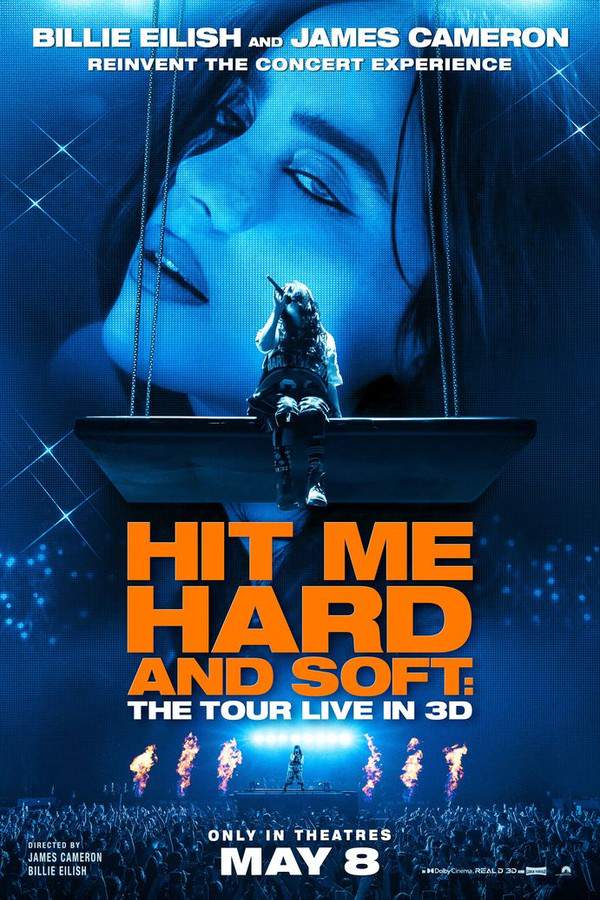
When Billie Eilish - Hit Me Hard and Soft: The Tour (Live in 3D) arrived in theaters on May 8, 2026, it represented more than just another entry in the increasingly crowded concert film genre. This unprecedented collaboration between Gen Z’s reigning pop auteur and James Cameron—the undisputed king of blockbuster spectacle—immediately sparked intense debate among cinephiles and Eilish’s devoted fanbase alike. Was this going to be a Titanic-sized technical achievement that revolutionized how we experience live music on screen, or merely an expensive vanity project serving the already converted? As audiences flocked to AMC theaters equipped with Dolby Cinema and 3D capabilities, the question wasn’t just about whether the film captured Billie’s artistic evolution—it was whether this hybrid of intimate indie sensibility and cutting-edge cinematic technology could justify the premium ticket prices for casual viewers and diehard “Avocados” alike.
The reception landscape reveals a fascinating dichotomy: critics appreciated the technical mastery while debating the emotional accessibility, whereas audience reactions splintered between transcendent, life-changing experiences and frustrating technical disappointments. With a critical range spanning from mixed to rapturous, and user scores oscillating between perfect 10s and disappointing 3s, this film has emerged as one of 2026’s most divisive yet culturally significant releases. Whether you’re researching concert films for your next movie night or trying to determine if this warrants a trip to your local multiplex, understanding the nuanced reception—from the box office implications to the long-term awards potential—requires diving deep into both the Cameron-engineered spectacle and Eilish’s raw, unfiltered performance artistry.
Critical Consensus: Is Billie Eilish’s 3D Concert Film a Cinematic Triumph or Just a Tech Demo?
The critical reception for Billie Eilish - Hit Me Hard and Soft: The Tour (Live in 3D) has generated one of the most interesting critical conversations of 2026, with reviewers grappling with whether this represents genuine cinematic innovation or simply an expensive playground for James Cameron’s latest gadgets. Landing scores between 60 and 83 across major outlets, the film sits in that rare sweet spot where technical admiration meets genuine emotional debate—a fitting parallel to Eilish’s own artistic identity that balances studio polish with bedroom-pop intimacy.
The Playlist emerged as one of the film’s strongest defenders, awarding it an 83/100 and praising how the film “maps the machinery behind the magic—the lighting choices, stage movements, emotional calibration, hidden pathways, and private moments of anticipation.” Their review suggests this isn’t merely a recording of a concert but rather “a portrait of a performer who understands the scale of her platform and still wants every person in the room to feel seen.” This sentiment echoes throughout the higher-scored reviews, with Consequence of Sound similarly awarding 83/100 and noting that “Hit Me Hard and Soft gets damn close” to capturing the transcendence of live performance, attributing this success to the “dual perspectives of its directors: The artist at the peak of her abilities, and the observer in awe of what he’s witnessing.”
However, the collaboration between Eilish and Cameron hasn’t convinced everyone that the marriage is seamless. The New York Times (70/100) characterized the movie as “a bizarre Venn diagram of aesthetic and emotional interests: a totally immersive experience into the power of Eilish’s music, and a test film for Cameron to play with his latest gadgets.” This tension between art and technology permeates much of the critical discourse. Screen Rant (70/100) clarifies that Cameron’s decision to share directorial credit was intentional, positioning him not as the creative force but as a documentarian capturing Eilish’s vision: “Cameron is less striving to create his own art than to capture Eilish’s.”
Empire (80/100) perhaps provides the most accessible entry point for skeptics, arguing that “you don’t have to be a diehard Eilish fan to appreciate the artistry in music, performance and filmmaking here.” This accessibility factor becomes crucial when analyzing the film’s reception across different demographic groups. Meanwhile, The Hollywood Reporter (80/100) focuses on the tactile quality of the imagery, suggesting that “with its vivid footage, sometimes captured from breathlessly intimate proximity, you might be able to believe, just for a moment, that you could really reach right through the screen and touch her.”
The lower end of the critical spectrum raises valid concerns about sustainability and focus. Status (60/100) offered a somewhat cynical but observant take, noting that “given the frequent weeping captured from her die-hard, singing-along fans, 4DX would really be the killer app, approximating the spray of their abundant tears of joy.” The Los Angeles Times (70/100) similarly found the emotional intensity overwhelming by the conclusion, stating that “actually witnessing the audience’s emotional connection to her lyrics makes ‘Hit Me Hard and Soft’ feel like an epic coming-of-age movie as much as a concert film. Still, by the 50th mascara-smeared face, I needed fresh air.”
For those exploring movie summaries and trying to determine where this fits in the pantheon of music documentaries, the critical consensus suggests this isn’t quite Stop Making Sense or Gimme Shelter, but rather a new beast entirely—one that requires evaluating your own tolerance for both technological spectacle and intense emotional displays. The person profiles of both Eilish and Cameron reveal why this collaboration made sense: two perfectionists from different generations obsessed with control and sensory immersion.
The 3D Experience: Immersive Innovation or Expensive Gimmick?
Perhaps no aspect of Billie Eilish - Hit Me Hard and Soft: The Tour (Live in 3D) has generated more polarized discourse than its use of stereoscopic technology. In an era where 3D cinema has largely retreated to superhero blockbusters and animated features, Cameron and Eilish’s decision to deploy the format for an intimate concert experience represents either a bold reinvention of the medium or an unnecessary barrier to entry, depending on which audience reactions you consult.
The proponents argue that this is exactly the film that justifies the 3D premium. IndieWire (75/100) contends that while the film is “largely shot like a typical concert movie except for the fact that it’s in 3D—the 3D works exceptionally well to place you onstage with Eilish.” This spatial relationship between viewer and performer becomes crucial when considering Eilish’s specific performance style—working without backup dancers and with an “intimately scaled band,” she creates what IndieWire describes as a “me and them” dynamic that the 3D technology amplifies rather than distracts from. The Travers Take (80/100) found delicious irony in this approach, noting that “emo queen Billie Eilish and blockbuster king of the world James Cameron have teamed up to go small on the most massive screen imaginable, in 3D yet.”
User reviewer karankhosla, awarding the film a 74/100, provides perhaps the most nuanced technical assessment from a consumer perspective: “I watched it in 3D, and honestly, I think that is the only way to watch this movie. I am not normally a 3D person, but this was probably the most impressed I have been by 3D since [Avatar].” This comparison to Cameron’s previous work inevitably hangs over the film’s reception, with many viewers approaching the theater expecting the same revolutionary leap in visual technology that Avatar represented in 2009.
However, the 3D implementation hasn’t been universally successful across exhibition formats. User duanewilliams delivered a scathing 3/10 review citing technical failures: “The 3D tech used at the AMC theater I went to is seriously flawed, resulting in a significantly degraded visual experience.” This disparity between theaters highlights a crucial factor for potential ticket-buyers researching where to watch—not all 3D presentations are created equal, and the film’s reliance on precise calibration means that outdated projection systems or improper glasses can severely damage the intended effect.
The Dolby Cinema presentation, frequently mentioned in positive reviews, seems to offer the optimal experience, combining the 3D visuals with advanced audio systems that capture the subtleties of Eilish’s whisper-quiet vocal style alongside the bass-heavy production of tracks like “Therefore I Am” and “Lunch.” For those debating whether to seek out standard digital screenings versus the premium formats, the box office data likely reflects a significant skew toward these upgraded experiences, suggesting that audiences are treating this less as a traditional movie and more as an event.
The format also raises interesting questions about the future of the concert film genre. If Cameron and Eilish succeed in establishing 3D as a viable medium for live music documentation, we may see a resurgence in theatrical concert releases that had largely migrated to streaming platforms. However, if technical inconsistencies continue to plague regional theaters, this could remain a niche experiment rather than a new standard.
Fan Reception vs. Casual Viewer: Who Is This Film Really For?
The demographic divide in Billie Eilish - Hit Me Hard and Soft: The Tour (Live in 3D) reviews reveals fascinating insights about modern moviegoing habits and the evolving relationship between artist and audience. While Empire insists the film was “made for? Everyone,” the user review landscape tells a more complicated story about accessibility, emotional prerequisites, and the varying expectations between casual listeners and the Eilish faithful.
For the devoted fanbase—the “Avocados” who camp outside venues and know every lyrical nuance—the film has approached religious experience status. User saxboychair2 awarded a perfect 10/10, noting it “feels like you’re actually there at the concert,” while bigboy similarly scored it 10/10, emphasizing that it “felt like i was there with her on stage.” These reactions suggest that for existing fans, the film succeeds in its primary objective of democratizing access to an experience that sold out arenas within minutes, allowing those unable to secure tickets to the live tour to participate in the communal moment.
The emotional intensity of these responses cannot be understated. Nathalye B described it as “a breathtaking masterpiece… easily the best I’ve ever seen and my new all-time favorite,” citing how “it truly felt like she was standing right in front of me.” Samantha O’s review reads like testimonial literature: “Billie’s Movie Changed All Of Us… She inspired me in so many ways, I was going through a hard time in my life and her songs… helped me a lot.” These reviews highlight how Eilish’s music serves as emotional infrastructure for a generation grappling with mental health, identity, and belonging—elements that the film captures through its focus on audience reactions and intimate performance moments.
However, the film faces significant accessibility hurdles for the uninitiated. karankhosla, representing the casual viewer perspective with a 7/10 score, articulates a crucial limitation: “Where the film is weaker is depth. It shows the concert and some of what happens around it, but it never really takes you behind the songs. We do not get the meaning, the stories, the difficult moments or the personal background behind the music.” This criticism suggests that while the film excels as a technical document of performance, it assumes a level of pre-existing emotional investment that non-fans may not possess.
The review also touches on generational differences in performance styles, comparing Eilish unfavorably to “old-school performers” like Robbie Williams in terms of crowd control and between-song storytelling. “Modern performers can be brilliant musically and visually,” karankhosla observes, “but sometimes they do less to actively command and shape the room between songs.” This suggests that viewers expecting traditional concert film narratives—behind-the-scenes confessionals, explicit song explanations, or backstage drama—will find the film’s focus on pure performance either refreshing or alienating depending on their preferences.
The Los Angeles Times’ observation about the “50th mascara-smeared face” speaks to this tension between authentic emotion and viewer fatigue. For those deeply connected to Eilish’s lyrics about depression, heartbreak, and self-discovery, seeing hundreds of fans weeping provides validation and community. For others, it may feel like unrelenting emotional bombardment without sufficient narrative variation.
Nea M’s 4/5 review offers a middle ground, praising the film as “absolutely beautiful” while noting limitations that might affect repeat viewings: “I am a bit disappointed that the shootings were only done on one concert, and not multiple and different ones, so we could’ve heard different set lists.” This suggests that even among fans, there’s desire for more comprehensive documentation rather than a single night’s performance, regardless of how polished that night may be.
For those exploring movie lists of essential music documentaries or searching for collection recommendations for teen audiences, the reception suggests this works best as fan service rather than gateway content. However, Lena A’s review that “there’s no need to be a super fan of hers” to enjoy it indicates that the technical craftsmanship can override narrative unfamiliarity for open-minded viewers.
Behind the Curtain: Analyzing the Directorial Vision and Production Craft
The filmmaking methodology behind Billie Eilish - Hit Me Hard and Soft: The Tour (Live in 3D) has sparked considerable analysis regarding authorship, artistic control, and the documentation of live performance. Unlike traditional concert films where a director imposes their vision upon the material, this collaboration positions Eilish as the primary creative force with Cameron serving as a highly advanced technical facilitator—a dynamic that fundamentally shapes the film’s reception among cinephiles.
Screen Rant’s observation that “sharing directorial credit was his idea” proves crucial to understanding the film’s ethos. Rather than Cameron imposing his blockbuster sensibilities upon Eilish’s intimate stage show, the film includes meta-textual moments showing the two collaborating on camera placement, with Eilish explaining her “song-specific color scheme” intentions. This transparency about the construction of the spectacle aligns with contemporary audiences’ increasing media literacy and desire for behind-the-scenes authenticity. For those interested in movie wiki details and production trivia, these moments provide fascinating insight into how modern concert films balance coverage with artistry.
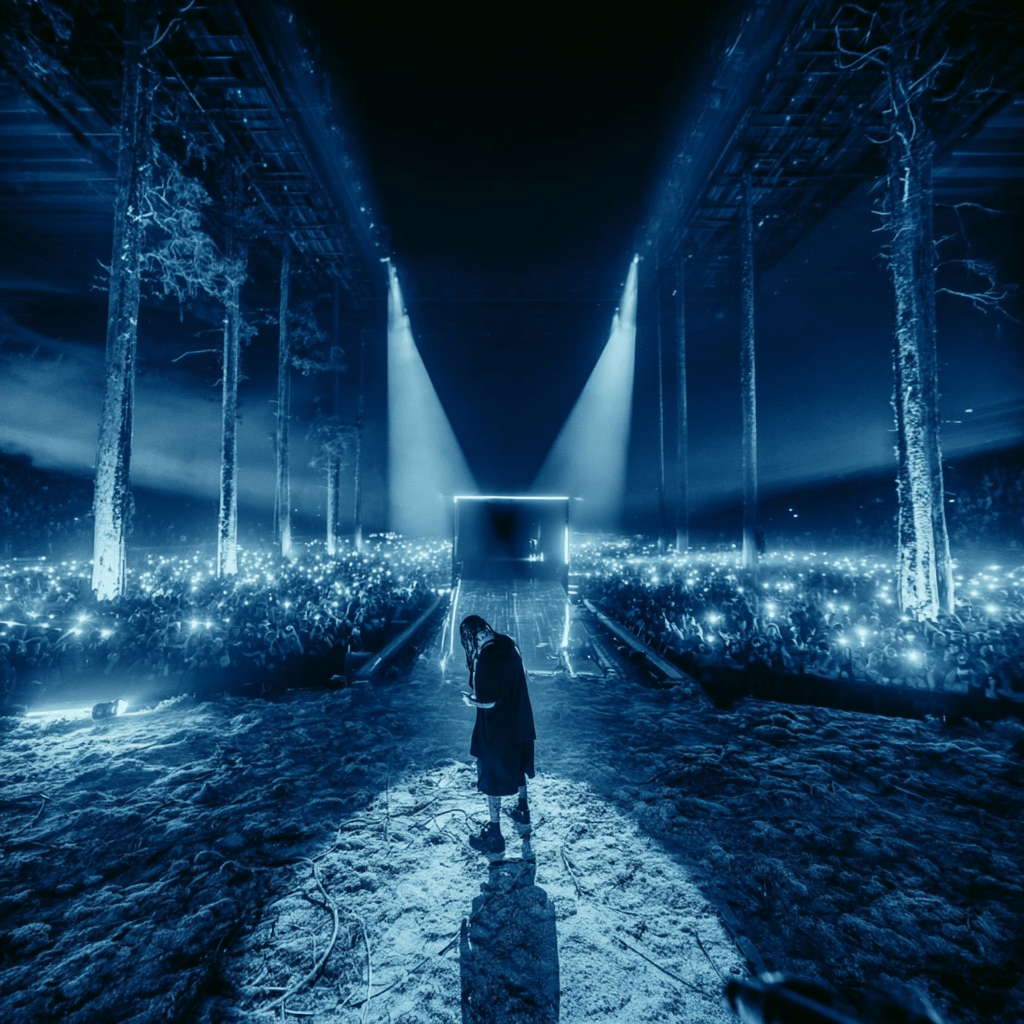
The Playlist’s praise for how the film maps “the machinery behind the magic” speaks to a broader trend in music documentaries that demystify production while simultaneously celebrating it. The film reveals “hidden pathways,” lighting decisions, and the physical logistics of Eilish’s stage movement—elements that transform passive viewing into an appreciation of athletic and artistic discipline. This approach resonates with viewers who appreciate the award-worthy technical achievements of live production, treating stage design and lighting as seriously as cinematography and editing.
However, this focus on machinery creates tension with the emotional content. karankhosla’s criticism that the film lacks “crowd control and more direct storytelling between songs” highlights a potential disconnect between Eilish’s preferred performance mode and traditional documentary expectations. Where older concert films might include interview segments or backstage footage to provide narrative context, Eilish and Cameron’s film maintains relentless focus on the present-tense performance. This choice reflects Eilish’s artistic ethos—she connects through “intimacy, movement, mood and energy” rather than explicit narrative exposition—but may leave viewers seeking deeper psychological insight into the songs’ origins feeling unsatisfied.
The cinematography itself has garnered significant praise, with The Hollywood Reporter noting the “breathlessly intimate proximity” of certain shots. The camera work avoids the distant, static wide shots that plague many concert films, instead employing fluid movements that mirror Eilish’s own choreography. This kinetic visual language prevents the 3D effects from feeling like mere novelty, instead integrating them into the spatial storytelling of the performance.
Criticisms regarding the single-concert approach (noted by Nea M) raise valid questions about the film’s longevity and comprehensiveness. By limiting documentation to one night rather than compiling “multiple and different” shows across the tour, the film sacrifices variety for consistency. This decision likely stems from the logistical challenges of Cameron’s 3D camera rigs, which require significant setup and calibration, but it means that viewers receive a definitive version of the show rather than a kaleidoscopic tour document.
For film students and enthusiasts browsing person profiles and wondering about the directorial hierarchy, this film presents a fascinating case study in egoless collaboration. Cameron, known for obsessive control over his narratives, appears content to let Eilish’s vision dominate, resulting in a work that feels authentically hers despite the massive technical infrastructure supporting it.
Sound Design and Theater Etiquette: The Audio Experience Divides Audiences
While the visual spectacle of Billie Eilish - Hit Me Hard and Soft: The Tour (Live in 3D) dominates marketing materials, the auditory experience has proven equally decisive in shaping viewer reception—though not always positively. The intersection of theatrical audio systems, Eilish’s distinctive vocal style, and audience behavior has created a polarizing discourse about how concert films should be experienced in commercial cinemas.
The most significant technical complaint comes from duanewilliams, who awarded the film only 3/10 and specifically cited audio issues: “It’s nearly impossible to understand the words of the songs, in part because the sound mixing allows the audience to drown out the singer.” This critique highlights a fundamental challenge in concert film production: balancing the authentic atmosphere of crowd participation with the clarity required for cinematic presentation. Unlike traditional narrative films where dialogue is isolated and controlled, concert films must navigate the chaotic acoustic environment of live performance, where thousands of fans singing along constitutes both the appeal and the audio obstacle.
This mixing choice creates a paradox for viewers. On one hand, the inclusion of prominent crowd vocals captures the communal ecstasy of live music—the sense of collective ritual that defines concert culture. On the other, Eilish’s lyrics often function as the primary emotional text of her work, and obscuring them with fan vocals risks alienating viewers who rely on verbal comprehension for emotional connection. The Dolby Cinema presentations mentioned in positive reviews likely offer superior audio separation that mitigates this issue, suggesting that, like the 3D visuals, the sound design requires premium exhibition formats to achieve its intended effect.
karankhosla’s observation about theater etiquette adds another layer to the audio experience: “People were softly singing along, some were dancing at the sides, and there was more chatter than usual… But people filming the screen was annoying.” This suggests that the film has created new behavioral norms for moviegoing, blurring the lines between theatrical exhibition and live event. Traditional cinema etiquette—silence, stillness, attention to screen only—clashes with the interactive participation that concert films invite. The “chatter” and movement that would ruin a traditional film actually enhance the concert atmosphere, but the phone filming represents a bridge too far for many viewers.
Status’s joke about 4DX and “tears of joy” touches on the physicality of the experience that some viewers seek. While the film itself doesn’t include 4DX effects, the emotional reactions described by Leah P (“we danced and sung and had fun”) and Lena A (“I cried, I laughed, I sung, Jumped and danced”) suggest that audiences crave sensory immersion beyond passive viewing. This raises questions about why Cameron and Eilish didn’t incorporate 4DX or ScreenX technologies that could have amplified the physical sensations of the concert experience—though such additions might have further alienated viewers seeking pure audiovisual documentation.
The audio mixing also affects the perception of Eilish’s vocal performance. Known for her whisper-quiet delivery and ASMR-adjacent vocal techniques, Eilish’s voice requires careful engineering to project in theater spaces designed for bombastic blockbusters. When combined with her brother Finneas’s intricate production—full of subtle synth textures and bass drops—the audio demands placed on theater sound systems are significant. Reviews mentioning “Dolby sound” suggest that standard digital presentations may struggle to capture the dynamic range of the music, compressing the quiet-loud contrasts that define Eilish’s sonic palette.
For those checking game and quiz content related to the film, or comparing it to other entries in their movie lists, the audio considerations are crucial for setting expectations. This is not a film to stream quietly on a laptop; it demands theatrical exhibition with quality sound systems, and even then, viewers must accept that crowd noise constitutes part of the intended soundscape rather than a distraction from it.
Emotional Resonance and Narrative Depth: What’s Missing from the Documentary?
The most persistent criticism of Billie Eilish - Hit Me Hard and Soft: The Tour (Live in 3D) centers not on what is present, but what is absent: traditional documentary elements that provide context, backstory, and narrative arc. While the film succeeds as a visceral performance document, several critics and viewers have questioned whether it functions as a complete cinematic experience or merely an expensive souvenir for existing fans.
karankhosla’s detailed critique strikes at the heart of this issue: “Where the film is weaker is depth… We do not get the meaning, the stories, the difficult moments or the personal background behind the music. That felt like a missed opportunity.” This observation highlights the difference between performance documentation and documentary storytelling. By eschewing interviews, archival footage, or explicit narrative framing, Eilish and Cameron create a film that exists entirely in the present tense—a choice that prioritizes immediacy over context but potentially limits the work’s accessibility to newcomers.
The comparison to “Robbie Williams” style crowd control and storytelling highlights generational shifts in performer-audience relationships. Where previous generations of pop stars might have engaged in banter, told extended anecdotes between songs, or explicitly explained their artistic intentions, Eilish’s approach relies on what karankhosla describes as “intimacy, movement, mood and energy.” This non-verbal communication style aligns with Gen Z’s comfort with visual literacy and emotional subtext, but may leave older viewers or those unfamiliar with Eilish’s personal history feeling excluded from the full emotional impact.
The Los Angeles Times’ description of the film as an “epic coming-of-age movie” suggests that the narrative emerges organically from the accumulation of emotional moments rather than explicit storytelling. By focusing on the “mascara-smeared faces” of the audience and the visible catharsis of fans connecting with lyrics about mental health and identity, the film constructs a meta-narrative about Eilish’s role as generational voice. However, the reviewer’s admission that they “needed fresh air” by the end suggests that this emotional intensity, without variation or narrative relief, can become overwhelming.
Fan reactions like Samantha O’s testimony about Eilish helping through “hard times” indicate that for the initiated, no additional context is necessary—the songs already function as personal soundtrack to specific life experiences. The film serves as validation of these pre-existing relationships rather than an introduction to them. Nathalye B’s assertion that “it truly felt like she was standing right in front of me” speaks to the film’s success in collapsing the distance between star and fan, but this intimacy is largely one-way; Eilish reveals little of herself beyond what she offers in performance.
The lack of “behind the songs” content, noted by multiple reviewers, represents a deliberate artistic choice that reflects contemporary pop stardom’s relationship with privacy. Unlike previous eras where documentaries might have included footage of recording sessions or songwriting processes, Eilish maintains tight control over her narrative, releasing information through controlled channels (social media, curated interviews) rather than documentary exposition. This protects her privacy but limits the film’s utility as a comprehensive portrait of her artistic process.
For viewers exploring collections of music documentaries or browsing the wiki for background information, the film’s narrow focus requires supplemental research to fully appreciate. Unlike Miss Americana (Taylor Swift) or Homecoming (Beyoncé), which provided extensive behind-the-scenes access and personal narrative, Hit Me Hard and Soft offers only the polished final product. Whether this represents refreshing focus or disappointing omission depends largely on what viewers bring to the theater with them.
Final Verdict: Should You Buy a Ticket to Billie Eilish’s 3D Concert Experience?
As the dust settles on the theatrical release of Billie Eilish - Hit Me Hard and Soft: The Tour (Live in 3D), the verdict remains nuanced: this is a film that succeeds magnificently at specific goals while remaining indifferent to broader accessibility. For Billie Eilish devotees, the film offers an essential, potentially transcendent experience that captures the intimacy and intensity of her live performance with unprecedented technical sophistication. The combination of Cameron’s 3D wizardry and Eilish’s artistic vision creates moments of genuine cinematic magic that justify the premium ticket prices for fans who would otherwise never see her live.
However, for casual viewers or those seeking traditional documentary storytelling, the film’s narrow focus on a single night’s performance—devoid of backstage context, lyrical explanation, or narrative arc—may feel like an expensive luxury rather than essential cinema. The technical requirements (properly calibrated 3D projection, Dolby sound systems) mean that your mileage may vary significantly depending on your local theater’s equipment, as evidenced by the stark contrast between duanewilliams’s technical nightmare and karankhosla’s immersive bliss.
The critical consensus suggests that while this may not revolutionize the concert film genre in the way Avatar changed blockbuster cinema, it represents a significant evolution in how live music can be experienced theatrically. The film asks audiences to accept new norms of theater behavior (singing along, emotional vocalization) while delivering visual spectacle that justifies the big-screen treatment over eventual streaming release.
Ultimately, whether this film is “worth watching” depends on your existing relationship with Eilish’s music and your tolerance for emotional intensity over narrative depth. If you’ve ever felt that her whispered vocals and confessional lyrics spoke directly to your experience, the film offers a communal validation of that connection. If you’re approaching this as a James Cameron curiosity or general music fan, temper expectations for revelation and prepare for a sensory experience that prioritizes mood over exposition.
For the latest box office numbers, award considerations, and detailed summaries of this and other concert films, visit What’s After the Movie. Check out our quizzes to test your knowledge of music documentaries, explore our person profiles for deep dives into Billie Eilish and James Cameron’s filmographies, or browse our lists of essential concert films to stream while you decide whether to catch this one in theaters.