Paul McCartney: Man on the Run (2026) Reviews – Critic and Audience Reactions to the Wings Era Documentary
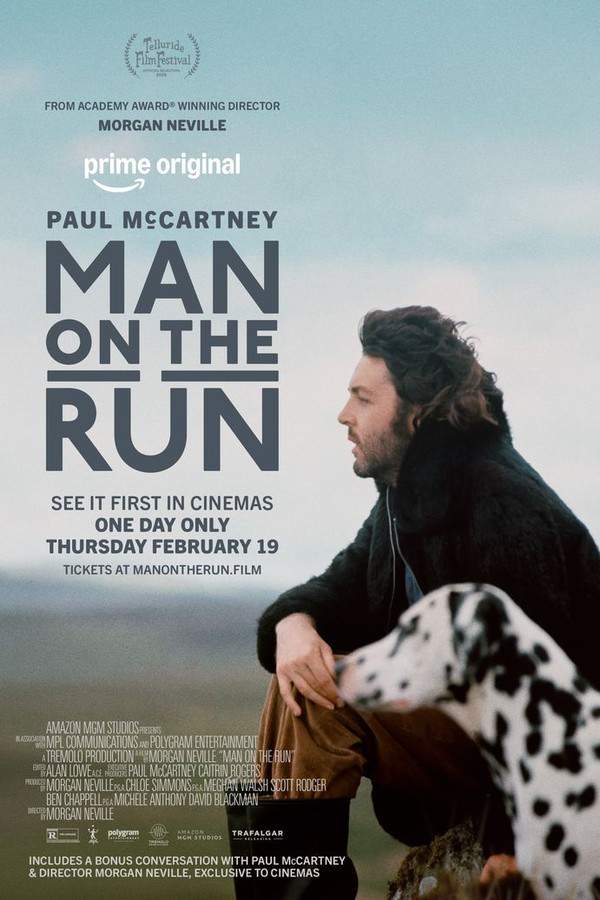
When a music documentary tackles one of the most scrutinized figures in rock history, the stakes are immediately elevated. Paul McCartney: Man on the Run, directed by Academy Award-winning filmmaker Morgan Neville, arrives at a cultural moment where audiences are simultaneously saturated with Beatles-related content yet perpetually hungry for new insights into the band’s most successful solo career. Focusing specifically on McCartney’s turbulent yet creatively fertile post-Beatles period—specifically the formation and rise of Wings throughout the 1970s—this documentary promises to reveal the man behind the myth during his most vulnerable transition.
The film’s reception has generated fascinating discourse across critical and audience spheres, with reactions ranging from euphoric celebrations of rare archival footage to pointed critiques regarding narrative depth. For viewers wondering whether this addition to the McCartney cinematic canon offers fresh perspective or merely rehashes familiar biographical territory, the consensus suggests a middle ground: this is ultimately a film for the fans, but one crafted with sufficient emotional intelligence to resonate beyond the hardcore demographic. Whether you’re seeking a spoiler-free review before committing to a theatrical viewing or analyzing the critical consensus surrounding this latest music biography, the reception landscape reveals a documentary that prioritizes emotional accessibility over groundbreaking revelations. As we examine the diverse reactions from prestigious publications and everyday viewers alike, patterns emerge regarding Neville’s directorial choices, the film’s treatment of grief and creativity, and whether Man on the Run successfully justifies its existence in an already crowded field of Beatles-related documentation.
Critical Consensus: How Critics Received Paul McCartney: Man on the Run
The critical reception for Paul McCartney: Man on the Run presents a fascinating study in contextual evaluation, with scores ranging from the effusive perfection of The Telegraph and the San Francisco Chronicle to the more measured reservation of Radio Times. This spectrum illustrates the central tension reviewers faced: balancing appreciation for Morgan Neville’s polished craftsmanship against questions of necessity and depth in yet another McCartney retrospective.
At the pinnacle of critical acclaim, The Telegraph awarded the documentary a perfect score, describing it as offering “an intimate, funny and sometimes emotional charge through the 1970s as McCartney tried to escape the aftermath of being in the biggest band in the world by forming Wings – who would go on to become one of the biggest bands of the decade.” This enthusiastic endorsement highlights what many critics celebrated—the film’s propulsive energy and its success in reframing the often-derided Wings era as a period of genuine artistic courage rather than mere commercial consolidation. The San Francisco Chronicle echoed this sentiment with their own perfect rating, noting, “I’ve been fascinated by McCartney for decades, and ‘Man on the Run’ made me feel like I was getting closer to understanding the real guy,” suggesting that for longtime observers, Neville’s approach provided psychological access previously unavailable in standard biographical treatments.
However, the critical landscape wasn’t uniformly adoring. Radio Times offered a more ambivalent assessment with a 60/100 score, commending Neville’s Oscar-winning pedigree from 20 Feet from Stardom while criticizing that he “devotes perhaps too much time to biographical details fans will already know well.” This observation introduces a crucial fault line in the reception: the documentary’s accessibility versus its depth. For critics well-versed in Beatles lore, the film occasionally treads familiar ground, yet Radio Times acknowledged that Neville “should be applauded for scratching deeper below the surface of a superstar in transition,” suggesting that even familiar territory gains resonance through Neville’s empathetic lens.
Variety struck a middle path with a 70/100 score, characterizing the film as “a splendid jukebox, offering rapid-fire clips that bowl you over anew with just how rapidly McCartney’s own synapses were firing on ingenious hit after hit.” This assessment positions the documentary as primarily a sensory and nostalgic experience rather than an investigative exposé. Meanwhile, The Guardian (80/100) captured the ambivalence many critics felt, noting that “you may find yourself wondering why we are going over this ground again, but it’s an engaging film,” ultimately praising the mesmeric quality of McCartney’s presence—described as “cherubic, and yet sharp and watchful”—as justification enough for the film’s existence.
NME (80/100) focused on personality-driven moments that distinguished this portrait, particularly highlighting a moment where “he insists he’s not a workaholic but a ‘playaholic’, which might be the ultimate Macca-ism.” Their analysis that this quip “sums up his depiction in Man On The Run: goofy and a little corny, but always endearingly himself” suggests that the film succeeds not through revelation but through authentic character portraiture. Time Out (80/100) similarly emphasized accessibility, noting that “if, like Alan Partridge, you believe that Wings were ‘the band The Beatles could have been’, Morgan Neville’s propulsively upbeat music doc is a total treat,” acknowledging that the film operates effectively as fan service while maintaining artistic credibility.
For those tracking box office performance metrics or seeking to understand how critical reception might influence viewing decisions, these reviews suggest a documentary that satisfies without necessarily surprising—a competent, emotionally intelligent addition to the McCartney filmography that prioritizes celebration over interrogation.
Fan Perspectives: Hardcore Beatles Devotees vs. Casual Viewers
While critics maintained professional distance, audience reactions to Paul McCartney: Man on the Run reveal a more visceral, personally invested response spectrum, with the majority of viewers awarding perfect scores despite occasional reservations about specific creative choices. This divergence between professional critics and paying audiences highlights how the documentary functions differently depending on the viewer’s existing relationship with McCartney’s mythology.
User reviewer John T articulated perhaps the most representative fan experience, describing the film as “paging through my own autobiography” and noting, “I’ve carried Paul McCartney’s voice in my head for nearly fifty-nine years; his songs have marked both the quiet crossroads and the pivotal turning points of my life.” This intensely personal reaction—describing the artist as “one of the most life-affirming figures in modern music”—demonstrates how the documentary serves as emotional validation for longtime devotees. John T appreciated the film’s chronological structure and its treatment of “losses and moments of self-doubt,” ultimately concluding that for “devotees of The Beatles or Wings, this film will likely feel less like a documentary and more like a reunion.”
Similarly, Mary A admitted initial skepticism about new content given the saturated market of Beatles-related material, stating, “With all the material out there about the Beatles and Sir Paul individually, I wasn’t sure what was left to tell.” However, she found fresh value in the film’s revelation of “the struggle to cope with the ending of the most significant band in rock history,” particularly praising insight into “the vulnerability and fear that Paul experienced.” Her observation about McCartney’s decision to form Wings and “put the band through the same process towards success that the Beatles experienced even though he could have called on industry favors to bypass touring in a minivan” resonated with viewers interested in the psychology of artistic integrity versus commercial convenience.
Phil C offered a balanced assessment typical of knowledgeable fans, calling it an “enjoyable overview of the first part of Paul’s solo years” that “highlights the struggles and triumphs of the era,” while James C simply noted it as “Excellent! Great footage and well-told.” These reactions suggest that for the core demographic, technical filmmaking matters less than access and authenticity.
However, not all fan reactions were uniformly positive, introducing crucial caveats for potential viewers. Linda B provided a dissenting perspective with a 2.5/5 rating, describing the film as “lazy, shallow, and boring” despite her self-identification as part of the target audience. Her specific technical criticism—that “the creators did nothing to enhance the quality of the historical videos so they were all pixelated and blurry”—raises important questions about archival restoration standards in modern documentaries. Linda B felt the film didn’t achieve “all that much depth aside from showing the ‘Heart of the Country’ side of Paul and Linda,” concluding with the disappointed assessment: “I expected more, much more.”
Isabel L offered a nuanced 5/5 review that simultaneously praised the theatrical experience while noting missed opportunities. She observed that “the film felt incomplete, without addressing Linda’s death, but instead addressed John’s felt unfinished,” and wished for “more backstory on his songs and why he wrote them.” Her desire for “a deeper dive” into the songwriting process and personal tragedy suggests that even satisfied viewers recognized narrative gaps. She also noted the theatrical atmosphere, mentioning that “it seemed like there was a lot of moments where the film encouraged out loud participation, but our crowd really didn’t,” indicating that the theatrical experience might vary based on audience composition.
For viewers exploring movie collections or browsing our concert film section to find similar music documentaries, these audience reactions suggest that Man on the Run functions best as communal viewing experience for established fans rather than an entry point for newcomers seeking comprehensive education about McCartney’s solo career.
Morgan Neville’s Directorial Approach: Storytelling and Pacing Analysis
Morgan Neville’s reputation as an Oscar-winning documentarian (20 Feet from Stardom) created specific expectations regarding Paul McCartney: Man on the Run, with critical assessments frequently referencing his established stylistic tendencies while debating their appropriateness for this particular subject. The resulting analysis reveals a director prioritizing emotional rhythm over chronological rigor, creating a work that functions as impressionistic portraiture rather than definitive historical record.
Variety’s characterization of the film as a “splendid jukebox” captures the essential aesthetic approach: rapid-fire musical clips designed to overwhelm the viewer with McCartney’s creative prolificacy. This technique—emphasizing the sheer volume of quality material produced during the Wings era—serves Neville’s thematic goal of legitimizing a period often dismissed by rock historians as inferior to McCartney’s Beatles output. The “rapid-fire clips” mentioned by Variety create a propulsive viewing experience that mirrors the chaotic energy of McCartney’s 1970s, a decade defined by constant motion, legal battles with The Beatles’ dissolution, and the desperate creation of a new artistic identity.
However, this approach generated criticism regarding depth. Radio Times specifically noted that Neville “devotes perhaps too much time to biographical details fans will already know well,” suggesting that the director’s commitment to accessibility occasionally sacrifices investigative rigor. This criticism aligns with The Guardian’s observation that viewers might wonder “why we are going over this ground again,” indicating that Neville’s choice to include foundational biographical context—necessary for casual viewers—potentially alienates knowledgeable fans seeking exclusive revelations.
The pacing strategy appears designed to balance darkness with McCartney’s inherent optimism. Movie Nation’s succinct description of the film as “Revealing, entertaining and touching” suggests that Neville successfully modulates between these tones, while The Telegraph highlighted the “emotional charge” that propels the narrative forward. The director’s treatment of sensitive subjects—specifically John Lennon’s death and the conclusion of Wings in 1980—received particular praise from user John T, who noted that Neville treated both “with restraint and dignity,” avoiding exploitation while honoring historical significance.
Visual treatment emerged as a contentious aspect of Neville’s approach. User Linda B’s criticism regarding “pixelated and blurry” historical footage raises questions about modern restoration capabilities and budgetary constraints. In an era where AI enhancement and 4K restoration have become standard expectations for music documentaries, Neville’s decision to present unenhanced archival material—whether due to budget limitations, aesthetic choice, or source material availability—created a barrier for some viewers expecting pristine visual quality. This technical choice potentially dates the viewing experience, making the 1970s footage feel more remote than necessary for contemporary audiences accustomed to high-definition historical content.
The “playaholic” sequence highlighted by NME—where McCartney rejects the workaholic label in favor of this more whimsical characterization—exemplifies Neville’s instinct for capturing revealing personality moments that transcend factual biography. By prioritizing these offhand revelations over comprehensive career analysis, Neville constructs a portrait of McCartney as emotionally accessible rather than historically monumental. This approach aligns with San Francisco Chronicle’s comment about finally understanding “the real guy,” suggesting that Neville’s greatest achievement lies in humanizing an icon through casual intimacy rather than grand narrative construction.
For those interested in exploring how Man on the Run compares to other music documentaries or seeking to test their knowledge through our quizzes and games, Neville’s directional choices place this film firmly in the “appreciation” category of rock docs rather than the “investigation” or “exposé” traditions.
The Emotional Core: Vulnerability, Loss, and the “Playaholic” Persona
Beneath the archival performances and chronological progression, Paul McCartney: Man on the Run constructs a sophisticated emotional narrative centered on McCartney’s psychological negotiation of trauma, identity, and creative survival. The critical and audience consensus suggests that the documentary’s greatest strength lies not in musical analysis but in its portrait of a man reconstructing himself after the collapse of the world’s most famous band.
User John F captured this emotional resonance perfectly, describing the film as “very powerful” and noting that “Paul’s genius and vulnerabilities were on full display.” His observation that “Linda’s love and John’s love for Paul and Paul’s love for both of them was deep and beautiful” identifies the documentary’s emotional architecture: a triangle of relationships that sustained McCartney through his most precarious professional period. The fact that “no one left the theater when it was over” and that audiences “applauded, watched the full ending and hung around” suggests that Neville successfully cultivates communal emotional catharsis, transforming historical documentary into present-tense emotional experience.
The film’s treatment of vulnerability emerges as its most celebrated aspect. Mary A appreciated insight into “the vulnerability and fear that Paul experienced,” particularly regarding the pressure of establishing legitimacy post-Beatles. This fear manifested practically in McCartney’s decision to tour under primitive conditions with Wings—loading into vans and playing small venues despite his status as pop royalty. Mary A’s observation that “he formed Wings and put the band through the same process towards success that the Beatles experienced even though he could have called on industry favors” reframes McCartney as an artist seeking earned success rather than resting on laurels, a narrative that apparently resonated strongly with audiences valuing artistic integrity over commercial convenience.
NME’s focus on the “playaholic” moment reveals the documentary’s success in capturing McCartney’s deflective humor as psychological defense mechanism. By insisting he’s motivated by play rather than work, McCartney reveals the coping strategy that allowed him to survive the pressure of being “in the biggest band in the world” (as The Telegraph noted) while processing the trauma of that band’s acrimonious dissolution. This light touch—described as “goofy and a little corny, but always endearingly himself”—prevents the documentary from becoming overly sentimental while still acknowledging the gravity of McCartney’s emotional burden.
The handling of specific tragedies—John Lennon’s assassination and Linda McCartney’s eventual death (though Isabel L noted the latter was not addressed as thoroughly as desired)—provides the film with its dramatic weight. John T specifically praised how the documentary treats “John Lennon’s death and the end of Wings in 1980” with “restraint and dignity,” while honoring “Linda McCartney’s steadfast and positive influence.” This balance between acknowledging grief and celebrating resilience defines the film’s emotional maturity, avoiding both mawkish exploitation and sterile detachment.
Isabel L’s criticism that the film “scrapped the surface on their personal lives which easily the film could’ve dived deeper” and her specific desire for more exploration of “Linda’s death” suggests that some viewers sought greater psychological excavation than Neville provided. However, her simultaneous admission that she “love[s] Paul, and he was and is always so amazing and talented” and her appreciation for seeing his “MAD side- his ‘fuck you’ side” indicates that even viewers wanting more depth found value in the emotional authenticity presented.
For viewers seeking detailed summaries or exploring person profiles related to the McCartney family and Wings members, the documentary serves as an emotional primer rather than comprehensive psychological profile, functioning best when viewed as impressionistic portrait rather than definitive analysis.
Comparative Reception: How Man on the Run Stacks Up Against Music Documentary Standards
To fully contextualize the reception of Paul McCartney: Man on the Run, one must consider its position within the broader ecosystem of rock documentaries and Beatles-related media. The film enters a market saturated with retrospectives, remasters, and reassessments of the Fab Four’s legacy, forcing inevitable comparisons with predecessors like The Beatles: Get Back (Peter Jackson’s epic 2021 documentary) and various McCartney solo projects. Understanding these comparative dynamics illuminates why critics and audiences evaluated specific elements of Neville’s approach with particular severity or generosity.
The documentary’s focus on the Wings era—the period often derided by music historians as McCartney’s “light” period following the “serious” artistic achievements of The Beatles—places it in conversation with rehabilitation narratives common to rock documentaries. Unlike Get Back, which benefited from unprecedented access to the Beatles’ final recording sessions, Man on the Run works with existing archival material, limiting its capacity for revelation. The Guardian’s implicit comparison when noting viewers might wonder “why we are going over this ground again” reflects this contextual fatigue; in a post-Get Back landscape, audiences have raised expectations for documentary access and intimacy that archival compilations struggle to satisfy.
However, Time Out’s specific reference to the “Alan Partridge” joke about Wings being “the band The Beatles could have been” suggests that Man on the Run succeeds precisely where comprehensive Beatles documentaries fail—by legitimizing the solo McCartney catalog for skeptical listeners. Where Get Back focused on the band’s dissolution, Neville’s film celebrates the creative rebirth that followed, offering a necessary corrective to narratives that dismiss post-1970 McCartney as artistically compromised. This rehabilitative function—arguing for the artistic merit of “Band on the Run” and “Live and Let Die” alongside “Yesterday” and “Hey Jude”—provides the documentary with its cultural justification.
The technical criticisms regarding visual quality, particularly Linda B’s observation about “pixelated and blurry” footage, position Man on the Run unfavorably against recent documentaries utilizing AI restoration and advanced colorization. In an era where Peter Jackson could digitally separate mono audio tracks into isolated instruments and vocals, Neville’s presentation of unenhanced 1970s footage feels deliberately analog or unfortunately underfunded. This technical disparity affects perceived value; viewers accustomed to pristine archival presentation in recent music docs like Moonage Daydream (David Bowie) or Summer of Soul may find the visual experience of Man on the Run less immersive.
The theatrical experience component, mentioned by Isabel L regarding moments that “encouraged out loud participation,” suggests Neville and distributors envisioned the film functioning as communal event cinema—a Rocky Horror or Singin’ in the Rain for the classic rock set. However, her observation that “our crowd really didn’t” participate highlights the documentary’s uncertain identity: is it interactive celebration or contemplative biography? This ambiguity regarding audience behavior expectations creates a viewing experience that varies wildly based on theater composition, unlike the standardized reception of streaming content.
For those curating personal movie lists or exploring our movie wiki for comprehensive Beatles coverage, Man on the Run occupies a specific niche: essential viewing for Wings enthusiasts and McCartney completists, supplementary material for general Beatles fans, and potentially optional for casual viewers who found satisfaction in Get Back’s exhaustive treatment of the band’s final days. Its value lies not in replacing previous documentaries but in extending the narrative into the underexplored 1970s, providing crucial context for understanding how McCartney survived and eventually thrived after the apocalypse of Beatlemania.
Final Verdict: Is Paul McCartney: Man on the Run Worth Watching?
Synthesizing the diverse critical and audience reactions to Paul McCartney: Man on the Run reveals a documentary that succeeds on emotional terms while occasionally disappointing those seeking comprehensive analysis or technical polish. The film functions most effectively as a celebration of resilience and creative joy, offering McCartney’s dedicated fanbase the intimate access and psychological insight they crave while providing casual viewers an accessible entry point into the underappreciated Wings era.
The preponderance of five-star audience ratings, despite specific complaints regarding archival quality and narrative depth, suggests that Neville achieved his primary objective: honoring McCartney’s “playaholic” philosophy while acknowledging the serious emotional labor required to rebuild a career after cultural cataclysm. For viewers wondering whether this documentary justifies the theatrical experience or eventual streaming investment, the consensus indicates an affirmative answer for anyone with even moderate interest in McCartney’s solo career, provided expectations align with appreciation over investigation.
Critical scores averaging in the 70-80 range, tempered by Radio Times’ reservation and The Telegraph’s enthusiasm, position Man on the Run as competent, professional documentary filmmaking that prioritizes audience satisfaction over formal innovation. It will not revolutionize understanding of McCartney or the 1970s music industry, but it offers something perhaps more valuable: two hours of communion with a beloved artist, mediated by a director who clearly respects both the subject and the audience.
As you explore what comes next in McCartney’s ongoing career or dive deeper into our collection of music documentaries and concert films, Man on the Run serves as a reminder that sometimes the most profound artistic statements emerge not from breaking new ground, but from courageously revisiting familiar territory with fresh eyes and open hearts.
| Site | Link |
|---|---|
| The Movie Database (TMDB) | Paul McCartney: Man on the Run on TMDB |
| Rotten Tomatoes | Paul McCartney: Man on the Run on Rotten Tomatoes |
| Metacritic | Paul McCartney: Man on the Run on Metacritic |
| JustWatch | Paul McCartney: Man on the Run on JustWatch |
| Letterboxd | Paul McCartney: Man on the Run on Letterboxd |