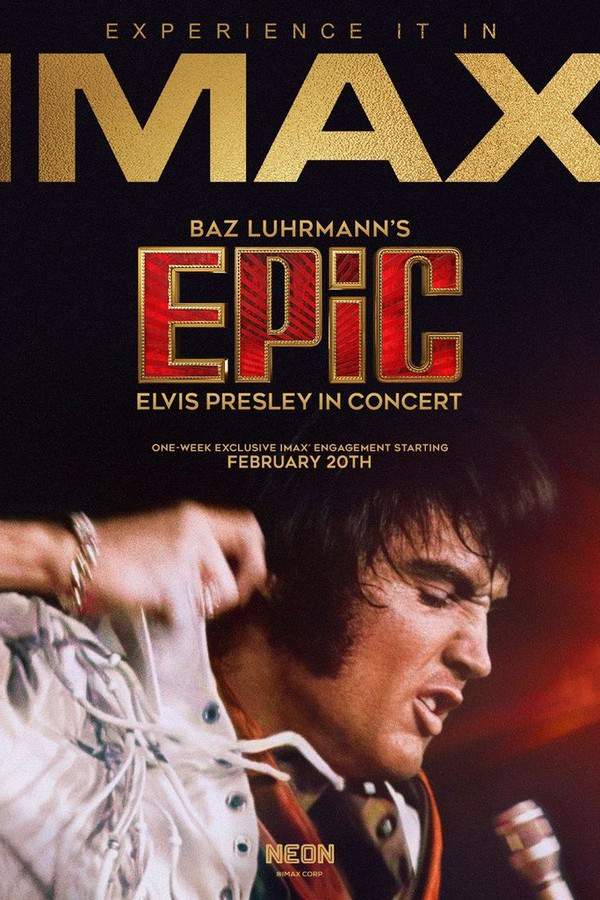
EPiC: Elvis Presley in Concert (2026) Reviews: Critic and Audience Reactions to the Ultimate Elvis Concert Experience
When Baz Luhrmann returned to the world of Elvis Presley with EPiC: Elvis Presley in Concert (2026), audiences and critics alike anticipated something far removed from traditional documentary fare. Released on February 20, 2026, this immersive cinematic experience promised not merely to revisit archival footage, but to resurrect the King of Rock ‘n’ Roll for contemporary audiences through a dazzling fusion of restored performances and Luhrmann’s signature maximalist aesthetic. For moviegoers searching for comprehensive EPiC: Elvis Presley in Concert reviews, determining whether this film serves as essential viewing for casual fans or merely a devotional artifact for the Elvis faithful has become a pressing question. The reception landscape reveals a fascinating dichotomy between critical analysis of cinematic craft versus the raw emotional testimony of viewers who witnessed what many are calling the definitive concert film experience. Whether you’re exploring EPiC: Elvis Presley in Concert critic reviews to gauge its artistic merit or seeking audience reactions to understand its emotional impact, the consensus suggests this is a theatrical event that transcends typical genre classifications. At What’s After the Movie, we’ve analyzed the full spectrum of critical consensus and viewer reactions to provide you with the definitive breakdown of this unique film’s reception.
Critical Consensus: How Film Critics Received EPiC: Elvis Presley in Concert (2026)
The critical reception for EPiC: Elvis Presley in Concert (2026) reveals a fascinating spectrum of admiration, with review scores ranging from solid appreciation to absolute perfection. While the film has garnered an impressive critical consensus, the variance in scores—from NME’s more measured 60/100 to the perfect 100/100 scores awarded by The Hollywood Reporter and The Globe and Mail—indicates that Luhrmann’s approach resonates differently depending on one’s tolerance for sensory bombardment and stylistic excess.
The Hollywood Reporter delivered perhaps the most effusive praise, arguing that labeling the film merely as an “archival doc or concert film” feels “almost reductive.” Their review emphasizes that EPiC constitutes “a transcendent theatrical experience, an exhilarating party, a giddying visual and sonic blitz that will be an elixir to the Elvis faithful and an unparalleled primer for those who have never quite grasped what all the hysteria was about.” This perspective positions the film not as a dusty historical document but as a vibrant, living celebration that converts skeptics through sheer cinematic force.
Conversely, NME offered a more tempered assessment, describing the film as “a kaleidoscopic mix of documentary and concert movie” while noting Luhrmann’s characterization of the work as a “tone poem.” Their critique suggests that while visually arresting, the film’s rejection of traditional documentary conventions—specifically its abandonment of talking heads in favor of Elvis’s own narration—might alienate viewers seeking conventional biographical context. This tension between celebration and analysis defines much of the critical discourse surrounding the film.
The Daily Beast positioned EPiC as “a superb companion piece to the director’s 2022 biopic Elvis,” praising it as “a feat of showmanship both by Presley on stage and Luhrmann behind the camera.” This comparative framing proves essential for understanding the film’s place within Luhrmann’s larger Elvis project. While the 2022 biopic explored the tragedy and complexity of Presley’s life behind the scenes, EPiC focuses purely on the performative magic, creating what critics recognize as a different but complementary artistic statement.
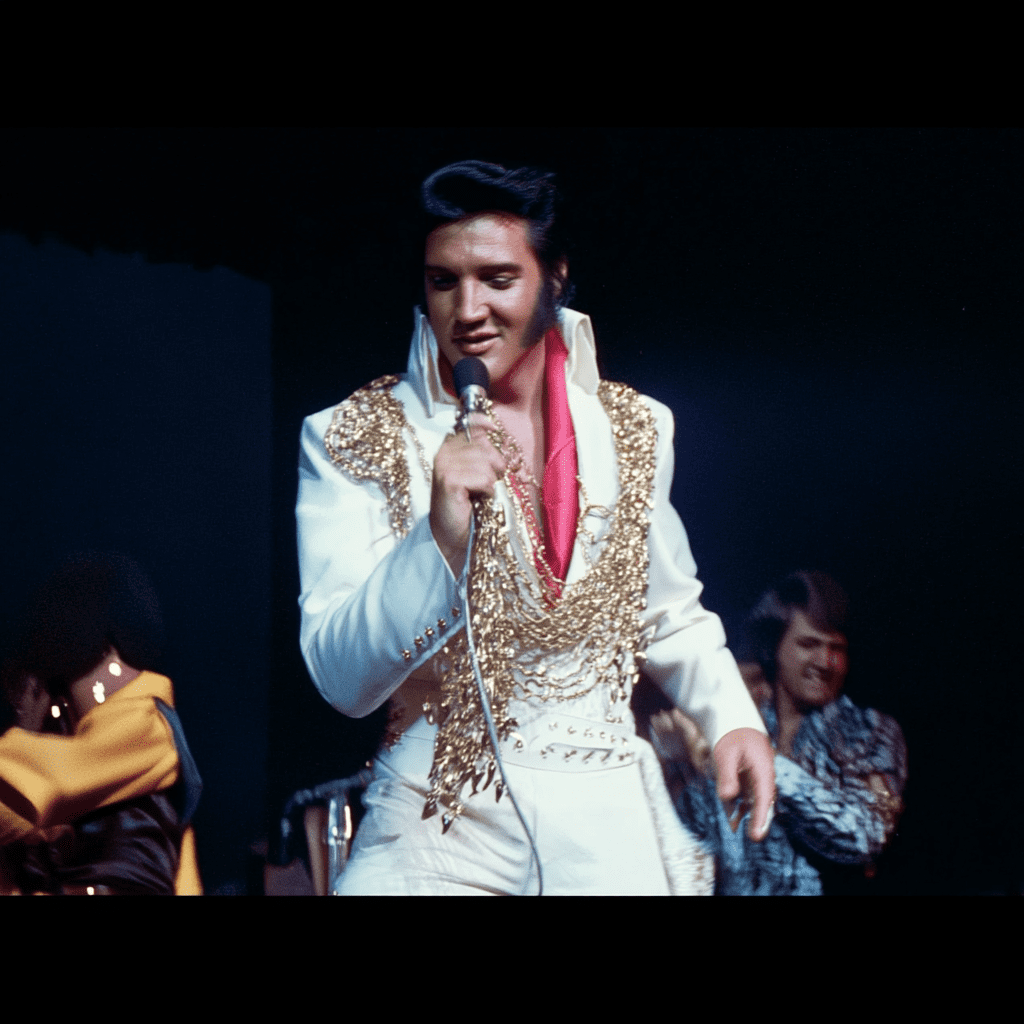
The Independent highlighted the aesthetic synergy between director and subject, noting that Luhrmann “trades in razzle-dazzle” that capitalizes on Presley’s “fondness for garish sunglasses, giant sideburns, and an arsenal of jumpsuits filigreed with gems.” Their analysis of the “kinship of strutting peacocks” suggests that EPiC represents perhaps the most authentic meeting of artistic sensibilities possible—two showmen separated by decades but united through Luhrmann’s camera in a shared “appetite for gilded excess and perpetual motion.”
For viewers researching EPiC: Elvis Presley in Concert film reception and wondering about its critical standing, the verdict suggests overwhelming approval tempered by acknowledgment that Luhrmann’s style—love it or hate it—dominates the experience. The Chicago Tribune perhaps summarized this best, calling it “an exhilarating cinematic experience, whether you’re an Elvis fan or not—but Luhrmann makes sure you are by the end.”
Audience Reactions and Fan Testimonials: Is EPiC: Elvis Presley in Concert Worth Watching for Casual Viewers?
While critics debate the film’s artistic merits, audience reactions to EPiC: Elvis Presley in Concert have been remarkably unanimous, with user reviews consistently awarding perfect or near-perfect scores. This groundswell of viewer enthusiasm provides compelling evidence for those asking whether the film warrants a trip to the theater, particularly in premium formats like IMAX.
User reviewer Habibiehakim provided one of the most detailed analyses, awarding the film a 9/10 and articulating a perspective that addresses the concerns of potential newcomers: “Elvis in his own words, framed through Baz Luhrmann’s signature luxurious style, feels almost like perfection.” Their observation that the film serves as “the perfect introduction for anyone new to Elvis Presley” rather than focusing on “the darker, more depressing chapters of his life” offers crucial insight into the film’s accessibility. By highlighting Presley’s “charm, charisma, creative spark, and that larger-than-life aura,” EPiC apparently succeeds in converting the curious into converts, validating The Hollywood Reporter’s assertion about its effectiveness as a “primer” for non-fans.
The emotional resonance for longtime fans proves equally powerful, as evidenced by Neena’s poignant testimony: “An up close and personal experience showing what Elvis was really like in concert… mostly Las Vegas. I saw him perform live 50 times in all. Fabulous to experience it all again just as I remember.” This validation from someone with direct experiential memory of Presley’s live performances suggests that Luhrmann’s restoration and presentation achieves remarkable authenticity—no small feat given the ocean of nostalgia surrounding the King.
Multiple viewers emphasized the technical presentation as essential to the experience. Ana L specifically recommended the IMAX viewing: “Seeing his performance at IMAX but felt more like if I was there in that moment.” Similarly, John K noted, “Definitely worth seeing in IMAX. 10 out of 10!” These consistent recommendations regarding format suggest that for those debating is EPiC: Elvis Presley in Concert worth watching, the answer depends significantly on theatrical commitment—this is not a film designed for small screens or distracted viewing.
Par H offered a nuanced 9/10 review that acknowledged the film’s structural limitations while praising its execution: “This film is not a biopic nor an end-to-end concert. We get a summary of Elvis’ musical life up to his military service, Hollywood movies era then onto Vegas. Vegas is where we mostly stay and we end before the tragedy becomes apparent.” This observation about the film’s selective timeline—it consciously avoids Presley’s decline—helps manage expectations for viewers seeking comprehensive biography versus pure entertainment.
For those exploring what to watch after the movie or looking to test their knowledge, our movie quizzes and games offer interactive ways to engage with Elvis’s filmography and musical legacy. The overwhelming audience sentiment suggests that EPiC succeeds as both a celebration for the devoted and an entry point for the curious, with Fabio L summing up the experience: “As a fan of Elvis, I sang, was mesmerized and sang and danced in my seat. 5/5 !!!”
Visual Spectacle and Cinematic Craft: Analyzing Baz Luhrmann’s Direction in EPiC: Elvis Presley in Concert
The technical and aesthetic achievements of EPiC: Elvis Presley in Concert (2026) have generated significant discussion among critics analyzing the film’s visual language and editing rhythms. Luhrmann’s distinctive approach—what reviewer Habibiehakim describes as “unmistakable, stylish, energetic, and consistently entertaining”—transforms archival restoration into high art, creating a sensory experience that divides critics precisely because of its aggressive stylistic confidence.
IGN awarded the film 90/100, describing it as “a riveting, immersive experience that brings the King back to life for one last show.” This notion of resurrection through cinematic technique underscores the film’s primary achievement: using modern technology and editorial bravado to collapse the temporal distance between Presley’s 1970s performances and contemporary audiences. The “beautifully restored, high-resolution footage” noted by multiple viewers represents not mere preservation but enhancement—Luhrmann amplifies the existing charisma rather than simply presenting it.
The editing style received particular praise from user Par H, who called it “sublime.” This technical assessment aligns with The Independent’s observation about Luhrmann’s capitalizing on visual excess—garish sunglasses, gem-encrusted jumpsuits, outlandish collars—creating what they term a “kinship of strutting peacocks.” The film’s visual vocabulary refuses documentary restraint, instead embracing the baroque aesthetic that defined both Presley’s stage presence and Luhrmann’s directorial career.
The Wall Street Journal’s observation that “Mr. Luhrmann successfully makes Presley’s concerts fresh again” addresses a crucial challenge facing any archival project: avoiding the dusty, museum-piece quality that often renders concert films inert. By treating the footage with the same kinetic energy that defined his Moulin Rouge! or The Great Gatsby, Luhrmann bridges decades, making the performances feel immediate rather than historical.
For film enthusiasts interested in the intersection of concert films and auteur cinema, EPiC represents a fascinating case study in directorial intervention. Unlike traditional documentaries that privilege objectivity, Luhrmann’s “tone poem” approach—eschewing talking heads for Presley’s own narration—creates a subjective immersion that prioritizes emotional truth over historical documentation. This methodology has led The Globe and Mail to declare it “the greatest concert documentary ever made,” a bold claim that rests on the film’s ability to transcend its genre limitations.
The Los Angeles Times captured this transcendence perfectly: “The first hour of EPiC: Elvis Presley in Concert convinces you that the King is the greatest entertainer who ever lived. By the end of it, he’s a god.” This progression from appreciation to deification suggests that Luhrmann’s visual strategy builds cumulative power, transforming the theatrical space into something approaching religious experience. For those tracking box office performance of music documentaries or exploring director filmographies, EPiC stands as a significant achievement in experiential cinema.
The King on Stage: Performance Authenticity and Emotional Resonance in EPiC: Elvis Presley in Concert (2026)
Beyond the technical spectacle, EPiC: Elvis Presley in Concert derives its power from the raw authenticity of Presley’s performances and the editorial decision to let the artist speak for himself. The film’s narrative strategy—eliminating contemporary commentary in favor of Elvis’s own words—creates an intimate connection that reviewers consistently cite as the project’s emotional anchor.
Original-Cin’s perfect 100/100 review captures this intimacy: “EPiC: Elvis Presley in Concert doesn’t ask you to worship Elvis so much as to remember what it felt like when the man took control of a room and decided—joyfully, deliberately—to make it move with him.” This distinction between idolatry and empathy defines the film’s approach to its subject. Rather than constructing a hagiography, Luhrmann reconstructs the phenomenological experience of witnessing Presley’s command, allowing viewers to understand the “hysteria” through direct exposure rather than historical explanation.
User Anthony L emphasized this work ethic and artistry: “Great movie, really shows Elvis the artist and how hard he worked, highly recommend.” This focus on professional dedication rather than personal tragedy distinguishes EPiC from the typical Elvis narrative, which often fixates on the singer’s final years and premature death. By concluding “before the tragedy becomes apparent” (as Par H noted), the film preserves the image of Presley at his creative and physical peak, focusing exclusively on his capabilities rather than his limitations.
The film’s structure—moving from early career through military service and Hollywood to the Vegas residency—provides context without wallowing in biography. Par H observed that “The camera spends 99% of the time with Elvis on the screen,” creating an unmediated relationship between viewer and performer. This concentration proves crucial for the film’s emotional impact, as Wanda testified: “Totally narrated by Elvis, this show was so well put together. Everyone should experience Elvis on the big screen! He really brought so much joy to so many during his short lifetime!”
The “joyful” quality mentioned by multiple reviewers contrasts sharply with the melancholy that often pervades Elvis documentaries. Diana M’s sentiment that “It could have gone on forever” suggests that rather than exhausting viewers, the film’s 97-minute runtime leaves audiences craving more—a rare achievement in documentary filmmaking. Johnny reinforced this, noting, “Loved the pace and sound, Elvis was truly a once in a lifetime talent.”
For those building movie collections or exploring film lists of essential music documentaries, EPiC offers a unique proposition: it captures the essence of an artist without the burden of his ending. Our movie wiki provides additional context on how this film compares to other Elvis-related cinema, while the full movie page offers comprehensive details on cast, crew, and production background.
Comparative Analysis and Genre Context: Where EPiC Stands Among Music Documentaries and Concert Films
Understanding EPiC: Elvis Presley in Concert (2026) requires situating it within the broader landscape of music documentaries and concert films, a genre often characterized by static filming and reverential but distant observation. Luhrmann’s film deliberately breaks from these conventions, prompting critics to reconsider what constitutes a “concert documentary” and whether EPiC represents evolutionary advancement or genre subversion.
The Globe and Mail’s declaration that this is “the greatest concert documentary ever made” invites comparison with canonical works like Woodstock, Stop Making Sense, or Amazing Grace. Where those films often adopted a fly-on-the-wall observational style, EPiC actively manipulates time, space, and sensory input to create what The Hollywood Reporter calls “an unparalleled primer for those who have never quite grasped what all the hysteria was about.” This educational aspect—converting the uninitiated—distinguishes it from fan-service projects that presuppose audience devotion.
The Chicago Tribune’s assertion that the film works “whether you’re an Elvis fan or not” challenges the insular nature of many music documentaries, which often function as closed loops of existing fandom. By contrast, EPiC apparently succeeds as standalone cinema, requiring no prior investment in Presley’s discography or biography to appreciate the performative genius on display. This accessibility has implications for how we evaluate film reception across different demographic groups, from nostalgic boomers to curious Gen Z viewers discovering Elvis through TikTok snippets.
Luhrmann’s decision to describe the film as a “tone poem” (noted by NME) rather than a documentary positions EPiC closer to experimental cinema than to the traditional concert film. This classification helps explain the divided critical reactions—viewers expecting linear biography or comprehensive concert coverage found the film’s impressionistic structure challenging, while those embracing its sensory approach discovered a new standard for the genre.
The comparison to Luhrmann’s own Elvis (2022) proves unavoidable. Where the biopic utilized Austin Butler’s interpretation to explore the tragedy of management exploitation and personal decline, EPiC removes the middleman, presenting Presley unfiltered. This shift from dramatic recreation to archival resurrection represents a maturation of Luhrmann’s engagement with the subject, moving from interpretation to presentation while maintaining his distinctive authorial voice.
For awards consideration and long-term canonical status, EPiC occupies a curious position. Its refusal to adopt traditional documentary conventions might limit its recognition within certain critical circles, yet its technical achievements in restoration and presentation set new benchmarks for the preservation and presentation of historical performance footage. As the lines between concert film, documentary, and immersive art installation continue to blur, EPiC stands as a significant marker of where the genre might evolve—prioritizing experience over information, emotion over exposition.
Final Thoughts: The Lasting Impact and Viewer Takeaways from EPiC: Elvis Presley in Concert
The reception landscape for EPiC: Elvis Presley in Concert (2026) reveals a rare alignment between critical admiration and audience euphoria, suggesting that Baz Luhrmann has achieved something genuinely special: a film that satisfies the intensely protective Elvis faithful while converting the skeptical or uninitiated. The critical consensus, spanning scores from 60 to 100, indicates that while Luhrmann’s maximalist approach may not suit every taste, the film’s technical achievements and emotional authenticity garner nearly universal respect.
For viewers still asking “is EPiC: Elvis Presley in Concert worth watching,” the overwhelming evidence suggests affirmative, with the crucial caveat that theatrical presentation—particularly IMAX—appears essential to the intended experience. User reviews consistently emphasize that the film demands big-screen immersion, with John K insisting it “kept me glued to the screen the entire movie” and Ana L describing the IMAX presentation as feeling transportive to the actual historical moment.
The film’s decision to focus exclusively on Presley’s performative peak, avoiding the well-worn narrative of his tragic decline, proves refreshing for critics and audiences weary of the “behind the music” formula. By presenting Elvis as he wished to be remembered—a charismatic, hardworking entertainer at the height of his powers—EPiC offers a celebration rather than an elegy. This approach has resonated deeply with viewers like Fabio L, who found the film “the best Doc of Elvis ever made” for its balanced portrayal of “the talent, ability and charismatic character he was on stage and off while also being a father, husband, socialite and entertainer.”
Whether approached as a companion piece to Luhrmann’s 2022 biopic or as a standalone introduction to Elvis Presley’s artistry, EPiC succeeds in its ambitious goal of making a decades-deceased performer feel vibrantly present. The film’s reception suggests that in an era of content saturation and fragmented attention, there remains a profound hunger for collective theatrical experiences that celebrate excellence unironically. For your next movie night or when curating your personal movie collection, consider making EPiC a priority—preferably on the largest screen available, with the volume set to appropriately royal levels.
| Resource | Link |
|---|---|
| TMDB | EPiC: Elvis Presley in Concert on TMDB |
| Wikipedia | EPiC: Elvis Presley in Concert on Wikipedia |
| Rotten Tomatoes | EPiC: Elvis Presley in Concert on Rotten Tomatoes |
| Metacritic | EPiC: Elvis Presley in Concert on Metacritic |
| JustWatch | EPiC: Elvis Presley in Concert on JustWatch |
| Box Office Mojo | EPiC: Elvis Presley in Concert on Box Office Mojo |
| Letterboxd | EPiC: Elvis Presley in Concert on Letterboxd |