What's After the Blog?
Opinions • Reception
She Dances (2026) Review & Critics Opinions – Audience Reception, Performance & Storytelling Analysis
This post examines fan reactions and critic reviews of She Dances (2026), focusing on the film’s performance, storytelling, and emotional resonance. Discover how audiences and critics receive this poignant dance drama and what it means for the contemporary dance genre.
March 30, 2026

Movies mentioned in this article
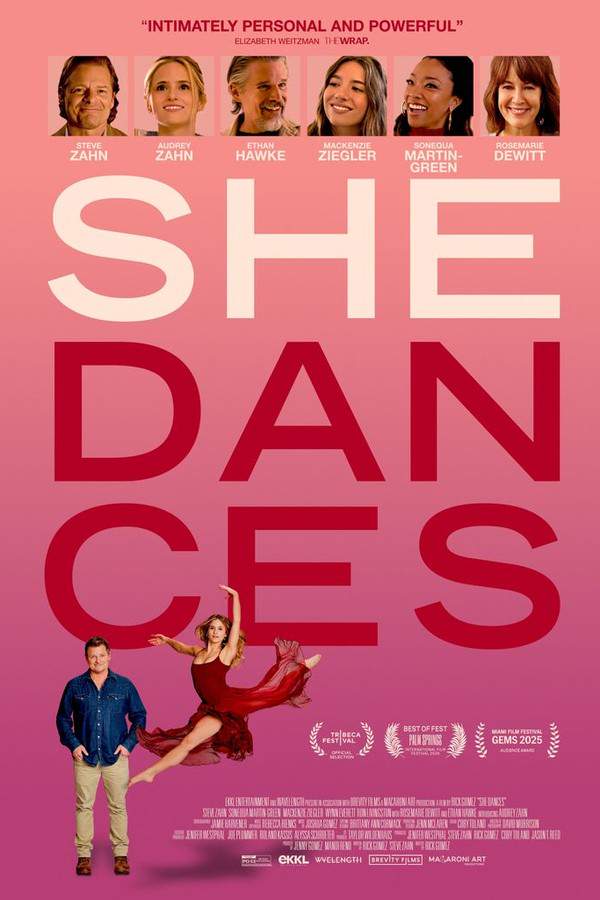
She Dances (2026) Reviews and Reception: Critical Consensus vs. Audience Reactions | What’s After the Movie
When She Dances premiered on March 27, 2026, it arrived not with the bombastic marketing of franchise blockbusters, but with the quiet intimacy that defines the best independent cinema. Directed by Rick Gomez in his feature filmmaking debut and co-written by veteran character actor Steve Zahn, this family affair—starring Zahn opposite his real-life daughter Audrey Zahn—immediately sparked curiosity among cinephiles searching for authentic emotional storytelling. As viewers increasingly turn away from spectacle-driven content toward character-driven narratives, the question dominating search trends became clear: Is She Dances worth watching, or does it succumb to the nepotism criticisms that often plague familial collaborations in Hollywood?
The reception landscape for She Dances reveals a fascinating dichotomy between critical reservation and audience adoration, making it essential viewing for those seeking unvarnished opinions about modern indie filmmaking. While some reviewers approached the film questioning whether the project could transcend its behind-the-scenes family dynamics, audiences have embraced the picture as a touching exploration of grief, parental love, and artistic expression. Whether you’re searching for spoiler-free reviews, in-depth film analysis, or simply wondering about the critical consensus surrounding this father-daughter drama, this comprehensive breakdown examines every facet of She Dances’ reception. For complete movie details, cast information, and streaming availability, visit the She Dances movie page on What’s After the Movie, your definitive destination for cinematic insights and movie summaries.
Critical Reception and Review Aggregation: How Critics Received She Dances (2026)
The critical landscape for She Dances presents a study in contrasts, with review scores spanning a remarkable 40-point range that signals genuine disagreement among film journalists rather than consensus. At the high end, She Dances Collider (90/100) delivered effusive praise, declaring that “Steve and Audrey Zahn pull it off in a beautiful film that will uplift your heart after breaking it.” This sentiment of emotional catharsis resonates through several major outlets, yet equally prestigious publications expressed marked reservations about the film’s execution and ambition.
RogerEbert.com (75/100) offered measured appreciation focused specifically on Steve Zahn’s performance, noting that “Zahn is excellent in these tender moments, demonstrating his acute ability to imbue such stories with a deep well of feeling without a false or exaggerated note.” The review particularly highlighted the meta-textual resonance of “a dad watching his daughter excel,” suggesting that the film’s greatest strength lies in capturing authentic parental pride. However, this warmth wasn’t universal. The New York Times (70/100) presented a more qualified endorsement, observing that while the picture “has an often jaunty tone, it’s really at its best when it leans into the sadness that shadows the father-daughter relationship.” This critique implies a tonal inconsistency that prevented the film from achieving its full emotional potential, suggesting that the screenplay’s lighter moments undercut its dramatic weight.
The harshest critical assessments focused on narrative execution rather than performance quality. Screen Rant (50/100) delivered the most cutting analysis, stating that “She Dances seems almost scared of its own premise,” a devastating observation that suggests the filmmakers retreated from the story’s most challenging emotional territories. Variety (60/100) echoed this unevenness, describing the film as a “sweet yet uneven dramedy” while acknowledging it as a “proud family affair both on screen and off.” Perhaps most tellingly, IndieWire (67/100) questioned the film’s lasting significance, suggesting that “it’s unlikely to be remembered as anything more than an excuse for Steve Zahn to make a movie with his daughter, which should end up being a strangely fitting legacy for a film about how precious and fleeting moments can be.”
This critical fragmentation reveals essential context for potential viewers searching for She Dances critic reviews. The film appears to demand specific expectations: those seeking tightly plotted narratives or groundbreaking cinematic innovation may find the IndieWire and Screen Rant assessments validating, while viewers prioritizing emotional authenticity and performance chemistry will likely align with Collider’s enthusiastic endorsement. For detailed box office performance data and how these reviews translated to commercial success, explore our comprehensive analytics on What’s After the Movie.
Audience Reactions and Viewer Sentiment: What Fans Are Saying About She Dances
While critics debated the film’s artistic merits, audience reception for She Dances has proven remarkably uniform in its enthusiasm, creating one of the more significant critic-viewer divergences in recent indie cinema. User reviews consistently emphasize emotional resonance over technical critique, with the majority of viewers awarding perfect scores and emphasizing the film’s lingering emotional impact. This disconnect between professional criticism and public opinion offers fascinating insights for those researching She Dances audience reactions and wondering whether the film delivers the cathartic experience promised by its marketing.
Megan D’s detailed user review captures the prevailing sentiment among general audiences, describing She Dances as “a deeply emotional film that lingers with you long after it ends.” The review emphasizes the picture’s exploration of “love, loss, and personal healing,” noting specifically that “the dance sequences aren’t just visually beautiful—they carry emotional weight, often expressing what words cannot.” This observation highlights a crucial element that some critics overlooked: the film’s use of movement and choreography as narrative language rather than mere spectacle. Similarly, Erick B praised the film as “a touching, funny movie about family and grief” with “excellent performances throughout,” specifically citing Steve Zahn as “always wonderful” while declaring Audrey Zahn’s work a “breakout debut.”
The accessibility and cross-generational appeal emerge as recurring themes in user-generated She Dances reviews. David succinctly labeled it the “Perfect Fathers Day movie,” while Scott described it as an “Amazing feel good movie that would be loved by all ages.” MovieFloozy expanded on this universality, stating that “This is a great movie for all ages and oozes heart and soul!” These reactions suggest that audiences approached the film seeking emotional connection rather than cinematic innovation, finding satisfaction in the genuine chemistry between the leads. Lee H’s review perhaps best synthesizes the audience consensus, calling it “a beautifully done little film about big relationships” that achieves “some of the best emotional and tone balance we’ve seen in a long while.”
However, the audience reception isn’t entirely monolithic. Joel G’s 2.5/5 review offers a dissenting perspective that validates some critical concerns, noting that “pretty slow plot” development meant “the only payoff is at the end on the daughter’s final dance where it was heartwarming..But it took soooo long to get there and there wasnt anything interesting along the way.” Even this criticism, however, acknowledges the effectiveness of the climactic sequence, suggesting that patient viewers receive emotional rewards that impatient spectators might miss. For viewers seeking to test their knowledge of the film after watching, What’s After the Movie offers engaging movie quizzes and games to deepen your engagement with She Dances and similar titles.
Performance Analysis: Steve Zahn and Audrey Zahn’s On-Screen Chemistry in She Dances (2026)
At the center of every She Dances review—whether laudatory or critical—lies the undeniable electricity between Steve Zahn and Audrey Zahn, a real-life father-daughter pairing that transforms the film from a standard indie drama into a meditation on familial bonds and artistic legacy. Critics and audiences alike have fixated on this dynamic, with many reviews devoting significant analysis to whether the Zahns’ authentic relationship enhances the narrative or merely serves as a behind-the-scenes curiosity that overshadows the film’s artistic intentions.
RogerEbert.com’s observation that Steve Zahn demonstrates “his acute ability to imbue such stories with a deep well of feeling without a false or exaggerated note” establishes the baseline for critical appreciation of the elder Zahn’s work. The review’s specific mention of “a dad watching his daughter excel” captures the meta-cinematic quality that permeates the film, creating layers of meaning that transcend the screenplay’s specific plot points. The New York Times reinforced this assessment, identifying the scenes where the film “leans into the sadness that shadows the father-daughter relationship” as the locations where “the two Zahns do their best, most affecting acting work.” This suggests that the film’s dramatic peaks derive not from scripted dialogue but from the unspoken history and genuine affection visible between the performers.
Audrey Zahn’s contribution has generated equally passionate responses, with multiple reviewers declaring her arrival as a significant new talent. MovieFloozy’s proclamation that “Audrey Zahn is incredible—a star is born!” finds echo in Erick B’s assessment of her “breakout debut,” while Collider’s collective praise for the Zahns “pulling it off” implies that the film’s success rests heavily on Audrey’s shoulders. This reception proves particularly noteworthy given the inherent skepticism often directed toward children of established actors, suggesting that Audrey Zahn’s performance contains sufficient technical skill and emotional authenticity to silence nepotism concerns.
Yet IndieWire’s contentious observation—that the film serves as “an excuse for Steve Zahn to make a movie with his daughter”—raises valid questions about whether the project’s emotional impact justifies its existence beyond this familial collaboration. The review’s conclusion that this limitation constitutes “a strangely fitting legacy” offers backhanded praise, suggesting that the film’s thematic concerns regarding “precious and fleeting moments” align perfectly with its production circumstances, even if the narrative itself lacks complexity. For comprehensive cast and crew profiles including filmographies and career highlights, visit the What’s After the Movie person database to explore the Zahns’ extensive body of work and upcoming projects.
Tone and Pacing: Navigating the Emotional Landscape of She Dances (2026)
The tonal architecture of She Dances has emerged as perhaps the most divisive element in the film’s reception, with reviewers engaging in vigorous debate regarding director Rick Gomez’s balancing of light and shadow, humor and grief, kinetic dance sequences and static dramatic moments. This conversation regarding the film’s emotional rhythm provides crucial context for potential viewers wondering about She Dances’ storytelling quality and whether its pacing supports its thematic ambitions.
The New York Times pinpointed the central tension in Gomez’s directorial approach, noting that “while the picture… has an often jaunty tone, it’s really at its best when it leans into the sadness that shadows the father-daughter relationship.” This assessment suggests that the film’s marketing as an accessible family drama may actually undermine its most powerful elements, with the “jaunty” moments serving as defense mechanisms against the profound grief lurking beneath the narrative surface. Variety’s classification of the film as an “uneven dramedy” reinforces this diagnosis, implying that Gomez struggled to reconcile the script’s competing impulses toward humor and heartbreak.
Audience reviewers, however, frequently praised this exact balance. Lee H specifically highlighted how the film hits “grief, discomfort, competition, humor, friendship, parenting, and love in all the right ways,” suggesting that general viewers experienced the tonal shifts as realistic rather than inconsistent. This divergence may reflect different expectations between professional critics—who often value tonal coherence—and everyday audiences, who recognize that real life rarely maintains consistent emotional registers. Davidhelmers1 T’s observation that the film proved “Smart, funny, heartbreaking, warm and thought provoking” after attending a packed theatre Q&A further supports the interpretation that She Dances succeeds as a holistic experience rather than a technically perfect specimen.
The pacing criticisms, however, carry more weight across both critical and popular reviews. Joel G’s complaint that the plot moves slowly, requiring viewers to wait through “soooo long” a runtime for the emotional payoff of the daughter’s final dance, suggests that Gomez’s debut feature may suffer from first-time director indulgence. Yet this criticism exists in tension with the praise from Megan D, who noted that the film captures “quiet moments: grief, hope, and the struggle to move forward,” implying that the deliberate pacing serves thematic purposes related to the protagonist’s emotional journey. For viewers interested in how She Dances compares to other intimate character studies and movie collections featuring similar emotional arcs, What’s After the Movie provides curated lists and comparative analyses.
She Dances Within the Modern Indie Cinema Landscape: Genre Expectations and Long-Term Reception
As the 2026 cinematic landscape continues to evolve, She Dances occupies a fascinating position within the ecosystem of independent filmmaking, representing both the possibilities and limitations of deeply personal, family-driven production. Understanding where this film sits within broader genre expectations helps contextualize the mixed critical reception while explaining the overwhelming positive audience reactions that have defined its theatrical run.
The film arrives at a moment when audiences increasingly crave what Erick B called “intimate, human films”—pictures that prioritize emotional truth over spectacle. In this context, Screen Rant’s criticism that the film seems “scared of its own premise” may reflect not cowardice but rather a deliberate choice to explore grief through restraint rather than melodrama. The indie film context allows for this subtlety, with lower stakes enabling filmmakers to prioritize character over plot mechanics. Vanessa K’s observation about “great friendships through thick, just thick” suggests that viewers found value in the film’s communal aspects—the dance moms, the support systems—rather than solely focusing on the central father-daughter dyad.
The question of long-term reception remains open. IndieWire’s prediction that the film will be remembered primarily as “an excuse for Steve Zahn to make a movie with his daughter” may prove accurate in terms of cinema history, yet this doesn’t necessarily diminish the work’s immediate impact on viewers. Lee H’s hope that the film receives “wider distribution and reach more people” speaks to a common anxiety within indie film culture: that quality work remains invisible due to limited marketing budgets and platform availability. For those tracking where to watch She Dances and how it performs commercially, our Box Office Mojo integration provides real-time data on the film’s financial journey.
Ultimately, She Dances serves as a reminder of why viewers seek out spoiler-free reviews and detailed film analysis before committing their time. The disparity between professional critics’ technical assessments and audiences’ emotional connections suggests that this film rewards specific viewing contexts: those seeking patient, character-driven storytelling will find a gem, while those prioritizing narrative propulsion may echo the frustration of the film’s detractors. To explore more films with similar themes or to create your own watchlists, visit the What’s After the Movie Wiki and Movie Lists sections for comprehensive recommendations.
Conclusion: The Final Verdict on She Dances (2026) Reviews and Whether It’s Worth Watching
The reception of She Dances ultimately reveals itself as a Rorschach test for what viewers value in contemporary cinema. For those searching for definitive answers regarding whether She Dances is worth watching in 2026, the evidence suggests a clear directive: approach the film with appropriate expectations. If you seek the kinetic pacing of franchise blockbusters or the polished perfection of prestige television, the criticisms regarding its “uneven” tone and slow plot development may prove accurate. However, if you crave the authentic emotional resonance that only comes from genuine human connection—specifically the rare alchemy of real familial chemistry captured on film—then the overwhelming audience consensus suggests She Dances delivers something precious and increasingly rare.
The film stands as a testament to the power of independent filmmaking to explore personal stories without studio interference, even when those stories occasionally struggle with pacing or tonal consistency. Whether you consult She Dances Rotten Tomatoes scores, analyze Metacritic aggregations, or simply trust the word-of-mouth enthusiasm from fellow moviegoers, the data points toward a film that succeeds on its own intimate terms. For your next cinematic discovery, continue exploring detailed reviews, cast information, and reception analysis at What’s After the Movie, where every film receives the comprehensive coverage it deserves.
| Platform | Link |
|---|---|
| She Dances IMDB | IMDB |
| She Dances TMDB | TMDB |
| She Dances Wikipedia | WIKIPEDIA |
| She Dances Rotten Tomatoes | ROTTEN_TOMATOES |
| She Dances Metacritic | METACRITIC |
| She Dances JustWatch | JUST_WATCH |
| She Dances Box Office Mojo | BOX_OFFICE_MOJO |
| She Dances Letterboxd | LETTERBOXD |
Continue reading




What's After the Movie?
Not sure whether to stay after the credits? Find out!
Check out our other apps:

SAT Sphere
Build confidence for the Digital SAT.

Mori Atlas
Discover wild places worth protecting.

Luntero
Search smarter for a home in Amsterdam.

Plot Explained
Unravel movie endings and hidden clues.

Pokechamp
Dive into Pokémon data and battle logic.

Driving Theory
Get ready for your European theory test.

Movie Dust
Plan your next cinema trip with ease.

Musemap
Find art and culture as you travel.

Selkobase
Compare credentials before committing.

Local Manual
Turn an unfamiliar country into practical next steps.

Lernavi
Compare school systems before your next move.

GymRoam
Find a workout stop wherever your plans take you.
Explore Our Movie Platform
New Movie Releases (2026)
Famous Movie Actors
Top Film Production Studios
Movie Plot Summaries & Endings
Major Movie Awards & Winners
Best Concert Films & Music Documentaries
Movie Collections and Curated Lists
© 2026 What's After the Movie. All rights reserved.
Privacy Policy