What's After the Blog?
Opinions • Reception
Midwinter Break (2026) Review & Opinions: Critics and Fans Analyze the Film’s Reception, Storytelling, and Performances
Explore fan reactions and critic reviews of Midwinter Break (2026), focusing on the couple’s emotional journey, storytelling depth, and its place in contemporary romance cinema. This post breaks down performance highlights, narrative twists, and the broader franchise context.
February 20, 2026
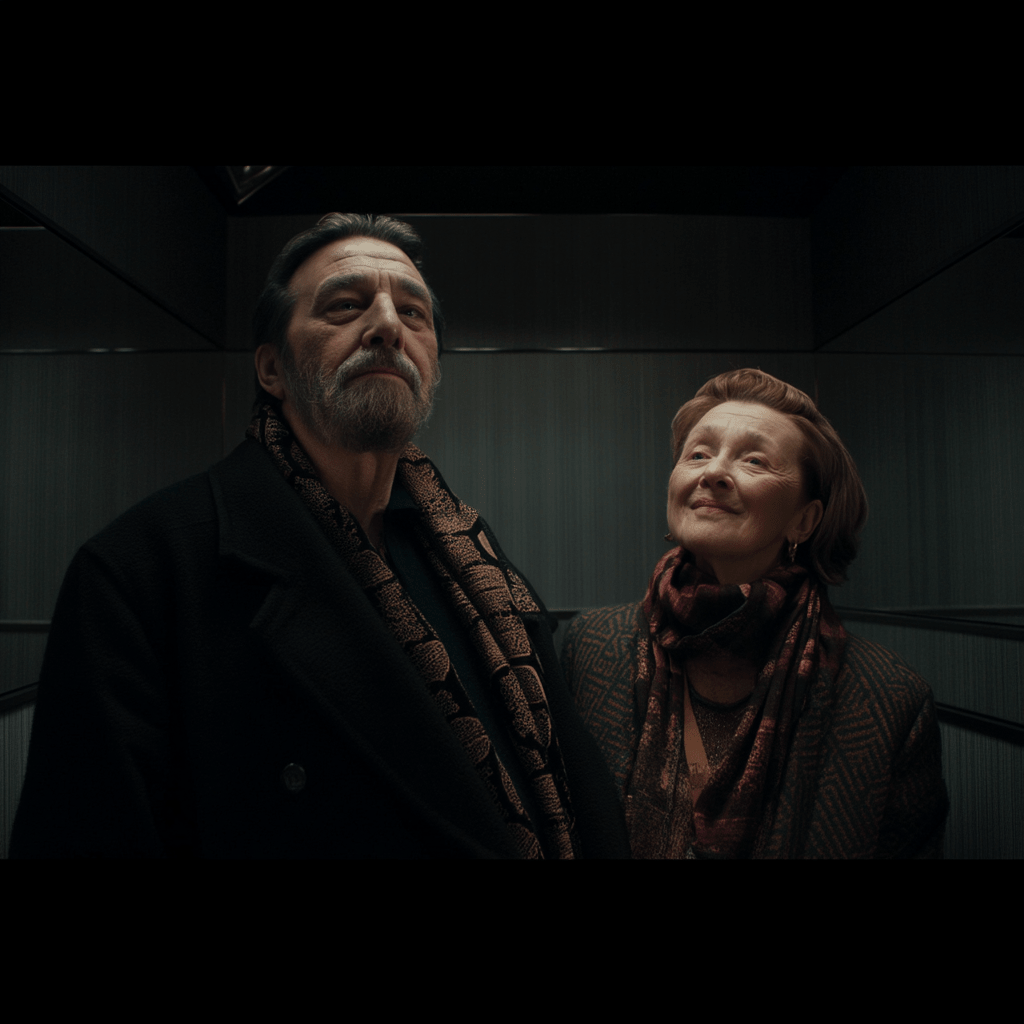
Movies mentioned in this article
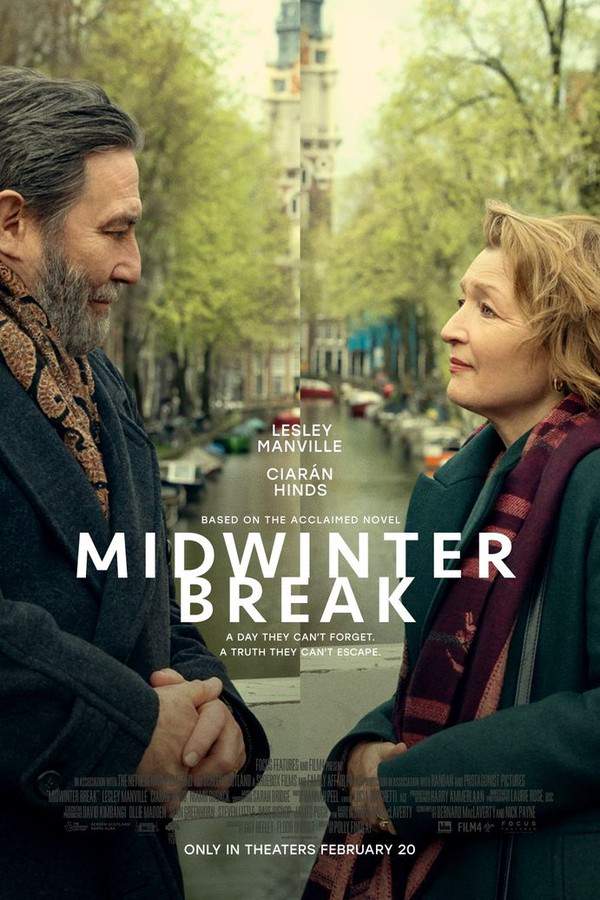
Midwinter Break (2026) Reviews and Reception: Critic & Audience Reactions Analysis
When Bernard MacLaverty’s acclaimed 2017 novel Midwinter Break was adapted for the screen with powerhouse performers Lesley Manville and Ciarán Hinds leading the cast, expectations ran high for a prestige drama that would capture the nuanced complexities of long-term marriage. Released on February 20, 2026, director Polly Findlay’s cinematic interpretation arrived in theaters carrying the weight of its literary source material and the pedigree of its veteran leads. Yet as viewers began flocking to What’s After the Movie searching for Midwinter Break reviews, spoiler-free reception analysis, and answers to the burning question “is Midwinter Break worth watching,” a fascinating divide emerged between critical consensus and audience sentiment. This is not a film that offers easy answers or cathartic resolutions; rather, it presents a quiet, often challenging meditation on marital stagnation that has left some viewers profoundly moved while others found themselves checking their watches. Whether you’re seeking movie summaries or exploring our comprehensive film database for similar character studies, understanding the polarized reception of Midwinter Break requires diving deep into the specific grievances and praises dominating film discourse. From complaints about its “ponderous” pacing to celebrations of its “profound” emotional intelligence, this analysis synthesizes genuine critic and user reactions to provide a complete picture of how this Amsterdam-set drama resonates with different viewing demographics.
Critical Consensus on Midwinter Break: Is It Worth Watching?
The critical reception of Midwinter Break presents a complex tapestry of mixed-to-negative assessments that rarely coalesce into a definitive verdict, creating confusion for potential viewers browsing Rotten Tomatoes or Metacritic for guidance. With scores clustering predominantly around the 50-point mark on major aggregators, the film has earned a reputation as a frustrating near-miss—a project blessed with extraordinary acting talent but cursed by what many reviewers perceive as narrative inertia. RogerEbert.com delivered perhaps the most scathing Midwinter Break film review, describing the movie as “such an overly ponderous exercise that, by the time it finally comes to an end, you may feel so sapped of energy that find yourself struggling to get up out of your seat.” This sentiment of exhaustion pervades much of the critical discourse, suggesting that the film’s deliberate pacing and lack of traditional dramatic tension alienated reviewers expecting more dynamic storytelling from such accomplished performers.
However, the critic reviews were not uniformly dismissive, creating a fascinating split that reveals more about varying critical appetites for quiet cinema than about the film’s objective quality. The A.V. Club offered a contrasting perspective with a 75/100 score, arguing that Midwinter Break “is most interested in the realities of long-term relationships—with unfaced trauma and graceful forgiveness alike—more than concrete absolutes, which is what makes it a valuable meditation on the imperfection of marriage.” This divergence between critics who found the work “unsatisfying” (The Wall Street Journal) versus those who deemed it “profound” (The Associated Press) creates a challenging landscape for audiences seeking a straightforward recommendation. The Associated Press specifically noted that the film “is a delicate film that stays in a minor key, but whose impact is profound if you can get on its level,” suggesting that Midwinter Break’s critical consensus depends heavily on viewer patience and alignment with its artistic intentions.
Original-Cin perhaps best summarized the adaptation struggle, noting that “not all great books make great movies,” a sentiment echoed across multiple reviews lamenting the translation from page to screen. The Hollywood Reporter pinpointed a specific structural issue: “Although Manville and Hinds are always worth watching, it’s obviously a problem when the actors and the scenery so thoroughly overshadow a film’s story.” This criticism—that the film functions better as a showcase for its leads and Amsterdam’s picturesque canals than as a compelling narrative—recurs throughout professional assessments. Yet even detractors acknowledged the technical craftsmanship involved. The Globe and Mail emphasized that “both bring grace and gravitas to their characters, conveying their personal crises with humanity,” while The New York Times suggested that the “stellar leads” constituted the “saving grace” of an otherwise “prosaic drama.” For those tracking film reception and box office performance data on What’s After the Movie, this critical ambivalence suggests a film that requires specific temperamental alignment—appealing primarily to viewers who prioritize performance over plot and emotional authenticity over entertainment value.
Lesley Manville and Ciarán Hinds: Performance Reception Analysis
If there exists any universal agreement within the Midwinter Break audience reactions and critical assessments, it centers unequivocally on the extraordinary caliber of its two leads, whose portrayals of Stella and Gerry have generated the most consistent praise across otherwise divided reviews. Both Lesley Manville and Ciarán Hinds, veterans of stage and screen with extensive filmographies that demonstrate their remarkable range, appear to have elevated material that several critics found lacking in dramatic propulsion. The Travers Take acknowledged this phenomenon directly, noting that “watching Lesley Manville and Ciarán Hinds is usually time well spent,” even while expressing disappointment with the “woebegone wintery love story” surrounding them. This tension—between acting excellence and narrative dissatisfaction—defines much of the conversation surrounding whether Midwinter Break is worth watching for casual filmgoers versus serious acting aficionados.
Manville’s portrayal of Stella specifically has garnered attention for its subtlety and emotional accessibility, with user reviewer Catherine D noting that she “found myself feeling the pain of the female lead” and questioning “how do you live up to the expectations you’ve imposed on yourself?” This emotional resonance speaks to Manville’s ability to communicate complex interiority through minimal dialogue—a crucial skill given the film’s reliance on silence and unspoken tension. Ana W similarly praised that “Leslie Manville delivers an amazingly performance disregarding the weaknesses of the plot,” while Brent_Marchant highlighted both leads as being “clearly at the top of their game here.” The Boston Globe identified the core strength of their collaboration, stating that their “best work occurs in the silences that pass between their characters,” suggesting that Midwinter Break’s film analysis must account for the non-verbal storytelling that traditional plot-focused criticism might overlook.
Hinds, meanwhile, brings a complementary gravitas to Gerry that balances Manville’s more spiritually searching Stella. The pairing represents a masterclass in screen chemistry built not on romance but on the comfortable, sometimes suffocating familiarity of decades-long partnership. Random M described the film as “a quiet deconstruction of a marriage that’s tender but devesting at the same time carried by a pair of stalwart performances,” emphasizing how the actors anchor the philosophical weight of MacLaverty’s source material. For viewers browsing our movie collections or exploring award-worthy performances, the consensus suggests that Manville and Hinds deliver the caliber of work typically associated with end-of-year recognition, even if the film itself may not appear on many top-ten lists. Their performances serve as the primary draw for viewers who might otherwise find the pacing too deliberate, creating a unique value proposition: see it for the acting, stay for the meditation on marriage’s complexities, or leave if you require more kinetic storytelling.
Audience Reactions: From “Boring” to “Profound” – Viewer Sentiment Breakdown
While critics maintained a generally lukewarm stance, the Midwinter Break user reviews reveal a fascinating bipolar distribution that speaks to the subjective nature of slow cinema and relationship dramas. User ratings span the entire spectrum from 1.5 stars (“boring and depressing” per Eric) to 7 stars (“profound food for thought” according to Brent_Marchant), creating a divisive audience reception profile that challenges simple categorization. This divergence suggests that viewer reactions to Midwinter Break depend significantly on pre-existing expectations and tolerance for ambiguity, making it essential for potential audiences to understand which camp they might fall into before purchasing tickets or streaming access through platforms listed on our JustWatch integration.
The negative faction, represented by users like Eric who found the film “boring and depressing” with an ending that “wasn’t worth the time spent watching,” and Marisa who described the experience as “sad, depressing, slow” while joking about “looking for the nearest bridge,” voice a common complaint about the film’s emotional weight and pacing. Marilyn concurred, stating that “the whole movie made me sad” and noting that “these are two people that just cannot connect with each other,” ultimately concluding she wouldn’t recommend it to friends. These audience reactions highlight a crucial marketing challenge: viewers expecting a redemptive holiday romance or even a bittersweet reconciliation story may find themselves alienated by the film’s steadfast refusal to provide cathartic resolution or clear narrative closure.
Conversely, the positive reception tends toward passionate defense of the film’s contemplative qualities. Brent_Marchant provided perhaps the most detailed Midwinter Break review from the user community, praising it as “the kind of picture that requires close, careful, engaged viewing” and arguing that those “looking to be fed by this release’s ample, meaningful subject matter will likely find themselves nicely satisfied by film’s end.” This emphasis on active engagement versus passive consumption distinguishes satisfied viewers from disappointed ones. Jadelynn G articulated this divide beautifully, admitting she initially feared boredom but found herself “immediately attached as the actress drew me in with her solemn glances toward her husband filled with wishes and hopes she kept secret.” Crucially, she noted that “if you’re looking for a chaotic drama filled movie, this isn’t it. There really isn’t a buildup and no catharsis. It just is.”
This sentiment—that Midwinter Break functions as observational realism rather than structured drama—recurs across positive user reviews. Steven H appreciated the “complex lives of couples each with unique perspectives on shared lives,” while Random M valued the “quiet deconstruction” of marriage. For film enthusiasts who enjoy movie quizzes and games testing their knowledge of relationship dramas, understanding these tonal expectations becomes crucial for recommendation algorithms. The film appears to satisfy viewers seeking “insightful, contemplative narratives” (as Brent_Marchant put it) while disappointing those seeking entertainment or clear emotional arcs, creating a reception landscape where “your mileage may vary” serves as the only honest critical consensus.
Pacing, Tone, and Storytelling: Why Midwinter Break Divides Viewers
The technical and aesthetic choices driving Midwinter Break’s film reception illuminate why this adaptation has generated such disparate responses across different viewing demographics. Multiple reviews cite the film’s “delicate” quality, with The Wall Street Journal criticizing it as “so delicate as to be slight, so unassuming as to be unsatisfying,” while The Associated Press praised this same quality as creating a film that “stays in a minor key.” This contradiction—delicacy as virtue versus delicacy as flaw—lies at the heart of the movie’s divisive nature. When searching for Midwinter Break spoiler-free reviews, potential viewers must understand that the film prioritizes emotional texture over narrative momentum, a choice that alienates audiences accustomed to three-act structures and clear dramatic escalation.
The pacing complaints dominate negative feedback, with RogerEbert.com’s description of the film as “overly ponderous” setting the tone for critical discourse. User Laura similarly noted that “it really didnt have a true ending, plus story was kind of vague or not clear,” while Eric’s one-word dismissal of “boring” encapsulates the frustration of viewers seeking kinetic energy. Yet this slowness appears intentional rather than accidental, designed to mirror the stagnation experienced by the protagonists in their marriage. Brent_Marchant offered a compelling defense of this structural choice, suggesting that early “pacing issues” and “occasionally awkward, overly ‘mechanical’ sequences” might actually be “reflective of the puzzling and unanticipated introspective process in which the principals are about to enter.” This meta-textual reading—where formal awkwardness mirrors psychological awkwardness—requires interpretive generosity that not all viewers bring to their Midwinter Break viewing experience.
The storytelling’s reliance on implication rather than exposition also creates a barrier for some while attracting others. Jadelynn G described the experience as “like prying too deeply into someone else’s life,” capturing the film’s vérité approach to marital observation. The Boston Globe noted that the couple’s “best work occurs in the silences,” suggesting that the narrative operates in negative space, requiring viewers to read between lines and interpret glances rather than dialogue. This demands a level of cinematic literacy and patience that casual moviegoers might not possess or desire, explaining the divergence between critic reviews that appreciate artistic risk and general audience reactions seeking clearer entertainment value.
The Amsterdam setting itself becomes a character in this storytelling approach, with Brent_Marchant noting it serves as “a gorgeous cinematic showcase for the picturesque city that serves as the story’s backdrop but without turning into a veiled travelogue.” However, The Hollywood Reporter’s criticism that “the actors and the scenery so thoroughly overshadow a film’s story” suggests that the location photography, while beautiful, cannot compensate for narrative thinness when viewers crave plot development. For those exploring movie lists of similar European-set relationship dramas or consulting our film wiki for comparable Bernard MacLaverty adaptations, understanding this balance—or imbalance—between setting, performance, and story becomes essential for managing expectations about what Midwinter Break actually delivers versus what marketing materials might suggest.
The Ending Controversy and Emotional Resonance: What Fans Are Saying
No discussion of Midwinter Break’s reception would be complete without addressing the contentious finale that has generated some of the most passionate—and divergent—responses from viewers seeking closure or resolution. The ending’s ambiguity serves as a Rorschach test for audience engagement, with reactions ranging from frustration at perceived pointlessness to appreciation for tonal consistency. User Eric’s complaint that “the ending wasn’t worth the time spent watching” and Laura’s observation that “it really didnt have a true ending” represent the dissatisfaction of viewers who expected definitive narrative resolution regarding whether Stella and Gerry’s marriage survives their Amsterdam “adventure” or implodes under the weight of unspoken grievances.
However, defenders of the film argue that this ambiguity serves the story’s thematic concerns rather than betraying audience trust. Jadelynn G initially admitted dissatisfaction with the ending but revised her opinion upon reflection, concluding that “after thinking about it, it fit the tone of the movie. There was a hopefulness of connection.” This suggests that Midwinter Break’s ending analysis requires interpretive work from viewers willing to engage with uncertainty as an artistic statement rather than a failure of screenwriting. The film refuses to provide the easy comfort of either reconciliation or separation, instead landing in the messier reality of ongoing negotiation that defines most real marriages facing crisis.
The emotional resonance—or “depressing” quality, depending on perspective—of this conclusion ties directly to the film’s exploration of spiritual seeking within mundane partnership. Catherine D’s reflection on the female lead’s struggle with “expectations you’ve imposed on yourself” highlights how the ending functions as a culmination of Stella’s internal journey regarding fulfillment and personal agency. The “winter” of the title operates metaphorically here, suggesting not just the season but a season of life and relationship—potentially barren but capable of renewal, or perhaps entering permanent frost. Stephen C’s cryptic but positive assessment of “Success in 1.5 hours” suggests that for some viewers, the lack of catharsis constitutes the film’s success in avoiding Hollywood conventions.
For viewers comparing Midwinter Break to similar films about marital stagnation—such as 45 Years or Hope Gap—the ending controversy reflects broader questions about what audiences owe to “slow cinema” and what these films owe to audiences. Marilyn’s summary that “these are two people that just cannot connect with each other” and her decision not to recommend the film captures the risk inherent in this storytelling approach: when you deny viewers traditional emotional payoff, you risk alienating those who invested time and emotional energy expecting transformation or clarity. Yet Brent_Marchant’s counter-argument that the film provides “our own restorative midwinter breaks” suggests that the ending’s refusal to resolve might itself be restorative—a permission slip for viewers to sit with their own unresolved conflicts and relationship ambiguities. Whether this constitutes profound artistic courage or narrative cowardice remains the central debate in Midwinter Break film analysis, making it essential viewing for anyone interested in the current state of adult relationship dramas, even if it proves divisive in execution.
Conclusion: Navigating the Polarized Reception of Midwinter Break (2026)
As the dust settles on the theatrical release of Midwinter Break, the film stands as a testament to the gap between artistic intention and audience expectation, between critical appreciation of performance and frustration with pacing. The overwhelming consensus suggests that while Polly Findlay’s adaptation may not succeed universally as entertainment, it succeeds intermittently as a showcase for two of cinema’s finest performers working at the height of their powers. For viewers asking “is Midwinter Break worth watching,” the answer depends entirely on your tolerance for ambiguity, your appreciation for Lesley Manville and Ciarán Hinds, and your willingness to engage with a film that asks more questions than it answers. Those seeking concert films or high-energy entertainment should look elsewhere, while viewers craving “insightful, contemplative narratives” (as Brent_Marchant described) may find their new favorite film.
The Midwinter Break critical consensus ultimately settles around “mixed but respectful”—acknowledging the craft while questioning the commercial viability of such quiet storytelling. Yet the passionate defense from viewers who connected with its emotional wavelength suggests that cult status may await this film upon home release, where viewers can control their environment and expectations more carefully than in theaters. Whether you discover it through our comprehensive movie database or stumble upon it while browsing related collections, Midwinter Break offers a valuable, if divisive, addition to the canon of marriage-in-crisis cinema. It reminds us that sometimes the most profound cinematic experiences come not from spectacle or catharsis, but from the quiet courage of watching two people simply exist in a room together, trying to bridge the distance between them—successfully or not.
For continued updates on film reception, box office performance, and detailed summaries of the latest releases, continue exploring What’s After the Movie, your comprehensive destination for understanding what comes next in cinema.
| Site | Link |
|---|---|
| Midwinter Break TMDB | TMDB |
| Midwinter Break Wikipedia | Wikipedia |
| Midwinter Break Rotten Tomatoes | Rotten Tomatoes |
| Midwinter Break Metacritic | Metacritic |
| Midwinter Break JustWatch | JustWatch |
| Midwinter Break Box Office Mojo | Box Office Mojo |
| Midwinter Break Letterboxd | Letterboxd |
Continue reading




What's After the Movie?
Not sure whether to stay after the credits? Find out!
Check out our other apps:

SAT Sphere
Build confidence for the Digital SAT.

Mori Atlas
Discover wild places worth protecting.

Luntero
Search smarter for a home in Amsterdam.

Plot Explained
Unravel movie endings and hidden clues.

Pokechamp
Dive into Pokémon data and battle logic.

Driving Theory
Get ready for your European theory test.

Movie Dust
Plan your next cinema trip with ease.

Musemap
Find art and culture as you travel.

Selkobase
Compare credentials before committing.

Local Manual
Turn an unfamiliar country into practical next steps.

Lernavi
Compare school systems before your next move.

GymRoam
Find a workout stop wherever your plans take you.
Explore Our Movie Platform
New Movie Releases (2026)
Famous Movie Actors
Top Film Production Studios
Movie Plot Summaries & Endings
Major Movie Awards & Winners
Best Concert Films & Music Documentaries
Movie Collections and Curated Lists
© 2026 What's After the Movie. All rights reserved.
Privacy Policy