What's After the Blog?
Opinions • Reception
I'm Chevy Chase and You're Not (2026) – Critics Review, Audience Opinions, and Reception Analysis
Explore fan reactions and critic reviews of the 2026 comedy 'I'm Chevy Chase and You're Not', examining Chase's performance, storytelling style, and its place within his legacy and the broader comedy franchise. The post breaks down audience sentiment, critical consensus, and how the film's humor and deadpan delivery are received in a modern context.
January 27, 2026

Movies mentioned in this article
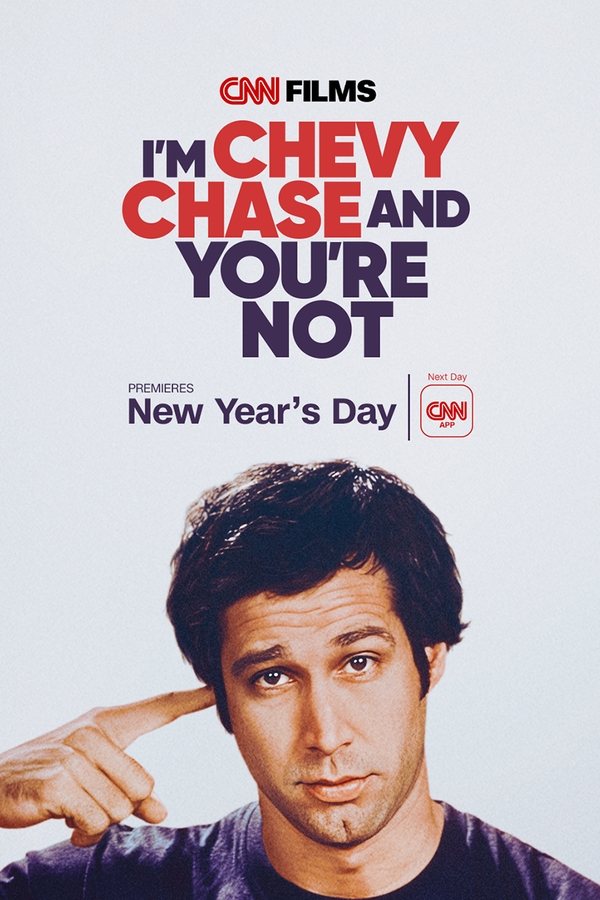
I’m Chevy Chase and You’re Not: A Deep Dive into the Reviews and Public Reception
The release of the documentary I’m Chevy Chase and You’re Not has sparked a complex and passionate conversation about the legacy of one of comedy’s most original and controversial figures. Directed by Marina Zenovich, the film promises an unflinching look at the man behind the iconic pratfalls and the infamous reputation. But what is the real verdict from critics and audiences? This analysis, brought to you by What’s After the Movie, delves deep into the reviews to uncover the overall sentiment, highlight the most compelling perspectives, and analyze what this reception tells us about Chevy Chase’s enduring, complicated place in popular culture. For those seeking more background, our complete I’m Chevy Chase and You’re Not movie page offers a wealth of information.
This blog post will dissect the critical and user reactions, comparing and contrasting the differing viewpoints to provide a holistic understanding of the film’s impact. We’ll explore the themes of genius versus difficulty, the role of personal trauma, and the documentary’s effectiveness in presenting a balanced portrait. Whether you’re a lifelong fan familiar with his work on What’s After the Movie’s movie lists or a newcomer curious about the man who defined an era of comedy, this review analysis will offer valuable insights.
Critical Consensus: A Flawed but Poignant Portrait of a Comedy Legend
The critical reception for I’m Chevy Chase and You’re Not is largely positive, though tempered with significant caveats about its depth and structure. On aggregate sites like Metacritic, the film garnered a mixed-to-positive score, reflecting a consensus that the documentary is a compelling, if sometimes superficial, look at a complicated subject. Critics largely agree that director Marina Zenovich successfully captures the essential duality of Chevy Chase: the groundbreaking comedic genius and the difficult, often insufferable personality.
A key strength repeatedly highlighted is the access to Chase himself. As the San Francisco Chronicle notes, the director “succeeds most at giving an inkling of the real Chase, now somewhat frail in his 80s.” This contemporary perspective is contrasted with a wealth of archival footage that, according to The Guardian, gets across “Chase’s abundant talent at its best, particularly his masterly command of the pratfall, and his immaculate comic timing.” This juxtaposition is central to the film’s power, creating a sense of poignancy that resonates with many reviewers. The sentiment from RogerEbert.com encapsulates this feeling: “One can’t help but feel sad, and yes, sometimes infuriated, that Chevy Chase never fully figured out a way to enjoy his great success without making so many others in his circle miserable.”
However, several critics point to a lack of deeper analysis. The Hollywood Reporter argues that Zenovich “does a better job of acknowledging contradictions in complicated human behavior than reckoning with what those contradictions mean,” suggesting the film is “particularly flimsy when it comes to linking difficult men with bigger institutional failures.” This indicates that while the documentary presents the “what” of Chase’s behavior effectively, it sometimes falls short on the “why,” leaving viewers to draw their own conclusions. The Wall Street Journal focuses on the present-day scenes, pointing out that “Mr. Chase still tries to be funny here, sometimes desperately, and isn’t,” which they see as adding a sting to the retrospective. For a broader look at how documentaries handle complex subjects, explore our collection of concert films and documentaries on What’s After the Movie.
Overall, the critical takeaway is that I’m Chevy Chase and You’re Not is a worthwhile watch for anyone interested in comedy history, but it may not provide the definitive, probing examination that some hoped for. It serves as an effective introduction to Chase’s legacy and his personal struggles, beautifully illustrated with clips from his peak years, but it might leave more dedicated fans wanting a deeper dive into the specific conflicts and their repercussions.
The Fan Perspective: A Divisive and Emotional Response from Audiences
If the critical response was mixed-to-positive, the audience reaction, as seen in user reviews on sites like Metacritic, is far more polarized and emotionally charged. The reviews from fans reveal a deep-seated connection to Chevy Chase’s work and a personal stake in how his story is told. The discourse reflects a battle between long-time admirers seeking vindication for their fandom and viewers confronted with a litany of negative behavior.
On one end of the spectrum, ardent fans like PontyMython232 (10/10) express relief that the documentary provides a more nuanced view. They acknowledge the difficulty of being a Chase fan in the modern era, stating, “Since 10+ years, what mostly happens with Chevy is any time he opens his mouth, good or bad, the internet will go off on him.” For this viewer, the documentary successfully contextualizes Chase’s behavior within his traumatic childhood, leading to a “deeper understanding of the man behind the mask.” Similarly, Paul-05237 (10/10) feels the film is essential for those “of a certain age” who remember Chase’s heyday, arguing that he “shouldn’t be judged by anyone solely because of things that have been written about him in tabloid newspapers.”
In the middle, many users express a balanced, albeit disappointed, perspective. roubos69 (7/10) captures this sentiment well, seeing the film as a “raw and honest portrait of a man who is often misunderstood.” They conclude that Chase is “a human being” with both flaws and virtues. pdxseayvr (7/10) found the documentary “interesting and well-done” but criticized specific production choices, such as the inclusion of Ryan Reynolds and the omission of any mention of the film Seems Like Old Times. Prismark10 (7/10) calls it a “fascinating warts and all look” but feels “it held its punches,” particularly regarding his career decline in the mid-80s.
On the negative side, some reviews are scathing. Drenton (3/10) launches a full-scale attack on the filmmaking itself, calling it “clearly the work of amateurs” and “this piece of junk,” citing issues with audio mixing and a lack of identifying titles for interviewees. This highlights how technical execution can severely impact the viewing experience for some. henry8-3 (6/10) offers a more measured critique, describing a “brutally honest and fascinating look” that ultimately presents Chase as “a figure of some considerable sadness.”
The user reviews collectively paint a picture of a documentary that forces viewers to reconcile their preconceived notions with the evidence presented. It’s a film that seems to resonate most strongly with those willing to engage with complexity, while alienating those seeking a simple narrative of heroism or villainy. For more deep dives into iconic figures, check out our extensive person profiles on What’s After the Movie.
Genius vs. Demons: Analyzing the Central Conflict in the Reviews
A central theme that emerges from nearly every review of I’m Chevy Chase and You’re Not is the fundamental tension between Chase’s undeniable comedic genius and the personal demons that plagued his career and relationships. This duality is the engine of the documentary and the focal point of most critical and audience analysis. The consensus is clear: Chase was a transformative talent, but his personal struggles often overshadowed his professional achievements.
The film expertly showcases the “genius” aspect through archival material. Critics and fans alike praise the selection of clips that highlight his physical brilliance on Saturday Night Live and in films like Caddyshack. This evidence supports the claim that Chase was a foundational figure in modern American comedy. As one user, Prismark10, notes, he was a “trailblazer in the early days of SNL,” an assessment with which few would disagree. This legacy is a key part of his movie collections on our site.
Conversely, the “demons” are explored through testimonies and Chase’s own reflections. The documentary delves into his well-documented reputation for being difficult on set, with contributors like director John Carpenter sharing negative experiences. Perhaps more importantly, it connects this behavior to deeper issues: a traumatic childhood involving abuse from his mother and stepfather, and later struggles with cocaine and alcoholism. User henry8-3 succinctly states that “because of his abusive childhood, he has no barriers to speak of,” and that substance abuse led him down a path where he was “incapable of taking good advice until it nearly killed him.”
The most insightful reviews analyze how the documentary handles this conflict. Does it excuse his behavior? Most conclude that it explains it without absolving it. RichardMcCarty (8/10) rejects a binary view, writing, “We love binary. Good or bad. Guilty or not… Chevy Chase is indeed both an ignorant a-hole and a misunderstood genius. And much more. Human, perfectly flawed, as are we all.” This perspective is echoed by roubos69, who observes that Chase “can be funny and sweet, but also blunt and unkind.”
The film’s success, according to many, lies in its ability to hold these two contradictory truths in balance. It allows viewers to marvel at the genius while simultaneously being saddened by the self-destructive behavior that limited his career and caused interpersonal strife. This complex analysis is what makes the documentary more than just a clip show or a hit piece; it’s a tragicomedy about the price of talent and the long shadow of childhood trauma.
The Documentary’s Approach: Strengths and Weaknesses in Telling Chase’s Story
Beyond the subject matter, the reviews for I’m Chevy Chase and You’re Not offer a robust critique of Marina Zenovich’s directorial choices, the film’s structure, and its overall effectiveness as a piece of documentary filmmaking. This analysis is crucial for understanding not just what the film says, but how well it says it.
A significant strength praised by multiple reviewers is the use of archival footage. The seamless integration of clips from SNL, talk shows, and film sets provides a powerful visual narrative of Chase’s meteoric rise and gradual decline. The Guardian specifically commended the editing for conveying his masterful comic timing. Furthermore, the access to Chase and his family is a major asset. Scenes with his wife, Jayni, and daughters provide a crucial counterpoint to his professional reputation, showcasing a loving family man, which user roubos69 found to be “the most beautiful part of the film.”
However, the documentary’s approach is not without its critics. A common complaint, from both professionals and audiences, is a lack of depth. The Hollywood Reporter felt the film was “flimsy” in connecting Chase’s personal failures to wider industry issues. User contactliron (8/10) expressed a similar sentiment, wishing it “could’ve been a little more deep.” This suggests that while the documentary covers the major beats of Chase’s life, it may avoid a more challenging, analytical stance.
Specific production choices also came under fire. User pdxseayvr questioned the inclusion of Ryan Reynolds, calling his presence “bizarre” and unsubstantial. The same user also criticized the interviewer’s (presumably Zenovich’s) occasional banter with Chase, which created an uncertain tone. The most scathing technical critique came from Drenton, who lambasted “amateur mistakes” like poor audio mixing and a failure to identify interviewees, significantly undermining their viewing experience.
Perhaps the most debated aspect is how the film handles Chase’s controversies. While many appreciate the “warts and all” approach, some, like Prismark10, felt it “held its punches.” User PontyMython232 pointed out that potentially mitigating information, such as Chase feeling “unprotected” on the set of Community, was “quickly glossed over.” This indicates a deliberate editorial choice to present facts without heavy-handed interpretation, leaving the audience to act as the final judge—a technique some find empowering and others find frustratingly incomplete. For viewers who enjoy forming their own opinions, our movie quizzes and games offer a fun, interactive way to engage with film knowledge.
The Human Behind the Persona: Childhood Trauma and its Lasting Impact
A recurring and powerful theme in the reviews of I’m Chevy Chase and You’re Not is the exploration of how childhood trauma shaped the man Chevy Chase became. This aspect of the documentary seems to have made a profound impact on viewers, providing a psychological framework for understanding his often-puzzling behavior and emotional fragility.
The film details a deeply abusive upbringing, with Chase recounting that his mother would wake him in the middle of the night simply to slap him. Reviews indicate that this revelation is a pivotal moment. For user PontyMython232, hearing this story in detail was “shockingly horrific,” and they interpret Chase’s entire persona as a defense mechanism: “what I see is basically a hurt kid, who still carries the pain around and has built a shield around him.” This perspective encourages empathy, suggesting that his infamous arrogance and sharp tongue were armor forged in childhood.
The documentary powerfully illustrates how this trauma manifested in adulthood. User PontyMython232 highlights a telling anecdote from Chase’s wife, Jayni, about the first time she woke him at night, prompting a fearful reaction—a direct echo of his childhood abuse. This moment is cited as “heartbreaking” and effectively connects past pain to present-day behavior. Even more symbolic, according to the same user, is a scene where director Zenovich asks if Chase ever cut ties with his abusive parents. Instead of answering directly, Chase deflects with a comedy bit, pretending to swat and eat an invisible fly. The reviewer interprets this as a profound moment that “says it all,” demonstrating his inability to confront the pain directly, instead masking it with humor.
This focus on trauma moves the discussion beyond mere gossip about on-set behavior. It frames Chase not just as a “difficult” man, but as a wounded one. henry8-3 concludes that Chase is “a figure of some considerable sadness,” a sentiment that stems directly from this exploration of his past. While, as some critics noted, the documentary could delve deeper into the institutional aspects of his career, its strength lies in this intimate, psychological portrait. It challenges viewers to see the complexity behind the public figure, making the film a compelling case study on the long-term effects of childhood adversity. For more analytical content, our movie wiki provides detailed backgrounds on countless films and artists.
Conclusion: The Enduring Complexity of Chevy Chase’s Legacy
The reception of I’m Chevy Chase and You’re Not ultimately confirms that Chevy Chase remains a fascinating and deeply polarizing figure. The documentary has not provided a neat, consolidated verdict on his life and career; instead, it has reignited the conversation, allowing for a more nuanced public discussion that moves beyond the simplistic headlines. The overall sentiment from both critics and audiences is that the film is a compelling, if imperfect, portrait that succeeds in highlighting the tragicomic nature of his story.
The key takeaway from the reviews is a widespread acknowledgment of Chase’s immense talent alongside a sober recognition of his profound flaws. The documentary makes it impossible to dismiss him as merely a “jerk” or to lionize him as an unblemished “genius.” As user RichardMcCarty wisely noted, “People are complicated,” and this film embraces that complexity. It allows viewers to feel both admiration for his groundbreaking work and sadness for the personal struggles that limited his trajectory and caused so much interpersonal friction.
For fans, the film offers a measure of vindication and a deeper understanding of their hero’s flaws. For critics, it serves as a valuable document of comedy history, albeit one that could have probed deeper into the systemic issues of the entertainment industry. For the casual viewer, it is an engaging human story about fame, trauma, and the difficulty of reconciling public perception with private reality.
In the end, I’m Chevy Chase and You’re Not emphasizes that a person’s legacy is rarely a single thing. It is a collection of brilliant moments, regrettable actions, personal pain, and enduring art. The film ensures that Chevy Chase will be remembered not just for his pratfalls and punchlines, but for the complicated, contradictory, and utterly human story behind them. To explore the stories behind other iconic films and personalities, visit the homepage of What’s After the Movie for endless discovery.
Where to Find More Information and Reviews
For further exploration of I’m Chevy Chase and You’re Not, check out these official pages and review aggregators:
| Source | Link |
|---|---|
| IMDB | I’m Chevy Chase and You’re Not on IMDB |
| The Movie Database (TMDB) | I’m Chevy Chase and You’re Not on TMDB |
| Wikipedia | I’m Chevy Chase and You’re Not on Wikipedia |
| Rotten Tomatoes | I’m Chevy Chase and You’re Not on Rotten Tomatoes |
| Metacritic | I’m Chevy Chase and You’re Not on Metacritic |
| JustWatch | I’m Chevy Chase and You’re Not on JustWatch |
| Letterboxd | I’m Chevy Chase and You’re Not on Letterboxd |
Continue reading




What's After the Movie?
Not sure whether to stay after the credits? Find out!
Check out our other apps:

SAT Sphere
Build confidence for the Digital SAT.

Mori Atlas
Discover wild places worth protecting.

Luntero
Search smarter for a home in Amsterdam.

Plot Explained
Unravel movie endings and hidden clues.

Pokechamp
Dive into Pokémon data and battle logic.

Driving Theory
Get ready for your European theory test.

Movie Dust
Plan your next cinema trip with ease.

Musemap
Find art and culture as you travel.

Selkobase
Compare credentials before committing.

Local Manual
Turn an unfamiliar country into practical next steps.

Lernavi
Compare school systems before your next move.

GymRoam
Find a workout stop wherever your plans take you.
Explore Our Movie Platform
New Movie Releases (2026)
Famous Movie Actors
Top Film Production Studios
Movie Plot Summaries & Endings
Major Movie Awards & Winners
Best Concert Films & Music Documentaries
Movie Collections and Curated Lists
© 2026 What's After the Movie. All rights reserved.
Privacy Policy