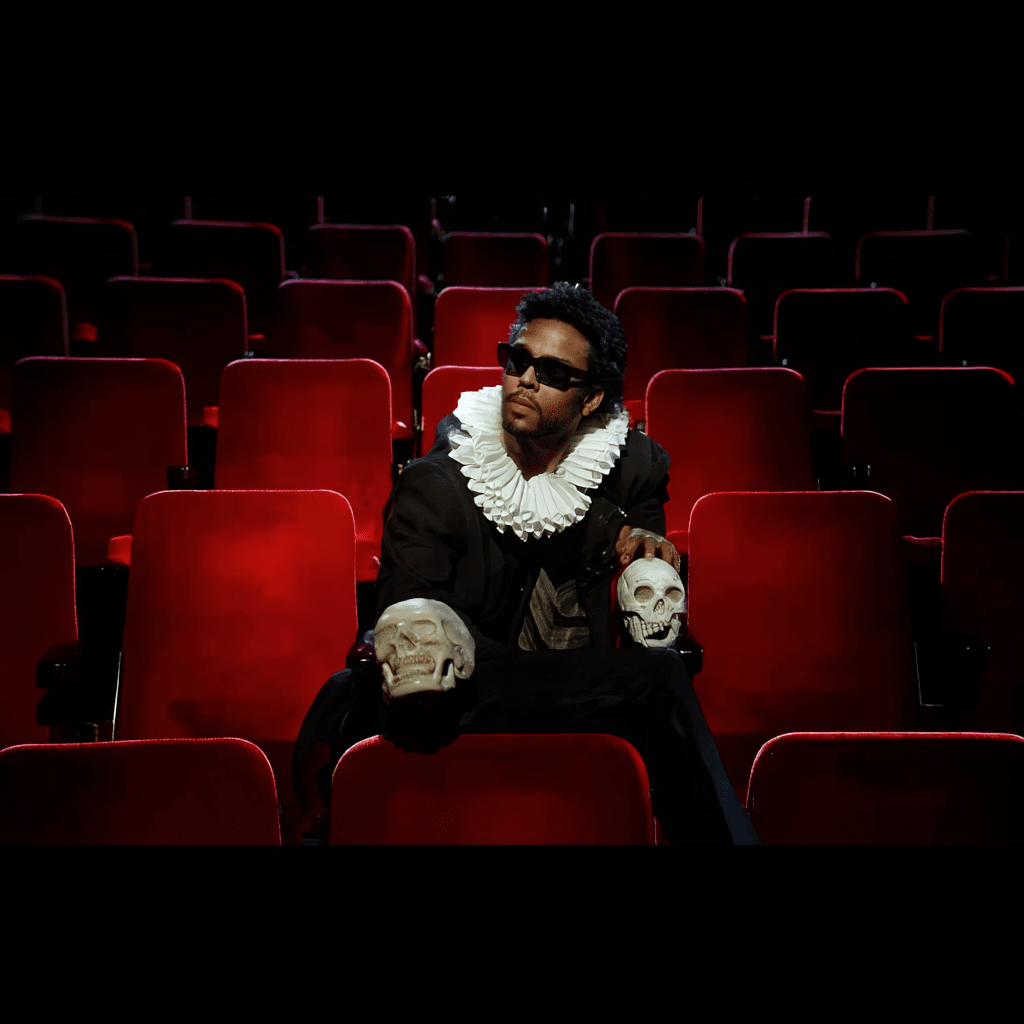

Hamlet 2025 Reviews: Riz Ahmed’s Modern Shakespeare Adaptation Reception and Critical Consensus Analysis
Shakespearean adaptations have always sparked fierce debate among cinephiles, theater purists, and casual moviegoers alike, but few contemporary retellings have generated quite as much polarized discourse as Aneil Karia’s Hamlet (2025). Starring Riz Ahmed in the titular role, this modern-dress reimagining transports the Prince of Denmark to present-day London’s South Asian community, stripping away the medieval grandeur of Elsinore in favor of corporate boardrooms, graffitied streets, and rain-soaked motorways. As audiences search for honest Hamlet 2025 reviews and spoiler-free takes on whether this bold interpretation succeeds, the film reception reveals a fascinating schism between those who embrace its raw intimacy and those who find its stylistic choices alienating.
For visitors exploring What’s After the Movie, where you can dive deeper into comprehensive movie summaries and explore detailed film profiles, this analysis serves as your definitive guide to the Hamlet 2025 critical consensus. Rather than simply cataloging ratings, we’re examining the substantive conversations surrounding Riz Ahmed’s visceral performance, the film’s controversial handheld cinematography, and its radical reimagining of Ophelia and Horatio. Whether you’re debating is Hamlet 2025 worth watching or seeking detailed film reception analysis before heading to theaters, this review compilation captures the multifaceted perspectives from both professional critics and everyday viewers who experienced this adaptation at festivals and general release.
Critical Consensus and Film Reception: How Reviewers Responded to Hamlet 2025’s Bold Vision
The Hamlet 2025 critic reviews paint a portrait of a film that refuses to play it safe, with scores ranging from a dismissive 50 to an enthusiastic 90 across major outlets. This wide critical spread immediately signals that Karia’s adaptation is anything but middle-of-the-road Shakespeare, instead offering a divisive cinematic experience that demands active engagement from its audience. For those tracking film reception trends on What’s After the Movie’s awards page, this particular adaptation joins a long lineage of controversial Bard interpretations that prioritize authorial vision over fidelity to traditional staging.
The Intimacy vs. Aimlessness Debate
Central to the critical discourse is whether Karia’s directorial approach—characterized by relentless handheld camerawork and suffocating medium close-ups—serves the text or obscures it. Slant Magazine notably praised this technique, observing that the film is “nearly defined by its handheld camerawork and the medium close-ups on Riz Ahmed’s face,” calling it “one of the more intimate adaptations of Shakespeare’s play to date.” This assessment finds support in The Associated Press’s characterization of the film as “jittery, tense, fast-talking and always on edge,” describing this particular Hamlet as “above all, in a rush.”
However, intimacy does not guarantee admiration, as evidenced by The San Francisco Chronicle’s scathing critique: “Cast adrift in this aimless movie, Ahmed seems lost. His performance is one in an unfortunate tradition of weepy Hamlets, and his problems are compounded by the fact that his weepiness is unconvincing. Each time he teared up while delivering a soliloquy, I felt that he was trying to sell me a used car.” This stark contrast in critic reviews—between those who find the aesthetic choices immersive and those who deem them disorienting—defines the film’s polarizing reception.
Narrative Efficiency and Emotional Rawness
Screen Daily offered a measured appreciation for the screenplay’s economy, noting that “This Hamlet sticks to the narrative essentials to produce a terse, pitiless retelling.” Similarly, The Guardian identified “a rigorous chill” permeating the adaptation, while Time Out acknowledged the film’s transformative nature: “At the end of the day, it’s not really Hamlet, it’s something new that uses the words from Hamlet. But at its best, it’ll still hit you with all the force of Shakespeare’s existential masterpiece.”
The most enthusiastic endorsement came from Film Threat, whose 90/100 score reflected genuine admiration for the adaptation’s emotional authenticity: “This version of Hamlet is raw in its emotion, incredibly natural in its performances, and heartbreaking in its conclusion. Even after centuries of retellings, the story still cuts deep, and Aneil Karia’s version proves that its power has not diminished. At the center of it all is Riz Ahmed, whose incredibly raw performance ensures this adaptation will be remembered.”
Collider positioned itself in the middle ground, noting that “Riz Ahmed’s fiery turn and a bold South Asian lens make this Hamlet compelling, even if uneven,” while The Hollywood Reporter tempered its praise by acknowledging that “Karia’s attempts to make the play cinematic work well at times.” IndieWire highlighted the translation of theatrical language to screen, praising how “the director does an excellent job of nailing the small details required to translate Shakespeare’s verse into the realism of film.”
When examining these Hamlet 2025 reviews collectively, a pattern emerges: critics who value innovation and emotional immediacy tend to embrace the film’s chaotic energy, while those prioritizing clarity of diction and classical restraint find themselves frustrated by what Pantycelyn described in user reviews as “exhaustingly and relentlessly close up” cinematography “seemingly undertaken in an earthquake zone.”
Riz Ahmed’s Performance Analysis: Audience Reactions to a Modern Prince of Denmark
No element of Hamlet 2025 generated more impassioned viewer reactions than Riz Ahmed’s interpretation of the melancholy prince, with opinions diverging dramatically regarding his physicality, vocal delivery, and emotional accessibility. For audiences searching Hamlet movie 2025 opinions and questioning whether Ahmed succeeds where other screen Hamlets have faltered, the reception suggests his performance is either the film’s transcendent centerpiece or its fundamental liability—a binary that speaks to the risky nature of modernizing Shakespearean tragedy.
The Case for Ahmed’s Mastery
Supporters of Ahmed’s turn frequently cite his physical commitment and ability to render Early Modern English as contemporary natural speech. User reviewer DavidP-215 provided one of the most detailed defenses, declaring that “Ahmed absolutely nails the role of Hamlet, bringing a level of authenticity to every gesture and every emotion that of a veteran actor, consummately taking us through every one of hamlet’s thought processes, and making the dialogue feel natural, even with its linguistic anachronisms.” This assessment emphasizes Ahmed’s non-verbal storytelling, noting that “His grief is bloodshot-eyed, his madness is barking, and his indignance is felt in every breath and every look.”
The user xhkrbz, writing from a Telluride Film Festival screening, similarly praised Ahmed’s focus and the production’s unwavering commitment to his perspective: “The choices they made on what to cut out, what characters to merge, and to focus relentlessly on the POV of Ahmed’s brilliant Hamlet all pay off.” This viewer specifically highlighted the motorway sequence as evidence of Ahmed’s ability to externalize internal anguish, describing the “to be or not to be” soliloquy reimagined as “a suicidal inner monologue driving flat out down the motorway in the rain.”
From a representation standpoint, reviewer raziaali-40318 offered a culturally specific appreciation that speaks to why diverse audience reactions matter in evaluating this adaptation: “Riz Ahmed brings dialogue to life as though it is second nature, blending classical performance with modern authenticity… Watching a South Asian actor lead a Shakespearean adaptation with such charm and ease felt incredibly powerful.” This perspective reframes Ahmed’s performance not merely as interpretation but as cultural milestone, noting that “seeing so many South Asian and Muslim names in the credits felt like a genuine milestone.”
The Dissenting Viewpoints
Conversely, detractors found Ahmed’s delivery emotionally opaque or technically deficient. Beyond the San Francisco Chronicle’s critique of “weepy” line readings, user ethanbresnett expressed ambivalence that speaks to broader fan opinions about modern Shakespeare: “I also wasn’t overly convinced by Riz Ahmed as Hamlet… it just didn’t quite gel for me, with the language and costume and the setting all feeling a little jarring together.” Meanwhile, Pantycelyn’s criticism targeted technical execution: “‘Words words words’ are important with Shakespeare play, but it was hard to make out the words for most of the film, so poor was the diction of many actors, particularly the one playing the slightly important role of Hamlet.”
Donmurray29 struck a middle ground typical of moderate Hamlet 2025 ratings, acknowledging Ahmed’s craft while noting limitations: “Ahmed really carries the film and projects with real vigour a weary Hamlet, to see him do this, shows he loves his craft… If the film had a bit more polish in the look and camera work, an 8 rating was there.”
For those exploring actor profiles and filmographies on What’s After the Movie, Ahmed’s Hamlet represents a fascinating career pivot—following his Oscar-winning work on The Long Goodbye (which he co-created with Karia) and his acclaimed performance in Sound of Metal. Whether this particular role enhances or complicates his artistic legacy depends largely on individual tolerance for experimental Shakespearean interpretation.
Modern Setting and Cultural Translation: Viewer Reactions to the Contemporary London Adaptation
One of the most significant factors influencing Hamlet 2025 audience reactions is Karia and screenwriter Michael Lesslie’s decision to transplant the narrative from medieval Denmark to modern-day London, specifically within the British-South Asian community. This relocation—transforming Elsinore from a castle into a corporation and staging the ghost’s appearance on a corporate rooftop rather than battlements—has generated passionate discourse about whether such modernization illuminates or obscures Shakespeare’s text. For visitors browsing movie collections of contemporary Shakespeare adaptations, this film represents a bold case study in cultural translation.
Representation and Cultural Specificity
Perhaps no review better captures the emotional impact of this setting than raziaali-40318’s reflection: “The story of Hamlet though fictional is not unfamiliar to many South Asian families. This adaptation is a perfect example of what diversity in international cinema should look like. It reflects perspectives that feel deeply familiar to many households while still presenting a ‘same, but different’ cultural lens.” The reviewer specifically highlighted the wedding sequence as culturally resonant, noting how “the story unfolding during a South Asian wedding creates a layered backdrop—one filled with celebration, tradition, and family expectations while simultaneously exploring internal conflict, morality, and emotional turmoil.”
This cultural specificity extends to the film’s most visually distinctive sequence: the play-within-a-play reconceived as a South Asian dance performance. User xhkrbz described this as “stunningly beautiful,” while raziaali-40318 identified it as a “standout cultural moment… the inclusion of the Hindu goddess dance sequence, paired with Mast Qalandar playing in the background. It was visually powerful and symbolically rich.”
The Authenticity Debate
Not all viewers found the modern setting successful. Ethannbresnett articulated a common reservation among Hamlet 2025 reviews from traditionalists: “I’m not a huge fan of Shakespeare adapted for a modern setting at the best of times, and I’m not entirely sure this adaptation does a great job of it… It just didn’t quite gel for me, with the language and costume and the setting all feeling a little jarring together.” This criticism—that the Early Modern English sits uncomfortably alongside contemporary London streetwear and corporate environments—recalls similar debates surrounding other modern-dress Shakespeare films.
However, defender DavidP-215 countered this precisely by arguing that the play’s themes transcend temporal setting: “When you examine the play’s core themes, that of death, grief, injustice, and the dangers of hubris, regardless of one’s background, these are universal components of the human experience, and Hamlet certainly makes its case for that argument.” This perspective suggests that successful film reception depends on whether viewers approach the adaptation seeking faithful reconstruction or thematic resonance.
Ferguson-6 provided detailed context for the production design choices, noting that “In this contemporary imagining of the story, Elsinore is a corporation rather than a castle… ‘Rotten’ is displayed as graffiti on the side of a building, rather than referencing Denmark.” These visual updates, while potentially jarring for purists, demonstrate the creative team’s commitment to finding cinematic equivalents for theatrical conventions—a translation process that inevitably invites comparison to other entries in the Shakespeare film canon.
Cinematography and Direction: Analyzing Aneil Karia’s Visual Choices in Hamlet 2025
The technical execution of Hamlet 2025 has emerged as perhaps the most divisive aspect of its critical consensus, with Aneil Karia’s decision to employ restless handheld cinematography and aggressive close-ups creating a tactile, sometimes overwhelming sensory experience. For film students and enthusiasts visiting What’s After the Movie’s Wiki to research directorial approaches to canonical texts, Karia’s methodology offers a stark contrast to the stately, composed aesthetics of traditional Shakespearean cinema (such as Branagh’s 1996 Hamlet or Olivier’s 1948 version).
Intimacy Through Discomfort
Slant Magazine’s observation that the film is “nearly defined by its handheld camerawork” underscores how thoroughly Karia rejects the polished, static framing often associated with prestige literary adaptations. This approach serves thematic purposes—creating what DavidP-215 described as “a naturalistic, hypnotic aperture into Hamlet’s world” and reinforcing the protagonist’s psychological instability through visual instability. The gritty aesthetic, replacing “the typical grandeur of the palace of Elsinore” with “graffitied buildings and lamplit streets,” complements this handheld intimacy, grounding the tragedy in recognizable urban reality rather than mythic past.
The Associated Press characterized the visual style as contributing to a sense of perpetual motion and anxiety, describing the film as “jittery, tense, fast-talking and always on edge.” This kinetic energy finds its apotheosis in the controversial motorway sequence, where “To be or not to be” becomes a death-wish monologue delivered during high-speed driving—a choice that Ferguson-6 noted “may be enough to disappoint traditionalist fans” but demonstrates the filmmakers’ willingness to risk sacrilege for visceral impact.
The Accessibility Problem
However, the cinematography’s intensity has alienated viewers who find it physically uncomfortable or narratively distracting. Pantycelyn’s critique that “the camera work was exhaustingly and relentlessly close up seemingly undertaken in an earthquake zone” reflects genuine accessibility concerns, as the shaky-cam technique can pose challenges for viewers sensitive to motion sickness or visual overstimulation. Ferguson-6 similarly noted that “there is a bit too much shaky-cam for my tastes,” suggesting that while the style serves the film’s themes of psychological distress, it occasionally crosses the line from immersive to alienating.
IndieWire’s praise for Karia nailing “the small details required to translate Shakespeare’s verse into the realism of film” suggests that the visual approach succeeds when serving the text’s emotional beats rather than overwhelming them. The Hamlet 2025 ratings disparity—ranging from dismissive to ecstatic—may partially reflect individual tolerance for this type of experiential cinema. For those seeking quizzes and games to test their knowledge of Shakespearean adaptations after viewing, understanding these visual choices becomes crucial to appreciating the film’s place in cinematic history.
Donmurray29’s assessment that “the look is not glamorous at all, it’s very much almost plain, that is very bold move and suits the mood of the world and time” captures the intentional anti-prestige aesthetic Karia pursues—one that prioritizes psychological truth over pictorial beauty, even at the risk of viewer discomfort.
Character Adaptations and Narrative Streamlining: Opinions on Ophelia, Horatio, and the Tragedy’s Restructuring
Beyond setting and cinematography, Hamlet 2025 reviews frequently focus on the significant narrative restructuring undertaken by screenwriter Michael Lesslie (previously responsible for 2015’s Macbeth adaptation). By conflating Ophelia with Horatio and eliminating scenes where the protagonist is absent, the film creates a streamlined, Hamlet-centric narrative that has generated both praise for its focus and criticism for its losses. For readers exploring movie summaries before viewing, understanding these changes proves essential to appreciating the adaptation’s specific logic.
The Ophelia/Horatio Hybrid
Perhaps no change better illustrates the film’s radical approach than the decision to merge Ophelia (traditionally Hamlet’s love interest who descends into madness) with Horatio (his loyal friend and confidant). Morfydd Clark, praised universally across user reviews for her performance, thus inherits a compound role that DavidP-215 argues actually strengthens the character: “Morfydd Clark, as Ophelia, does brilliantly with a character who is essentially already quite small and trivial even in the original play. Arguably, Clark is given more to do here than most Ophelia actors as her character has been conflated with that of Horatio’s giving a lot of his lines to her, thus, making her far more of a contemporary female paradigm in keeping with the themes of the modern-day setting.”
This alteration addresses longstanding feminist critiques of Ophelia’s limited agency in the original text while solving the practical problem of Horatio’s marginalization in a film focused entirely on Hamlet’s perspective. As Clark portrays Ophelia “caught in the chaotic whirlwind of Hamlet’s grief-stricken, venge-filled black hole of madness,” the character gains narrative weight while maintaining her tragic trajectory. Ferguson-6 noted this shift as “startling,” particularly regarding the character’s expanded role, while remaining impressed by Clark’s ability to navigate the hybrid identity.
Pacing and Narrative Economy
Screen Daily’s praise for the “terse, pitiless retelling” reflects the screenplay’s aggressive pruning of Shakespeare’s longest play. By maintaining only scenes featuring Hamlet’s presence, Lesslie ensures Riz Ahmed dominates virtually every frame—a choice that amplifies the film’s claustrophobic intensity but sacrifices the political intrigue surrounding Fortinbras and the courtly machinations typically external to the prince’s awareness. DavidP-215 identified this as his “only gripe,” noting that “Fortinbras’ character and role has changed so drastically that one could say the original play’s commentary on the weight of lineage… is maybe not as transparent or readily obvious here.”
This streamlining creates a Hamlet 2025 that runs significantly shorter than the four-hour-plus Branagh version or even the standard three-hour theatrical cuts, positioning it as an accessible entry point for viewers intimidated by Shakespeare’s length. However, for purists and those seeking the full political complexity of the original, this compression may feel like diminution rather than clarification.
The supporting cast—including Joe Alwyn as Laertes, Timothy Spall as Polonius, and Art Malik as Claudius—receives generally positive notices, with Ferguson-6 praising Spall’s “worthy dying scene” and donmurray29 noting that the ensemble “deliver, in the old tongue, and earn their keep in the acting chores here.” These performances ground the film in British theatrical tradition even as the surrounding aesthetic pushes toward innovation.
For those tracking box office performance and commercial viability, the film’s accessibility as a relatively brisk, intense psychological thriller rather than a stately costume drama may prove crucial to its crossover potential beyond the arthouse circuit.
Conclusion: Is Hamlet 2025 Worth Watching? Final Verdict on Critical Reception and Audience Takeaways
As the dust settles on the initial film reception of Hamlet 2025, the critical and audience consensus reveals a work that refuses easy categorization—neither a triumphant reinvention nor a failed experiment, but rather a deeply personal, occasionally frustrating, undeniably passionate interpretation that demands engagement on its own terms. For visitors to What’s After the Movie weighing is Hamlet 2025 worth watching, the answer depends largely on your relationship to Shakespearean tradition and your tolerance for experimental cinematography.
The critical consensus suggests that Riz Ahmed’s performance, while divisive, represents a committed, physically demanding interpretation that will likely define his career alongside Sound of Metal and The Night Of. Whether you find his weepy, jittery prince mesmerizing or unconvincing (as the San Francisco Chronicle did), there’s no denying the intensity he brings to every soliloquy. The film’s modern London setting and South Asian cultural specificity offer genuine representation breakthroughs that resonate deeply with viewers seeking themselves in canonical narratives, even as the juxtaposition of Early Modern English with contemporary settings alienates traditionalists.
Karia’s visual approach—characterized by handheld intimacy and aggressive close-ups—ensures that Hamlet 2025 will be taught in film schools as an example of maximalist aesthetic commitment, though viewers prone to motion sickness or those seeking the pictorial beauty of Olivier or Branagh should approach with caution. The streamlined narrative and merged characters create a focused, propulsive tragedy that sacrifices political complexity for psychological immediacy, making this an ideal entry point for Shakespeare newcomers but potentially frustrating for scholars.
Ultimately, this adaptation succeeds most profoundly as a document of artistic collaboration between Ahmed and Karia, extending the themes of cultural displacement and identity explored in their Oscar-winning short The Long Goodbye into the Shakespearean canon. If you value raw emotion over polished production, representation over tradition, and cinematic risk over safety, Hamlet 2025 offers a vital, if uneven, theatrical experience. For the complete picture of how this film fits into contemporary cinema, explore our detailed movie page, check our box office tracking, and join the conversation on our movie lists and collections where Shakespearean adaptations are ranked and debated by our community.
| Resource | Link |
|---|---|
| Hamlet 2025 IMDB | IMDB |
| Hamlet 2025 Wikipedia | Wikipedia |
| Hamlet 2025 Rotten Tomatoes | Rotten Tomatoes |
| Hamlet 2025 Metacritic | Metacritic |
| Hamlet 2025 Box Office Mojo | Box Office Mojo |
| Hamlet 2025 Letterboxd | Letterboxd |