What's After the Blog?
Opinions • Reception
H Is for Hawk (2026) Review, Critics Opinions, and Audience Reception – In‑Depth Analysis of Performance and Storytelling
Explore how critics and fans reacted to H Is for Hawk, examining the film's powerful performances, nuanced storytelling, and its place in the emerging drama landscape. This post breaks down reviews, fan reactions, and the emotional impact of the falconry‑driven narrative.
February 5, 2026

Movies mentioned in this article
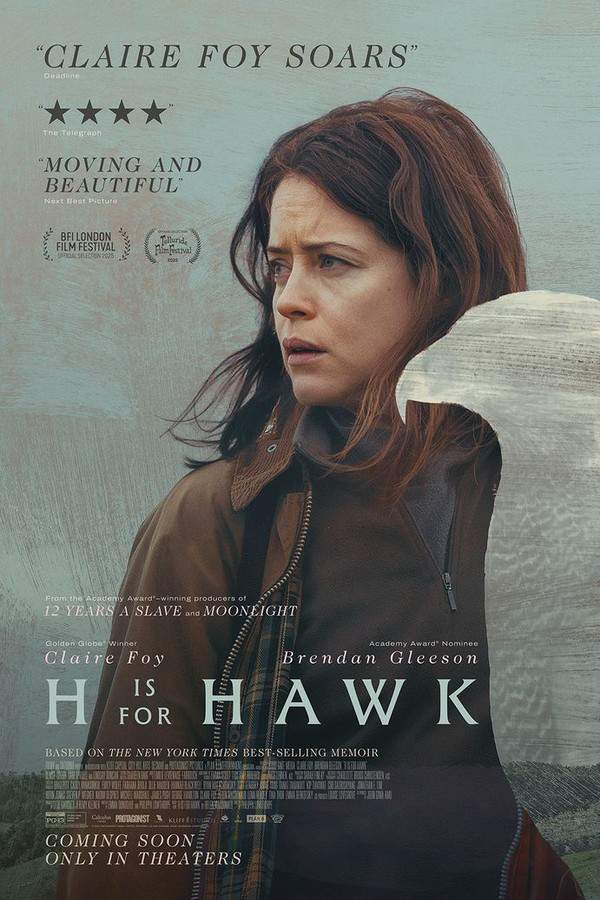
H Is for Hawk Review: Analyzing Critical and Audience Reception to the 2024 Grief Drama
When a film lands in theaters during the January dumping ground yet carries the pedigree of a prestige awards contender, audiences naturally turn to H Is for Hawk reviews to determine whether they’re witnessing a hidden gem or a misfire buried by its own studio. Released on January 23, 2026, Phillippa Lowthorpe’s adaptation of Helen Macdonald’s celebrated memoir has generated precisely the kind of polarized film reception that demands careful unpacking. At What’s After the Movie, we specialize in dissecting these complex critical landscapes, moving beyond simple aggregations to understand why a quiet, meditative story about falconry and bereavement can inspire both rapturous praise and frustrated dismissal.
The premise alone—Claire Foy portraying an academic attempting to process her father’s sudden death through the obsessive training of a goshawk named Mabel—signals that viewers should expect slow cinema rather than blockbuster pacing. Yet as our analysis of H Is for Hawk critic reviews and audience reactions reveals, the divide runs deeper than mere patience levels. The film sits at an intriguing intersection of British literary adaptation, nature documentary aesthetics, and psychological character study, creating a viewing experience that satisfies certain appetites while leaving others completely untouched. Whether you’re seeking a spoiler-free review to guide your weekend viewing or conducting deep film analysis on grief narratives in contemporary cinema, understanding the specific texture of this movie’s reception proves essential for setting appropriate expectations.
Critical Consensus vs. Audience Divide: How H Is for Hawk Split Viewers on Pace and Emotional Resonance
The critical consensus surrounding H Is for Hawk reveals a fascinating fragmentation that rarely aligns with traditional “fresh versus rotten” dichotomies. Reviewers awarded scores ranging from a perfect 100 at The Playlist to a middling 50 at The Reveal, with most major publications clustering in the 60-80 range—suggesting qualified appreciation rather than universal acclaim. This distribution mirrors the viewer reactions documented across platforms, where ratings swing wildly from enthusiastic 9/10 scores to disappointed 1/10 dismissals. What emerges is not a question of quality control but rather a fundamental disagreement about what constitutes meaningful cinematic engagement when dealing with trauma narratives.
The most persistent critique across both professional and amateur film reception circles involves the movie’s deliberate pacing. The Irish Times delivered a particularly pointed assessment, arguing that the film “confuses slowness with contemplation, repeating emotional beats and trumpeting parallels between Helen and Mabel.” This sentiment found echoes in user reviews, with one viewer on What’s After the Movie lamenting that the story is “ultra slow and totally boring,” citing minimal character development as a fatal flaw. TheMovieSearch R offered a similarly measured but critical H Is for Hawk review, noting that “what begins as meditative soon becomes exhausting” due to repetitive training sequences that “rarely deepen the narrative.”
Yet this alleged stagnation has its passionate defenders, suggesting the divide stems from divergent genre expectations rather than execution failures. User Darren N directly countered the pacing complaints with a rhetorical question: “For those who think it is slow… what do you expect a film about grief to be… action packed?” This defense aligns with The Telegraph’s observation that the film operates best as “a prestige drama” that is “at its best when it’s a little messy and wild, and content to let the feathers fly.” The Travers Take characterized it as a “slow but touching biopic,” implying that the deliberate tempo serves the subject matter rather than hindering it.
What complicates this binary is the recognition that H Is for Hawk occupies a specific cultural position between British independent cinema and Hollywood therapeutic narratives. User KatyGriffinSaye highlighted this distinction, contrasting the film’s “gentle tone” with the hyperactive flashiness of American studio productions. This cultural positioning may explain why some audience reactions celebrate the quietude while others, accustomed to more dynamic grief movie conventions, find the experience interminable. At What’s After the Movie’s summary page, we track how these geographical and cultural preferences significantly influence whether viewers find the film’s pacing respectful of their intelligence or simply underwritten.
The disparity ultimately suggests that H Is for Hawk requires a specific contractual agreement between filmmaker and viewer: an acceptance of observational cinema where emotional shifts occur across hours of falconry training rather than through dramatic confrontations. For audiences willing to accept these terms, the film offers substantial rewards; for those seeking traditional narrative propulsion, even the 118-minute runtime feels indefinite. This bifurcation makes the is H Is for Hawk worth watching question particularly difficult to answer universally—it depends entirely on whether you consider cinema a medium for active witnessing or active entertainment.
Claire Foy’s Performance: The Universal Highlight in a Divisive Film
If the film’s structure generates debate, Claire Foy’s central performance emerges as the undisputed anchor that prevents H Is for Hawk from completely fracturing under the weight of its own solemnity. Across the entire spectrum of critic reviews and fan opinions, from the highest accolades to the harshest condemnations, Foy’s portrayal of Helen Macdonald receives consistent, often effusive praise. This rare unanimity in an otherwise polarized film reception landscape positions her work as the primary reason to engage with the movie, regardless of one’s tolerance for slow-burn narratives.
RogerEbert.com identified the film’s strengths as lying “squarely with Foy, whose performance is restrained where it should be and revelatory at some moments you don’t expect.” This assessment captures the technical precision of her approach—avoiding the histrionics that often accompany grief narratives in favor of micro-expressions and physical rigidity that suggest trauma’s somatic weight. The Playlist awarded the film a perfect 100, declaring that while “finding ways to cope with any significant tragedy is hardly new… in the hands of Foy and Lowthorpe, it is.” This suggests that Foy doesn’t merely inhabit the role but reinvents the cinematic language of bereavement through her specific interpretive choices.
Technical analysis of her performance reveals a methodology rooted in stillness. Little White Lies particularly noted how “Foy’s performance – especially in the transfixing training scenes captured in long, unbroken takes – tells several stories on its own.” These extended sequences, where the camera lingers on Foy’s face as she communicates silently with the hawk, function as wordless monologues about control, vulnerability, and the fragile boundaries between human and animal consciousness. User Raymond C described her as “just magnificent,” while Kevin T emphasized how she “captures grief in such a deep and painful manner,” validating the critical consensus with layperson emotional responses.
The performance also succeeds through its collaborative energy with non-human actors. User Shane K highlighted how Foy and Brendan Gleeson (playing her father in flashbacks) create “amazing performances” that ground the supernatural patience required for falconry in recognizable human need. John W, in one of the most detailed H Is for Hawk audience reactions, placed Foy among “the most committed and expressive actresses alive,” specifically citing her work in All of Us Strangers as companion evidence of her ability to communicate interiority without exposition. This comparison to her recent body of work suggests that Foy has developed a specific mastery of characters processing loss that makes her casting here feel inevitable rather than merely appropriate.
What distinguishes this performance from standard prestige drama fare is its refusal to solicit pity. The Independent noted that the film “concerns itself less with the healing of wounds, but rather with the prying open of them,” and Foy embodies this approach through a persistent tension in her posture and gaze—she plays Helen as someone actively resisting comfort, seeking the sharp edges of pain rather than its dull aftermath. This makes the character difficult in ways that challenge audiences accustomed to redemptive arcs, yet it also lends the performance documentary-level authenticity. For viewers researching actor profiles and filmographies on our platform, Foy’s work here stands as a masterclass in anti-sentimental emotional honesty.
The Grief Narrative: Therapy Arc or Profound Meditation on Death?
Beneath the surface of falconry tutorials and English countryside vistas lies the core thematic engine driving all H Is for Hawk reviews: the representation of grief as both psychological process and philosophical inquiry. Here the critical divide sharpens most significantly, with interpretations split between those who view the narrative as a sophisticated exploration of mortality and those who dismiss it as a “genteel therapy arc” lacking sufficient edge or insight.
The Reveal offered the most pointed critique of the film’s thematic ambitions, suggesting that “only a scene where Helen defends her hunting trips with Mabel as ‘an honest encounter with death’ suggests the tougher, more provocative movie that might have been.” According to this perspective, the film sanitizes Macdonald’s memoir, converting raw, uncomfortable emotions into palatable, cinematic self-help. The newspaper i similarly argued that while the film “wants desperately to make you feel the raw blankness of grief and the healing power of nature… in the end feels more like a kids’ wildlife documentary: beautiful but bloodless.” These critical reviews suggest a failure of nerve, a reluctance to fully inhabit the darkness of parental loss in favor of safer, more visually pleasing metaphors.
Conversely, The Times offered a robust defense of the film’s philosophical rigor, praising how “this protagonist looks to nature and to Mabel in an admirable attempt to reconcile the ubiquity of death, the brevity of life and the urgent, though possibly pointless, search for meaning.” This reading positions the film not as therapy but as existential inquiry, using the hawk—traditionally associated with wildness and mortality—as a lens through which to examine human denial of death’s inevitability. The Independent similarly elevated the material, noting the film’s focus on “prying open” wounds rather than healing them, suggesting that the discomfort viewers feel stems from authentic engagement with grief’s incomprehensibility rather than narrative failure.
User reactions on What’s After the Movie’s discussion forums reveal how these competing interpretations play out among general audiences. John W provided an extensive film analysis highlighting the movie’s engagement with “grief and memory; loneliness and friendship; trying to really see and understand nature; the need for both calm and wildness in our lives; philosophical matters of violence, spirituality, and even nihilism.” This comprehensive thematic inventory suggests that for attentive viewers, the film offers far more than simple catharsis. Meanwhile, user Julia focused on the supporting relationships, noting how the film “shows the support of having one person who helps you move through by being with you,” highlighting Denise Gough’s performance as the best friend who provides “constant, nonjudgement support.”
The question of whether H Is for Hawk transcends the “grief movie” genre depends largely on whether viewers accept falconry as a legitimate metaphorical framework or merely a picturesque coping mechanism. User Indy44 suggested the film could have strengthened its hand by developing “the father’s passion for nature” more thoroughly to create “the stronger connection between nature and human existence.” This critique implies that the film’s central metaphor—training a predator to manage loss—remains somewhat under-theorized for audiences seeking rigorous philosophical coherence. Yet for viewers like Karen, who described it as a “beautiful story of falconry training and the process of grief,” the literal and metaphorical levels harmonize effectively enough to deliver emotional truth.
For those constructing movie collections around themes of bereavement or nature healing, H Is for Hawk presents a complicated case study. It refuses the tidy resolution of films like Manchester by the Sea while avoiding the absolute nihilism of darker indie fare. Instead, it occupies a middle space where healing is possible but messy, where nature offers solace without guarantees—a ambiguity that satisfies some audience reactions while frustrating others seeking clearer narrative medicine.
Visual Poetry vs. Narrative Stagnation: The Cinematography Debate
The aesthetic construction of H Is for Hawk generates perhaps the most technically specific disagreements among critic reviews, centering on whether the film’s visual splendor compensates for—or exacerbates—its narrative thinness. This tension between cinematic beauty and storytelling momentum represents a central paradox of the “prestige nature film” subgenre, with Lowthorpe’s work serving as a test case for whether breathtaking imagery of goshawks in flight can sustain dramatic interest across a feature runtime.
The cinematography receives universal acknowledgment for its technical excellence, even from detractors. Indy44 praised the “wonderful cinematography of a hawk hunting,” while Raymond C emphasized that “the whole filming of a truly wild animal was extraordinary.” These observations highlight the genuine documentary-level challenge of capturing a goshawk’s behavior—unpredictable, fast, and dangerous—with cinematic clarity. The long, unbroken takes mentioned by Little White Lies serve dual purposes: showcasing Foy’s acting while simultaneously documenting the bird’s physical reality, creating a hybrid of narrative and nature documentary that some find innovative and others find inert.
The Telegraph celebrated this visual approach, arguing the film is “at its best when it’s a little messy and wild, and content to let the feathers fly,” suggesting that the aesthetic chaos of natural environments provides necessary contrast to the controlled interior spaces of academic grief. However, The Irish Times identified this same visual strategy as contributing to “narrative stagnation,” arguing that “too often H Is for Hawk confuses slowness with contemplation.” This critique implies that the camera’s lingering gaze on feathers, landscapes, and weather patterns substitutes for plot development, creating a tableau effect that prioritizes mood over momentum.
User ArtieSue W crystallized this ambivalence in a concise viewer reaction: “Beautiful to look at and listen to soundtrack. Boring to watch throughout. No ending.” This binary assessment—acknowledging sensory pleasure while denying narrative satisfaction—recurs across mixed reviews. The i newspaper similarly concluded that the film feels “more like a kids’ wildlife documentary: beautiful but bloodless,” suggesting that the visual vocabulary, while impeccable, fails to generate the visceral engagement necessary for serious drama. The accusation of bloodlessness carries particular weight given that the source memoir dealt explicitly with the violent realities of hawking—killing, blood, and the predator’s relationship to death—which the film apparently sanitizes in favor of picturesque flight sequences.
However, defenders like John W argued that the “direction, editing, cinematography, music are all stunning,” integrating these elements into a cohesive aesthetic system that supports the film’s emotional goals. This suggests that the visual style isn’t merely decorative but essential to the film’s argument about attention—learning to see the hawk clearly mirrors learning to see one’s own grief clearly, requiring patience and the abandonment of conventional dramatic shortcuts. For audiences engaging with our movie wiki entries on cinematography techniques, the film offers rich examples of how natural lighting and handheld camera work can create intimacy with non-human subjects.
The comparison to documentaries also raises questions about genre expectations. KatyGriffinSaye explicitly noted that “it is not ‘How to Train Your Dragon’,” distinguishing between animated fantasy and this film’s grounded realism. Yet for viewers expecting the emotional accessibility of animated family films or the narrative drive of traditional biopics, the documentary-esque observational style proves challenging. TheMovieSearch R noted that the film “struggles to connect with a wider generation,” possibly because its visual language appeals to art-house sensibilities while its marketing and star power suggest mainstream accessibility.
For those tracking box office performance and commercial viability, this aesthetic schism carries financial implications. Films that satisfy neither the nature documentary crowd (who might prefer BBC-style factual programming) nor the drama audience (who demand character evolution) risk commercial limbo, regardless of their artistic merits. H Is for Hawk appears to inhabit this uneasy middle space, its visual beauty serving as both its primary selling point and its most common point of contention.
Genre Expectations and Release Strategy: Why January Frustrated H Is for Hawk’s Potential
The temporal context of H Is for Hawk’s release significantly colors its film reception, creating a meta-narrative about studio confidence and audience alignment that influences how viewers interpret the work itself. Released in late January—a traditional dumping ground for films that distributors consider commercially risky or awards-season also-rans—the movie faced immediate skepticism from cinephiles who wondered why a film featuring Claire Foy, Brendan Gleeson, and Lindsay Duncan, directed by an acclaimed filmmaker, wasn’t positioned for autumn prestige or spring counter-programming.
John W’s user review directly addressed this perplexity, asking “why this beautiful movie is being dumped in January” and suggesting that the timing contributes to its “unsung and underseen” status. This release strategy creates a self-fulfilling prophecy: audiences approach January films with lowered expectations, critics view them through the lens of dismissal, and the films subsequently underperform, validating the studio’s initial lack of confidence. For a movie requiring the patience and attentiveness that H Is for Hawk demands, this scheduling proves particularly damaging, as winter audiences often seek either escapist entertainment or Oscar contenders, not quiet British meditations on bereavement.
The scheduling also highlights the film’s challenging genre positioning. It is not precisely a nature documentary, though it contains documentary elements; not purely a grief drama, though that is its engine; and not a biopic in the traditional sense, though it adapts a real memoir. User swing’s complaint about “very little character development” and the overall “boring” quality reflects, in part, a mismatch between marketing materials (which likely emphasized the dramatic hook of a woman and her hawk) and the actual film’s contemplative rhythms. When audiences seeking the emotional clarity of The Falcon and the Snowman or the adventure of Kes instead encounter two hours of training montages and grief processing, disappointment follows naturally.
KatyGriffinSaye’s observation about the film’s Britishness becomes relevant here as well. American audiences, conditioned by Hollywood’s pacing and cathartic structures, may find the film’s “gentleness” and “not so hyper” tone alienating rather than refreshing. This cultural gap explains why some audience reactions celebrate the film as a respite from blockbuster noise while others dismiss it as inert. TheMovieSearch R specifically noted that the film’s “polished and consistent” direction “favoring seriousness over accessibility” limits its generational reach, suggesting that the movie speaks most clearly to middle-aged or older viewers who have experienced parental loss and can map their own experiences onto Helen’s journey.
For those exploring movie lists of overlooked gems or quizzes and games testing their knowledge of recent releases, H Is for Hawk represents a fascinating case of distribution misalignment. It is, as The Travers Take noted, a “prestige drama” in content but not in positioning, lacking the awards campaign that might have signaled to viewers that its slow pace represents artistic intention rather than narrative aimlessness. The January release effectively ghettoized a film that required careful curatorial framing—placement in autumn festivals or thoughtful spring rollouts—to reach its intended audience.
This context also illuminates why critical reviews trended more positive than general audience reactions. Critics, viewing the film during festival circuits or press screenings with appropriate preparation, could appreciate its aesthetic coherence without the baggage of January expectations. General audiences, encountering it as a commercial release among superhero films and Oscar bait, lacked the framing necessary to recalibrate their attention spans. At What’s After the Movie, we often observe that a film’s release date functions as a critical lens as powerful as its editing; in this case, the January positioning created a hurdle that the film’s delicate wings could not quite clear.
Conclusion: Is H Is for Hawk Worth Watching in 2026?
Synthesizing the diverse landscape of H Is for Hawk reviews, critic consensus, and fan opinions, the film emerges as a specialized offering—an artistic success with significant commercial limitations, a showcase for extraordinary acting that cannot overcome its niche appeal. The overwhelming praise for Claire Foy’s performance provides the primary recommendation; her ability to convey grief’s physical and psychological weight through restraint and precision offers a masterclass in screen acting that transcends the movie’s uneven reception. For viewers who prioritize performance over plot, or who seek cinema as a vehicle for emotional witnessing rather than narrative propulsion, the film delivers substantial rewards.
However, the recurring criticisms—narrative stagnation, repetitive structure, and a sanitization of the source material’s darker edges—suggest that H Is for Hawk works better as a visual poem than as a dramatic engine. It succeeds when accepted on its own terms as an observational study of healing through nature, but falters when measured against conventional dramatic expectations. The divide between those who find it “pitch perfect” (Darren N) and those who find it “draining” (TheMovieSearch R) ultimately maps onto broader questions about what we want cinema to do with pain: contain it, analyze it, or simply observe its rhythms.
For audiences preparing to engage with this film, our recommendation at What’s After the Movie’s summary page is to approach with calibrated expectations. Do not expect the cathartic release of traditional grief narratives or the kinetic energy of nature adventure films. Instead, prepare for a film that asks you to sit with discomfort, to find meaning in the training of a hawk as a proxy for the retraining of a shattered self. If you can accept these terms—the slowness, the ambiguity, the refusal of easy redemption—H Is for Hawk offers a rare, textured exploration of how we continue living when the center no longer holds.
The film’s long-term reputation will likely depend on finding its audience through streaming platforms rather than theatrical exhibition, where viewers can pause, reflect, and return to its images without the pressure of commercial pacing. As it settles into the canon of British literary adaptations, it may find greater appreciation among viewers seeking alternatives to Hollywood’s emotional bombast. For now, it stands as a beautiful, problematic, occasionally transcendent work that demands patience and rewards the patient—assuming they know what they’re signing up for when they enter Helen and Mabel’s world.
| Resource | Link |
|---|---|
| H Is for Hawk Wikipedia | Wikipedia |
| H Is for Hawk Rotten Tomatoes | Rotten Tomatoes |
| H Is for Hawk Metacritic | Metacritic |
| H Is for Hawk Box Office Mojo | Box Office Mojo |
Continue reading




What's After the Movie?
Not sure whether to stay after the credits? Find out!
Check out our other apps:

SAT Sphere
Build confidence for the Digital SAT.

Mori Atlas
Discover wild places worth protecting.

Luntero
Search smarter for a home in Amsterdam.

Plot Explained
Unravel movie endings and hidden clues.

Pokechamp
Dive into Pokémon data and battle logic.

Driving Theory
Get ready for your European theory test.

Movie Dust
Plan your next cinema trip with ease.

Musemap
Find art and culture as you travel.

Selkobase
Compare credentials before committing.

Local Manual
Turn an unfamiliar country into practical next steps.

Lernavi
Compare school systems before your next move.

GymRoam
Find a workout stop wherever your plans take you.
Explore Our Movie Platform
New Movie Releases (2026)
Famous Movie Actors
Top Film Production Studios
Movie Plot Summaries & Endings
Major Movie Awards & Winners
Best Concert Films & Music Documentaries
Movie Collections and Curated Lists
© 2026 What's After the Movie. All rights reserved.
Privacy Policy