What's After the Blog?
Opinions • Reception
Fantasy Life (2026) Review & Opinions: Critics Reception, Fan Reactions, Performance & Storytelling Analysis
An in‑depth look at how critics and audiences responded to Fantasy Life (2026), examining reviews of the film’s performances, storytelling, and its place in contemporary drama. See fan reactions, critic scores, and what the reception means for the cast’s future projects.
March 31, 2026

Movies mentioned in this article
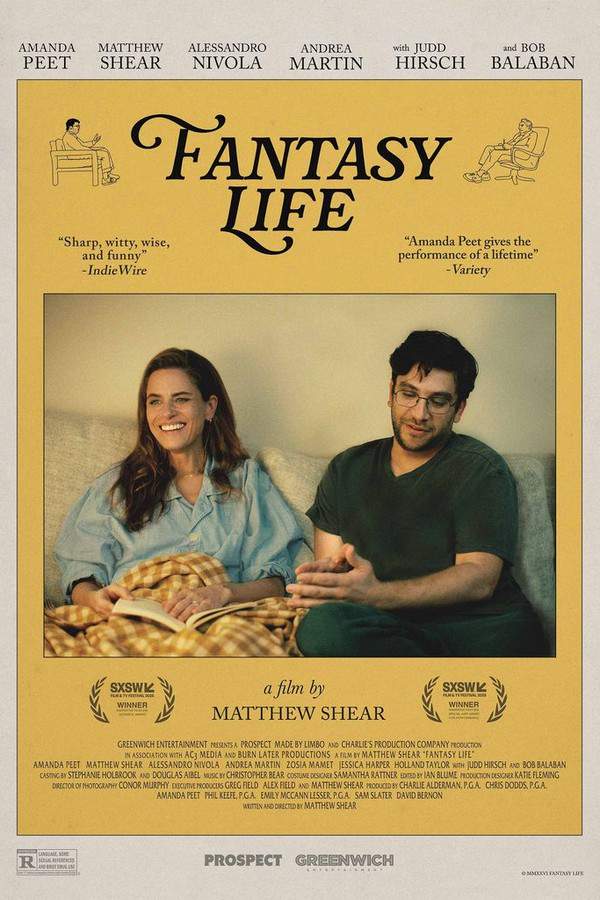
Fantasy Life (2026) Review: Critical Reception, Audience Reactions, and Is It Worth Watching?
When Fantasy Life premiered on March 27, 2026, it marked a significant cinematic moment—not necessarily because it revolutionized the indie film landscape, but because it signaled the return of Amanda Peet to feature films after a decade-long absence from the silver screen. This modestly budgeted dramedy, written and directed by Daniel Shear, arrived in theaters carrying the weight of expectations from longtime Peet fans while simultaneously attempting to carve out its own identity in an increasingly crowded market for relationship-focused independent cinema. As audiences flocked to theaters seeking spoiler-free reviews and honest takes on whether this film justified the price of admission—particularly during an era where $20 theater tickets demand careful consideration—the reception emerged as fascinatingly polarized. From viewers walking out within thirty minutes to passionate defenders calling it a modern indie triumph, Fantasy Life has sparked debates about pacing, tonal consistency, and what constitutes a satisfying narrative conclusion. For moviegoers researching Fantasy Life critic reviews, audience scores, and detailed film analysis before committing their evening, the landscape reveals a movie that refuses easy categorization. At What’s After the Movie, where we track comprehensive movie summaries, box office performance, and award considerations, we’ve analyzed the full spectrum of reactions to help you determine whether this unconventional character study deserves a place on your watchlist or if the critical consensus suggests waiting for streaming.
Amanda Peet’s Career-Defining Return: Performance Analysis and Critical Consensus
The overwhelming consensus across both professional critics and casual moviegoers centers on one undeniable truth: Amanda Peet’s portrayal of Dianne represents the gravitational center around which Fantasy Life orbits. Having stepped away from cinematic roles for ten years—a hiatus that left fans wondering about her return—Peet delivers what multiple outlets have described as a career-redefining performance that mixes vulnerability with fierce comic timing. The Travers Take captured this sentiment perfectly, declaring, “Amanda Peet fans rejoice! This tale of broken connections returns this acting sorceress to films, after 10 years, playing an aging star out to restart her career and her love life. She’s funny and fierce in all the right places.” This assessment aligns with Collider’s observation that the film serves as “a feel-good, indie dramedy anchored by Amanda Peet’s career-best cinematic return,” suggesting that regardless of the film’s structural imperfections, her presence alone justifies the viewing experience.
What makes Peet’s work here particularly noteworthy, according to Slant Magazine’s critique, is her ability to find “layers of shading in what could have been a dull and simplistic role.” This speaks to the sophisticated approach Shear took with the character of Dianne, an aging actress navigating professional uncertainty and romantic possibility simultaneously. Rather than falling into the trap of midlife-crisis clichés that plague many indie dramas, Peet infuses Dianne with a specific, lived-in quality that critics recognized as authentic. When exploring actor profiles and filmographies on our database, Peet’s return here draws interesting comparisons to other actors who’ve successfully navigated similar career gaps, reminding us that sometimes absence truly does make the heart grow fonder in Hollywood.
However, the critical adoration for Peet creates an interesting tension when examining the film’s ensemble nature. While RogerEbert.com praised the “top-to-bottom cast of proudly eccentric actors,” noting that performers like Holland Taylor, Jessica Harper, Zosia Mamet, and Bob Balaban ensure “every scene has moments of truth,” several critics noted that the narrative occasionally feels like a solo showcase rather than a balanced ensemble piece. Screen Rant specifically observed that “Sam somewhat shrinks into the periphery of the story to make way for Amanda Peet’s Dianne, whose tonal world is welcome, but certainly different.” This shift in focus has divided audiences—some appreciate the deep dive into a complex female protagonist rarely seen in contemporary cinema, while others feel the romantic partnership at the film’s center becomes imbalanced, potentially undermining the relationship dynamics that the marketing suggested would drive the plot.
Genre Identity and Tone: Is Fantasy Life a Rom-Com or Indie Dramedy?
Perhaps the most persistent question circulating in Fantasy Life film analysis circles concerns the movie’s stubborn resistance to neat genre classification—a quality that has simultaneously endeared it to indie film enthusiasts and frustrated viewers seeking straightforward romantic entertainment. Collider directly addressed this ambiguity, noting that “although it could be debated whether this is a rom-com or not, given that the romance itself takes a back seat, it excels as a feel-good, indie dramedy.” This observation highlights a crucial disconnect between marketing materials that may have positioned the film as a conventional love story and the actual experience, which prioritizes character introspection and professional reinvention over meet-cutes and grand romantic gestures.
The Wall Street Journal offered perhaps the most measured take on this tonal balancing act, stating that “as a love story, Fantasy Life isn’t particularly original, but the low-key way Mr. Shear realizes some familiar situations is warm and human, with comic aspects and sad ones kept in an appealing balance.” This synthesis of humor and pathos represents the film’s greatest artistic achievement according to many critics, yet it also explains why audience reactions have been so dramatically split. Viewers expecting the propulsive plotting of mainstream romantic comedies found themselves instead watching a meditation on aging, artistic relevance, and quiet personal growth—themes that require patience and alignment with the protagonist’s emotional frequency.
The New York Times captured this sneaky subversion of expectations with elegant precision, writing that “for a movie about two people going through a wobbly patch, Fantasy Life glides with a sneaky storytelling ease.” This “sneaky” quality manifests in the way Shear withholds traditional conflict escalation, opting instead for the messy, incremental progress that characterizes actual adult relationships. For those exploring our movie wiki or browsing through curated movie collections of unconventional romances, Fantasy Life shares DNA with films like Past Lives (mentioned approvingly by user reviewer Clark T) and other contemporary indie darlings that prioritize emotional realism over narrative convenience.
Yet this refusal to conform to genre expectations has proven costly with certain demographics. User reviews expressing frustration often cite the film’s marketing as misleading, with some theatergoers feeling they received a bait-and-switch where the romantic elements felt secondary to Dianne’s individual journey. This disconnect raises important questions about how independent films are positioned in the marketplace and whether clearer labeling might help align audience expectations with artistic intent—a consideration we explore further in our film lists categorizing movies by tone and pacing.
The Supporting Ensemble: Chemistry, Casting, and Character Dynamics
While Amanda Peet rightfully commands the spotlight, RogerEbert.com’s assertion that the “top-to-bottom cast of proudly eccentric actors” elevates the material rings true when examining the film’s supporting architecture. The presence of veteran performers like Holland Taylor, Jessica Harper, Zosia Mamet, and Bob Balaban creates a rich tapestry of intergenerational relationships that ground Dianne’s journey in a specific social reality. As RogerEbert.com noted, this casting ensures “every scene has moments of truth,” suggesting that Shear’s directorial empathy extended beyond the protagonist to craft a world populated by fully realized human beings rather than mere plot devices.
The generational dynamic proves particularly effective in scenes involving Dianne’s father, played by Bob Balaban, and the various industry veterans who orbit her professional life. These interactions provide crucial context for understanding why Dianne’s career anxiety feels so pressing—surrounded by peers who’ve successfully navigated aging in Hollywood (or failed to do so), her insecurities become contextualized within an industry notoriously hostile to women over forty. For those interested in exploring the careers of these supporting players, our actor profiles section offers comprehensive filmographies tracking their contributions to cinema.
User reviewer Joey J emphasized this collective strength, stating, “Its the supporting cast that brings everything together,” while also praising Shear’s directorial presence as “star magnitude” and noting Alessandro Nivola’s appeal. This appreciation for the ensemble highlights an important aspect of the viewing experience: while critics debate the film’s structural cohesion, the actual scenes play with a loose, improvisational chemistry that makes the 91-minute runtime feel conversational rather than plotted. Clark T’s user review specifically praised the “realistic dialogue that didn’t feel forced in anyway,” attributing this authenticity to the combined talents of the cast.
However, the ensemble’s strength also exacerbates one of the film’s most criticized elements—the relative underdevelopment of Sam, Dianne’s romantic interest played by Nivola. As Screen Rant observed, Sam “somewhat shrinks into the periphery,” creating an imbalance that some viewers found frustrating. This narrative choice may reflect Shear’s specific interest in female subjectivity and the way women often remain the emotional laborers in relationships while male partners remain somewhat mysterious, but for audiences seeking equal development of both leads, this dynamic proved unsatisfying. The chemistry between Peet and Nivola receives consistent praise in positive reviews—user “eli” specifically mentioned “the kissing scenes and the story” as highlights—yet the screenplay’s reluctance to grant Sam equal interiority remains a sticking point for detailed film analysis.
Audience Polarization: From Walkouts to Widespread Acclaim
Perhaps no aspect of Fantasy Life’s reception proves more fascinating than the stark divide between viewers who found the film profoundly moving and those who considered it an unendurable exercise in tedium. This polarization manifests most clearly in user scoring, where ratings range from enthusiastic 5/5 stars to devastating 0.5/5 scores, with little middle ground. User TD declared it an “outstanding movie with excellent script and compelling characters,” while Stephen C succinctly praised it as “Funny in 1 hour and 31 minutes.” These positive reactions often emphasize the film’s relatability, with EW noting it was “poignant, relatable in many ways.”
Contrast this with the visceral negative reactions: Michael Y reported walking out after thirty minutes, calling it “absolutely horrible… so dry and boring,” while Mariah H described it as “the worst movie I’ve seen in a while,” criticizing the “pointless drawn out storyline, like you were watching a boring life unfold with a lot of forced drama.” Teresa L echoed this sentiment, complaining that “I kept waiting for this film to pick up & do something, & it just dripped along until it finally ended!” This split suggests that Fantasy Life functions as a litmus test for viewer patience and their appetite for low-stakes, character-driven storytelling.
The specific complaints about pacing and structure warrant closer examination. Multiple negative reviews cite the film’s abrupt ending as a major flaw—Mike K noted that “it didn’t have an ending… it just stopped and the credits started rolling,” a sentiment Mariah H shared when stating “The end felt rushed and had no definitive marker; felt like just another scene.” These reactions indicate that Shear’s decision to eschew traditional cathartic conclusions in favor of ambiguous, life-like pauses alienated viewers conditioned to expect clear narrative resolution. This is precisely where interactive movie quizzes and games can help audiences identify whether their taste aligns with indie storytelling or if they prefer more structured narratives before investing in a theater ticket.
However, defenders like Clark T found profound value in exactly these qualities, comparing it favorably to Past Lives and praising its “message of mental health” as “so important.” This divergence highlights how Fantasy Life demands a specific viewing mindset—one that prioritizes emotional truth over plot mechanics. For those debating whether to watch, our detailed movie page for Fantasy Life offers additional context about the film’s pacing and tone to help set appropriate expectations before viewing.
Storytelling Execution: Cohesion, Pacing, and Narrative Resolution
Beneath the surface-level debate about enjoyment lies a substantive critical conversation about Shear’s technical execution and the film’s structural integrity. Screen Rant offered the most pointed critique of these elements, arguing that “rather than hold things together, Shear the filmmaker seems to step back, too. The result is a film that only exists in moments: sometimes funny, sometimes interesting, always lacking the cohesion necessary to add up to anything.” This assessment identifies a potential Achilles’ heel in the directorial approach—an improvisational looseness that creates individual moments of brilliance while potentially sacrificing cumulative impact.
The pacing issues mentioned by several users—Teresa L’s complaint that it “just dripped along” and Mariah H’s observation about “forced drama”—suggest that Shear’s deliberate choice to mirror the uncertainty of his protagonist’s life may have resulted in sequences that feel aimless rather than intentionally ambiguous. The 91-minute runtime, which Stephen C praised for its brevity, struck others as interminable precisely because the narrative refuses to manufacture artificial conflicts to maintain tension. This creates a unique viewing experience where the film’s success depends entirely on whether the audience connects with Dianne’s specific emotional frequency during the first twenty minutes.
The controversial ending deserves particular scrutiny in any comprehensive Fantasy Life film analysis. While traditional romantic dramas might conclude with a grand gesture or clear reconciliation, Shear opts for something more elliptical—what Mike K perceived as simply stopping rather than concluding. However, viewed through a more charitable lens, this choice reflects the film’s overarching commitment to realism. Relationships rarely resolve with cinematic finality; instead, they enter phases of tentative continuation or quiet acceptance. The Wall Street Journal’s observation about the “appealing balance” maintained between comedy and sadness suggests that Shear’s refusal to provide cathartic release may be philosophically consistent, even if commercially risky.
For those tracking box office performance or considering the film’s potential award season prospects, these structural choices matter significantly. While Peet’s performance seems destined for independent spirit award consideration, the film’s overall reception suggests it may struggle to find a broad audience beyond art-house circuits. Yet for viewers who align with its wavelength—those who appreciated the “sneaky storytelling ease” noted by The New York Times—the lack of traditional structure becomes a feature rather than a bug. As you explore our concert films and other alternative programming options, Fantasy Life stands as a testament to the importance of matching viewer expectations with artistic intent, ensuring that those who seek quiet, character-driven intimacy find exactly what they’re looking for in this divisive but undeniably sincere indie offering.
Final Verdict: Who Should Watch Fantasy Life and Is It Worth Your Time?
As the dust settles on the initial theatrical run of Fantasy Life, the emerging critical consensus paints a picture of a film that succeeds magnificently on specific metrics while struggling with broader accessibility. It is, above all else, a showcase for Amanda Peet’s return to form—a performance that justifies the price of admission for fans of her previous work and for anyone invested in seeing complex, middle-aged female characters given the screen time and nuance they deserve. The reviews and reception suggest that viewers who approach the film as a character study rather than a romance, who value dialogue and performance over plot momentum, and who don’t require definitive narrative closure will find much to appreciate in Shear’s gentle, humanistic approach.
However, the vocal contingent of viewers who found the film boring or incomplete cannot be dismissed—their reactions highlight genuine weaknesses in pacing and structural cohesion that may limit the film’s long-term cultural footprint. For moviegoers seeking fast-paced entertainment or traditional romantic comedy beats, movie summaries and spoiler-free reviews suggest this may not satisfy those particular cravings. The disconnect between marketing and final product remains a cautionary tale about the challenges of positioning indie dramedies in a marketplace saturated with more conventional fare.
Ultimately, Fantasy Life earns its place in the 2026 cinematic landscape as a divisive but sincere attempt to capture the messy, unglamorous reality of adult relationships and professional reinvention. Whether it becomes a cult favorite or fades into obscurity may depend on its streaming afterlife, where viewers can approach it with adjusted expectations and the freedom to pause when the deliberately slow pacing requires patience. For now, it stands as a must-see for Amanda Peet completists, a maybe-see for indie film enthusiasts, and a probably-skip for those seeking high-energy escapism. Before making your decision, explore our comprehensive movie wiki and film collections at What’s After the Movie to find additional context, compare it with similar titles, and determine where this polarizing entry fits within your personal cinema preferences.
External Resources and Movie Database Links
For additional information about Fantasy Life (2026), including detailed cast information, streaming availability, and aggregated scores, visit these trusted movie databases:
| Site | Link |
|---|---|
| Fantasy Life TMDB | The Movie Database |
| Fantasy Life Wikipedia | Wikipedia |
| Fantasy Life Rotten Tomatoes | Rotten Tomatoes |
| Fantasy Life Metacritic | Metacritic |
| Fantasy Life JustWatch | JustWatch |
| Fantasy Life Box Office Mojo | Box Office Mojo |
Continue reading


What's After the Movie?
Not sure whether to stay after the credits? Find out!
Check out our other apps:

SAT Sphere
Build confidence for the Digital SAT.

Mori Atlas
Discover wild places worth protecting.

Luntero
Search smarter for a home in Amsterdam.

Plot Explained
Unravel movie endings and hidden clues.

Pokechamp
Dive into Pokémon data and battle logic.

Driving Theory
Get ready for your European theory test.

Movie Dust
Plan your next cinema trip with ease.

Musemap
Find art and culture as you travel.

Selkobase
Compare credentials before committing.

Local Manual
Turn an unfamiliar country into practical next steps.

Lernavi
Compare school systems before your next move.

GymRoam
Find a workout stop wherever your plans take you.
Explore Our Movie Platform
New Movie Releases (2026)
Famous Movie Actors
Top Film Production Studios
Movie Plot Summaries & Endings
Major Movie Awards & Winners
Best Concert Films & Music Documentaries
Movie Collections and Curated Lists
© 2026 What's After the Movie. All rights reserved.
Privacy Policy