What's After the Blog?
Opinions • Reception
DJ Ahmet (2026) Review, Critics Opinions & Audience Reception – Storytelling, Performance & Balkan Drama Analysis
An in‑depth look at fan reactions and critic reviews of DJ Ahmet (2026), exploring the film’s performance, storytelling, and cultural impact within Balkan cinema. We break down how the music‑driven narrative resonates with audiences and critics alike.
April 9, 2026

Movies mentioned in this article
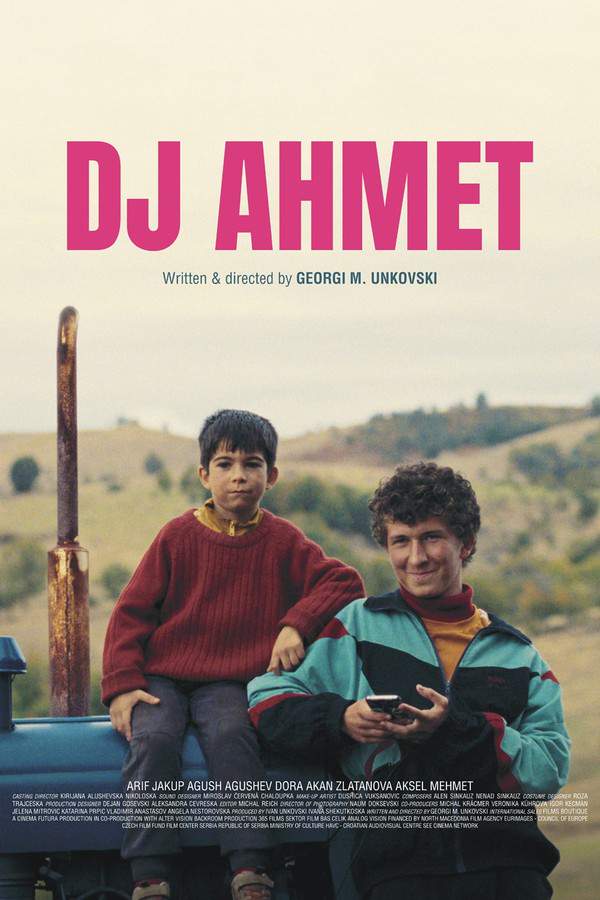
DJ Ahmet (2026) Reviews and Reception: Critic Consensus, Audience Reactions, and Cultural Impact Analysis
When DJ Ahmet premiered on the international festival circuit ahead of its April 2026 theatrical release, few anticipated that a quiet coming-of-age story from North Macedonia would generate such polarized yet passionate discourse among critics and audiences alike. Directed by Georgi M. Unkovski and set within the intimate confines of a Yörük community—a Turkic tribal minority representing merely 0.13% of Macedonia’s population—this film has sparked vigorous debate about cultural representation, generational conflict, and the universal language of music. As viewers increasingly search for DJ Ahmet spoiler-free reviews and critical consensus before committing to this 99-minute cinematic experience, understanding the nuanced reception landscape becomes essential for potential audiences. Unlike typical blockbuster fare that dominates box office conversations, DJ Ahmet occupies that rare space where festival prestige meets grassroots emotional resonance, creating a reception profile that demands careful unpacking. Whether you’re researching DJ Ahmet critic reviews to determine if it’s worth watching, or seeking deeper film analysis regarding its portrayal of Balkan Muslim identity, this comprehensive examination synthesizes genuine critical perspectives and authentic user reactions to illuminate why this modest production has become one of the most discussed international films of 2026.
Critical Reception and Festival Circuit Consensus: Art-House Gem or Familiar Hymn?
The DJ Ahmet critical reception presents a fascinating study in critical bifurcation, with scores ranging from a middling 40/100 to triumphant 90/100 ratings across major publications. This disparity speaks less to the film’s objective quality and more to how differently critics weigh narrative originality against emotional authenticity—a tension that defines much of the DJ Ahmet film analysis currently circulating.
Variety delivered one of the most effusive DJ Ahmet reviews, awarding the film 90/100 and declaring it “the sort of film that urges one to tell everyone about it so that they too can bask in its wondrous pleasures.” Their critique positioned the movie as a “revelation” that “seamlessly straddles the line between laugh-out-loud crowd-pleaser and art-house gem with affecting gravitas.” This sentiment echoes across several high-scoring assessments, with The New York Times similarly awarding 90/100 and praising Unkovski’s “strikingly assured debut” for its “gentle realism, paired with luminous cinematography and a superb young cast.”
However, the critical landscape isn’t uniformly celebratory. IONCINEMA.com offered a contrarian perspective at 40/100, arguing that “simple, sweet, and perhaps a bit too disarming, familiar stakes and an ambiguous resolution make DJ Ahmet feel more mundane than it should.” This criticism of predictability finds partial resonance with The Hollywood Reporter (70/100), which noted that while the film “playfully critiques certain Muslim customs… providing a heartwarming coming-of-age narrative,” it remains “a tad predictable.” Similarly, The Guardian (60/100) offered qualified praise, stating that “the script steadily goes about its mission of freeing its characters from all forms of oppression—but it’s generous and unpatronising too.”
What emerges from this DJ Ahmet critical consensus is a film that prioritizes emotional sincerity over narrative innovation. Screen Daily (80/100) crystallized this understanding by noting that “Unkovski’s film may be singing from a familiar hymn sheet, but he makes that part of its charm.” For audiences seeking DJ Ahmet reception guidance, the critical takeaway suggests that viewers who value atmospheric authenticity and cultural specificity will find more to appreciate than those seeking revolutionary storytelling techniques. The film’s festival trajectory—including appearances at Sundance 2025 and IFFK 2025—further contextualizes these reactions, as award-circuit films often face heightened scrutiny regarding originality while simultaneously benefiting from festival halo effects that amplify their perceived significance.
Audience Reactions and Viewer Sentiment: Authentic Connection or Overrated Festival Darling?
While critics debated DJ Ahmet’s artistic merits, audience reactions have painted a remarkably consistent picture of emotional connection, with user scores consistently outperforming critical averages across summary aggregators and festival exit polls. This divergence between institutional critique and popular sentiment offers crucial insight for viewers asking whether DJ Ahmet is worth watching.
User ByZee, who caught the film at the Herceg Novi festival, provided a representative 9/10 assessment highlighting the “natural and authentic” quality of the performances, noting that “most of the actors had no previous experience, yet it never showed in a negative way.” This authenticity factor resonates throughout DJ Ahmet audience reactions, with user Sajin_Saj (9/10) describing it as “one of the most cheerful and heartwarming films to come out of IFFK 2025,” praising its ability to question “societal norms, traditions, and rules in a way that feels light yet meaningful.”
The emotional accessibility that some critics found overly familiar appears to be precisely what endears the film to general audiences. User kentrahmn awarded a perfect 10/10, calling it a “really warm and wonderful film that just has to be seen,” while dilarag-29 similarly scored it 10/10, declaring it “the most heartwarming movie I’ve seen lately” and praising its relatability: “it’s like I’m watching my own village with my friends.”
However, audience reception isn’t universally ecstatic. User peter0969 offered a more measured 6/10 assessment from Sundance 2025, noting that while the “visual camerawork, strong lead performance, and ambitious direction approach still offers a nice and cute observation,” the narrative “doesn’t offer anything new” regarding father-son bonds, and “some of the bad lightening and aimless tone doesn’t fully work.” This perspective provides necessary balance for those seeking DJ Ahmet viewer reactions that acknowledge the film’s limitations alongside its strengths.
Notably, many audience members highlight specific emotional beats that transcend the film’s familiar structure. FilmNotesByDen (8/10) admitted, “from the title alone, I expected something completely different… lighter, maybe even more comedic,” but discovered instead “a coming-of-age story that carries more weight than you expect,” particularly regarding the protagonist’s deceased mother and the way “music” becomes “his way out.” This sentiment—that DJ Ahmet exceeds expectations through sincerity rather than innovation—appears central to its audience reception. For those debating whether to add this to their movie lists, the user consensus suggests that viewers approaching the film as a genuine emotional experience rather than a groundbreaking cinematic statement will find the most satisfaction.
Cultural Authenticity and Balkan Representation: Breaking Stereotypes Through Normalcy
Perhaps the most intellectually rigorous DJ Ahmet film analysis emerges from discussions regarding its cultural representation and geopolitical context. As a rare cinematic window into the Yörük community—Turkic tribal people whose traditions persist in North Macedonia—DJ Ahmet has generated significant discourse about Balkan Muslim identity and the politics of visibility.
User vildandrpljanin94 provided an extensive 10/10 analysis that functions almost as academic critique, stating that “in a cultural landscape long burdened by reductive tropes of violence, backwardness, and ethnonational fragmentation, DJ Ahmet arrives as a quiet but subversive intervention.” Their review emphasizes that the film “does not romanticize the Balkans, nor does it reproduce the spectacle of trauma,” instead offering what they term “lived resilience.” This perspective aligns with The Observer (UK)‘s 80/100 assessment praising the “rich depiction of a traditional Yörük community” that “feels authentically lived in rather than an ethnographic curio.”
The film’s handling of religious and cultural specificity has drawn particular attention from critics evaluating its reception within Muslim communities and among diaspora audiences. The Hollywood Reporter noted its ability to “playfully critique certain Muslim customs, but never in a demeaning way,” while The Guardian appreciated that the script frees characters from oppression through methods that remain “generous and unpatronising.” This balance—acknowledging conservative constraints without demonizing the community—represents a delicate tightrope that DJ Ahmet navigates with varying degrees of success depending on the viewer’s perspective.
For audiences interested in DJ Ahmet cultural context, the film offers what user vildandrpljanin94 calls “normalcy” as its “most radical element.” By centering “a rural Muslim boy from a tiny community in a very small village in a small country, whose dream is neither migration nor martyrdom but music,” the film disrupts entrenched narratives about Balkan identity. This interpretation finds support in Film Threat’s 90/100 review, which praised Unkovski’s “deep respect for community and history” and his ability to capture “the harmony and imbalance of living through dialogue, people, music, and work.”
However, this specificity also creates accessibility challenges for some viewers. While Radio Times (80/100) argued that the result “feels universal because it acknowledges that everyone was young and yearning once,” others may find the cultural particularities require additional context. Visitors to our movie wiki can find background information on Yörük traditions to enhance their viewing experience. The film’s refusal to exoticize or explain its cultural context—treating the mosque, household rituals, and community structures as givens rather than spectacles—represents either a strength or barrier depending on the viewer’s appetite for immersive, unexplained cultural specificity.
Cinematic Craft: Visual Poetry, Sonic Liberation, and the Pink Sheep Metaphor
Beyond narrative and representation, DJ Ahmet reviews consistently highlight the film’s technical achievements, particularly regarding cinematography, soundtrack integration, and visual symbolism. For viewers researching DJ Ahmet technical analysis, understanding these elements provides crucial insight into why the film resonates despite its familiar story beats.
The cinematography has garnered universal praise across critical and audience responses. The New York Times specifically noted the “luminous cinematography,” while user Sajin_Saj described it as “vibrant and full of energy, capturing both the emotional beats and the fun spirit of the story.” ByZee highlighted how “the imagery stuck with me too, especially the pink sheep as a metaphor for being an outcast.” This visual motif—the pink sheep as a twist on the “black sheep” concept—has become a touchstone in DJ Ahmet film analysis, with FilmNotesByDen noting that “there’s literally a pink sheep in this film, which kind of tells you everything about its tone.”
The visual strategy extends beyond mere aesthetic pleasure into thematic functionality. As vildandrpljanin94 analyzed, “long takes of mountainous terrain and modest domestic interiors produce a sense of enclosure without claustrophobia,” while “light is used strategically”—dim and natural in scenes of containment, bright and kinetic during musical sequences. This visual language supports the film’s central tension between restriction and liberation without relying on heavy-handed exposition.
The soundtrack and musical elements have similarly dominated DJ Ahmet reception discussions. User Otho K praised how “the acting, music and cinematography conspire to make for a memorable time at the movies,” specifically highlighting “the magical power of music.” This aligns with the film’s categorization adjacent to concert films in terms of how seriously it treats its protagonist’s DJ aspirations—not as a punchline, but as genuine artistic expression. Radio Times specifically cited “a great soundtrack” as essential to the film’s universal appeal, while Sajin_Saj called it “one of the best heard at IFFK this year—fresh, emotional, and perfectly matched to the film’s mood.”
For those exploring DJ Ahmet personnel, Unkovski’s direction receives particular praise for extracting naturalistic performances from non-professional actors. ByZee emphasized that the use of inexperienced performers “made the whole story feel natural and authentic, like we were watching real lives unfold rather than a cast putting on a show.” This authenticity extends to the film’s pacing, which Consequence (75/100) described as a “quiet little underdog story” that builds charm through accumulation rather than dramatic crescendos.
Tradition Versus Modernity: Navigating Generational Conflict and Identity
At the heart of DJ Ahmet’s reception lies its treatment of the coming-of-age genre within a specific cultural framework where tradition and modernity clash not through violent rebellion, but through headphones and DJ equipment. This thematic focus has generated significant analysis regarding how the film positions individual aspiration against communal obligation.
The father-son dynamic emerges as a central tension across reviews. lilianaoana (8/10) sardonically awarded “the title of worst father of the year” to the protagonist’s patriarch, while peter0969 noted the “bonds of father and son” theme alongside the “whole theme of being yourself despite being in a conservative society.” FilmNotesByDen provided deeper context, explaining that “his mother has passed away, his father pulls him out of school and pushes him into a life that already feels decided. Sheep, routine, expectations—and next to that, a brother who just stopped speaking.”
However, the film’s sophistication lies in its refusal to caricature this conflict. vildandrpljanin94 noted that “the father is not a villain but a product of historical precarity,” and that “the village is not oppressive in a simplistic sense; it is cautious, shaped by memory, marginalization, and the fear of erasure.” This nuanced approach allows DJ Ahmet to function as both a specific cultural document and a universal story about adolescent yearning. User kosmasp (9/10) summarized this as the question of “what to do when you are born into something? Your life more or less already written—but without taking into account your own free will, your own dreams.”
The romantic subplot featuring Aya (described by lilianaoana as “such a fox with her scarf and dress”) further complicates traditional narratives. kosmasp appreciated that “she is not just there to look beautiful… she has her own mind and her own dreams,” suggesting the film extends its emancipatory themes beyond the male protagonist. This intersection of gender, tradition, and modernity provides rich material for DJ Ahmet film analysis, particularly regarding how the film handles what The Guardian called the “mission of freeing its characters from all forms of oppression.”
For viewers engaging with this movie collection of Balkan coming-of-age stories, DJ Ahmet offers a distinctively gentle approach to generational conflict. Unlike more confrontational narratives, user vildandrpljanin94 argued that “resistance in the Balkans does not always manifest through protest. Sometimes it manifests through headphones.” This quiet resistance—embodied in the protagonist’s desire to become a DJ not as escape, but as “self-articulation”—defines the film’s unique contribution to the genre.
Conclusion: Is DJ Ahmet Worth Watching? Final Reception Verdict and Viewer Takeaways
Synthesizing the diverse DJ Ahmet reviews and reactions from both institutional critics and everyday viewers, the film emerges as a paradoxically predictable yet profound entry in the coming-of-age canon—a work that divides critics on grounds of originality while uniting audiences through emotional authenticity. For those finalizing their decision about whether DJ Ahmet is worth watching, the reception data suggests a clear profile: this film rewards viewers who prioritize cultural specificity, atmospheric immersion, and genuine heart over narrative innovation or kinetic plotting.
The DJ Ahmet critical consensus ultimately settles on the recognition that Georgi M. Unkovski has crafted a debut of remarkable confidence, even if some find its thematic territory overly familiar. The disparity between Variety’s ecstatic 90/100 and IONCINEMA’s disappointed 40/100 reflects not a disagreement about the film’s execution, but about the value of gentle realism in an era of cinematic maximalism. Meanwhile, the overwhelming positivity of audience reactions—from perfect 10/10 scores praising its heartwarming qualities to thoughtful 8/10 analyses of its visual metaphors—suggests that DJ Ahmet connects with viewers on a visceral level that transcends critical reservations about its “ambiguous resolution” or “familiar stakes.”
Long-term DJ Ahmet reception will likely depend on its ability to find its audience beyond the festival circuit. As a film that “straddles the line between laugh-out-loud crowd-pleaser and art-house gem,” it risks falling between commercial stools—too specific for mainstream multiplexes, perhaps too accessible for hardcore experimental enthusiasts. Yet for viewers seeking DJ Ahmet spoiler-free reviews that confirm whether the emotional investment pays off, the consensus is clear: this is cinema of accumulation rather than spectacle, where the power emerges through sustained immersion rather than dramatic revelation.
Whether you’re exploring box office data, browsing movie quizzes, or simply seeking your next meaningful cinematic experience, DJ Ahmet represents a worthy addition to 2026’s international film landscape—a reminder that even within the most familiar narrative frameworks, authentic cultural voice and visual poetry can create something that feels genuinely new. For complete DJ Ahmet information including cast details, technical specifications, and ongoing reception updates, visit the What’s After the Movie summary page.
External Resources and Additional DJ Ahmet Information
For further exploration of DJ Ahmet (2026) reviews, ratings, and availability, consult the following authoritative sources:
| Resource | Link |
|---|---|
| DJ Ahmet IMDB | IMDB |
| DJ Ahmet Wikipedia | Wikipedia |
| DJ Ahmet Rotten Tomatoes | Rotten Tomatoes |
| DJ Ahmet Metacritic | Metacritic |
| DJ Ahmet JustWatch | JustWatch |
| DJ Ahmet Box Office Mojo | Box Office Mojo |
Continue reading



What's After the Movie?
Not sure whether to stay after the credits? Find out!
Check out our other apps:

SAT Sphere
Build confidence for the Digital SAT.

Mori Atlas
Discover wild places worth protecting.

Luntero
Search smarter for a home in Amsterdam.

Plot Explained
Unravel movie endings and hidden clues.

Pokechamp
Dive into Pokémon data and battle logic.

Driving Theory
Get ready for your European theory test.

Movie Dust
Plan your next cinema trip with ease.

Musemap
Find art and culture as you travel.

Selkobase
Compare credentials before committing.

Local Manual
Turn an unfamiliar country into practical next steps.

Lernavi
Compare school systems before your next move.

GymRoam
Find a workout stop wherever your plans take you.
Explore Our Movie Platform
New Movie Releases (2026)
Famous Movie Actors
Top Film Production Studios
Movie Plot Summaries & Endings
Major Movie Awards & Winners
Best Concert Films & Music Documentaries
Movie Collections and Curated Lists
© 2026 What's After the Movie. All rights reserved.
Privacy Policy