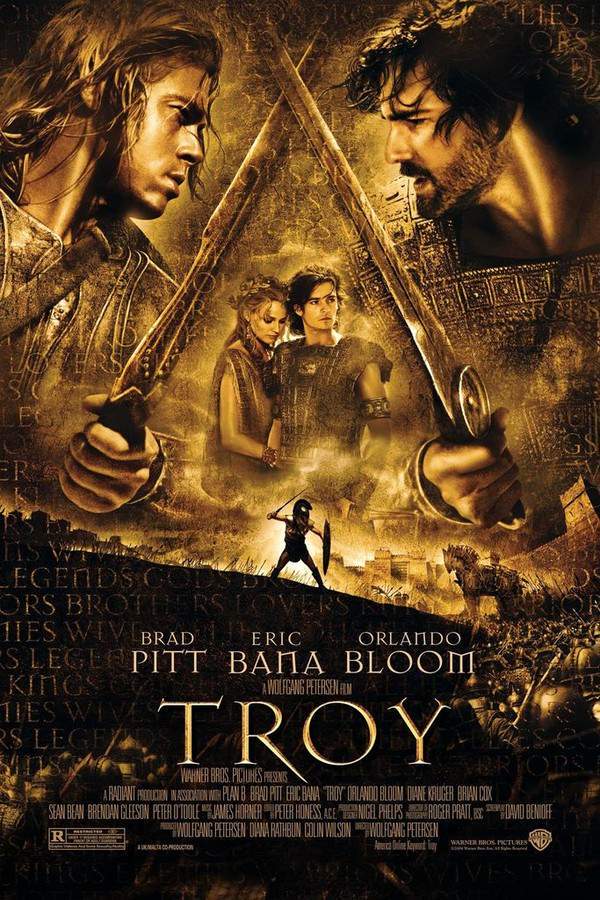
What Is Troy About?
The premise of Troy in 293 words, with nothing given away. The full story follows below.
In a world where myth and history intertwine, the glittering cities of the Aegean stand on the brink of conflict. The towering walls of Troy glitter against the sea, while the disciplined fleets of Sparta prepare to guard their honor. The film opens with a vivid sense of ancient grandeur, where the clash of bronze, the roar of chariots, and the whispers of the gods shape every decision. The tone balances the sweeping spectacle of a legendary war with intimate moments that reveal the humanity behind the heroes and the kingdoms they defend.
At the heart of the tension lies a fateful encounter that ignites the looming war. Paris, a prince whose curiosity and desire lead him to the beautiful Helen, the celebrated wife of Menelaus, spark a dispute that quickly escalates beyond personal longing. Menelaus vows retribution, calling upon his brother Agamemnon—the ambitious ruler who has already united the Greek forces under his banner. Meanwhile, on the Trojan side, Hector stands as the steadfast defender of his city, embodying duty and courage. Across the opposing camps, the legendary warrior Achilles wrestles with his own destiny, torn between a quiet life and the lure of immortal fame, while Odysseus offers cunning counsel and a strategic mind that promises to shape the unfolding saga.
The film’s mood is a blend of awe‑inspiring epic and personal drama, where the grandeur of armies and the intimacy of love and honor coexist. Characters are drawn with a timeless elegance, their motivations echoing the age‑old themes of pride, loyalty, and the search for meaning amid chaos. As the tide of war gathers, the audience is invited to contemplate how a single choice can ripple across nations, setting the stage for a conflict that will be remembered for millennia.
What Happens in Troy?
The complete story of Troy, from the first scene to the last, in 831 words (about 4 minutes). Spoilers throughout. Names in the text link to 5 cast member pages.
Spoilers ahead
Agamemnon, portrayed by Brian Cox, the ruler of Mycenae, has successfully united numerous kingdoms in Greece under his command and is now preparing to launch an assault on Thessaly. In a bid to avoid open conflict, King Triopas, played by Julian Glover, proposes that they allow their finest warriors to determine the victor. Triopas sends forth the daunting Boagrius, while Agamemnon’s confidence rests with Achilles. Achilles, a fierce warrior embodying the spirit of battle, is reluctant to fight for Agamemnon, as he yearns to carve out his own legacy and achieve immortality. Ultimately, Achilles triumphs over Boagrius, solidifying Agamemnon’s dominance over Thessaly.
In a contrasting scene, Princes Hector and Paris, portrayed by Eric Bana and Orlando Bloom respectively, are hosted in King Menelaus of Sparta’s banquet hall as peace envoys from Troy. However, Paris becomes enamored with Menelaus’s stunning wife, Helen, played by Diane Kruger, and persuades her to escape with him back to Troy. When Hector discovers this betrayal, his anger is palpable, but they have lost the chance to return to Sparta. Menelaus, upon realizing Helen’s disappearance, vows to bring destruction upon Troy and seeks Agamemnon’s backing, which the latter eagerly provides out of his own desires to raze the city.
Meanwhile, Odysseus, the king of Ithaca and Agamemnon’s commander, attempts to convince Achilles to join the expedition against Troy. He finds Achilles engaged in a sparring match with his young cousin, Patroclus. Achilles turns to his mother, Thetis, for counsel. She presents him with a troubling choice: opting for a quiet, blessed life at home with a family or pursuing glory and an immortal name through combat—though this path promises only death.
As Hector reunites with his family—his wife, Andromache, and his infant son—Achilles ultimately decides to join Agamemnon’s troops but insists on bringing his own elite warriors, the Myrmidons, led by Eudorus. Their fleet arrives at Troy ahead of the other forces, and they swiftly take control of the beach, capturing Briseis, a priestess and cousin of Hector and Paris. In the ensuing conflict, Hector confronts Achilles but refuses to engage in battle just yet, allowing Hector to depart peacefully.
Tensions mount as Agamemnon seizes Briseis, which infuriates Achilles. In his wrath, Achilles contemplates vengeance but is held back by Briseis’s plea. During a council meeting, Paris courageously offers to duel Menelaus to stave off bloodshed. Hector discovers Helen contemplating her role in the conflict and reassures her of the grave implications of the war that now transcends her personal desires.
The following day, as Agamemnon’s forces prepare for clash, Achilles remains in his camp, seething over the loss of Briseis. The duel between Paris and Menelaus sees Paris wounded and crawling back to Hector, who valiantly protects him, even killing Menelaus in the process. Undeterred by the setback, Agamemnon commands a full assault on Troy. However, the Trojans amass fierce resistance and compel Agamemnon to retreat under their relentless counter-offensive.
In a twist of fate, Achilles rescues Briseis from Agamemnon’s forces, leading to a passionate encounter between them. However, as Patroclus learns of Achilles’ plan to return home, despair floods him, longing for the battles ahead. Hector forewarns Priam of the strong Trojan defense, yet the king dismisses his counsel and reluctantly opts for a pre-dawn offensive, risking their fortifications.
As dawn breaks, Hector leads the Trojan forces against the Greeks. Achilles, still embittered by Agamemnon’s actions, appears suddenly in his armor, rallying the Myrmidons. Shortly after, Hector and Achilles meet on the battlefield. The outcome unfolds dramatically, with Achilles appearing invincible until Hector, in a tragic misstep, kills Patroclus. Stricken by grief and fury, Achilles emerges with vengeance in his heart and ultimately faces Hector, overpowering him and sealing his fate.
That evening, the grieving Priam approaches Achilles in disguise, pleading for the recovery of Hector’s body. He speaks of shared grief in war and the loss of lives. Moved, Achilles allows Priam to reclaim Hector’s corpse, swearing a truce for twelve days of mourning, while Briseis is also set free.
As word of Achilles’s truce spreads, Agamemnon’s ire boils over. Odysseus devises a cunning strategy to use the mourning period to their advantage. Following the twelve days, the Trojans discover a deceptive wooden horse left by the Greeks. Priam, despite Paris’s doubts, invites it within their walls, believing it’s a token of peace.
As night falls, the Greeks emerge from the horse, catching the Trojans off guard and storming the city. While chaos ensues, Priam is brutally murdered by Agamemnon. In a desperate bid, Achilles searches for Briseis, but Agamemnon attempts to claim her first, only to meet his demise at her own hands. Tragically, Achilles is eventually struck down by Paris as he seeks vindication for his loved ones.
The following day, in a display of honor, Achilles is given a funeral befitting a hero as Odysseus reflects on the fleeting nature of life and glory, emphasizing the legends that the heroes—Hector and Achilles—will leave behind, ensuring their names never fade into oblivion.
Troy Timeline: Every Key Event in Order
15 key events in the order they happen, from “Agamemnon's Alliance” to “Achilles' Death and Legacy”. 13 events name a place, across 5 locations.
- 1
Agamemnon's Alliance
Agamemnon, the ruler of Mycenae, successfully unites numerous Greek kingdoms under his command, preparing for an aggressive campaign against Thessaly. His ambition is fueled by the desire for dominion over the region, signaling the start of impending conflict.
Where:Mycenae
- 2
The Challenging Duel
King Triopas proposes that a duel between their greatest warriors determine the outcome of the conflict, aiming to avoid a full-scale war. Agamemnon selects Achilles as his champion, while Triopas sends forth the formidable Boagrius to represent Thessaly.
Where:Thessaly
- 3
Achilles' Reluctance
Despite being a fierce warrior, Achilles hesitates to fight for Agamemnon. His desire to carve out his own legacy and achieve immortality clashes with the demands of loyalty to a king.
- 4
Triumph in Battle
Achilles ultimately defeats Boagrius in the duel, securing victory for Agamemnon and further establishing his dominance over Thessaly. This moment marks a significant turning point in the campaign.
Where:Thessaly
- 5
The Abduction of Helen
During a banquet in Sparta, Paris becomes enamored with Queen Helen and persuades her to escape with him back to Troy. This betrayal ignites the fury of Menelaus, setting off a chain reaction that leads to war.
Where:Sparta
- 6
Menelaus' Vow
Upon realizing Helen's disappearance, Menelaus vows to unleash destruction upon Troy, seeking Agamemnon's support for his revenge. Agamemnon readily agrees, motivated by his ambitions to raze the city.
Where:Sparta
- 7
Odysseus' Plea to Achilles
Odysseus encounters Achilles in training and implores him to join the war against Troy. Achilles, however, seeks guidance from his mother, Thetis, who presents him with a difficult choice between a life of peace or one of glory through battle.
Where:Ithaca
- 8
Achilles' Decision
After contemplating his options and the implications of war, Achilles decides to join Agamemnon, but insists on bringing his elite warriors, the Myrmidons. Their swift arrival in Troy shifts the balance of power on the battlefield.
Where:Troy
- 9
The Seizure of Briseis
After capturing the city beach, Achilles' forces take Briseis, a priestess and cousin of Hector. When Agamemnon seizes her from Achilles, it ignites a fierce anger in the warrior.
Where:Troy
- 10
The Duel of Paris and Menelaus
A council leads to Paris challenging Menelaus to a duel to avoid further bloodshed. The battle sees Paris wounded, leading to Menelaus's death at the hands of Hector, thus escalating the war further.
Show the other 5 events of Troy Hide the last 5 events
- 11
Achilles' Vengeance
Fueled by rage over the loss of Briseis and the death of Patroclus, Achilles confronts Hector on the battlefield. Their intense duel culminates in Hector's demise, marking a tragic revenge for Achilles’ fallen friend.
Where:Troy
- 12
Priam's Plea
That evening, Priam approaches Achilles disguised as a common man. He pleads for the return of Hector's body, sharing a heartfelt message about the shared sorrows of war, which ultimately sways Achilles.
Where:Troy
- 13
The Wooden Horse Strategy
After twelve days of mourning for Hector, the Greeks use this time to devise a strategy involving a deceptive wooden horse. The Trojans, believing it a peace offering, bring it within their walls, leading to their downfall.
Where:Troy
- 14
Chaos in Troy
Matters escalate as night falls and the Greeks emerge from the wooden horse, launching a surprise attack on the unsuspecting Trojans. Chaos ensues within the city, resulting in horror and destruction.
Where:Troy
- 15
Achilles' Death and Legacy
In the aftermath of the conflict, Achilles is fatally struck down by Paris. He is honored with a hero's funeral, cementing the legacy of both him and Hector in history as legends whose names will endure forever.
Where:Troy
Who Are the Main Characters in Troy?
3 characters, among them Achilles, Hector and Paris: who each one is and the part they play in the story. Every profile links to the actor’s page.
-

Achilles
Played by Brad Pitt
Achilles is a fierce Greek warrior known for his unparalleled fighting skills and significant role in the Trojan War. He struggles with his desire for glory and the desire for a peaceful life, which reflects his inner turmoil and complexity. His deep bond with Patroclus and his fierce protectiveness over Briseis reveal a more human side, despite his reputation as a legendary hero.
- 🛡️ Warrior
- 🔥 Pride
-

Hector
Played by Eric Bana
Hector serves as the noble prince of Troy, representing honor and duty toward his family and city. He grapples with the challenges of war while being a steadfast protector of his loved ones, particularly his wife, Andromache, and his son. Hector's fierce loyalty and tragic fate elevate him as a tragic hero caught in the crossfire of greater conflicts.
- 👑 Honor
- ⚔️ Protector
-

Paris
Played by Orlando Bloom
Paris, the flamboyant prince of Troy, is often seen as a romantic figure whose infatuation with Helen leads to catastrophic consequences. His charm and charisma contrast sharply with his role in instigating the war, reflecting the complexities of love and desire. Paris's character arc highlights the conflict between personal desire and moral responsibility.
- ❤️ Love
- 😕 Conflict
Where and When Is Troy Set?
Troy is set in Troy, Sparta, Mycenae and Ithaca (Ancient Greece). Here is why the time and place matter to the story.
When
Ancient Greece
The movie is set during the era of the Trojan War, a time characterized by heroic deeds, divine interventions, and the pursuit of glory. Ancient Greece was marked by great city-states and complex relationships, which often led to fierce conflicts, as seen in the battles for Troy. This period laid the foundation for many Greek legends and cultural narratives that continue to shape storytelling today.
Where
Troy, Sparta, Mycenae, Ithaca
Troy is a legendary city known for its fortified walls and the epic battles fought outside its gates during the Trojan War. Sparta, another significant location, is famed for its military prowess and the valor of its warriors. Mycenae, the home of Agamemnon, symbolizes power and unity among Greek kingdoms. Ithaca, ruled by Odysseus, represents wisdom and cunning in the face of warfare.
- 🏙️ Cities
- 🏰 Kingdoms
What Are the Themes of Troy?
3 ideas the story keeps returning to, among them War & Honor, Betrayal and Fate vs. Free Will.
-
01
War & Honor
The theme of war is central to the narrative, depicting the glory and devastation it brings. Characters grapple with personal honor and the weight of their decisions as they face the consequences of their actions in battle. The pursuit of immortal legacy often conflicts with familial loyalty and human emotion, illustrating the complex nature of honor in warfare.
-
02
Betrayal
Betrayal is a recurring theme, especially illustrated through Paris's actions that spark the Trojan War. The emotional turmoil faced by characters like Hector and Achilles highlights the personal cost of such betrayals, affecting families and kingdoms alike. The impact of romantic decisions contributes significantly to the larger conflict and its tragic outcomes.
-
03
Fate vs. Free Will
The movie explores the tension between fate and individual agency. Characters like Achilles are torn between their destined roles as legendary heroes and their personal desires for a different life. Ultimately, the choices they make within the constraints of their fate shape their destinies and determine their legacies, prompting reflections on glory and mortality.
What Kind of Film Is Troy?
Dark in tone, with fast pacing and a straightforward story, going by the plot summary.
- Tone
- Dark
- Pacing
- Fast
- Story
- Straightforward
- Intensity
- High
- Ending
- Sad
A fast-paced and intense epic war film that delivers a tragic and dark experience, filled with grand battles, profound loss, and the grim consequences of pride and vengeance.
- epic
- tragic
- tense
- sweeping
- grim
- vengeful
- war
- honor and glory
- revenge
- ambition
Content notes: war violence, major character deaths.
Quiz
How well do you remember Troy? Test yourself on the story.