What Is The Lark About?
The premise of The Lark in 309 words, with nothing given away. The full story follows below.
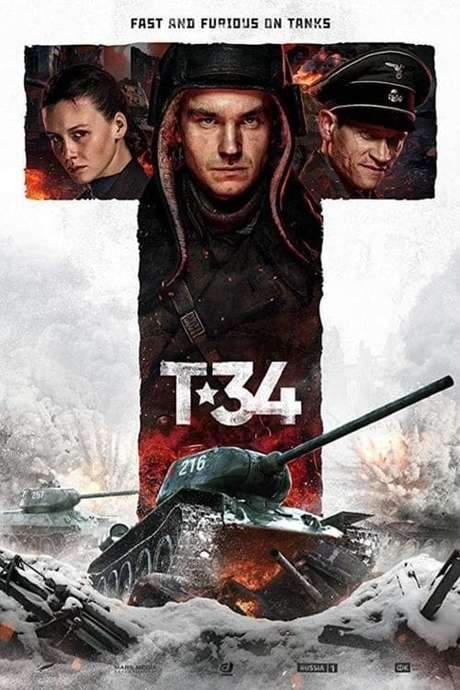
Deep within Nazi Germany in 1942, a harrowing and little-known chapter of the war comes to light through a story of survival against impossible odds. The film opens on a grim reality where Soviet prisoners of war are forced into “death crews,” serving as live targets for German forces to test new anti-tank weaponry. Stripped of their autonomy and facing certain death, these men operate captured tanks in a brutal proving ground, their lives measured only by the efficiency of the weapons aimed at them. The atmosphere is suffocating, defined by a ruthless mechanical precision that views human existence as merely a component of the war machine.
At the center of this desperate struggle is Ivan, a skilled mechanic and driver who refuses to accept the fate assigned to him. Alongside a small group of Red Army soldiers and a French Resistance fighter named Jean Peugeot, he becomes the linchpin of a daring plan. The narrative establishes a tense dynamic within the confined space of a T-34 tank, where a diverse crew must bridge their differences to seize a singular opportunity for freedom. Their shared history as pawns in a lethal experiment forges a bond that goes beyond nationality, united by a singular drive to reclaim their agency.
As the crew breaks through enemy lines, the film sets the stage for a relentless pursuit across hostile territory. What begins as a flight for survival evolves into a complex game of strategy, as the fugitives turn the tables on their pursuers. The open road becomes a canvas for chaos and resistance, promising a narrative filled with tension, tactical maneuvering, and the unpredictable nature of a war fought on the run. It is a story that highlights how a handful of determined individuals can disrupt a nation’s sense of security, turning the hunters into the hunted in a deadly cat-and-mouse game.
What Happens in The Lark?
The complete story of The Lark, from the first scene to the last, in 189 words (about 1 minute). Spoilers throughout. Names in the text link to 4 cast member pages.
Spoilers ahead
The opening sequence states that the film is based on true events. Set deep within Nazi Germany on June 22, 1942, the story follows the grim use of captured Soviet tanks as live targets for testing anti-tank weapons. These “death crews” consist of Soviet prisoners of war and civilians from concentration camps, forced to fight and die in brutal experiments. The film chronicles the escape of one such tank crew led by Ivan, a skilled mechanic and driver, who, along with two other Red Army soldiers and a fighter from the French Resistance—Jean Peugeot—breaks through enemy lines in a T-34 tank. Along their route, they rescue Soviet women forced into labor, disrupt a German town, raid supplies, and destroy a monument to a Teutonic knight, shaking the town’s sense of victory and safety.
As the crew fights through enemy territory, they suffer losses: the French fighter is killed by a bomb, and Alyosha and Pyotr die after leaving the tank during an attack. In a final act of defiance and humanity, Ivan saves a young German boy crossing the road but is shot dead by German forces moments later.
The Lark Timeline: Every Key Event in Order
12 key events in the order they happen, from “Opening sequence asserts true-event basis” to “Aftermath and legacy of the escape”. 11 events name a place, across 11 locations.
- 1
Opening sequence asserts true-event basis
The opening sequence declares that the film is based on true events, grounding the narrative in a wartime reality. It sets a grim tone by promising a story drawn from real actions and consequences rather than fictional exploits. The reference invites the audience to read the ensuing chaos as something that happened, even as it unfolds on screen.
When:June 22, 1942 Where:Nazi Germany
- 2
Death crews assembled to test anti-tank weapons
Captured Soviet tanks are repurposed as live targets for German anti-tank weapon testing. The crews are made up of Soviet prisoners of war and civilians from concentration camps, treated as disposable tools of warfare. The scene exposes the cruelty of the occupation and the dehumanization evident in the 'death crews.'
When:June 1942 Where:Nazi Germany – training grounds
- 3
Ivan leads the escape with a T-34
Ivan, a skilled mechanic and driver, leads the Soviet crew as they break through enemy lines in a T-34. The team consists of three Red Army soldiers and a French Resistance fighter, banding together under pressure. Their escape marks the start of a perilous journey toward safety.
When:June 1942 Where:Nazi-occupied Europe
- 4
Rescue of Soviet women from forced labor
While on the run, the crew frees Soviet women who have been forced into labor by the Germans. The rescue adds a humanitarian dimension to their mission and expands the stakes beyond their own survival. The act demonstrates courage amid constant danger from pursuit and bombardment.
When:June 1942 Where:along escape route
- 5
They disrupt a German town and shake victory illusion
The tank crew's presence disrupts the townsfolk's sense of victory and normalcy in a German town. Their audacious movement pits civilian life against a collapsing war front and fills the town with fear. The moment underscores how a single tank can alter perceptions of the war's outcomes.
When:June 1942 Where:German town
- 6
Raid on supplies and hamper the German war effort
The crew raids supplies, stealing what they need to survive and hindering German logistics. This act also interacts with the broader theme of resistance against an overbearing occupation. The raid highlights the crew's resourcefulness under pressure.
When:June 1942 Where:German rear areas
- 7
Monument to Teutonic Knight is destroyed
In a symbolic strike, they destroy a monument to a Teutonic Knight, striking at the vestiges of expansion and domination. The act serves as a defiant message to the occupiers that resistance endures. The destruction reverberates beyond the immediate combat as a political statement.
When:June 1942 Where:town square
- 8
French Resistance fighter killed by a bombing
A bomb destroys the French Resistance fighter, cutting the team literally and symbolically. The loss shades the mission with personal tragedy and underscores the cost of the escape. The casualty also affects the crew's dynamics and morale going forward.
When:June 1942 Where:combat zone
- 9
Two crew members die after leaving the tank
During an attack, two crew members die after exiting the tank, illustrating the peril of relying on mobility and personal risk. Their deaths reduce the crew to a smaller, more vulnerable unit. The event heightens the sense of sacrifice driving the survivors onward.
When:June 1942 Where:battlefront
- 10
Ivan saves a young German boy
In a moment of humanity amid chaos, Ivan saves a young German boy crossing the road. The act embodies the film's theme of compassion amid brutal warfare, no matter the side. It also foreshadows the ultimate cost of his mission.
When:Final stretch of journey Where:on a road in Germany
- 11
Ivan is shot dead after the rescue
Moments after saving the boy, Ivan is shot dead by German forces, sealing his sacrifice. The death underscores the price paid for daring defiance and the hope of mercy in war. The crew's journey ends with this poignant loss.
When:End of journey Where:roadside
- 12
Aftermath and legacy of the escape
The journey's end leaves a lingering sense of the crew's sacrifices and the fragile hope stirred by their actions. The narrative invites reflection on the human cost of war and the resilience of those who resist oppression. It emphasizes that courage can emerge in the darkest moments, shaping memory long after the battles end.
Who Are the Main Characters in The Lark?
4 characters, among them Ivan (Vyacheslav Gurenkov), Alyosha (Valeriy Pogoreltsev) and Pyotr (Gennadiy Yukhtin): who each one is and the part they play in the story. Every profile links to the actor’s page.
- I(
Ivan (Vyacheslav Gurenkov)
Played by Vyacheslav Gurenkov
Ivan is the skilled mechanic and driver who leads the escape in the T-34. He remains calm under pressure, improvising repairs and navigating through dangerous frontline terrain. His leadership and courage drive the crew’s efforts, even as the mission becomes increasingly perilous.
- 🧭 Determined
- 🛡️ Protective
- ⚔️ Courageous
- A(
Alyosha (Valeriy Pogoreltsev)
Played by Valeriy Pogoreltsev
Alyosha is a steady, loyal member of the tank crew who contributes practical skills and moral support. He helps coordinate risky maneuvers and offers resilience in the face of repeated losses. His presence anchors the group through adversity.
- 💪 Loyal
- 🧰 Practical
- 🌀 Steady
- P(
Pyotr (Gennadiy Yukhtin)
Played by Gennadiy Yukhtin
Pyotr is a brave comrade who participates actively in the crew’s operations. He shows determination under fire and makes sacrifices to protect the mission and his fellow soldiers. His camaraderie highlights the bonds formed under extreme stress.
- 🔥 Brave
- 🗺️ Strategic
- 🎯 Resilient
- JP
Jean Peugeot (Valentīns Skulme)
Played by Valentīns Skulme
Jean Peugeot is a fighter from the French Resistance who allies with the Soviet crew. He brings flexible thinking and courage, helping to bridge different groups against their occupiers. His collaboration expands the scope of resistance beyond one nation.
- 🕊️ Ally
- 🌟 Resourceful
- 💫 Strategic
Where and When Is The Lark Set?
The Lark is set in Nazi Germany and German town (1942). Here is why the time and place matter to the story.
When
1942
The events take place during World War II in 1942, a year marked by brutal campaigns on the Eastern Front. German forces conduct anti-tank weapon testing using captured Soviet tanks, reflecting the brutal and systematic warfare of the period. The story spans the summer, with the crew attempting to break through enemy lines amid advancing frontlines.
Where
Nazi Germany, German town
Set deep within Nazi Germany, the film unfolds in a region where a captured Soviet T-34 is used as a live target for anti-tank weapons. The action moves through a German town and surrounding countryside, highlighting the oppressive atmosphere of occupation and constant danger. The landscape features checkpoints, ruins, and a sense of impending violence as the crew fights to survive.
- 🪖 War-torn
- 🏚️ Occupied
- 🧭 Frontline
What Are the Themes of The Lark?
3 ideas the story keeps returning to, among them Brutality, Resistance and Sacrifice.
-
01
Brutality
The film foregrounds the brutal treatment of prisoners of war and civilians, including the use of captured tanks as living targets for weapon testing. It exposes how war machinery dehumanizes people and reduces individuals to tools of terror. The narrative underscores the heavy toll exacted on those forced into lethal roles by the regime.
-
02
Resistance
Against overwhelming odds, the crew refuses to surrender to the occupiers. They rescue Soviet women from forced labor, raid supplies, and strike at symbols of occupation, highlighting acts of defiance. The presence of a French Resistance fighter reinforces cross-national solidarity in the face of tyranny.
-
03
Sacrifice
The story culminates in acts of selflessness and tragedy, with heroes paying the ultimate price for others. Ivan’s final choices embody the cost of freedom and the human cost of war. The film leaves a lasting impression of courage amid loss.
What Kind of Film Is The Lark?
Tense in tone, with fast pacing and a straightforward story, going by the plot summary.
- Tone
- Tense
- Pacing
- Fast
- Story
- Straightforward
- Intensity
- High
- Ending
- Bittersweet
A relentlessly tense and fast-paced war thriller that follows a desperate POW escape through enemy territory, balancing moments of heroic triumph with the grim, tragic reality of its bleak setting.
- tense
- desperate
- gripping
- tragic
- heroic
- urgent
- world war two
- prisoner of war
- desperate escape
- tank warfare
Content notes: war violence, prisoner of war, concentration camps, forced labor, death of major characters.