What Is The Dust of Time About?
The premise of The Dust of Time in 335 words, with nothing given away. The full story follows below.
In a world that stretches from the smoky studios of Rome to the icy steppes of Kazakhstan, an American director of Greek descent embarks on a deeply personal cinematic quest. A receives a long‑forgotten letter that pulls him into the tangled archives of his family’s past, prompting him to stitch together fragments of memory that span continents and half a century. The film’s canvas is painted with the sweeping backdrop of mid‑century history, yet the focus remains intimate, inviting the audience to feel the subtle tremors of time as they echo through personal narratives.
At the heart of this tapestry is Eleni, a woman who has lived according to an unshakable belief in love’s absolute truth. Her presence drifts like a reverie across the story’s many locales, her voice resonating in letters, photographs, and fleeting moments that hint at both joy and longing. Through her, the film explores how affection can become a compass amid the shifting sands of political upheaval and cultural change, offering a quiet, lyrical counterpoint to the larger historical currents.
Equally pivotal are Spyros and Jacob, whose lives intersect with Eleni’s in ways that suggest both companionship and unspoken yearning. Spyros carries the weight of a generation caught between duty and desire, while Jacob provides a steady, if enigmatic, thread that ties disparate episodes together. Their relationships form the subtle scaffolding upon which the director builds his meditation on heritage, identity, and the elusive nature of memory.
The tone is wistful yet vibrant, a palette of muted sepia and sudden bursts of color that mirrors the “dust of time” that clouds recollection. As the director navigates archives, old reels, and personal artifacts, the audience is invited to join a reflective pilgrimage—searching for lost moments, feeling the pull of forgotten places, and pondering how love endures amid the relentless march of history. The film promises an immersive experience that lingers long after the final frame, leaving viewers to wonder what other stories lie hidden in the quiet corners of their own pasts.
What Happens in The Dust of Time?
The complete story of The Dust of Time, from the first scene to the last, in 457 words (about 2 minutes). Spoilers throughout. Names in the text link to 4 cast member pages.
Spoilers ahead
In 1999, A, an American filmmaker of Greek descent, receives a phone call from his melancholic daughter at the Cinecittà studio. He hurries back to his Rome apartment and discovers a letter from his mother, Eleni, written to his father, Spyros, in 1956. The discovery sets off a thread of memories that spans decades and continents, inviting the past to surface in the present.
Traces of those memories begin in 1953, when [Eleni] and Jacob watch a newsreel in the Soviet industrial city Temirtau (now in Kazakhstan). [Spyros] arrives, and in a quick turn of events, he and Eleni jump onto a tram, leaving Jacob behind. The tram rumbles toward a public square where Stalin’s death is announced, and that night, after a private moment, [Spyros] and [Eleni] are arrested and separated, reshaping the paths of everyone involved.
In Siberia, 1956, [Eleni] sends her three-year-old son on a train to Moscow, where Jacob’s older sister will take care of him. This act quietly anchors a future where distance and longing will echo through the years, even as new loyalties and hopes form elsewhere.
New Year’s Eve, 1973, finds [Eleni] and [Jacob] crossing from Communist Hungary into Austria. They share a moment of celebration, but the relationship fades as Eleni encourages Jacob to pursue a life in Israel, leaving a sense of unfinished business in its wake.
The summer of 1974 brings a renewed search and a revelation: Eleni finally locates [Spyros] in the suburbs of New York, but she leaves him without greeting, already aware that he has built a life elsewhere. The emotional tension heats up as the past leaks into the present.
Winter returns in 1974 when Eleni crosses into Canada. There, she and [A] drive [Spyros] to an Ontario bar where Eleni works, and a fragile engagement rekindles: [Spyros] proposes to Eleni, and she accepts, weaving a new arrangement from old fractures.
By 1999, Eleni and Spyros arrive in a reunited Berlin, and [Jacob] visits them as they navigate the city’s shifting pulse. The trio heads to a station where Eleni feels faint, and Spyros phones [A], learning that their granddaughter has been found. They move to an old building where their granddaughter has barricaded herself among addicts and vagabonds. Eleni steps in, rescues her, and they bring her back to [A]’s Berlin apartment. Eleni rests in the granddaughter’s room as they continue to grapple with the past, while [Jacob] drowns himself in the Spree.
As the calendar turns to New Year’s Day 2000, Eleni dies, leaving Spyros and their granddaughter to face the quiet aftermath. They stand together, looking out a window, and then run hand in hand beneath a snowy Brandenburg Gate, carrying forward a legacy built from love, loss, and endurance.
The Dust of Time Timeline: Every Key Event in Order
11 key events in the order they happen, from “1999: Phone call and discovery of a 1956 letter” to “2000-01-01: Eleni's death and a quiet departure”. 11 events name a place, across 10 locations.
- 1
1999: Phone call and discovery of a 1956 letter
In 1999, A, a filmmaker, receives a phone call from his melancholic daughter at the Cinecittà studio and rushes back to his Rome apartment. There he discovers a letter written in 1956 by his mother, Eleni, to his father, Spyros. The letter links his present turmoil to a past he barely knows.
When:1999 Where:Cinecittà, Rome
- 2
1953: Temirtau tram ride and a shocking arrest
In 1953, Eleni and Jacob watch a newsreel in the Soviet industrial city Temirtau as Spyros arrives. They jump onto a tram and rush to a public square where Stalin's death is announced. That night, after an intimate encounter, Spyros and Eleni are arrested and separated.
When:1953 Where:Temirtau, Soviet Union (now Kazakhstan)
- 3
1956: Siberia separates mother and son
In Siberia, Eleni places her three-year-old son on a train to Moscow, where Jacob's older sister will take care of him. The child is sent away as Eleni remains behind. This act marks a long period of separation that shapes their lives.
When:1956 Where:Siberia
- 4
1973-12-31: Hungary to Austria and a broken bond
On New Year's Eve 1973, Eleni and Jacob cross the border from Communist Hungary into Austria and celebrate the turn of the year there. After the celebration, Eleni ends their relationship and encourages Jacob to go to Israel.
When:1973-12-31 Where:Hungary–Austria border
- 5
Summer 1974: New York suburb revelation
In the summer of 1974, Eleni finds Spyros in the suburbs of New York and does not greet him. She learns that he is already married to another woman. The encounter deepens the burden of their unresolved history.
When:Summer 1974 Where:New York suburbs
- 6
Winter 1974: Canada reunion and a proposal
In winter 1974, Eleni crosses from the United States to Canada. There, she and A meet again for the first time in many years. A drives Spyros to an Ontario bar where Eleni works, and Spyros proposes to Eleni, which she accepts.
When:Winter 1974 Where:Ontario, Canada
- 7
1999: Return to Berlin and the uneasy reunion
In 1999, Eleni and Spyros arrive in reunified Berlin and join their son Jacob as he visits. They all go out to the station together, a moment that unsettles Eleni as the past resurfaces.
When:1999 Where:Berlin, Germany
- 8
1999: News of a granddaughter and a search begins
During the same visit, Spyros phones A and learns that their granddaughter has been found. The family prepares for a crisis that will draw them deeper into Berlin’s hidden world.
When:1999 Where:Berlin
- 9
1999: Rescue at the old building
The trio goes to an old building where their granddaughter has barricaded herself among addicts and vagabonds. Eleni enters the building, finds the girl, and rescues her. They return to A's Berlin apartment with a renewed sense of purpose.
When:1999 Where:Old building, Berlin
- 10
1999: Jacob's death in the Spree
After the rescue, Jacob drowns himself in the Spree river, a devastating blow that fractures the fragile reconciliation of the family and marks the end of his presence in the living world.
When:1999 Where:Spree River, Berlin
- 11
2000-01-01: Eleni's death and a quiet departure
On New Year's Day 2000, Eleni dies. Spyros and their granddaughter look out of a window, and together they walk hand in hand under the snowy Brandenburg Gate, marking a somber, hopeful finale.
When:2000-01-01 Where:Berlin
Who Are the Main Characters in The Dust of Time?
6 characters, among them Eleni, Spyros and Jacob: who each one is and the part they play in the story. 5 of them link to the actor’s page.
-

Eleni
Played by Irène Jacob
A resilient matriarch whose past drives the film's emotional core. Across decades, she navigates political upheaval, long-lost lovers, and the burden of family secrets. Her choices reveal a fierce determination to protect those she loves, even at personal cost.
- ❤️ Mother
- 🧠 Memory
- 🌍 Immigrant
-
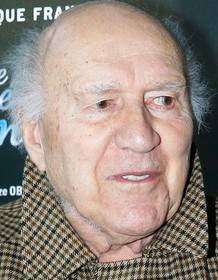
Spyros
Played by Michel Piccoli
A complex figure navigating love, loyalty, and his own secrets. He moves through decades as a man shaped by displacement and his relationships with Eleni and Jacob.
- 💔 Love and Betrayal
- 🕰️ Time-Worn
- 🌐 Exile
-

Jacob
Played by Bruno Ganz
A Jew of German descent, he threads through the story as a foil and bond across generations.
- ❤️ Family
- 🌍 Diaspora
-

A
Played by Willem Dafoe
An American filmmaker of Greek descent who catalyzes the family's reunions and frames the decades as a filmic memory.
- 🎬 Film within a film
- 🧭 Memory
- G
Grandfather
Played by Sviatoslav Yshakov
An elder figure whose quiet presence anchors the lineage's memory, representing endurance across generations.
- 🧓 Elder
- 👪 Family legacy
- G
Granddaughter
A young member of the family who becomes a focal point of protection and belonging, symbolizing renewal.
- 💖 Future
- 👪 Family
Where and When Is The Dust of Time Set?
The Dust of Time is set in Temirtau, Moscow, Siberia, New York, Austria, Hungary, Ontario, Berlin (1953-2000). Here is why the time and place matter to the story.
When
1953-2000
The narrative spans several decades, starting in the early 1950s and ending at the turn of the millennium. It traces political upheaval, border crossings, and the persistence of family memories across continents. The timeline culminates in a reunified Berlin, underscoring how personal histories intersect with global change.
Where
Temirtau, Moscow, Siberia, New York, Austria, Hungary, Ontario, Berlin
The film sweeps across a string of real-world locations tied to its characters' lives. Temirtau’s industrial backdrop introduces the Cold War era's reach, while Moscow, Siberia, and border towns in Europe mark the movements of Eleni, Spyros, and Jacob. The later chapters unfold in New York, Canada (Ontario), and Berlin, using these places to mirror memory, exile, and reunion.
- 🌍 European settings
- 🗺️ Border-crossing journeys
- 🏙️ Urban landscapes
- ❄️ Winter atmosphere
What Are the Themes of The Dust of Time?
3 ideas the story keeps returning to, among them Time and Memory, Love and Separation and Borders and Identity.
-
01
Time and Memory
Across decades, the film threads past and present, showing how memories endure through changing landscapes and relationships. Time reshapes choices, regrets, and the bonds that endure across generations. The characters' recollections drive the narrative as much as external events.
-
02
Love and Separation
Love persists despite distance, borders, and broken promises. The relationships between Eleni, Spyros, and Jacob reveal tenderness, longing, and sacrifices made for family. The film treats affection as a force that outlives political regimes.
-
03
Borders and Identity
The journey across borders literalizes questions of belonging and identity. Each crossing tests loyalties and reveals how history channels personal stories. The settings—across continents—highlight the tension between roots and routes.
What Kind of Film Is The Dust of Time?
Melancholic in tone, with variable pacing and a complex story, going by the plot summary.
- Tone
- Melancholic
- Pacing
- Variable
- Story
- Complex
- Intensity
- Medium
- Ending
- Bittersweet
A dreamlike and melancholic epic that drifts through five decades of love and loss, enveloping viewers in a heavy but beautiful atmosphere of nostalgia and the painful clarity of time.
- nostalgic
- dreamlike
- longing
- somber
- reflective
- isolated
- memory and time
- family saga
- long lost love
- political exile
Content notes: political arrest and exile, suicide.
Quiz
How well do you remember The Dust of Time? Test yourself on the story.