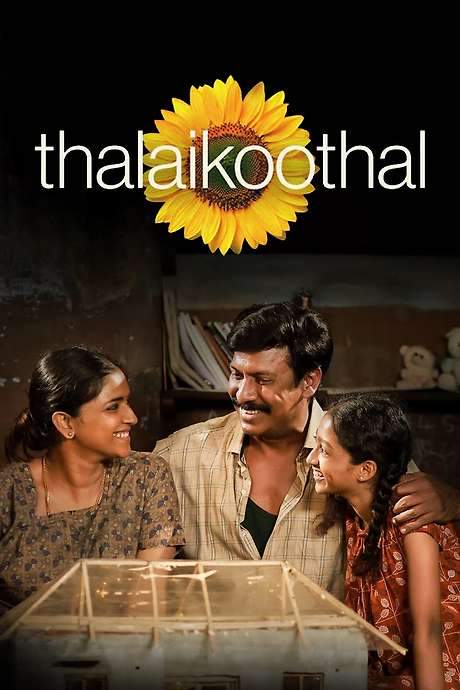
What Is Thalaikoothal About?
The premise of Thalaikoothal in 318 words, with nothing given away. The full story follows below.
In a dusty village where daily survival feels as precarious as the monsoon‑laden fields, * Pazhani * shoulders a burden far heavier than his modest income. After his father, Muthu, falls into a prolonged coma following a workplace accident, he abandons his own work to become the sole caretaker, swapping construction labor for night shifts as an ATM guard. The modest home he shares with his wife, Kalaiselvi, and their young daughter becomes a quiet arena of love, sacrifice, and mounting tension, each day stretching the thin line between hope and exhaustion.
The household’s fragile equilibrium is further strained by relentless financial pressures. A local moneylender looms over their doorstep, while Kalaiselvi juggles extra work in a match‑stick factory, her frustration simmering against the backdrop of poverty and the ever‑present fear of losing what little they have. Within this setting, the shadow of an age‑old rural practice—thalaikoikoothal, a form of euthanasia—lurks in conversation, suggested by relatives who see the comatose father as an insurmountable burden. The notion introduces a moral crossroads that pits tradition against the stubborn spark of a son’s devotion.
The film’s tone is intimate and unflinching, bathing every scene in the amber glow of dusk‑lit lanes and the muted chatter of a close‑knit community. It captures the quiet dignity of Pazhani’s resolve while revealing the cracks in his marriage, the unspoken yearning of his daughter, and the weight of cultural expectations that press upon the family. The atmosphere thrums with a blend of melancholy and resilient optimism, inviting viewers to contemplate how far a single individual might go to protect the remnants of his past.
At its core, Thalaikoothal explores the fragile balance between duty and desire, tradition and personal conviction. As the family navigates grief, financial strain, and the looming decision that threatens to redefine their lives, the story lingers on the question of what it truly means to care when hope hangs by a thread.
What Happens in Thalaikoothal?
The complete story of Thalaikoothal, from the first scene to the last, in 717 words (about 3 minutes). Spoilers throughout. Names in the text link to 5 cast member pages.
Spoilers ahead
Pazhani, Samuthirakani, is a middle‑aged man who lives with his wife Kalaiselvi, Vasundhara Kashyap, and their daughter, while caring for his bedridden, comatose father Muthu, Kalai Selvan. To support his family and pursue his father’s care, Pazhani drops his own work and takes a night shift as an ATM security guard. Kalaiselvi grows increasingly frustrated with how his attention remains tied to his father, and she must take a factory job at a matchstick plant to keep the household afloat. The couple’s finances are strained after Pazhani borrows a large sum from a local moneylender to fund Muthu’s treatment, and the lender’s harassment only grows louder. When Pazhani’s father‑in‑law hints at performing thalaikoothal on the ailing elder to ease the burden, Pazhani resists—yet the threat of debt and social pressure gnaws at him. On top of this, Pazhani turns to a local demigod for a cure or blessing, and his pledge to throw a village feast if his father improves becomes a guiding thread through a life of escalating stakes. One day, Muthu opens his eyes and begins to recognize the people around him, lifting Pazhani’s spirits and prompting him to borrow again to arrange the communal celebration, even as he secretly pledges the house documents to the moneylender to cover mounting expenses.
The film unfolds in a non‑linear fashion, weaving in flashbacks to Muthu’s youth. In these memories, younger Muthu, Kathir, falls in love with Pechi, a lower‑caste washerwoman, Katha Nandi. Against the rigid social expectations of the time, they pursue a bond that leads toward marriage. However, before the ceremony can take place, Pazhani’s grandfather interrupts, attacking Pechi and severing her finger, pulling Muthu away and shattering the couple’s hopes. The emotional blow reverberates through the family; when the elder Pazhani recalls this incident, he slips back into the coma and loses consciousness again, deepening the tangled web of memory and present‑day fear. The memory of that forbidden love haunts Muthu’s image in Pazhani’s family, and the weight of ancestral trauma presses on Pazhani’s decisions.
Back in the present, the moneylender returns, attempting to measure the house for sale while Pazhani’s wife’s relatives interfere. Kalaiselvi interrupts the proceedings, and she discovers that Pazhani had pledged the house documents to the lender without telling her, leading to a bitter argument that ends with her leaving the family with their daughter. Pazhani’s father‑in‑law and brother‑in‑law reappear with a Swami and press Pazhani to perform Thalaikoothal on his father, arguing that there is no hope for recovery. Kalaiselvi strengthens her threat to leave if he does not go along, pushing Pazhani to a painful decision. Faced with the pressure and the possibility of losing his wife and child, he reluctantly agrees to keep caring for his father rather than resort to killing him. The family’s bonds fracture as Kalaiselvi and their daughter depart, and the nightmares Pazhani experiences reveal his deepest fears about losing them.
In a grim turn, the decision is carried out under a ritual guise: the elder Muthu is given an oil bath, forced to drink coconut water, and laid to sleep on the floor with the others believing it to be a peaceful end. Yet the plan is not to allow a natural death; the next day a poison injection finishes the job, and Muthu’s death is staged as a natural cremation. Pechi, now an aged memory and a silent witness to the tragedy, visits the funeral but leaves unrecognized by the party. A shattered Pazhani takes a fragment of his father’s remains from the graveyard and, with a quiet reverence, plants a banyan tree to honor him. The act becomes a living memorial that will outlast the family’s troubles.
The family moves to the city to rebuild their lives, with Pazhani continuing to care for his daughter as best he can. Years later, a conversation on a bus reveals the truth about the thalaikoothal incident to Pazhani’s daughter, a revelation that shapes her perspective on her father and their shared history. The final frames sweep forward to a tranquil moment beneath the now‑grown banyan tree, where Pazhani and his daughter share time together, acknowledging the past while attempting to move forward. The film’s ending lingers on the tree’s massive, spreading roots—a poignant symbol of memory, guilt, and the stubborn resilience of family ties.
Thalaikoothal Timeline: Every Key Event in Order
15 key events in the order they happen, from “Pazhani cares for his comatose father at home” to “Years later: under the banyan tree”. 15 events name a place, across 10 locations.
- 1
Pazhani cares for his comatose father at home
Pazhani juggles caring for his bedridden father Muthu with night shift as an ATM security guard. His wife Kalaiselvi grows increasingly angry as Pazhani's attention is pulled away by his father's needs.
When:early part Where:Pazhani's home
- 2
Debt and medical expenses strain the family
Pazhani borrows a large sum from a local moneylender to fund Muthu's treatment. The lender's constant harassment and the low family income heighten the pressure on Pazhani and Kalaiselvi.
When:early Where:Home and moneylender's office
- 3
In-laws push for thalaikoothal while Pazhani resists
Pazhani's father-in-law suggests performing thalaikoothal to end the burden of a comatose father. Pazhani strongly disagrees, insisting he will care for his father instead of killing him.
When:midpoint Where:Home
- 4
Pazhani consults a demigod for a cure
Seeking hope, he consults a local demigod who promises blessings if his father's condition improves and even suggests a ritual to mobilize the village's support.
When:before improvement Where:Home and demigod's place
- 5
Muthu regains awareness; village feast planned
Muthu opens his eyes and recognizes people around him, bringing Pazhani joy. To celebrate and to fund ongoing care, Pazhani borrows again to arrange a feast for the village.
When:after improvement Where:Home and village
- 6
Pazhani pledges house documents to the moneylender
To cover mounting expenses, Pazhani pledges the house documents to the moneylender, signaling how precarious the family's finances have become.
When:after improvement Where:Home
- 7
Flashback: Muthu's youth and Pechi
Non-linear flashbacks reveal Muthu's past romance with Pechi, a lower-caste washerwoman. They plan to marry, but Pazhani's grandfather attacks them and Cuts Pechi's finger, forcing them apart.
When:past Where:Muthu's village (past)
- 8
Memory triggers another coma
The painful memory surfaces, and Muthu sinks back into a coma. Pazhani's relief turns to renewed worry as the crisis deepens.
When:later Where:Pazhani's home
- 9
Lender returns; Kalaiselvi discovers the pledge
The moneylender arrives to measure the house for sale, but Kalaiselvi interrupts and learns that Pazhani had pledged the house documents without telling her. She leaves with their daughter.
When:present Where:Home
- 10
Pressure to perform Thalaikoothal escalates
In-laws and the swami pressure Pazhani to perform thalaikoothal as the burden continues. Kalaiselvi threatens to leave unless he protects his father.
When:rising Where:Home
Show the other 5 events of Thalaikoothal Hide the last 5 events
- 11
Attempted care turns into murder via thalaikoothal
Under immense pressure, Pazhani agrees to the ritual and participates in the oil bath, coconut water, and sleeping on the floor. When Muthu remains alive, a killer injects poison, killing him instantly.
When:night of the ritual Where:Home
- 12
Funeral and Pechi's appearance
Muthu's death is arranged as a natural cremation, and Pechi attends the funeral, appearing briefly but remaining unseen by the family.
When:shortly after death Where:Funeral site
- 13
Banyan tree planted with the remains
A devastated Pazhani retrieves part of his father's remains from the grave and plants a banyan tree over them, creating a living memorial.
When:after death Where:Grave site
- 14
Relocation to the city; daughter learns the truth
The family moves to the city for work. On a bus, the daughter confronts Pazhani with what she learned from a friend about the thalaikoothal incident.
When:years later Where:City and bus
- 15
Years later: under the banyan tree
The story closes with Pazhani and his now-grown daughter spending time beneath the banyan tree, the memorial tree symbolizing their past and their future.
When:years later Where:Under the banyan tree
Who Are the Main Characters in Thalaikoothal?
5 characters, among them Pazhani (Samuthirakani), Kalaiselvi (Vasundhara Kashyap) and Older Muthu (Kalai-selvan): who each one is and the part they play in the story. Every profile links to the actor’s page.
-

Pazhani (Samuthirakani)
Played by Samuthirakani
A middle-aged man who sacrifices his own work and stability to care for his bedridden father Muthu. He quits his job and takes night shifts as an ATM guard to fund treatment, while his wife Kalaiselvi bears the economic strain. Haunted by debt from a moneylender, he faces mounting pressure from relatives to perform Thalaikoothal, even as he clings to the belief that his father should be cared for. His resolve and moral conflict form the emotional core of the film.
- 👨👩👧 Family duty
- 💸 Debt burden
- 🏥 Caregiving
- ⚖️ Moral dilemma
- K(
Kalaiselvi (Vasundhara Kashyap)
Played by Vasundhara Kashyap
Pazhani's wife, a working mother who must support the family after Pazhani's shift to night guarding. She resents the time Pazhani spends tending his father and fears financial instability, leading to tensions at home. Forced to work at a matchstick factory, she pushes back against feeling neglected and becomes embroiled in conflicts with the moneylender and the family’s elders. Her decision to leave with their daughter marks a turning point in their relationship.
- 👩💼 Working woman
- 💔 Domestic conflict
- 💰 Economic pressure
- 🆓 Independence
- OM
Older Muthu (Kalai-selvan)
Played by Kalai Selvan
Pazhani's comatose father, whose accident and continuing illness drive the family's finances and emotions. The bedbound man intermittently awakens, triggering non-linear flashbacks to his youth. In those memories, he recalls a forbidden romance with Pechi, revealing the social forces that shaped his life. His condition catalyzes the family’s struggle and Pazhani's ultimate dilemma.
- 🧓 Elder care
- 👣 Family history
- 💔 Remembrance
- 🌳 Legacy
- YM
Younger Muthu (Kathir)
Played by Kathir
The younger version of Pazhani's father, seen in flashbacks as a man who falls in love with Pechi under social scrutiny. His romance is crushed by family interference, sowing seeds of regret that echo into the present. These memories illuminate the caste barriers that still influence decisions in the family. His story helps explain the generational weight of tradition.
- 💘 First love
- 🧭 Social pressure
- 🕰️ Memory in present
- 🔗 Legacy
- P(
Pechi (Katha Nandi)
Played by Katha Nandi
A lower-caste washerwoman whose romance with Muthu exposes the caste-based constraints of the time. Their relationship is crushed by family interference, foreshadowing the social consequences that haunt the couple. She reappears only in memory and at the funeral, a symbol of a love that could never be fully realized. Pechi's presence underscores the film's critique of rigid social hierarchies.
- 💃 Social stigma
- 🧡 Forbidden love
- 🪪 Marginalization
What Are the Themes of Thalaikoothal?
5 ideas the story keeps returning to, among them Family Duty, Debt Trap and Caste & Love.
-
01
Family Duty
Pazhani's life centers on caring for his comatose father while trying to keep his wife and child afloat. The film portrays caregiving as a weight that reshapes work, finances, and relationships. As debt pressures and filial responsibilities mount, the line between obligation and personal sacrifice blurs. It asks how far one should go to honor family when the cost is paid in hurt and strain.
-
02
Debt Trap
To fund his father's treatment, Pazhani borrows heavily from a moneylender, plunging the family into a debt cycle. The relentless calls and looming seizure threaten the stability of their home. The debt shapes choices and fuels the urge to take drastic measures. Even when hope flickers, the shadow of debt remains over every decision.
-
03
Caste & Love
The past love between Muthu and Pechi is framed by caste boundaries that condemn their relationship. Their story highlights social pressure and prejudice that persist across generations. Pechi's marginalization reveals how caste codes govern intimate choices. The film uses this history to question whether love can survive in a rigid social order.
-
04
Memory & Legacy
Flashbacks of Muthu's youth uncover the roots of his present fate and Pazhani's burdens. The memories of Pechi anchor identity and moral conflict across generations. The banyan tree later ties these memories to a tangible, living legacy. The film suggests that memory shapes choices and what families leave behind.
-
05
Moral Dilemma
Ethical lines blur as care, kinship, and social pressure collide with the tradition of Thalaikoothal. Pazhani's conscience is tested by pleas from in-laws and the fear of losing his family. He initially resists harm but is driven to a corner where drastic steps become imagined as protection. The narrative probes whether ends justify means when the price is human life.
What Kind of Film Is Thalaikoothal?
Dark in tone, with slow pacing and a moderate story, going by the plot summary.
- Tone
- Dark
- Pacing
- Slow
- Story
- Moderate
- Intensity
- High
- Ending
- Bittersweet
A deeply somber and emotionally oppressive drama that follows a man buckling under the immense strain of familial duty, financial ruin, and the pressure to commit a ritual killing, set against a backdrop of haunting ancestral trauma.
- somber
- oppressive
- anxious
- melancholic
- grieving
- stressed
- family conflict
- caregiving
- financial hardship
- euthanasia
Content notes: euthanasia, financial exploitation, family pressure, ritualistic killing.
Quiz
How well do you remember Thalaikoothal? Test yourself on the story.