Thalaikoothal 2023

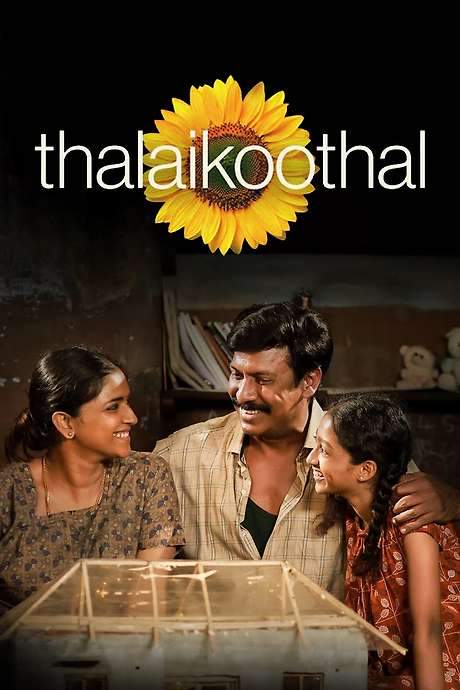
A man faces significant financial hardship while tirelessly caring for his father, who is in a coma. As his family considers euthanasia as a solution, his determination to restore his father to health is profoundly challenged. He must fight to maintain hope amidst difficult circumstances and the pressure of his family's suggestions.

Does Thalaikoothal have end credit scenes?
No!
Thalaikoothal does not have end credit scenes. You can leave when the credits roll.
Where to Watch Thalaikoothal
See current US streaming, rental, and purchase options for Thalaikoothal (2023) via JustWatch.


Streaming availability powered by 
Meet the Full Cast and Actors of Thalaikoothal
Explore the complete cast of Thalaikoothal, including both lead and supporting actors. Learn who plays each character, discover their past roles and achievements, and find out what makes this ensemble cast stand out in the world of film and television.


External Links and Streaming Options
Discover where to watch Thalaikoothal online, including streaming platforms, rental options, and official sources. Compare reviews, ratings, and in-depth movie information across sites like IMDb, TMDb, Wikipedia or Rotten Tomatoes.






Take the Ultimate Thalaikoothal Movie Quiz
Challenge your knowledge of Thalaikoothal with this fun and interactive movie quiz. Test yourself on key plot points, iconic characters, hidden details, and memorable moments to see how well you really know the film.
Thalaikoothal Quiz: Test your knowledge of the 2023 Tamil drama film Thalaikoothal.
Who is the main protagonist who cares for his comatose father?
Full Plot Summary and Ending Explained for Thalaikoothal
Read the complete plot summary of Thalaikoothal, including all major events, twists, and the full ending explained in detail. Explore key characters, themes, hidden meanings, and everything you need to understand the story from beginning to end.
Pazhani, Samuthirakani, is a middle‑aged man who lives with his wife Kalaiselvi, Vasundhara Kashyap, and their daughter, while caring for his bedridden, comatose father Muthu, Kalai Selvan. To support his family and pursue his father’s care, Pazhani drops his own work and takes a night shift as an ATM security guard. Kalaiselvi grows increasingly frustrated with how his attention remains tied to his father, and she must take a factory job at a matchstick plant to keep the household afloat. The couple’s finances are strained after Pazhani borrows a large sum from a local moneylender to fund Muthu’s treatment, and the lender’s harassment only grows louder. When Pazhani’s father‑in‑law hints at performing thalaikoothal on the ailing elder to ease the burden, Pazhani resists—yet the threat of debt and social pressure gnaws at him. On top of this, Pazhani turns to a local demigod for a cure or blessing, and his pledge to throw a village feast if his father improves becomes a guiding thread through a life of escalating stakes. One day, Muthu opens his eyes and begins to recognize the people around him, lifting Pazhani’s spirits and prompting him to borrow again to arrange the communal celebration, even as he secretly pledges the house documents to the moneylender to cover mounting expenses.
The film unfolds in a non‑linear fashion, weaving in flashbacks to Muthu’s youth. In these memories, younger Muthu, Kathir, falls in love with Pechi, a lower‑caste washerwoman, Katha Nandi. Against the rigid social expectations of the time, they pursue a bond that leads toward marriage. However, before the ceremony can take place, Pazhani’s grandfather interrupts, attacking Pechi and severing her finger, pulling Muthu away and shattering the couple’s hopes. The emotional blow reverberates through the family; when the elder Pazhani recalls this incident, he slips back into the coma and loses consciousness again, deepening the tangled web of memory and present‑day fear. The memory of that forbidden love haunts Muthu’s image in Pazhani’s family, and the weight of ancestral trauma presses on Pazhani’s decisions.
Back in the present, the moneylender returns, attempting to measure the house for sale while Pazhani’s wife’s relatives interfere. Kalaiselvi interrupts the proceedings, and she discovers that Pazhani had pledged the house documents to the lender without telling her, leading to a bitter argument that ends with her leaving the family with their daughter. Pazhani’s father‑in‑law and brother‑in‑law reappear with a Swami and press Pazhani to perform Thalaikoothal on his father, arguing that there is no hope for recovery. Kalaiselvi strengthens her threat to leave if he does not go along, pushing Pazhani to a painful decision. Faced with the pressure and the possibility of losing his wife and child, he reluctantly agrees to keep caring for his father rather than resort to killing him. The family’s bonds fracture as Kalaiselvi and their daughter depart, and the nightmares Pazhani experiences reveal his deepest fears about losing them.
In a grim turn, the decision is carried out under a ritual guise: the elder Muthu is given an oil bath, forced to drink coconut water, and laid to sleep on the floor with the others believing it to be a peaceful end. Yet the plan is not to allow a natural death; the next day a poison injection finishes the job, and Muthu’s death is staged as a natural cremation. Pechi, now an aged memory and a silent witness to the tragedy, visits the funeral but leaves unrecognized by the party. A shattered Pazhani takes a fragment of his father’s remains from the graveyard and, with a quiet reverence, plants a banyan tree to honor him. The act becomes a living memorial that will outlast the family’s troubles.
The family moves to the city to rebuild their lives, with Pazhani continuing to care for his daughter as best he can. Years later, a conversation on a bus reveals the truth about the thalaikoothal incident to Pazhani’s daughter, a revelation that shapes her perspective on her father and their shared history. The final frames sweep forward to a tranquil moment beneath the now‑grown banyan tree, where Pazhani and his daughter share time together, acknowledging the past while attempting to move forward. The film’s ending lingers on the tree’s massive, spreading roots—a poignant symbol of memory, guilt, and the stubborn resilience of family ties.

Coming soon on iOS and Android
The Plot Explained Mobile App
From blockbusters to hidden gems — dive into movie stories anytime, anywhere. Save your favorites, discover plots faster, and never miss a twist again.
Sign up to be the first to know when we launch. Your email stays private — always.
Explore the mobile appWatch Trailers, Clips & Behind-the-Scenes for Thalaikoothal
Watch official trailers, exclusive clips, cast interviews, and behind-the-scenes footage from Thalaikoothal. Dive deeper into the making of the film, its standout moments, and key production insights.
Thalaikoothal Themes and Keywords
Discover the central themes, ideas, and keywords that define the movie’s story, tone, and message. Analyze the film’s deeper meanings, genre influences, and recurring concepts.
Thalaikoothal Other Names and Titles
Explore the various alternative titles, translations, and other names used for Thalaikoothal across different regions and languages. Understand how the film is marketed and recognized worldwide.
Similar Movies To Thalaikoothal You Should Know About
Browse a curated list of movies similar in genre, tone, characters, or story structure. Discover new titles like the one you're watching, perfect for fans of related plots, vibes, or cinematic styles.









Quick Links: Summary, Cast, Ratings, More

What's After the Movie?
Not sure whether to stay after the credits? Find out!
Check out our other apps:

SAT Sphere
Build confidence for the Digital SAT.

Mori Atlas
Discover wild places worth protecting.

Luntero
Search smarter for a home in Amsterdam.

Plot Explained
Unravel movie endings and hidden clues.

Pokechamp
Dive into Pokémon data and battle logic.

Driving Theory
Get ready for your European theory test.

Movie Dust
Plan your next cinema trip with ease.

Musemap
Find art and culture as you travel.

Selkobase
Compare credentials before committing.

Local Manual
Turn an unfamiliar country into practical next steps.

Lernavi
Compare school systems before your next move.

GymRoam
Find a workout stop wherever your plans take you.
Explore Our Movie Platform
New Movie Releases (2026)
Famous Movie Actors
Top Film Production Studios
Movie Plot Summaries & Endings
Major Movie Awards & Winners
Best Concert Films & Music Documentaries
Movie Collections and Curated Lists
© 2026 What's After the Movie. All rights reserved.
Privacy Policy