What Is Swing Shift About?
The premise of Swing Shift in 370 words, with nothing given away. The full story follows below.
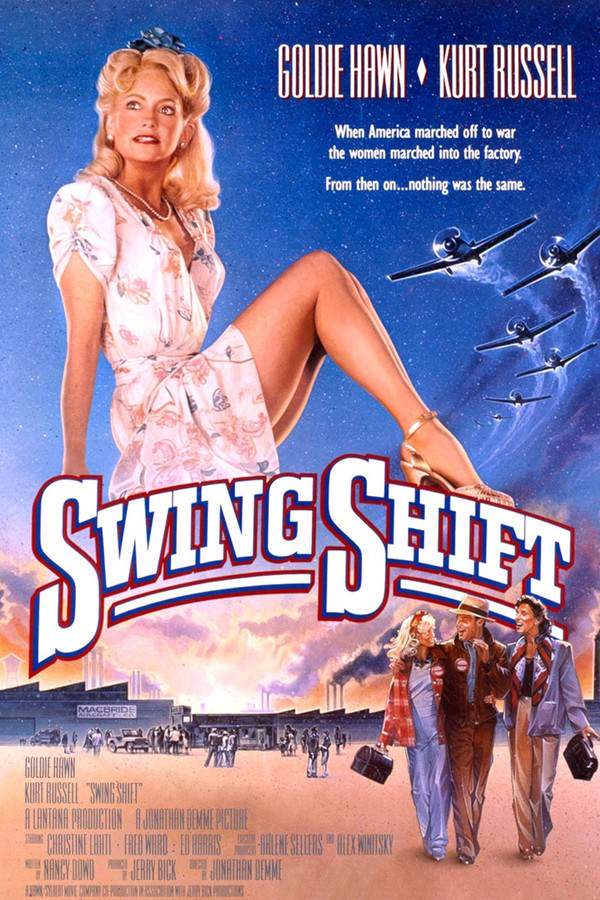
In the bustling heart of a California aircraft factory, the hum of machinery intertwines with the distant echo of war. The early 1940s bring both urgency and a peculiar intimacy to a community that has been reshaped by the demands of a global conflict. Bright lights illuminate long shifts, while the campus of the plant becomes a refuge where ordinary lives are suspended in a rhythm of hope, anxiety, and fleeting moments of joy. The atmosphere is textured with a blend of gritty determination and a lingering yearning for the world that existed before the war’s shadow fell.
Kay is a young woman whose marriage to a Navy seaman has been put on hold by his deployment to the Pacific. Determined to contribute to the effort and to fill the growing void left by her husband’s absence, she takes up a position on the factory floor, quickly finding herself submerged in a sea of steel, sweat, and camaraderie. The routine of the assembly line offers a steady cadence, yet beneath it runs a current of loneliness that she tries to conceal. In this environment she encounters Hazel, a charismatic club singer whose warmth and humor provide a welcome counterpoint to the clang of rivets, forging a bond that feels both supportive and unexpectedly vibrant.
Among the workers is Lucky, a charismatic musician whose trumpet and easy smile draw the attention of many, especially Kay. His presence introduces a subtle tension, as his easygoing nature and artistic spirit contrast sharply with the disciplined world of the factory and the distant, disciplined life of Kay’s husband. Their interactions hint at a fragile, unspoken connection that challenges the boundaries of loyalty, duty, and the yearning for companionship during an era when separation is the norm.
The film drifts between the clamor of wartime production and the quieter, intimate moments that emerge in its shadows. It captures a tone that is simultaneously hopeful and melancholy, exploring how love, friendship, and personal ambition intersect within the constrained yet resilient world of a wartime home front. In this delicate balance, each character must navigate the complexities of desire and devotion, leaving the audience poised on the edge of what might unfold when the war finally recedes.
What Happens in Swing Shift?
The complete story of Swing Shift, from the first scene to the last, in 531 words (about 2 minutes). Spoilers throughout.
Spoilers ahead
Jack Walsh [Kurt Russell] enlists as a U.S. Naval Seaman shortly after the Japanese attack at Pearl Harbor, marking the opening act of the United States’ involvement in World War II. His wife Kay [Goldie Hawn] signs up to work in an armaments factory in California while he serves overseas, and the distance begins to weigh on both of them as the war intensifies.
Caught in the quiet loneliness of wartime, Kay becomes steadily more aware of her own isolation. She eventually befriends her neighbor Hazel, a club singer whose own warmth and companionship offer a rare solace. Meanwhile, Lucky, a factory worker and musician, makes regular passes at Kay, testing the boundaries of her resolve. After months of avoidance and hesitation, Kay agrees to go out with him on a date, but the evening ends with a painful revelation: when the moment comes, she confesses she is married, and she goes home alone, leaving Lucky to ponder what might have been.
The factory throws a weekend party to celebrate its ongoing success, and Kay and Hazel push each other to attend. At the jamboree, Kay finally sees Lucky perform on the trumpet, and the magic of the moment gives her permission to let down her guard. She agrees to return with him to his world, allowing a new, complicated tenderness to bloom between them. The trio—Kay, Hazel, and Lucky—enjoy their time together until Kay’s husband returns unannounced on a 48-hour leave during the summer of 1944. When Jack unexpectedly finds them at Hazel’s, he takes Kay back to their own home.
In a tense, matter-of-fact moment, Jack searches through Kay’s closet for his clothing and, catching a glimpse of the Leadman work shirt, assumes it belongs to another man. Kay explains that she has been promoted at the factory, a realization that underscores the strain and complexity of their relationship. Over dinner the truth lands hard, and the next morning Jack returns to his ship, leaving Kay to face the consequences of the days they shared apart.
Back at the factory, the night doesn’t end with quiet reconciliation. Lucky invites Hazel to the club after work, and the two of them sleep together. Kay arrives by taxi later but, upon seeing Hazel, she retreats and goes home, the book of their entangled lives growing heavier with each turn. The friendship between Kay and Hazel appears to reach a tentative peace, yet the trio still ventures out together again, with a very drunk Kay and Hazel trading insults while Lucky carries Kay home.
In the dawn that follows, Lucky announces he will be going on tour with a band, a step that cements the end of the complicated triangle in the factory town. When the war finally ends with Japan’s surrender and the servicemen begin to return home, the plane factories begin laying off workers, and the emotional climate shifts with the season. Kay sends Lucky a farewell letter, signaling a life beyond the temporary closeness of the wartime arrangement. Back with Kay, Jack returns to her side, and Hazel to her own life, eventually marrying the club owner and closing the chapter on a turbulent, transformative moment in their lives.
Swing Shift Timeline: Every Key Event in Order
12 key events in the order they happen, from “Jack joins the Navy after Pearl Harbor” to “Resolution and new beginnings”. 12 events name a place, across 12 locations.
- 1
Jack joins the Navy after Pearl Harbor
After the attack on Pearl Harbor, Jack Walsh enlists and becomes a U.S. Navy Seaman, heading into WWII duty overseas. While he is away, his wife Kay begins laying groundwork for their future by signing up to work in an armaments factory in California.
When:December 1941 Where:Pearl Harbor, Hawaii
- 2
Kay starts factory work in California
Kay signs up to work in an armaments factory in California, taking on dangerous wartime production to support the war effort. The loneliness of separation pushes her to seek connection, and she begins forming bonds with people around the plant.
When:Early 1942 Where:California armaments factory
- 3
Kay befriends Hazel, the club singer
Kay forms a friendship with Hazel, a club singer who becomes a confidante during the long war months. Their bond deepens as Kay also meets Lucky, a factory worker and musician who flirts with her on a weekly basis.
When:1942 Where:Factory break room / Hazel's circle, California
- 4
Kay agrees to date Lucky and keeps it secret
After months of Lucky's persistent flirting, Kay agrees to go on a date with him, seeking a spark beyond her isolation. On the date, she spots her landlords at Hazel's place, ducks out before they spot her, and tells Lucky she can't because she's married, then goes home alone.
When:1943 Where:Hazel's neighborhood / Kay's home
- 5
Factory jamboree and Lucky's trumpet moment
A weekend factory jamboree brings Kay and Hazel into the spotlight, and Kay finally sees Lucky perform on the trumpet. The performance draws her in, and Lucky takes her home that night, nudging their relationship toward something more than friendship.
When:1943 Where:Factory jamboree, California
- 6
The entangled trio spends time together
Kay, Hazel, and Lucky begin spending time together, treating their evolving dynamic as a shared space despite the tension it creates. The situation grows more complicated as the war drags on and Jack remains overseas.
When:1944 Where:Hazel's place and surrounding circles
- 7
Jack returns on a 48-hour leave and confronts Kay
Summer 1944 brings Jack back on a secret 48‑hour leave, and he confronts Kay at Hazel's place. He discovers the closeness Kay has developed with Lucky and initially misreads the situation, leading to a tense dinner and sharp words.
When:Summer 1944 Where:Hazel's home
- 8
Jack returns to his ship; the marriage is strained
The confrontation ends with Jack returning early to his ship the next morning, while Kay faces her new reality and the consequences of the affair. The homefront divide within the couple deepens as he departs.
When:Summer 1944 Where:Hazel's home / aboard ship
- 9
Kay, Hazel, and Lucky's ongoing tensions
Lucky takes Hazel to the club and the trio's complicated dynamics continue to simmer. Kay arrives in a taxi to see Hazel there and, unsettled, returns home rather than joining them. Later, Lucky hints that a tour with his band is in the works.
When:Late 1944 Where:Kay's home / Lucky's club
- 10
End of the war changes the factory and relationships
With Japan's surrender, the airplane factory lets the women go and servicemen begin returning home. Kay writes a farewell letter to Lucky as he heads off on tour, while Jack's letters or looming return begin to shift the relationship dynamics.
When:Late 1945 Where:California factory / home
- 11
Servicemen come home and Hazel moves on
As the war ends, the household shifts again: Jack returns to Kay, and Hazel marries the club owner who had supported her. The trio's wartime arrangements give way to new domestic realities.
When:Late 1945 Where:Homefront California / Hazel's club
- 12
Resolution and new beginnings
Jack and Kay reconcile, choosing to face the future together after the upheavals of the wartime years. Hazel's marriage to the club owner signals a new stability for Hazel, ending the triangle romance that defined their recent years.
When:Post-1945 Where:Kay and Jack's home; Hazel's club
Who Are the Main Characters in Swing Shift?
4 characters, among them Kay Walsh (Goldie Hawn), Jack Walsh (Kurt Russell) and Hazel: who each one is and the part they play in the story. Every profile links to the actor’s page.
-

Kay Walsh (Goldie Hawn)
Played by Goldie Hawn
Kay is a lonely, resourceful wife who takes a factory job to support the war effort. She seeks connection and becomes torn between her husband Jack and her attraction to Lucky, revealing a desire for independence. Her choices drive the plot and challenge conventional notions of fidelity and commitment.
- 💍 Married
- 💔 Forbidden romance
- 🎶 Music lover
-

Jack Walsh (Kurt Russell)
Played by Kurt Russell
A naval seaman who returns home unexpectedly on leave and discovers Kay's affair, forcing a blunt confrontation. He is loyal and protective but struggles with distance and desire. His reaction fuels the emotional core of the story.
- 💍 Married
- 😡 Jealous
- 🛡️ Soldier
-

Hazel
Played by Holly Hunter
Kay's neighbor and confidante, Hazel is a club singer who becomes a friend to Kay through shared loneliness and music. She navigates her own evolving relationship with Lucky while remaining loyal to Kay. Hazel helps blur the lines between friendship and romance.
- 🎤 Club singer
- 💞 Friendship
- 💔 Complicated romance
-

Lucky
Played by Ed Harris
A charismatic factory worker and band musician who captivates Kay, offering an escape from factory life. His flirtations and touring plans contribute to the love triangle and test Kay's choices. He embodies wartime flirtation and the allure of nightlife.
- 🎺 Trumpet player
- 🕺 Charmer
- 💔 Romantic interest
Where and When Is Swing Shift Set?
Swing Shift is set in California and Pacific (aboard U.S. Navy ships) (1941–1945). Here is why the time and place matter to the story.
When
1941–1945
Set during World War II, the film opens after the Pearl Harbor attack in 1941 and follows the characters through the mid-1940s. Kay's factory work and Hazel's nightlife unfold alongside Lucky's musical tours, all within the war years. The narrative culminates in 1945 with Japan's surrender and the men returning home, reshaping the home front.
Where
California, Pacific (aboard U.S. Navy ships)
The story centers on the home front in California where Kay works in an armaments factory during World War II. It also touches on military life as Jack serves aboard U.S. Navy ships in the Pacific. Social spaces like Hazel's club and factory parties anchor the era, illustrating the blend of industrial labor and wartime entertainment. The later focus on an airplane factory highlights women's crucial wartime contributions.
- 🇺🇸 War-time California
- 🏭 Industrial town
- 🎶 Club life
What Are the Themes of Swing Shift?
3 ideas the story keeps returning to, among them Love Triangle, Women at Work and Homefront Strain.
-
01
Love Triangle
Kay's marriage to Jack is tested when she forms a bond with Lucky. The affair complicates loyalties, revealing longing, fear, and the emotional costs of secret relationships. Hazel's presence adds another layer of tension as friendship intersects with romance. The triangle explores trust, forgiveness, and the challenges of fidelity during wartime.
-
02
Women at Work
The factory setting highlights women's shift into long-term industrial labor during WWII. Kay and Hazel navigate camaraderie, competition, and the pride of contributing to the war effort. Their work reshapes household dynamics and personal independence. The story underscores the era's redefinition of women's roles.
-
03
Homefront Strain
Distance, secrecy, and social expectations strain marriages and friendships during wartime separations. The characters balance duty to country with personal longing and moral choices. The arrival of servicemen at the war's end reconfigures relationships, reinforcing loyalty and resilience. The homefront becomes a pressure cooker for emotion as the war winds down.
What Kind of Film Is Swing Shift?
Bittersweet in tone, with steady pacing and a moderate story, going by the plot summary.
- Tone
- Bittersweet
- Pacing
- Steady
- Story
- Moderate
- Intensity
- Medium
- Ending
- Bittersweet
A steady and melancholic wartime drama that explores the quiet loneliness and complex emotional consequences of a love triangle against the backdrop of a transformative era for its female characters.
- lonely
- melancholic
- yearning
- nostalgic
- reflective
- tense
- wartime homefront
- love triangle
- marital infidelity
- female friendship
Content notes: infidelity.
Quiz
How well do you remember Swing Shift? Test yourself on the story.