What Is Paheli About?
The premise of Paheli in 265 words, with nothing given away. The full story follows below.
In a sun‑drenched Rajasthan village, the tale unfolds like a living tapestry, narrated by two animated puppets whose voices echo the cadence of ancient folklore. The landscape is a blend of arid plains, bustling bazaars, and whispered legends that seem to hover just beyond the reach of ordinary life. This setting gives the film a dreamy, magical‑realist tone, where the line between the tangible and the ethereal feels perpetually blurred, inviting the audience to wonder what is possible when myth walks hand‑in‑hand with daily routine.
At the heart of the story is Lachchi, a vibrant young woman whose hopeful spirit shines brighter than the desert sun. She is married to Kishanlal, the diligent son of a prosperous merchant, whose sense of duty drives him to leave the village on a business venture shortly after their wedding. The brief separation creates a tender yearning, and it is during this vulnerable interval that a wandering spirit, captivated by Lachchi’s beauty, assumes Kishanlal’s form. The presence masquerades as her husband, offering companionship that feels both familiar and otherworldly, setting up a delicate dance of affection and uncertainty.
Four years later, the genuine Kishanlal returns, and the community finds itself caught between two men who share the same face and name. The villagers, bound by tradition and honor, must decipher who holds the true marriage bond, while Lachchi navigates the confusing currents of love, loyalty, and identity. The film’s mood remains lyrical and introspective, with a subtle undercurrent of tension that keeps the audience poised between wonder and suspense, never quite revealing which path the heart will ultimately take.
What Happens in Paheli?
The complete story of Paheli, from the first scene to the last, in 790 words (about 3 minutes). Spoilers throughout. Names in the text link to 8 cast member pages.
Spoilers ahead
The film unfolds as a folk-tale frame told by two puppets, Naseeruddin Shah and Ratna Pathak Shah, whose expressive voices guide us through a Rajasthan-set drama that blends romance, trickery, and the surreal.
Lachchi, Rani Mukerji, a bright and hopeful village girl, is arranged to marry Kishanlal, Shah Rukh Khan the diligent son of the wealthy merchant Bhanwarlal, Anupam Kher. Their journey toward a new life together begins with a long travel to Lachchi’s in-laws’ home, during which the couple pause at a dharamshala famed to be haunted by 128 ghosts. There, a ghost becomes enamored with Lachchi’s beauty, and his fixation deepens as he follows her, feeding her fears and shaping her sense of presence in the world. On their wedding night, Lachchi learns that Kishanlal plans to honor his father’s wishes by leaving the village for a distant business venture, a journey that will keep him away for five years. Kishanlal departs at dawn to Jamnagar, leaving Lachchi awash in a sense of loss, while his aunt Gajrobai, Juhi Chawla Mehta, consoles Lachchi by recalling that another family member once vanished without warning.
The ghost, having observed Kishanlal’s departure, adopts Kishanlal’s form and voice to speak with Lachchi at a water hole, lying about his travels and regaling Lachchi with a sense of companionship she sorely misses. The ghost then presents himself to Bhanwarlal in Kishanlal’s supposed absence, claiming a boon from a sage who, in exchange for five coins each morning, has granted him life and a semblance of an ordinary household. Bhanwarlal, forgetting the mage’s cautionary tales, welcomes the impostor back into the family’s circle. Only Lachchi perceives the deception, but the ghost’s persona—sensual, confident, and free—pulls Lachchi toward a different kind of affection, a tension that unsettles her prior loyalties.
As the ghost embodies Kishanlal, he befriends the real family while carefully navigating a single misstep: his treatment of Bhoja, the faithful servant, Rajpal Yadav. Bhoja suspects something is off when a letter supposedly sent from Jamnagar arrives at the house in Kishanlal’s own handwriting, and his fury at the missing communication exposes the rift between truth and performance. The family’s honor becomes a test of authenticity, and Bhanwarlal’s fear of social embarrassment pushes Lachchi and the others toward a dramatic display of loyalty and suspicion.
Meanwhile, the ghost suggests a camel-race to reclaim a vanished honor from a previous embarrassment. Lachchi’s household worries about the risks, but with the ghost’s magical tricks, the home camels win the race, reestablishing their place within the village’s social order and offering Sunderlal’s missing presence a chance to return home, too. Two years pass, and Lachchi finds herself pregnant with the ghost’s child, while Kishanlal returns quietly to confirm the rumors about Lachchi’s condition. The real husband’s presence is contested when the ghost—still inhabiting Kishanlal’s body—shows up, and the family’s witnesses struggle to distinguish the impostor from the true man.
To resolve the dispute, the group seeks the Raja’s arbitration, but a wandering Gadariya, Amitabh Bachchan, appears with three tests to reveal the genuine Kishanlal. The tests are grueling and symbolic: lift hot coals to prove true lineage, guide the sheep to prove rightful companionship, and—most telling—enter a water bottle to prove the deepest bond of love. Kishanlal attempts the first two feats; the ghost does not attempt the coal test but masters the final, entering the bottle to demonstrate his love for Lachchi. The investigator Gadariya seals the bottle to prevent the ghost’s exit, and the truth becomes undeniable.
Back home, the real Kishanlal discards the bottle in the desert, and the family returns, shaken by the revelation. Lachchi, heartbroken by the loss of her dream of the ghost, discovers another twist: the ghost has already escaped the bottle and taken possession of Kishanlal’s body to remain with Lachchi. As Lachchi contemplates confessing that she did not betray her husband, the ghost reveals his identity by recalling the daughter’s name they had planned, and Lachchi realizes she can live with both her husband and the spectral lover inside the same life. The film closes with the puppets remarking that this is a very old folk tale, leaving the audience with a lingering sense of wonder at the fusion of love, loss, and a notion of shared destiny.
This story, anchored by two masterful narrators and brought to life through a vibrant ensemble—Lachchi’s journey with Kishanlal, the secretive ghost, and the steadfast family of Bhanwarlal—offers a rich tapestry of emotion, fantasy, and cultural texture. The performances, the motifs of fidelity and illusion, and the intertwining of human and supernatural desire render a paradoxical, spellbinding experience that invites viewers to question what makes a union true and what it means to love across the boundaries of life and death.
Paheli Timeline: Every Key Event in Order
14 key events in the order they happen, from “Wedding journey and the haunted dharamshala” to “Twist ending: possession and acceptance”. 14 events name a place, across 13 locations.
- 1
Wedding journey and the haunted dharamshala
Lachchi, a young village girl, travels to her in-laws with Kishanlal. They stop at a dharamshala rumored to host 128 ghosts. A ghost senses Lachchi's beauty, follows her, and she feels a chilling presence that makes her fearfully uneasy.
When:During their journey to the in-laws Where:Dharamshala, en route to the in-laws' village
- 2
Marriage night and looming departure
On their marriage night, Kishanlal reveals that he must depart the next day to honor his father's wish and begin a distant business venture. The news shocks Lachchi, who feels torn between love and separation. Her aunt Gajrobai offers quiet consolation.
When:Marriage night Where:In-laws' house
- 3
Kishanlal's five-year departure
Kishanlal leaves early the following morning for Jamnagar to begin the long business trip. Lachchi is devastated by the separation, while Gajrobai consoles her, recalling her own family troubles.
When:Next day morning Where:From the in-laws' house toward Jamnagar
- 4
Ghost reveals himself at the watering hole
During Kishanlal's journey, the ghost appears in human form at a watering hole to speak with him about the voyage. The spirit explains he has a special boon and will receive five gold coins every morning for the rest of his life.
When:During the voyage Where:Watering hole
- 5
Ghost impersonates Kishanlal in the family home
The ghost, having taken Kishanlal's shape and voice, returns to Bhanwarlal's house and convinces him that Kishanlal has come back. Bhanwarlal forgets past concerns and accepts the man as his son-in-law.
When:The next day Where:Bhanwarlal's house
- 6
Lachchi learns the truth and embraces the ghost
That night, the ghost reveals his true identity to Lachchi. She is drawn to this confident, magical version of Kishanlal and begins living with him as her husband in his ghostly form.
When:That night Where:Lachchi's home
- 7
Befriending the family and Bhoja's confusion
As Kishanlal, now in ghost form, bonds with the real Kishanlal's family, Bhoja the servant grows perplexed by the strange letters and visits. He travels to Jamnagar to confront the real Kishanlal and understand the strange situation.
When:Within the first two years Where:Home and Jamnagar
- 8
Camel race to reclaim family honour
The ghost urges a camel race to restore the family's honour, arguing it could coax Sunderlal back home. The ghost uses magic to confuse the other camels and helps the house camels win, reviving the pride of the family.
When:Shortly after the confrontation with Bhoja Where:Family grounds near Navalgarh
- 9
Two years later, a message burns in the night
Two years after Kishanlal's departure, the real husband attempts to send a message home through Bhoja, but Bhoja's wife burns the letter, still nursing resentment from the earlier insult. The attempt to reconnect is thwarted.
When:Two years later Where:Home/Jamnagar
- 10
Lachchi's pregnancy and the four-year union
Lachchi and the ghost live blissfully for four years, and Lachchi becomes pregnant with the ghost's child, Lunima. The family remains divided about the true nature of the relationship.
When:During the four-year period Where:Lachchi's home
Show the other 4 events of Paheli Hide the last 4 events
- 11
The real Kishanlal returns and confronts the mystery
The real Kishanlal returns, shocked to find the ghost occupying his body. The family struggles to determine who is the real Kishanlal as social pressures from the Thakurs mount to reveal the truth and settle the dispute.
When:Around the time of the pregnancy Where:Home
- 12
Gadariya arrives with a three-test challenge
On the road to the raja, Gadariya the shepherd appears and sets three tests to prove the real Kishanlal: lift hot coals, gather his sheep in time, and enter a water bottle. The tests are designed to distinguish true lineage from impostor.
When:Before arbitration Where:Road to the raja
- 13
The water-bottle test and the ghost's bold move
Kishanlal cannot perform the first two feats, but when Gadariya calls for the real lover of Lachchi, the ghost performs the third feat by entering the water bottle, proving his love. Gadariya quickly seals the bottle to trap him, ensuring a fair test.
When:During the tests Where:Gadariya's tests
- 14
Twist ending: possession and acceptance
The real Kishanlal discards the bottle, but it is revealed that the ghost had already escaped and possessed Kishanlal's body to stay with Lachchi. Lachchi discovers the truth and chooses to live with both her real husband and the ghost in the same body, closing the tale with an unusual harmony.
When:After the bottle test Where:Desert and home
Who Are the Main Characters in Paheli?
7 characters, among them Lachchi (Rani Mukerji), Kishanlal (Shah Rukh Khan) and Ghost (Shah Rukh Khan): who each one is and the part they play in the story. Every profile links to the actor’s page.
- L(
Lachchi (Rani Mukerji)
Played by Rani Mukerji
A spirited young Lachchi from a Rajasthan village who enters an arranged marriage and discovers a new sense of desire through the ghostly version of her husband. She grows into a more confident, longing, and morally aware woman as she navigates competing lovers and social expectations.
- 💃 Protagonist
- 💞 Desire & Autonomy
- 🧭 Self-discovery
- K(
Kishanlal (Shah Rukh Khan)
Played by Shah Rukh Khan
The dutiful son of a wealthy merchant who leaves for a distant business trip, catalyzing the central conflict. His absence creates space for the ghost to impersonate him, while his commitment to family remains a constant undercurrent.
- 💼 Husband
- 🧭 Duty-bound
- 🏡 Family-first
- G(
Ghost (Shah Rukh Khan)
Played by Shah Rukh Khan
The spectral version of Kishanlal who wins Lachchi’s affection by taking the husband’s shape. He embodies temptation and mischief, challenging truths about marriage, love, and identity.
- 👻 Ghost
- 🎭 Doppelgänger
- 💘 Temptation
-
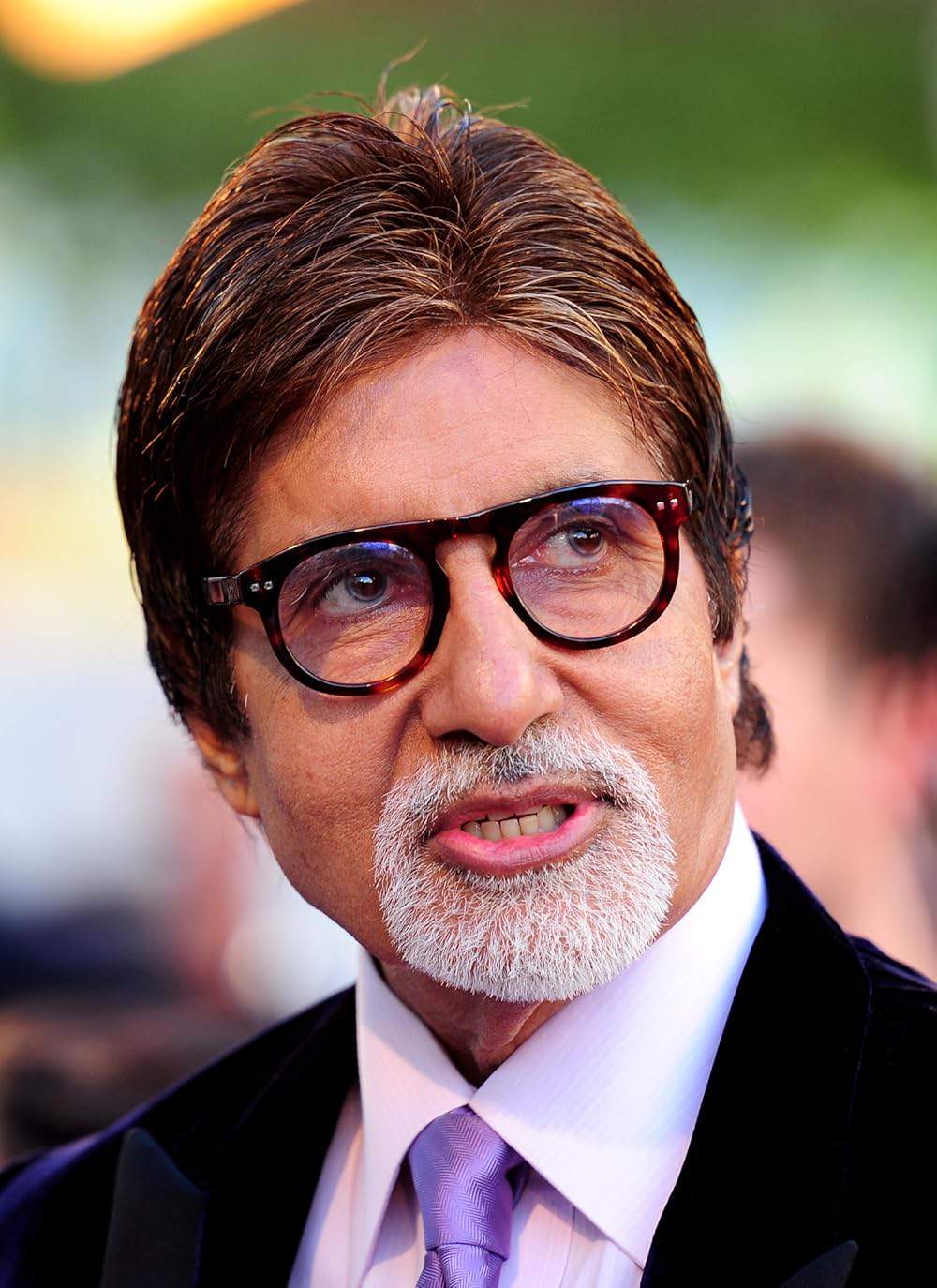
Gadariya (Amitabh Bachchan)
Played by Amitabh Bachchan
The wise wanderer who tests the true husband through three trials—lifting hot coals, gathering sheep, and entering a bottle. He acts as the story’s truth-seeker and arbiter, guiding the family toward revelation.
- 🧭 Guide
- 🗝️ Tests
- 🧠 Wise man
-

Bhanwarlal (Anupam Kher)
Played by Anupam Kher
Wealthy merchant and Lachchi’s father-in-law who embodies traditional honor and patriarchal authority. His decisions are powered by social status and family pride, making him a pivotal figure in the deception and its eventual unraveling.
- 💼 Patriarch
- 🛡️ Family honor
- 🏷️ Social status
- G(
Gajrobai (Juhi Chawla Mehta)
Played by Juhi Chawla Mehta
Lachchi’s aunt who provides emotional support and pragmatic counsel. She anchors the family’s response to the ghost’s intrusion and the marriage turmoil.
- 👩 Aunt
- 🤝 Supportive
- 🌺 Hospitality
- S(
Sunderlal (Suniel Shetty)
Played by Suniel Shetty
Gajrobai’s husband who reappears after being away and contributes to the family’s reconciliation and acceptance of past disappearances.
- 🧍 Returning family
- 🏛️ Presence
Where and When Is Paheli Set?
Paheli is set in Lachchi's Rajasthan village, Navalgarh, Jamnagar and Dharamshala. Here is why the place matters to the story.
Where
Lachchi's Rajasthan village, Navalgarh, Jamnagar, Dharamshala
Set in a dusty Rajasthani village with journeys to Navalgarh and Jamnagar, the film travels along caravan routes that weave tradition with spectacle. The Dharamshala, rumored to host 128 ghosts, provides a liminal space where the supernatural meets everyday life. The arid landscape, bustling markets, and ornate households frame a story about marriage, honor, and a magical entanglement that challenges social norms.
- 🏜️ Desert setting
- 🕌 Rajasthan culture
- 🕍 Spiritual shelter
- 🐫 Camel-trade locale
What Are the Themes of Paheli?
3 ideas the story keeps returning to, among them Love & Desire, Identity & Doppelgänger and Honor & Society.
-
01
Love & Desire
Lachchi's longing expands beyond a conventional marriage as she engages with the ghostly version of her husband. The narrative explores how desire can redefine agency within a traditional society, complicating notions of fidelity. The puppets’ framing casts romance as both enchantment and ethical tension, elevating personal longing above ritual decorum.
-
02
Identity & Doppelgänger
The ghost assumes Kishanlal's form, blurring who is real and who is imitation. Characters confront competing selves as appearances deceive and truth emerges through the trio of tests and final revelation. The tale uses alter egos to critique social roles and the reliability of outward appearances.
-
03
Honor & Society
The camel race, family reputation, and social judgment drive the central conflict, pressing Bhanwarlal and Lachchi into choices between tradition and personal truth. Gadariya's tests serve as a rite of passage that exposes how rigid norms govern love and belonging. The ending questions whether societal codes can coexist with genuine affection.
What Kind of Film Is Paheli?
Whimsical in tone, with steady pacing and a moderate story, going by the plot summary.
- Tone
- Whimsical
- Pacing
- Steady
- Story
- Moderate
- Intensity
- Medium
- Ending
- Bittersweet
A magical and romantic folk tale that unfolds with dreamlike whimsy, exploring the tender conflict between duty and desire through a supernatural love triangle set in a vibrant village.
- whimsical
- dreamlike
- romantic
- magical
- reflective
- tender
- supernatural romance
- identity deception
- folk tale
- marital fidelity
Quiz
How well do you remember Paheli? Test yourself on the story.