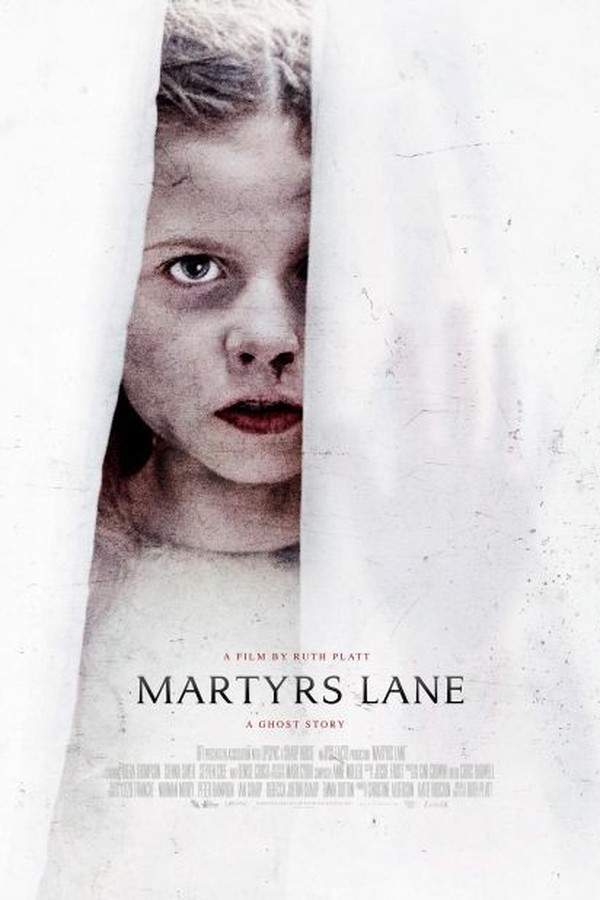
What Is Martyrs Lane About?
The premise of Martyrs Lane in 351 words, with nothing given away. The full story and the ending follow below.
Within the cold, drafty walls of an aging parsonage in the English countryside, ten-year-old Leah drifts through a childhood shadowed by quiet unease. Her father, a busy clergyman, tends to his parish while her older sister, Bex, carries the familiar burdens of a household that feels perpetually on edge. The home itself seems to hold its breath — creaking floorboards, shadowed corridors, and rooms that feel larger than a family of four should ever need. Outside, the rural landscape stretches into a moody isolation that only deepens the sense that something unspoken lingers just beneath the surface.
At the heart of this unease is Leah’s mother, Sarah, whose emotional distance has calcified into something more troubling. Once the source of warmth and comfort, Sarah now moves through the house with a detachment that feels almost deliberate, her gaze often distant and her affection rationed in ways Leah cannot comprehend. The other children sense this fracture too — Bex carries a quiet protectiveness, while their father throws himself into his work, perhaps hoping devotion might paper over what cannot be discussed. Leah is left to navigate this emotional wilderness largely alone, her childhood wonder slowly giving way to something more watchful and unsettled.
It is in these lonely hours, as darkness gathers beyond her window, that a mysterious young visitor comes to call. A pale figure, quiet and otherworldly, begins appearing at the threshold between Leah’s waking world and her dreams. This spectral presence seems to hold fragments of understanding — pieces of a larger puzzle that might explain her mother’s sorrow and the strange heaviness that fills the vicarage. Drawn by a longing for connection and answers, Leah begins to listen, uncertain whether this new companion is a guide, a warning, or something far older than either.
The film unfolds as an atmospheric meditation on grief, family, and the things children perceive but cannot name. Rich in period texture and haunted-house sensibility, it lingers in the space between innocence and revelation, where every shadow might hold a memory and every whisper might be a truth not yet ready to be spoken.
What Happens in Martyrs Lane?
The complete story of Martyrs Lane, from the first scene to the last, in 549 words (about 2 minutes). Spoilers throughout. Names in the text link to 4 cast member pages.
Spoilers ahead
A ten-year-old girl named Leah resides in a large vicarage in England, where she is frequently visited by a mysterious guest who imparts secrets and knowledge to her during the night.
Act 1: The Setup and The Secret
Living in a chilly UK vicarage, Leah shares her home with her older sister Bex, her preoccupied father Thomas, a priest, and her emotionally distant mother Sarah. Sarah seems to either resent or intentionally avoid Leah, wearing a locket that seemingly holds sentimental value. Upon opening the locket, Leah discovers a lock of blonde hair, which stands out since the family’s hair is predominantly dark. However, after accidentally dropping the hair out of a window, Sarah’s devastation is palpable. Leah’s nights are haunted by distressing dreams and asthma issues, revealing an unsettling tension within their family unit. The arrival of a young mother and her teething baby further complicates the already tumultuous environment of the household.
Act 2: The Nightly Visitor and The Game
One night, Leah encounters a ghostly girl, who appears at her window dressed in a white gown and adorned with makeshift angel wings. This spectral visitor, who remains unnamed, introduces Leah to a haunting game of “two truths and a lie.” This game morphs into a twisted scavenger hunt, compelling Leah to uncover various hidden objects around the vicarage and its grounds, such as spelling blocks and a loose button. Eager for a connection and understanding, Leah engages in the game, yet her actions inadvertently create chaos; for instance, she clumsily sews the ghost’s button onto Sarah’s sweater, resulting in the button falling off and causing the visiting baby to choke, ultimately resulting in the departure of their guests. As the game progresses, the ghost’s condition worsens, appearing increasingly filthy and displaying bloody marks. Bex cautions Leah about probing into the traumatic past, fully aware that their mother’s fragile mental state cannot withstand the burden of uncovering buried secrets.
Act 3: The Truth and The Tragedy
The unfolding scavenger hunt unveils repressed family trauma and uncovers items tied to the name “Rachel.” Leah learns that Rachel was her older sister, tragically killed by a joyrider while riding her bicycle before Leah was born. This loss has weighed heavily on Sarah, who never managed to fully process her grief; she has effectively erased Rachel’s name and history from the home while secretly cherishing her memory, symbolized by the lock of hair. This unresolved sorrow contributes to Sarah’s emotional neglect of her two living daughters.
The Ending
Ultimately, the ghost represents Rachel’s spirit, yearning for recognition and acknowledgment within the family. As Leah exposes all hidden truths, the psychological burden becomes too heavy for Sarah to bear. Rather than finding healing, Sarah succumbs to her sorrow, leading to a heart-wrenching climax where Leah observes her mother leaving the vicarage with Rachel’s spirit, choosing the departed daughter over her own living child. In the closing moments, Thomas directs movers to pack the house, instructing them to leave the piano. Leah catches a glimpse of Sarah and Rachel appearing together at the piano, strongly suggesting that Sarah, overwhelmed by her anguish, may have taken her own life to reunite with Rachel in the afterlife. This decision irrevocably fractures the family, illustrating that the trauma endured remained unresolved, ultimately consuming Sarah entirely.
Martyrs Lane Timeline: Every Key Event in Order
14 key events in the order they happen, from “Life in the Vicarage” to “The Lingering Trauma”. 14 events name a place, across 3 locations.
- 1
Life in the Vicarage
Ten-year-old Leah, along with her sister Bex, lives in a large vicarage in England under the care of their busy priest father, Thomas, and emotionally detached mother, Sarah. The household is marked by an unsettling atmosphere, exacerbated by Sarah's apparent resentment towards Leah, which deeply affects Leah's emotional state.
Where:Vicarage, England
- 2
The Mysterious Locket
Leah discovers a locket worn by her mother, Sarah, and decides to open it, revealing a lock of blonde hair that contrasts with their family's dark hair. As Leah accidentally drops the lock out of the window, she triggers a poignant reaction from Sarah, who is devastated by its loss, hinting at deeper family secrets.
Where:Vicarage, England
- 3
Nightmares and Asthma
Leah begins to experience troubling nightmares and struggles with asthma, which reflect her unsettling emotions and the fractures in her family dynamics. The introduction of a temporary guest—a young mother and her teething baby—further complicates the chaotic environment of the vicarage.
Where:Vicarage, England
- 4
The Ghostly Visitor
One night, Leah encounters a ghostly young girl at her window, dressed in a white dress and fake angel wings. This spectral presence proposes a game of 'two truths and a lie,' which becomes a key element in their nightly interactions and serves to draw Leah deeper into a web of familial secrets.
Where:Leah's bedroom, Vicarage
- 5
The Scavenger Hunt Begins
The ghost initiates a scavenger hunt, compelling Leah to search for hidden objects throughout the house and property. As Leah engages in the game, she unwittingly unleashes chaos, such as when she sews a button onto her mother's sweater poorly, leading to an incident that endangers the visiting baby.
Where:Vicarage, England
- 6
Deteriorating Apparition
As the game progresses, the ghost's appearance starts to deteriorate, becoming increasingly grimy and bearing bloody injuries. This visual transformation serves as a metaphor for the family's unresolved trauma and the burden Leah carries as she dives deeper into her family's dark history.
Where:Leah's bedroom, Vicarage
- 7
Bex's Warning
Bex, Leah's older sister, becomes concerned about Leah's obsession with the ghost and the scavenger hunt. She warns Leah to stop delving into the past, fearing their mother's fragile mental state may not withstand the resurfacing of buried family secrets.
Where:Vicarage, England
- 8
Uncovering Family Secrets
Through the scavenger hunt, Leah discovers various lost items that lead her to the name 'Rachel.' This revelation introduces her to the tragic history of her older sister, who was killed in a bicycle accident, a familial grief that Sarah has never confronted, instead choosing to erase Rachel's existence.
Where:Vicarage, England
- 9
A Mother's Grief
As Leah learns of Rachel’s tragic death, it becomes clear that Sarah's emotional abandonment towards Leah is rooted in her unresolved grief for Rachel. The atmosphere in the vicarage shifts as Leah realizes the profound impact of this loss on her family, leading to difficult confrontations about their past.
Where:Vicarage, England
- 10
The Ghost's Demand
The spirit of Rachel intensifies her presence, demanding recognition and acknowledgment of her existence. Leah is faced with the reality that Rachel's spirit is intertwined with their family’s history and that acknowledging this truth is essential for healing.
Where:Leah's bedroom, Vicarage
Show the other 4 events of Martyrs Lane Hide the last 4 events
- 11
Sarah's Downward Spiral
As the truth about Rachel is unveiled, Sarah succumbs to her grief rather than finding solace. Her mental state deteriorates, leading to excessive detachment from Leah and Bex, culminating in a tragic climax where Sarah prioritizes Rachel’s memory over her living daughters.
Where:Vicarage, England
- 12
The Climax
In a heart-wrenching moment, Leah witnesses her mother choosing to leave the house with Rachel's spirit. This choice underscores the depth of Sarah’s grief, suggesting that she cannot live in the present when burdened by the past, leading to a permanent fracture in the family dynamics.
Where:Outside Vicarage
- 13
Final Farewell
In the aftermath of Sarah's departure, Thomas directs movers to pack their belongings, signifying an impending change. Leah observes a poignant vision of Sarah and Rachel joyfully playing the piano together, implying a tragic end to the family's attempt to heal.
Where:Vicarage, England
- 14
The Lingering Trauma
The film closes on a haunting note, suggesting that Sarah may have chosen to end her life to reunite with Rachel. Leah is left alone, embodying the trauma that defined their family and the emotional void left by her mother's and sister's departures.
Where:Vicarage, England
Who Are the Main Characters in Martyrs Lane?
3 characters, among them Leah, Sarah and Thomas: who each one is and the part they play in the story. Every profile links to the actor’s page.
- L
Leah
Played by Kiera Thompson
Leah is a curious ten-year-old girl seeking connection and understanding amidst her family's turmoil. Her adventurous spirit drives her to engage with the ghostly presence, revealing her longing for recognition and love. Despite her innocence, Leah's actions lead to unintended consequences, highlighting her emotional struggles.
- 👧 Child
- 🎭 Innocence
-

Sarah
Played by Denise Gough
Sarah is Leah's emotionally detached mother, burdened by grief over the loss of her first daughter, Rachel. Her inability to process this trauma creates a chasm between her and her living daughters, leading to neglect. Sarah's character encapsulates the destructive nature of unresolved sorrow.
- 👩 Mother
- 😔 Heartbreak
-

Thomas
Played by Steven Cree
Thomas is Leah's father, a busy priest who seems oblivious to the emotional disarray within his family. His role as a provider often overshadows his responsibilities as an emotional anchor for his daughters, which adds to the family's dysfunction.
- 👨👧👦 Father
- 🙇♂️ Oblivion
Where and When Is Martyrs Lane Set?
Martyrs Lane is set in England and UK. Here is why the place matters to the story.
When
The story unfolds in a contemporary time period, reflecting modern familial issues and the psychological consequences of grief. The setting amidst a busy household emphasizes the challenges faced in managing emotional trauma while navigating everyday life.
Where
England, UK
The movie is set in a large, drafty vicarage located in England. This traditional home symbolizes the family’s complex dynamics and emotional struggles, serving as a backdrop for the haunting events that unfold. The vicarage's isolation contributes to the atmosphere of tension and ghostly appearances.
- 🏡 Vicarage
- 🌧️ England
What Are the Themes of Martyrs Lane?
2 ideas the story keeps returning to, among them Grief and Loss.
-
01
Grief
Grief is a central theme of the movie, represented through the neglected past of the characters. Leah's quest for truth uncovers her mother Sarah's unresolved sorrow over Rachel's death, which leads to destructive outcomes. The film portrays how unchecked grief can fracture relationships and haunt the living.
-
02
Loss
The presence of the ghostly figure reflects deep-rooted feelings of loss within the family. Rachel's spirit serves as a reminder of the unresolved pain that lingers among the living, ultimately illustrating the struggle for recognition and closure in the face of profound loss.
How Does Martyrs Lane End?
The last act of Martyrs Lane and what it means, in 275 words. The ending lands as bleak. Big spoilers: read the plot summary first if you have not seen it.
The final act, in full
After Leah’s family is haunted by the presence of a mysterious girl named Rachel, it becomes clear that Rachel’s apparition is a manifestation of Sarah’s overwhelming grief over the loss of her daughter. The film reveals that Sarah’s daughter Rachel died in a tragic car accident, and Sarah has never truly been able to let go of her grief. Rachel’s ghost appears to Leah, guiding her to understand that her mother’s actions are driven by unresolved sorrow, which causes her to lash out or behave strangely. Eventually, Leah encourages her mother to confront her pain, leading Sarah to realize she cannot control or undo what happened and must instead find a way to let go of the past. The presence of Rachel is thus a symbol of Sarah’s inability to move on from her tragedy.
The ghostly girl also interacts with Leah directly, hinting that her death was accidental and conveying the message that suffering isn’t permanent. As Leah uncovers the truth, she sees that Rachel’s spirit is not evil or vengeful but a child stuck in the liminal space between life and death. With her guidance, Sarah begins to accept her loss, and this acceptance allows the family to start healing. In the end, Leah and her mother are able to find peace, freeing themselves from the haunting presence of Rachel. The film leaves viewers with a poignant message about grief, acceptance, and the importance of confronting the pain of loss rather than letting it consume you. Ultimately, Martyrs Lane is a meditation on how unresolved grief can manifest as supernatural hauntings, and how facing our deepest sorrows can lead to liberation and renewal.
What Kind of Film Is Martyrs Lane?
Dark in tone, with slow pacing and a moderate story, going by the plot summary.
- Tone
- Dark
- Pacing
- Slow
- Story
- Moderate
- Intensity
- High
- Ending
- Bleak
A slow-burning, melancholic ghost story told through a child's eyes, where nightly visits from a mysterious figure gradually unravel a family's devastating secret and fractured bonds.
- atmospheric
- slow burn
- haunting
- somber
- melancholic
- eerie
- grief and loss
- family secrets
- ghost story
- child protagonist
Content notes: death of a child, suicide (implied), child endangerment, infant choking hazard, parental neglect.
Quiz
How well do you remember Martyrs Lane? Test yourself on the story.