
Man in the Middle 1964

Directed by
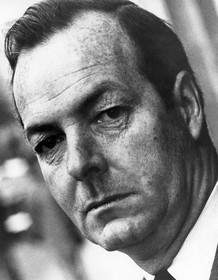
Guy Hamilton
Made by

Talbot Productions
Man in the Middle Plot Summary
Read the complete plot summary and ending explained for Man in the Middle (1964). From turning points to emotional moments, uncover what really happened and why it matters.
During World War II in India, tensions between American and British troops simmer and threaten to spill over into open conflict. The spark comes when Lieutenant Winston shoots unarmed British Staff Sergeant Quinn several times in front of 11 witnesses, an act that shocks both sides and tests the fragile alliance at the heart of the Allied push against a common enemy. In response, General Kempton orders Barney Adams to mount a vigorous defense for Winston at his forthcoming court-martial, with a clear aim: prove that this case is more than a simple scapegoat to ease mounting tensions.
Adams soon uncovers that Winston’s brother-in-law, a sitting Congressman, is leaning on the proceedings, applying political pressure in hopes of shaping the verdict. The Army’s Lunacy Commission declares Winston sane and fit to stand trial, but Colonel Burton heads off what he sees as inconvenient truth by destroying the commission’s psychiatric head Major Kaufman’s report, which argues the opposite. Burton’s plan is blunt: convict and hang Winston to help stitch together the strained relations between the two armies, even as Adams fights to keep the process fair.
Seeking professional insight, Adams approaches Major Kensington, a qualified psychiatrist who has been warned not to meddle. Kensington, while reluctant, believes Winston’s case may hinge on a psychopathic tendency rather than simple battlefield zeal. He suggests that Winston killed Quinn not out of blind hatred, but from a perceived threat—Winston feels victimized because Quinn, a sergeant with the same duties, challenges Winston’s authority and role. This nuanced view shakes Adams’s approach, adding layers to a defense that must navigate both legal standards and wartime politics.
In the shadows of this clash, a brief affair blooms between Winston’s nurse, Kate Davray, and Adams. Kate provides an unsigned carbon copy of Major Kaufman’s report to Adams, who initially resists accepting it, wary of compromising the trial’s integrity. The tension deepens as Winston, interviewed by Adams, rants about perceived racial defilement and the fear that white supremacy is being undermined, a sobering window into Winston’s psyche that complicates any straightforward verdict.
As the trial unfolds, Adams refuses to rush the defense and patiently awaits Kaufman’s formal testimony. When Kaufman is killed in a jeep accident while en route to the courtroom, Adams pivots, calling Kensington to the stand to authenticate the unsigned Kaufman report and to lend his expert perspective to the case. Kensington’s testimony illuminates Winston’s mental state for the court, and Winston’s composure finally cracks under the weight of the proceedings, erupting into a fevered, indiscriminate outburst.
With the evidence and testimony aligned, Adams secures a verdict that preserves justice without simply bowing to political pressure. The courtroom decision brings a measure of relief to the soldiers who had learned to distrust one another, and Adams spends a few peaceful days with Kate Davray. As the dust settles, friction between American and British troops begins to ease, and the forces march forward into battle united rather than divided, carrying with them a hard-won sense of unity and purpose.
Man in the Middle Timeline
Follow the complete movie timeline of Man in the Middle (1964) with every major event in chronological order. Great for understanding complex plots and story progression.
Rising friction between American and British troops in India
As World War II intensifies in the India theater, American and British troops grow uneasy with each other. Clashes and muttered resentments hint at a deeper rift beneath their allied front. The mounting tension sets the stage for a fateful incident later in 1944.
The unprovoked shooting of Staff Sergeant Quinn
Lieutenant Winston fatally shoots an unarmed British Staff Sergeant Quinn in front of eleven witnesses. The shocking act leaves both sides stunned and raises questions about loyalty and discipline. The base's mood shifts from tense to accusatory in an instant.
Kempton appoints Adams to defend Winston
General Kempton assigns Lt. Col. Barney Adams to lead the defense at Winston's court-martial. He intends to mount a vigorous defense to show the verdict isn't solely about appeasing tensions. The assignment marks a turning point in how the case will be handled.
Pressure from Winston's political connections
Adams learns that Winston's brother-in-law, a Congressman, is applying pressure behind the scenes. The political interference suggests the case could be influenced by outside interests rather than evidence. Adams weighs how this may affect the fairness of the trial.
Lunacy Commission finds Winston fit for trial
The Army Lunacy Commission rules that Winston is sane enough to stand trial. Adams is later informed that Colonel Burton refuses to accept, and even destroys, Major Kaufman's psychiatric report. The legitimacy of the proceedings is called into question.
Burton's motive to convict
Colonel Burton pushes for a conviction and hanging to repair strained Allied relations. His demand reveals how inter-arm tensions are being addressed through a harsh punitive outcome. The possibility of a fair defense grows more uncertain.
Adams seeks Kensington's counsel
Adams visits Major Kensington, a British psychiatrist who suspects Winston is psychopathic. Kensington warns against interference, yet he provides insights into the defendant's mindset and the case's psychology. The encounter deepens the legal strategy.
Unsigned Kaufman report reaches Adams
During a brief romance with nurse Kate Davray, Adams receives an unsigned carbon copy of Kaufman's report. He initially refuses to accept it, resisting outside the official stance. The document's existence foreshadows a contested medical dimension to the defense.
Winston's impassioned interview with Adams
In a candid interview, Winston rants that he killed Quinn to defend the white race against perceived defilement. His tirade reveals his volatile mindset and his willingness to frame the act as a racial grievance. Adams records the confession as part of the defense's case.
Adams withholds defense awaiting Kaufman
Rather than rushing a verdict, Adams delays building a full defense while waiting for Major Kaufman to testify. He intends to present a robust psychiatric argument if Kaufman can participate. The pause heightens the stakes of the upcoming trial.
Kaufman's death on the road to trial
Kaufman dies in a jeep accident while en route to the court-martial. The loss deprives the defense of a pivotal witness and complicates Adams's plan. The trial now must proceed with alternative testimony and evidence.
Kensington authenticated by the witness
Adams calls Kensington to testify and authenticate the unsigned Kaufman report. The court leans on psychiatric testimony to interpret Winston's behavior and mental state. Kensington's testimony shapes the trajectory of the proceedings.
Winston's breakdown during testimony
As Kensington presents his findings, Winston begins to break down and rant in court. The psychopathic diagnosis intersects with his volatile rage under cross-examination. The moment underlines the seriousness of the defendant's mental condition.
Verdict and personal aftermath
Adams secures a favorable verdict for Winston, avoiding a mandator y punishment. He then spends a few days with nurse Davray, experiencing a rare moment of peace amid the fallout. The result eases tensions and offers temporary harmony.
Friction eases; troops ready for battle in unity
With the court-martial resolved, friction between American and British troops subsides. The allied forces prepare to enter battle in complete unity, signifying a renewed collaboration on the eve of a major offensive. The trial's outcome is framed as a stabilizing moment in the war.
Man in the Middle Characters
Explore all characters from Man in the Middle (1964). Get detailed profiles with their roles, arcs, and key relationships explained.
Lt. Col. Barney Adams (Robert Mitchum)
A disciplined, morally driven defense attorney tasked with a high-stakes case. He weighs rigorous legal strategy against the risk of inflaming inter-allied tensions. He navigates political pressure to protect Winston's rights while aiming to preserve unity among American and British troops. His approach frames justice as essential to wartime cooperation.
Major Kensington (Trevor Howard)
A qualified psychiatrist who reluctantly believes Winston is psychopathic, offering a clinical lens and warning against interference. He testifies to the court, challenging simplistic guilt and highlighting the complexities of mental health in war. He represents a professional candor that clashes with military expediency. His involvement reveals how psychology can redefine justice under pressure.
Colonel Burton (Alexander Knox)
Head of the Army Lunacy Commission, intent on convicting Winston to repair strained Allied relations. He is calculating, pressurized, and resistant to dissenting evidence. He tries to control the narrative by suppressing unfavorable reports and sending Kaufman away. His actions illustrate how authority can shape verdicts more than truth.
Lt. Winston (Keenan Wynn)
The accused lieutenant who speaks of victimization and defiles white race; his volatility underscores themes of prejudice and psychopathy. His rants reveal a fragile ego under extreme stress, complicating the question of sanity. He becomes the catalyst for the courtroom drama and the war-time moral calculus.
Kate Davray (France Nuyen)
A nurse who becomes a bridge between the men, offering quiet resilience and human perspective in a charged environment. She provides crucial information (unsigned Kaufman report copy) and tempers the proceedings with empathy. Her presence introduces a personal dimension to the political and legal battle. She embodies the possibility of reconciliation in a fractured alliance.
Man in the Middle Settings
Learn where and when Man in the Middle (1964) takes place. Explore the film’s settings, era, and how they shape the narrative.
Time period
1944
Set in 1944, the film captures a moment when Allied forces press against a global conflict. War-time stress amplifies cultural frictions between American and British troops. The court-martial becomes a focal point for questions of duty, sanity, and unity under pressure.
Location
India
The story unfolds on a military base in India during World War II, where American and British troops are stationed and tensions simmer beneath the surface of alliance. The setting blends colonial landscapes with a war-weary atmosphere that colors every decision. It serves as a microcosm of Allied cooperation under strain.
Man in the Middle Themes
Discover the main themes in Man in the Middle (1964). Analyze the deeper meanings, emotional layers, and social commentary behind the film.
⚖️
Court-martial
The trial of Winston anchors the narrative, testing whether justice can be fair amid military politics. Adams must balance a rigorous defense with the broader aim of maintaining cohesion between allied forces. The narrative probes how evidence, perception, and authority shape verdicts under pressure. The outcome demonstrates that legal process can influence morale as much as military strategy.
🧠
Mental health
Major Kaufman's report and Major Kensington's testimony frame Winston's mental state as a central question. The film contrasts clinical insight with institutional cynicism, exposing how psychiatric labels can be wielded to serve strategic ends. The uncertainty around sanity drives the drama and ethical dilemma. The theme invites viewers to consider where responsibility lies when fear and prejudice meet power.
🤝
Unity vs division
The friction between American and British troops tests the idea of fighting a common enemy while maintaining mutual respect. Adams's defense strategy seeks to avert a miscarriage of justice that would fracture coalition warfare. The romance between Kate Davray and Adams humanizes the conflict, showing empathy as a unifying force. The narrative suggests that trust and collaboration can outlast personal or national biases.
🧭
Pressure & politics
External pressure from a congressman and military authorities reveals how politics influence military justice. Burton's agenda to convict is exposed, highlighting how leadership priorities can distort truth. The story shows how power dynamics shape investigations, witness integrity, and the timing of crucial evidence. Ultimately, the truth prevails only when integrity guides decision-making.

Coming soon on iOS and Android
The Plot Explained Mobile App
From blockbusters to hidden gems — dive into movie stories anytime, anywhere. Save your favorites, discover plots faster, and never miss a twist again.
Sign up to be the first to know when we launch. Your email stays private — always.
Explore the mobile appMan in the Middle Spoiler-Free Summary
Discover the spoiler-free summary of Man in the Middle (1964). Get a concise overview without any spoilers.
In the sweltering heat of a remote Far‑Eastern jungle outpost, World II’s grand alliances are reduced to uneasy campfires and whispered orders. American and British forces, once united by a common enemy, now find their patience frayed by cultural clashes and the relentless pressure of a campaign that feels endless. The dense foliage and the perpetual hum of distant artillery create a backdrop where every decision carries the weight of both strategy and survival, and where the thin line between camaraderie and rivalry can be snapped by the faintest spark.
When a sudden act of violence erupts among the troops, the military hierarchy moves to restore order through a formal court‑martial. Barney Adams, a seasoned Lieutenant Colonel with a reputation for quiet resolve, is tasked with defending the accused. He arrives with a seasoned calm that contrasts sharply with the jittery nerves of the outpost, aware that his role is not merely legal—it is a delicate balancing act between justice, diplomacy, and the fragile morale of two nations fighting side by side. His methodical approach and measured demeanor hint at a deeper commitment to truth, even as he steps into a maelstrom of conflicting loyalties.
Beneath the procedural veneer, rumors of missing testimony and silent witnesses begin to surface, suggesting that the case may be entangled with far‑reaching influences beyond the courtroom walls. As Barney navigates the labyrinth of military bureaucracy, he encounters figures who embody the tension between duty and politics, including a compassionate nurse, Kate Davray, whose presence adds a personal dimension to the unfolding drama. The atmosphere is thick with intrigue, every conversation a potential clue, and the stakes rise as the thin veneer of cooperation threatens to crack under the pressure of unseen forces. The film’s tone remains taut and brooding, promising a tense exploration of law, honor, and the hidden currents that shape wartime alliances.
Movies with Similar Twists and Themes
Uncover films that echo the narrative beats, emotional arcs, or dramatic twists of the one you're exploring. These recommendations are handpicked based on story depth, thematic resonance, and spoiler-worthy moments — perfect for fans who crave more of the same intrigue.



Featured on this page

What's After the Movie?
Not sure whether to stay after the credits? Find out!
Check out our other apps:

SAT Sphere
Build confidence for the Digital SAT.

Mori Atlas
Discover wild places worth protecting.

Luntero
Search smarter for a home in Amsterdam.

Plot Explained
Unravel movie endings and hidden clues.

Pokechamp
Dive into Pokémon data and battle logic.

Driving Theory
Get ready for your European theory test.

Movie Dust
Plan your next cinema trip with ease.

Musemap
Find art and culture as you travel.

Selkobase
Compare credentials before committing.

Local Manual
Turn an unfamiliar country into practical next steps.

Lernavi
Compare school systems before your next move.

GymRoam
Find a workout stop wherever your plans take you.
Explore Our Movie Platform
New Movie Releases (2026)
Famous Movie Actors
Top Film Production Studios
Movie Plot Summaries & Endings
Major Movie Awards & Winners
Best Concert Films & Music Documentaries
Movie Collections and Curated Lists
© 2026 What's After the Movie. All rights reserved.
Privacy Policy