What Is Maharaj About?
The premise of Maharaj in 314 words, with nothing given away. The full story and the ending follow below.
In pre‑independence Bombay, a tightly woven haveli cradles a community that clings to ritual and reverence. Beneath the polished veneer of devotion, the streets whisper of uneasy compromises, and the air is thick with the clash of old customs and the stirrings of a modern conscience. The film paints the era with muted sepia tones, letting the bustling bazaars and shadowed courtyards pulse with both the promise of change and the weight of entrenched belief.
At the heart of the story is Karsan Das Mulji, a bold journalist whose pen feels like a weapon against complacency. His fierce curiosity is matched only by his deep affection for Kishori, a young woman bound to the haveli’s traditions. Their bond is a quiet anchor amid the swirling doubts that begin to surface, as Karsan senses that the revered order governing their lives may hide darker truths. Their connection underscores a personal struggle between love, duty, and the urge to speak out.
Presiding over the community is the enigmatic JJ, known to many as the Maharaj. He commands devotion through a blend of charisma and ritual, embodying a sanctity that the townsfolk rarely question. Yet his presence casts a long shadow, hinting at a subtle tension between reverence and the unspoken doubts simmering beneath. Enter Viraaj, a steadfast ally whose support fuels Karsan’s resolve, offering both moral encouragement and strategic insight as the journalist’s quest gains momentum.
The film’s tone balances measured period drama with an undercurrent of restless urgency. Cinematic lighting captures the chiaroscuro of candlelit prayer halls and the stark daylight of legal corridors, reflecting the protagonist’s internal tug‑of‑war. As Karsan prepares to lift the veil on long‑held secrets, the story invites viewers into a world where truth battles tradition, and the stakes are as personal as they are communal, leaving a lingering sense of curiosity about what will emerge when the veil finally parts.
What Happens in Maharaj?
The complete story of Maharaj, from the first scene to the last, in 613 words (about 3 minutes). Spoilers throughout. Names in the text link to 4 cast member pages.
Spoilers ahead
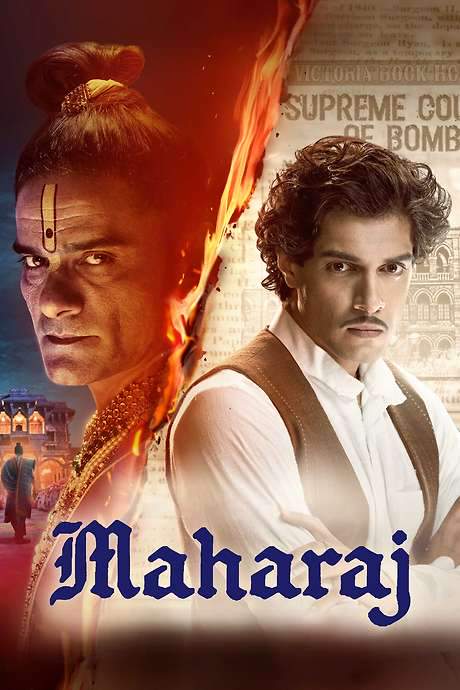
In pre-independence Bombay, Junaid Khan as Karsan Das Mulji and Shalini Pandey as Kishori belong to a close-knit haveli ruled by the revered Maharaj, known as JJ, portrayed by Jaideep Ahlawat. The community lives under a veneer of piety, where the ritual of charan seva is supposed to be sacred but in truth serves as JJ’s means to prey on young girls. When Kishori becomes the target of this manipulation, Karsan’s protective love clashes with the harsh reality of the system, and he breaks off their engagement, only to be cast out by his own family. Kishori, confronted with the moral ugliness she sees in JJ’s world, grapples with guilt and confusion, yet remains convinced that she has done nothing wrong. The rupture intensifies when Kishori witnesses JJ preying on her younger sister Devi, a moment that forces her to confront the depths of JJ’s exploitation. Realizing the magnitude of the harm but feeling she has already lost Karsan, Kishori makes a tragic choice, taking her own life before she can tell Karsan that there might still be a future for them. Devi carries Kishori’s final message to Karsan, urging him to expose JJ’s evil to the world and give a voice to those silenced by fear and tradition.
Powered by that final call, Karsan begins a difficult crusade to reveal JJ’s pattern of abuse. He faces relentless resistance from JJ and his devoted followers, who cling to tradition as a shield against scrutiny. Yet he finds an important ally in Viraaj, Sharvari Wagh in the role, who helps him rally supporters and publish JJ’s wrongdoings in a newspaper of his own. This publication gradually shifts public opinion and unsettles JJ’s grip on power, drawing more eyes to the truth and emboldening others who have suffered in silence.
The conflict grows thornier as JJ reacts with fury, threatening Karsan’s father in a bid to silence him and stop the spreading testimony. Despite these tactics, Karsan refuses to back down, adamant that truth must prevail even against fear and intimidation. JJ escalates the battle by filing a defamation suit against Karsan, a legal assault meant to bury the allegations beneath a veneer of doubt. The confrontation moves from alleys and homes to the courtroom, where Karsan’s resolve is tested to its limit. Even with limited public support, the message resonates with those who have felt JM’s exploitation firsthand, and Viraaj’s continued support helps remind them that the fight is about more than one man’s reputation—it’s about giving a voice to women who were coerced into a system that claimed to be holy.
In the courtroom, Karsan takes the stand to challenge JJ’s misinterpretations of scripture and the way he has used religion to justify control over women and girls. He speaks of dignity, consent, and the right to worship freely without being exploited in the name of faith. The testimony sparks a turning point: haveli followers in the courtroom begin to side with Karsan and testify against JJ, underscoring the truth of the claims he published and challenging the authority the Maharaj wielded. The atmosphere shifts from fear to courage as the community begins to see through the veneer of religiosity and recognize the harm that was inflicted.
By the end, JJ’s hold on his followers dissolves, and Karsan is acquitted of the defamation charges. The crowd’s applause marks a moral victory as the public acknowledges that the documents and testimonies were not fabrications but a call to accountability. The film closes with a sense of renewal for those who were silenced, and a newfound hope that voices—especially those of women subjected to charan seva—can demand change when truth is given space to speak.
Maharaj Timeline: Every Key Event in Order
13 key events in the order they happen, from “Karsan's engagement ends over the charan seva ritual” to “Aftermath: new voice for women and a fallen tyrant”. 13 events name a place, across 11 locations.
- 1
Karsan's engagement ends over the charan seva ritual
In pre-independence Bombay, Karsan and Kishori are set to marry in a haveli led by Maharaj JJ. Kishori is chosen to perform charan seva, a ritual that is revealed as JJ's exploitation of girls. Karsan is outraged by the abuse and breaks off the engagement, ultimately earning exile from his family.
When:Pre-independence era Where:Haveli, Bombay
- 2
Kishori discovers JJ's evil as he preys on Devi
Kishori witnesses JJ preying on her younger sister Devi and realizes the depth of his manipulation. She understands the belief system is built on exploitation rather than faith. Despite this, she fears she has already lost Karsan.
When:Pre-independence Bombay Where:Haveli
- 3
Kishori's suicide ends the relationship
Kishori takes her own life just as Karsan is about to offer a second chance. Her death shows the ultimate price of JJ's exploitation. The family mourns, and Devi begins to seek a way to expose JJ.
When:Soon after Kishori's discovery Where:Kishori's home
- 4
Devi passes Kishori's final message to Karsan
Devi delivers Kishori's final message to Karsan, urging him to expose JJ's evil to the world. The note becomes the catalyst for Karsan's campaign. This moment rekindles his resolve to fight for justice.
When:Immediately after Kishori's death Where:Devi's location
- 5
Karsan vows to expose JJ's misdeeds
Karsan sets out to reveal JJ's exploitation to the public. He faces initial obstacles and opposition from JJ and his followers. The mission becomes a perilous fight for truth.
When:After Kishori's death Where:Bombay
- 6
Viraaj joins and helps publish the revelations
Viraaj lends his support and helps publish JJ's misdeeds in his own newspaper. The publication begins to sway followers and bring attention to the abuses. Karsan's voice gains momentum in the city.
When:During the early campaign Where:Viraaj's newsroom
- 7
JJ threatens Karsan's father to stifle publication
Enraged by the growing exposure, JJ threatens Karsan's father to stop the publications. The threat tests Karsan's resolve and loyalty to his family. Karsan refuses to yield, pledging to continue.
When:During the harassment Where:Karsan's family home
- 8
JJ files a defamation suit against Karsan
JJ retaliates by filing a defamation suit against Karsan. The legal action marks a new battleground as the case moves toward court. Karsan faces a precarious legal fight with limited support.
When:After the suit is filed Where:Court
- 9
Viraaj motivates him to persevere
Despite limited support, Viraaj encourages Karsan to push forward for women like Kishori and Devi. He emphasizes the need to give voice to the silenced. The campaign gains a new, stubborn momentum.
When:During the legal battle Where:City and newspaper offices
- 10
Karsan takes the stand and speaks truth
Karsan takes the stand, challenging JJ's misinterpretations of scripture and exposing his exploitation of women and girls. He argues for a direct path to the divine, free of JJ's manipulations. The courtroom begins to turn as his words resonate with witnesses.
When:During trial Where:Courtroom
Show the other 3 events of Maharaj Hide the last 3 events
- 11
Followers testify against JJ
Haveli followers break with JJ and testify in support of Karsan, validating his published claims. Their testimonies refute JJ's control and demonstrate the harm caused. The courtroom atmosphere shifts toward accountability.
When:During trial Where:Courtroom
- 12
Karsan is acquitted; JJ loses influence
The verdict acquits Karsan of defamation, while JJ loses followers and credibility. People applaud Karsan for speaking truth and defending the vulnerable. The public perception of JJ begins to crumble.
When:After verdict Where:Courtroom
- 13
Aftermath: new voice for women and a fallen tyrant
Karsan emerges as a voice for women who were forced into silence. The community begins to rebuild trust in justice and reform. JJ's influence wanes as truth prevails and reform movements gain footing.
When:After trial Where:Bombay streets and haveli communities
Who Are the Main Characters in Maharaj?
5 characters, among them Karsan Das Mulji (Junaid Khan), Kishori (Shalini Pandey) and Jadunathjee Brajratanjee Maharaj (JJ) (Jaideep Ahlawat): who each one is and the part they play in the story. 4 of them link to the actor’s page.
- KD
Karsan Das Mulji (Junaid Khan)
Played by Junaid Khan
A determined reform-minded figure from the haveli who refuses to tolerate JJ’s tyranny. After Kishori’s tragedy, he faces obstacles but persists, rallying supporters and using journalism to reveal the truth. His stand culminates in a courtroom confrontation that endorses accountability and social change.
- 🎯 Determined
- 🧭 Moral compass
- K(
Kishori (Shalini Pandey)
Played by Shalini Pandey
Engaged to Karsan, she is selected for charan seva, a ritual she believes to be sacred but which JJ uses to exploit young women. Her tragedy becomes a catalyst for reform, and she sends a final message through Devi to urge Karsan to expose the truth.
- 💔 Victim
- 🕊️ Courage in adversity
- JB
Jadunathjee Brajratanjee Maharaj (JJ) (Jaideep Ahlawat)
Played by Jaideep Ahlawat
Leader of the haveli who weaponizes ritual power and scripture to control women. His influence drives the conflict, and he fights to quash Karsan’s revelations with intimidation and legal pressure, ultimately losing followers as the truth prevails.
- 🧭 Authority
- 🕳️ Hypocrisy
- V(
Viraaj (Sharvari Wagh)
Played by Sharvari Wagh
A supporter who helps Karsan mobilize followers and publish JJ’s misdeeds. Her involvement shows the importance of allies and media in turning private abuses into public accountability.
- 🗣️ Ally
- 📰 Advocate
- D
Devi
Kishori’s younger sister who carries Kishori’s final message to Karsan, underscoring the personal cost of oppression and the thread of resistance that spans the family.
- 👧 Family
- 🕊️ Voice for the voiceless
Where and When Is Maharaj Set?
Maharaj is set in Bombay (Pre-Independence era (before 1947)). Here is why the time and place matter to the story.
When
Pre-Independence era (before 1947)
The story takes place in Bombay before India’s independence, when colonial rule and traditional social norms shape daily life. Arranged engagements, ritual authority, and gender roles define the characters’ choices. The era provides the context for a clash between old customs and calls for reform.
Where
Bombay
Set in pre-independence Bombay, the film revolves around a haveli and its patriarchal power structure. The city’s urban backdrop reflects a society steeped in tradition while slowly leaning toward reform. The haveli serves as a microcosm of power, control, and resistance.
- 🗺️ Historical setting
- 🕰️ Colonial era
What Are the Themes of Maharaj?
3 ideas the story keeps returning to, among them Justice & Reform, Voice & Agency and Power & Hypocrisy.
-
01
Justice & Reform
Karsan challenges Maharaj JJ’s exploitation and the misinterpretation of scripture. The courtroom and press play crucial roles in exposing abuses and pushing for accountability. The narrative centers on restoring dignity to women and redefining power structures through justice.
-
02
Voice & Agency
Kishori’s tragedy becomes a catalyst for collective action as Karsan amplifies the voices of women silenced by ritual abuse. Viraaj helps publish JJ’s misdeeds, turning private oppression into public discourse. The film champions women’s agency and the power of speaking out.
-
03
Power & Hypocrisy
Maharaj JJ’s manipulation of tradition exposes the gap between religious authority and moral integrity. A defamation suit and public trial reveal how power can shield wrongdoing. The story critiques how loyalty to leaders can obscure truth until scrutiny prevails.
How Does Maharaj End?
The last act of Maharaj and what it means, in 183 words. The ending lands as happy. Big spoilers: read the plot summary first if you have not seen it.
The final act, in full
In the climax Karsandas Mulji finally confronts the self‑styled godman in court. He recounts the vile “charan pooja” ritual that forced his fiancée Kishori and countless other women into sexual servitude, exposing the fraud behind the Maharaj’s miracles. Moved by his testimony, his widowed sister‑in‑law steps forward, and one by one about thirty women—victims of the Maharaj’s abuse—take the stand, describing the same pattern of coercion and rape. The jury, and the public watching from the gallery, realise that the revered figure they had worshipped is nothing more than a predator cloaked in religion.
The judge, after hearing the avalanche of evidence, declares the godman not guilty of the defamation claim and, more importantly, urges criminal proceedings against him for his atrocities. Although the legal system does not immediately imprison the Maharaj, the verdict shatters his aura of invincibility and forces the community to question the blind traditions that enabled his crimes. Karsandas’s relentless crusade thus marks the beginning of a broader social awakening, showing how a single voice of reason can dismantle a centuries‑old superstition and give power back to the silenced.
What Kind of Film Is Maharaj?
Dark in tone, with steady pacing and a straightforward story, going by the plot summary.
- Tone
- Dark
- Pacing
- Steady
- Story
- Straightforward
- Intensity
- High
- Ending
- Happy
A tense and somber period drama that follows a high-stakes crusade against religious exploitation, marked by tragic personal loss but culminating in a hopeful victory for truth and justice.
- tense
- dark
- somber
- urgent
- oppressive
- courageous
- abuse of power
- religious corruption
- legal battle
- journalistic crusade
Content notes: sexual exploitation, suicide, abuse of power, religious manipulation.
Quiz
How well do you remember Maharaj? Test yourself on the story.